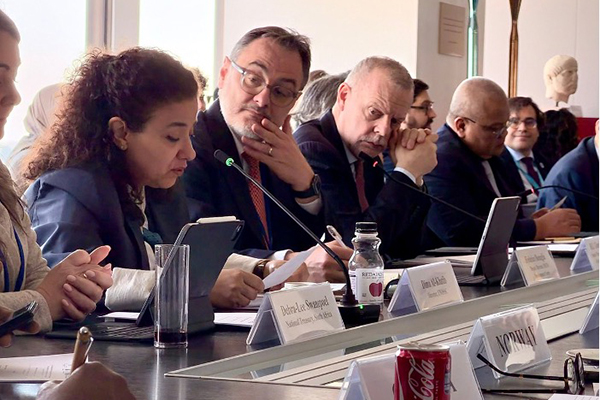
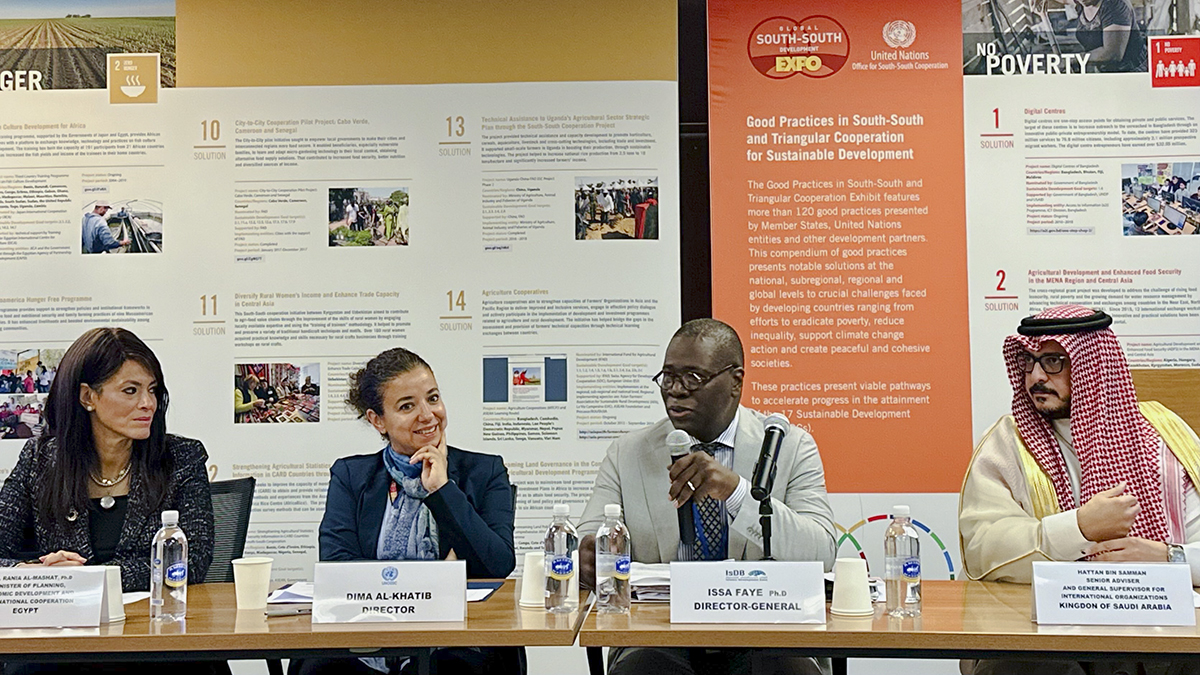
 Islamic Development Bank (IsDB) and United Nations Office for South-South Cooperation (UNOSSC) convene their second dialogue in Joint Global Advocacy Dialogue Series on the sidelines of the 79th United Nations General Assembly.
South-South cooperation has emerged as an important development cooperation modality for many of today’s largest development challenges and should be seen as a critical complement to North-South Cooperation. This second dialogue under the UNOSSC-IsDB Global Advocacy Dialogue Series is a pioneering milestone, highlighting the impact and lessons learnt from the
IsDB’s Reverse Linkage mechanism on the ground, particularly that private sector engagement plays an essential role in development success.
The Global Advocacy Dialogue Series was launched in March 2024 by UNOSSC and IsDB to explore the latest development and partnerships trends, focusing on the innovative and evolving nature of South-South and triangular cooperation. The
first dialogue in the IsDB-UNOSSC series, organized together with the Government of Portugal, introduced the potential for triangular cooperation to accelerate sustainable development, as a significant bridge between South-South and North-South cooperation.
“The adoption of the
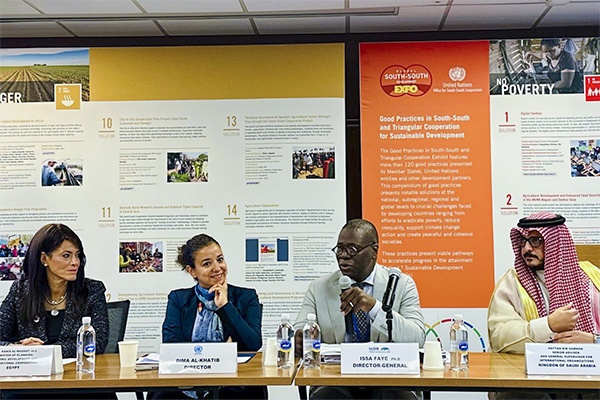
Pact for the Future represents an important step towards a stronger and more inclusive multilateral system, one fit to address today’s global challenges and accelerate our efforts for the Sustainable Development Goals,” said UNOSSC Director Ms. Dima Al-Khatib. “We now need the support of all stakeholders, including the private sector, to ensure that the Pact’s ambitions are translated into meaningful change on the ground.”
“In the average developing country, the private sector accounts for 60 percent of gross domestic product, 90 percent of jobs, and 80 percent of capital flows,” noted the UNOSSC Director. “It contributes to sustainable development by creating decent jobs, building future-oriented skills, spurring innovation, and providing essential infrastructure as well as affordable goods and services.”
“We must not involve the private sector as an afterthought, private sector are key development partners in harnessing South-South and triangular cooperation,” said Dr. Issa Faye, Head of Delegation of IsDB to the UN General Assembly, and Director General of Global Practice and Partnerships, highlighting the pivotal role of multilateral development banks like IsDB in driving private sector engagement through South-South and triangular cooperation. “We are looking for impact, we are looking for action, not just another seminar. Let’s think together on how we can work together with our private sector partners here to scale up impact on the ground.”
Dr. Faye called for harnessing the power of South-South cooperation, and focused on impactful, concrete actions to drive sustainable development. He emphasized IsDB’s commitment to supporting its Member Countries through innovative financing mechanisms and knowledge sharing initiatives, particularly through the Reverse Linkage mechanism, which facilitates technical cooperation and knowledge exchange. Important to note is that all IsDB’s 57 Member Countries are in the Global South.
An ‘Ideas Foundry’ segment followed the high-level opening to identify potential South-South and triangular cooperation collaborations and partnerships with the private sector colleagues present, focusing on the areas of energy, digital transformation, health, connectivity, logistics, Halal and transport.
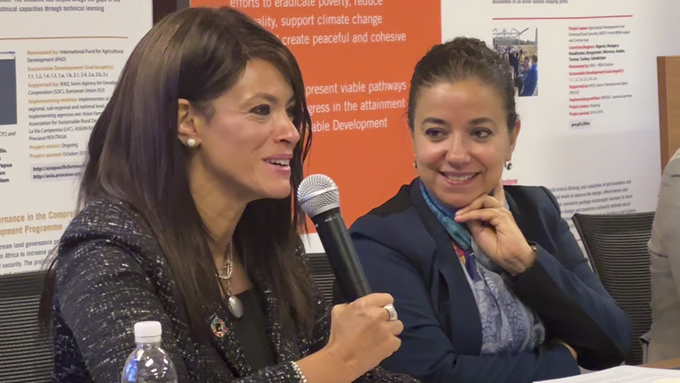
“What is significant about South-South cooperation is its ability to highlight examples which have worked,” said H.E. Dr. Rania Al-Mashat, Minister of Planning, Economic Development and International Cooperation of Egypt, in her keynote remarks.
She highlighted how Egypt is integrating the private sector into its national sustainable development strategies; and how international cooperation plays a key role in facilitating private sector investment across the region and beyond. “Leveraging alliances between stakeholders is extremely important,” said Minister Al-Mashat. “For the world at large to achieve the crosscutting SDGs by 2030 – on a national level, on a regional level, on a multilateral level – public money alone won’t work, private sector alone won’t work, MDB money alone won’t work.”
“The Kingdom of Saudi Arabia is committed to strengthening South-South cooperation as a means to promote sustainable development and fostering mutual prosperity,” said Mr. Hattan Bin Samman, Senior Advisor and General Supervisor for International Organizations. “We believe that collaboration among developing countries can lead to more equitable and inclusive growth.”
Delivering a statement on behalf of H.E. Mr. Faisal Alibrahim, Minister of Economy and Planning of the Kingdom of Saudi Arabia, Mr. Bin Samman highlighted that South-South cooperation is a force for positive change, private sector growth, and emphasized the importance of Public-Private Partnerships as a key for achieving the SDGs.
“The Islamic Development Bank has been an instrumental strategic partner of the Kingdom of Saudi Arabia’s development journey,” said Mr. Bin Samman. “Throughout our triangular cooperation we have successfully implemented numerous projects that have had profound impact globally.” He also noted the important work being done with UNOSSC in sharing knowledge, technology and best practices to address common challenges.
Models of Collaboration for SDG Progress – Building Blocks of Success
During an interactive discussion following the high-level segment, panelists focused on models of collaboration for SDG progress, and identifying building blocks of success.
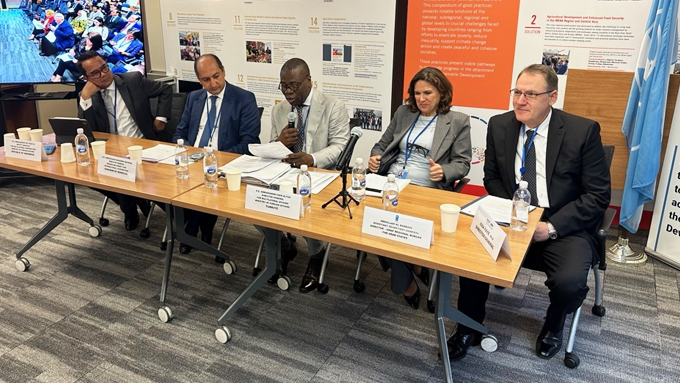
H.E. Amb. Mr. Mohamed Methqal, Director General of Moroccan Agency for International Cooperation (AMCI), highlighted Morocco’s strong track record in fostering South-South cooperation, particularly across Africa. He also shared AMCI’s role in public-private partnerships for sustainable development, and how Morocco has fostered effective public-private collaboration to address broader challenges such as climate change, infrastructure, job creation, and digital transformation.
“Through the Reverse Linkage mechanism, and with the financial support of the IsDB and its partners, we have developed South-South projects in partner countries,” said Ambassador Methqal. “We capitalize on national ecosystems to share Moroccan expertise, with a focus on implementation on the ground.”
H.E. Amb. Tri Tharyat, Deputy Minister for Multilateral Cooperation, Ministry of Foreign Affairs of the Republic of Indonesia, spoke about the significant progress Indonesia has made in fostering regional and international cooperation for sustainable development, particularly through initiatives like the ‘Making Indonesia 4.0’ roadmap and the recent High-Level Forum on Multi-Stakeholder Partnership, organized by BAPPENAS in Bali in September 2024.
“For Indonesia, South-South and triangular cooperation is a symbol of the empowerment of the Global South,” said Ambassador Tharyat. “By aligning our comparative advantages, the Global South can move forward with its development; but, to realize this goal, we believe strongly that the Government must engage the private sector in strategic partnerships.”
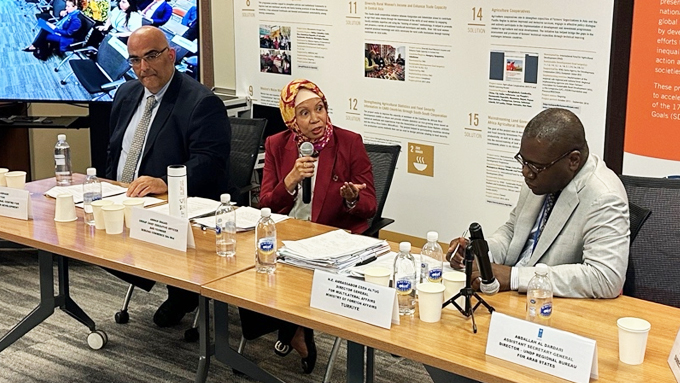
H.E. Amb. Ms. Esen Altuğ, Director General for Multilateral Economic Affairs, Ministry of Foreign Affairs of Türkiye, noted that – in alignment with both national and international development priorities – Türkiye has been proactive in fostering impactful public-private partnerships, including innovative platforms like the SDG Impact Accelerator, which has attracted several private sector partners in Türkiye.
“We need Governments, international organizations, the private sector and civil societies to work together to address the root causes of current and future challenges,” said Ambassador Altuğ, noting that Türkiye has undertaken multi-stakeholder projects recently in five Least Developed Countries together with UNDP – namely Angola, Benin, Democratic Republic of the Congo, Lao PDR, and Rwanda – in areas such as renewable energy, smart governance, gender equality, vocational training, and youth employment.
Mr. Abdallah Al Dardari, Assistant Secretary General and Director of the UNDP Regional Bureau for Arab States, focused on strategies that can strengthen partnerships between governments, private enterprises, development organizations, and MDBs across the Arab States and beyond.
Highlighting untapped potential for growth and development impact, Mr. Al Dardari stressed that the “Arab Region is losing 20% of its GDP every year because of the low participation of women.” “Including women in the economy is a low cost, high-impact strategy for inclusive growth and sustainable growth,” he said.
“The entrepreneurs that are informal and now coming into the digital age don’t have the tools that allow them to grow and prosper; this is the future, in which millions of people may not have access to finance and technology,” Mr. Al Dardari noted. He asked, “What is the financing mechanism for someone who has a mobile phone and a cloud account? What bank is willing to invest in that person?” He explained that the definition of ‘informality’, and the regulatory frameworks, require revisiting. In this regard, UNDP is working across countries, regions, and intra- and inter-regionally in order to bring those experiences onboard and channel them for the future. He also noted cross-regional experiences coming from Indonesia, Malaysia, Egypt, Saudi Arabia and Türkiye to reach the millions that cannot reached through conventional banking.
Scaling Impact – Insights from the Private Sector
Discussants shared their insights on scaling up impact in sustainable development from the private sector’s point of view.
Ms. Amnah Shaari, Group Chief Executive Officer and Founder, Serunai Commerce Sdn Bhd, discussed collaboration with the IsDB Reverse Linkage program toward strengthening the overall Halal ecosystem. Ms. Shaari stressed the importance of technology transfer and knowledge empowerment in sectors like food safety and highlighted the need for innovative financing models to support SMEs, particularly those led by women. She emphasized the potential for job creation and economic growth through the development of the Halal industry in the Global South. Also highlighted were Serunai’s efforts in providing digital platforms and technology transfer to governments and businesses, aiming to enhance their participation in the global Halal market and maximize the value of their natural resources.
Mr. Tarik Bourquouquou, Manager of International Projects Development, MASEN, spoke about MASEN’s work at the forefront of renewable energy projects in Africa, forging strong regional and international partnerships. MASEN is partnering with IsDB under its new program “Renewable Energy Cooperation Program to Power Africa” in which Mr. Bourquouquou played a key role in implementation. Mr. Bourquouquou detailed MASEN’s approach to performing comprehensive studies, ranging from resource assessment to project structuring with the aim of attracting private sector investment in renewable energy projects across Africa. He also mentioned that 11 countries have expressed interest, and that projects are already ongoing in countries, including Burkina Faso, Guinea-Bissau, and Niger. The importance of knowledge transfer and capacity building in these initiatives was emphasized, aligning with SDG 7 for affordable and clean energy.
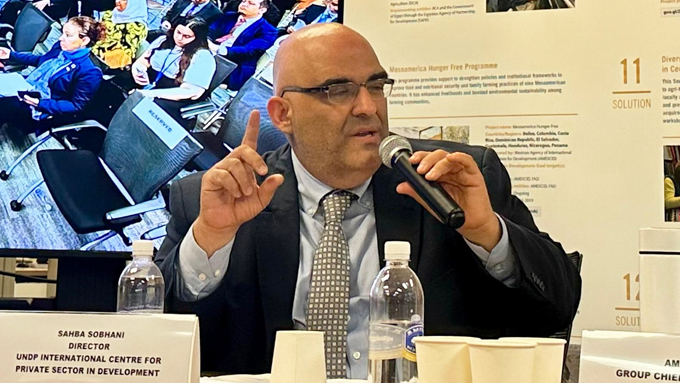
Mr. Sahba Sobhani, Director, UNDP International Centre for Private Sector in Development, spoke about what strategies are being used to more effectively engage private sector actors in the Global South, and how these approaches can be replicated or expanded to other regions. Noting that the basic formula for the private sector is ‘risk-return’, he highlighted UNDP’s work on developing SDG investor maps which identify investment opportunities for countries based on investor perspectives.
Ideas Foundry: Harnessing Private Sector Contributions through South-South and Triangular Cooperation
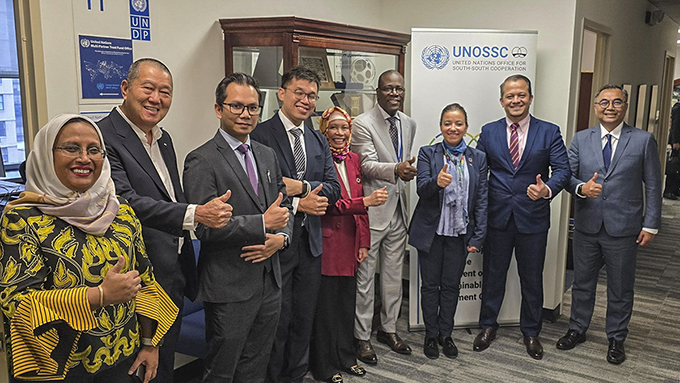
A technical-level ‘Ideas Foundry Session’ followed, focused on harnessing the private sector contributions through South-South and triangular cooperation in concrete terms.
During the Ideas Foundry Session, Mr. Ho Wei Ming of Probase Manufacturing Sdn Bhd gave a presentation on private sector participation in South-South and triangular cooperation loan-based financing projects, with a focus on road construction in Africa. His presentation highlighted the potential for private companies to contribute significantly to infrastructure development in the Global South. He emphasized the importance of road infrastructure in connecting rural and urban areas, ensuring that development is not limited to cities. The importance of innovative technologies, such as using drones in development projects was highlighted with regard to Probase’s experience in adapting their road construction technologies to local conditions in various African countries.
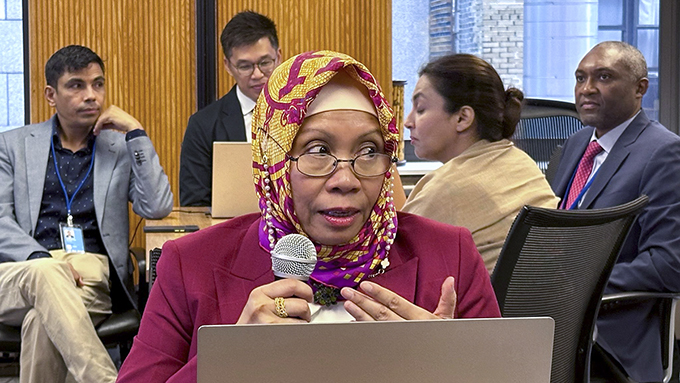
The Ideas Foundry dialogue identified potential South-South and triangular collaborations and concrete action items. Participants highlighted the need for enhancing systematic information sharing in food systems across countries, recognizing the critical role of agriculture in many developing economies. Additionally, participants showcased the potential for technology to address longstanding challenges in the Global South.
Mr. Aminuddin Mat Ariff, IsDB Lead Technical Cooperation Specialist (Reverse Linkage) – leading South-South and triangular cooperation global private sector partnership for the Bank – presented the Islamic Development Bank’s Reverse Linkage Mechanism as a powerful tool for fostering development cooperation. This mechanism facilitates knowledge exchange between Member Countries, leveraging their respective strengths and experiences. A key feature of the Reverse Linkage approach is its integration of contributions from both the private sector and civil society, ensuring a comprehensive and inclusive development process. The Mechanism was lauded for its demand-driven and results-oriented approach, which aligns closely with the principles of effective South-South cooperation.
UNOSSC colleagues shared that the
South-South and Triangular Cooperation Solutions Lab was launched in July for all partners. This digital platform is designed to serve as a hub for facilitating discussions and knowledge sharing among stakeholders, involved in South-South and triangular cooperation. The Solutions Lab provides a dynamic space for continuous updates on progress of South-South and triangular cooperation initiatives, allowing for real-time learning and adaptation of best practices across different contexts.
UNOSSC is also committed to featuring private sector partners’ case studies on its
South-South Galaxy platform for wider knowledge sharing.
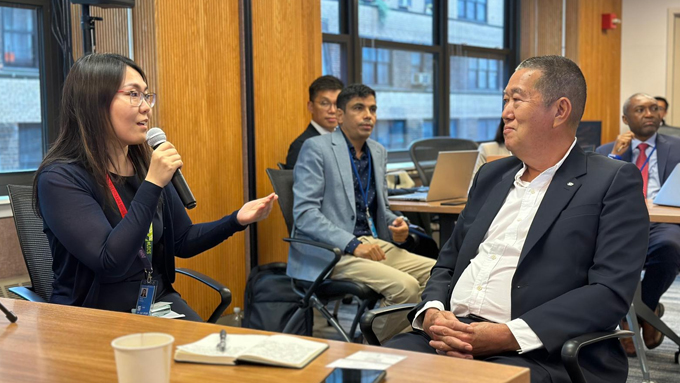
Throughout the dialogue, participants underscored the need to translate the rich insights from the discussions into concrete actions on themes such as the importance of building innovative financing mechanisms ,including Islamic finance; the need for digital transformation across various sectors; the critical role of private sector engagement in achieving the SDGs; and the growing potential of leveraging South-South and triangular cooperation to address crosscutting development challenges. Participants also emphasized the need for capacity building, particularly in areas such as debt management and climate finance.
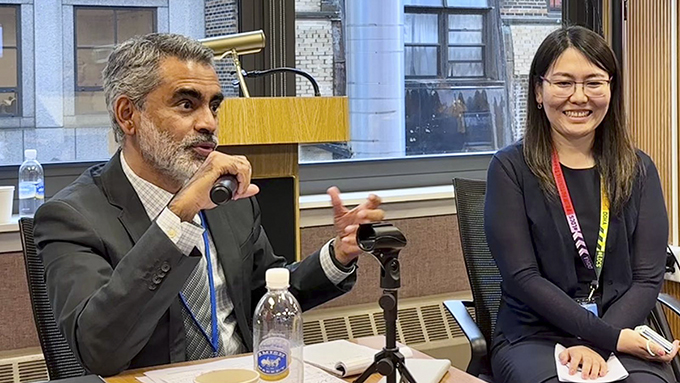
Recalling the decades-long history of the UNOSSC and IsDB partnership, Zanofer Ismalebbe, Chief of Knowledge Management at UNOSSC, noted in his closing remarks, how UNOSSC’s global and system-wide mandate and convenor role can be further harnessed to advance private sector engagement, and how the UNOSSC South-South Solutions Lab is inter-twined with UNOSSC’s global research initiative, the South-South Galaxy platform, and the
Data-to-Policy Network for Policy Makers, thus offering a comprehensive set of support package for all partners to utilize.
The dialogue closed with an unwavering commitment to advancing sustainable development in the Global South through enhanced private sector engagement, innovative cooperation mechanisms, and strengthened South-South partnerships.
The Islamic Development Bank (IsDB) is a multilateral development financial institution with 57 Member Countries and a mandate of delivering sustainable socio-economic development in Member Countries and Muslim communities worldwide. For more information, visit our website at: www.isdb.org
UNOSSC, hosted by UNDP since 1974, was established by the UN General Assembly with a mandate to advocate for and coordinate South-South and triangular cooperation on a global and UN system-wide basis. For more information, visit our website at: www.unsouthsouth.org
For further enquiries: Mr. Mithre J. Sandrasagra, Communications Specialist, UNOSSC, mithre.sandrasagra@unossc.org; Mr. Musa Fadl Alla, Senior Internal Communication Specialist, IsDB, mfadlalla@isdb.org