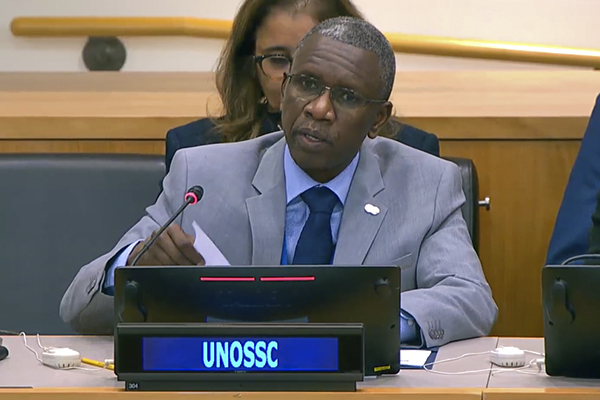
Samba Thiam, Senior Policy Development Adviser of the United Nations Office for South-South Cooperation, introduced the Secretary-General’s report on the “State of South-South cooperation” (document A/79/230).
Mr. Thiam noted that the report outlines the current global development context and analyses new developments and opportunities in South-South and triangular cooperation. It notes that 81 per cent of UN entities included this mode of collaboration in their strategic plans in 2023, and 86 per cent integrated South-South results in corporate reporting – up from 73 per cent and 79 per cent, respectively, in 2022.
Since 2021, requests for United Nations support on South-South or triangular cooperation have risen steadily from 53 per cent to 61 per cent of host country Governments, focusing mainly on health, climate change, and social protection. The development system’s response was evident, with an increased number of Governments (71 per cent in 2023, compared to 67 per cent in 2022) receiving such support.
According to the report, 35 per cent of Governments indicated they have received support from the UN system in establishing or strengthening national institutions engaged in South-South and triangular cooperation. Specific initiatives included assigning South-South focal points (58 per cent), establishing dedicated units for South-South cooperation (29 per cent) and allocating budgets for South-South cooperation (20 per cent).
Since 2021, there has been a significant increase (from 27 per cent to 47 per cent) of Member States reporting they received UN support for organizing global, regional or national knowledge-sharing initiatives on solutions from the Global South.
Key challenges faced by United Nations entities include a lack of institutional arrangements, capacity and funding for scaled-up South-South cooperation support, the report states.
Read the full statement of Mr. Samba Thiam as prepared for delivery. Click here for more information.