2025 Staff Retreat Charts Course for a Future-Ready UNOSSC
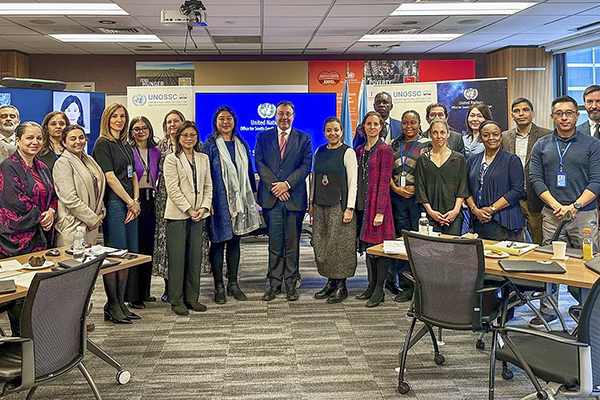
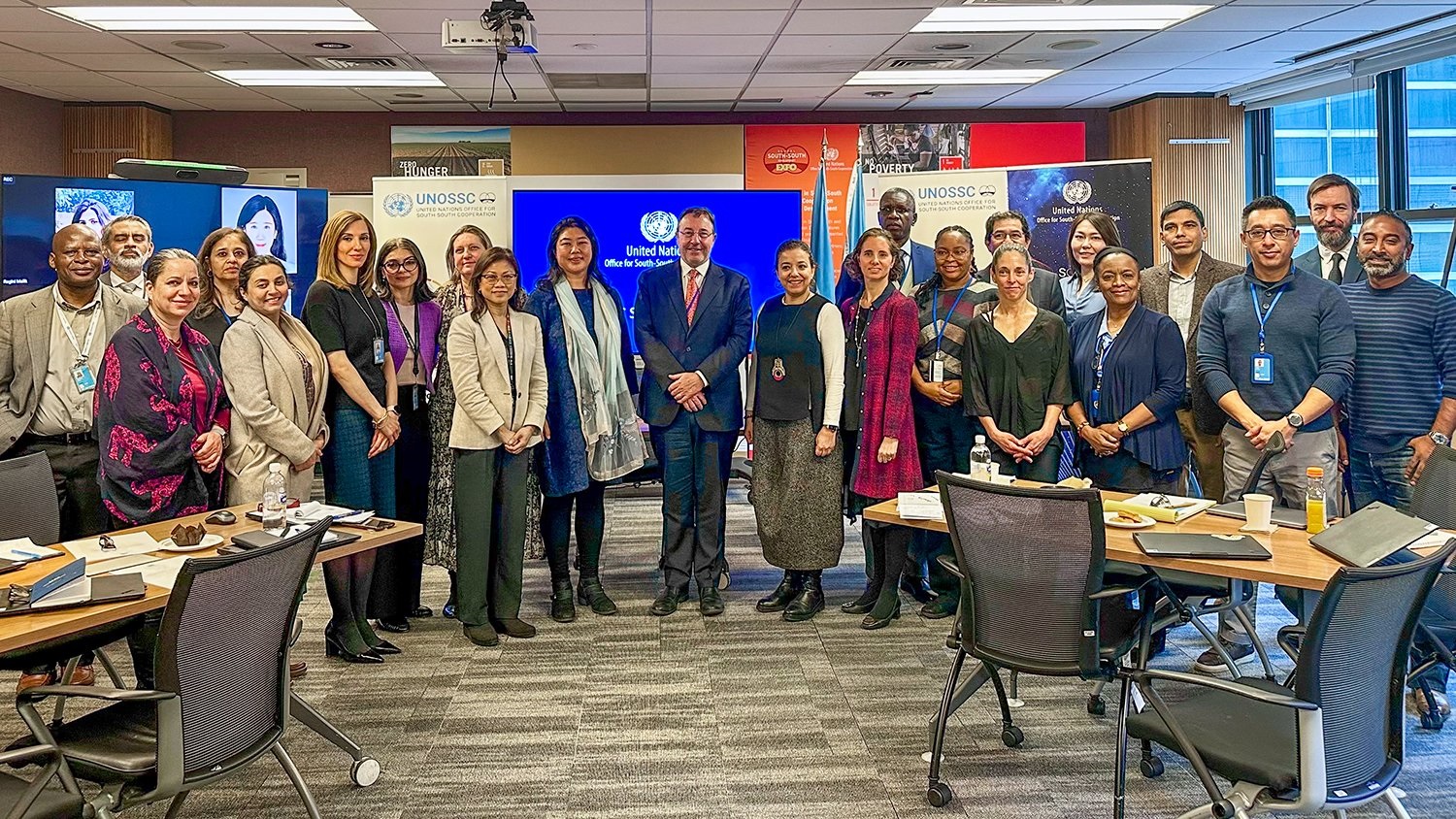
In a pivotal moment for international development, the United Nations Office for South-South Cooperation (UNOSSC) convened its 2025 Annual Staff Retreat from 2–3 April. Held at a time of profound global transformation, the retreat served as both a strategic milestone and a team-wide recommitment to advancing South-South and triangular cooperation.
Bringing together UNOSSC staff, Member State representatives, and strategic partners, the retreat focused on shaping the 2026-2029 UNOSSC Strategic Framework. With a global landscape increasingly defined by complex development challenges, constrained financing, and the urgent demand for inclusive multilateral solutions, the retreat provided a space for collective reflection and forward-thinking.
Setting the Strategic Agenda
Three primary objectives guided the retreat: aligning on UNOSSC’s future priorities, deepening Member State engagement, and strengthening internal capacities in advocacy, communication, and AI utilization.
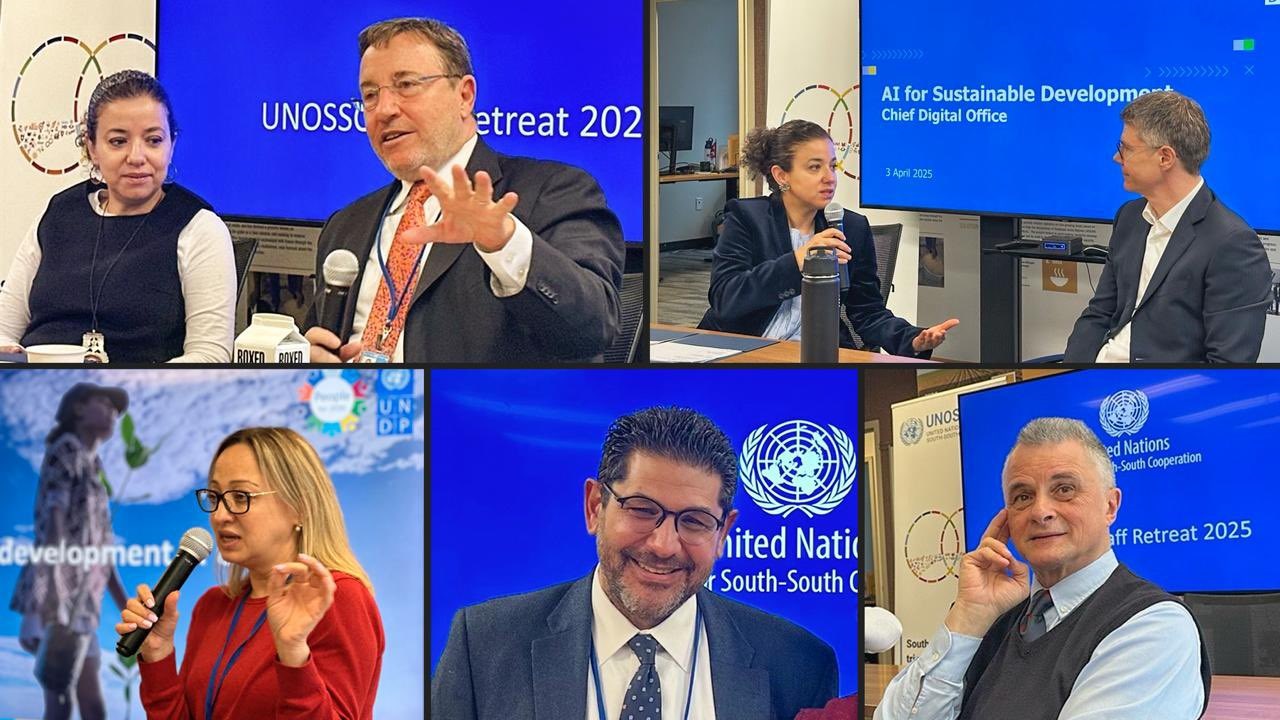
The retreat opened with powerful reflections from UNDP Administrator Achim Steiner and UNOSSC Director Dima Al-Khatib. The need for internal coherence and external credibility was emphasized, urging UNOSSC to clearly articulate its value proposition in a shifting landscape. Also highlighted was UNDP’s longstanding partnership with UNOSSC and the importance of aligning the new UNOSSC Strategic Framework with UNDP’s evolving vision.
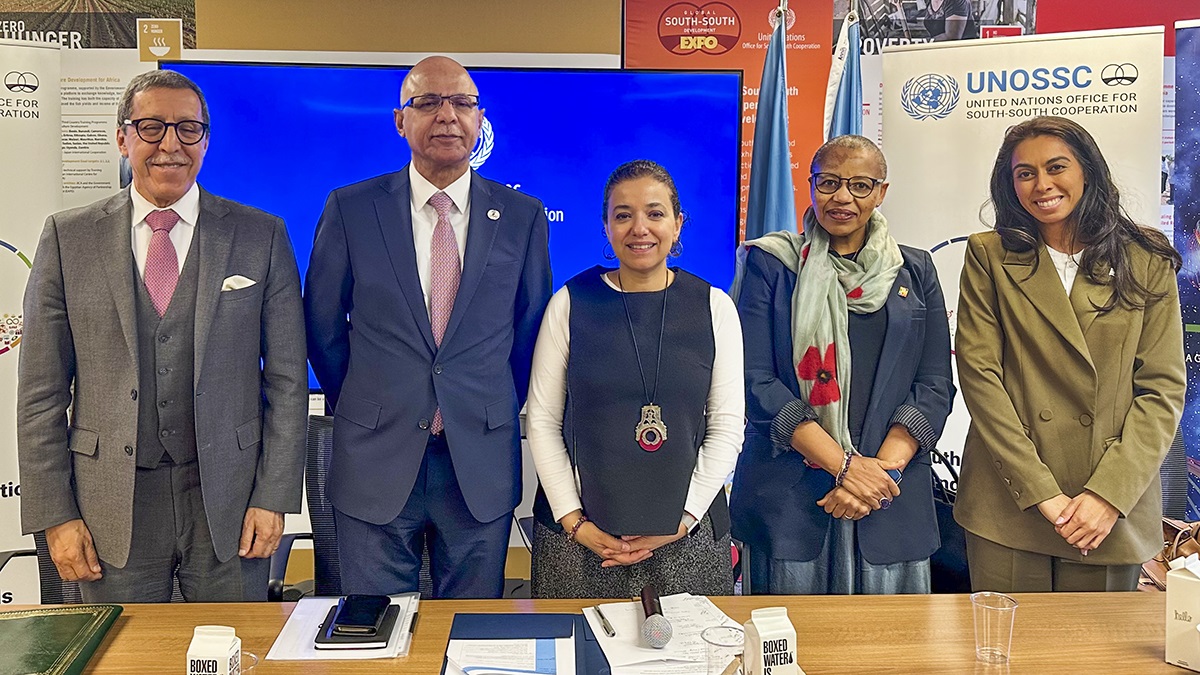
H.E. Mr. Omar Hilale, Permanent Representative of Morocco (Chair, LMG-MICs); H.E Dr. Abbas Obaid, Permanent Representative of Iraq (Chair, G77 and China); Ms. Dima Al-Khatib, UNOSSC Director; H.E. Ms. Mathu Joyini, Permanent Representative of South Africa (Chair, G20); and H.E. Ms. Ilana Victorya Seid, Permanent Representative of Palau (Chair, AOSIS).Member State Engagement: A Global South Dialogue
An interactive session with Permanent Representatives from Iraq (Chair, G77 and China), South Africa (Chair, G20), Morocco (Chair, LMG-MICs), and Palau (Chair, AOSIS) underscored the diversity and urgency of the Global South’s priorities. From calls for enhanced collaboration on science, AI, and trade, to requests for support in implementing regional frameworks like the Antigua and Barbuda Agenda for SIDS (ABAS), among others. Member States expressed strong ownership of the South-South and triangular cooperation agenda. They urged UNOSSC to scale up engagement with their constituencies and help bridge systemic divides, particularly in climate finance and AI inclusion.
Outlining Priorities and Designing for Impact: Strategic Framework Development
Led by consultant Andrew Russell, a brainstorming session challenged participants to rethink UNOSSC’s delivery and visibility. Key questions centered around the Office’s role in solving today’s challenges. Emphasis was placed on grounding UNOSSC’s value in its ability to enable real-world results, particularly by integrating South-South and triangular cooperation into national and regional plans, fostering co-creation, and enhancing support to emerging South-South partners.
The discussion also underscored the need to scale-up platforms like the Global South-South Development Expo, ensuring they serve as meaningful tools for knowledge exchange and innovation.
Future-Ready: Building Internal Capacity
Day two spotlighted staff development. A workshop on strategic messaging, led by communications expert Paul Van De Carr, provided tools for crafting compelling narratives around UNOSSC’s mission. Participants were encouraged to move away from overly technical jargon and focus instead on stories that connect emotionally and practically with diverse audiences – highlighting people, action, impact, and insight.
A session on digital transformation and AI, led by UNDP’s Chief Digital Officer Robert Opp, equipped staff with insights into how AI can serve as a development accelerator. Opportunities were identified for UNOSSC to play a leading role in equitable AI adoption through South-South collaboration, knowledge sharing, and capacity-building.
Finally, a session on career development led by UNDP’s OHR explored the evolving nature of talent management. Staff were introduced to the Talent Review process and the importance of proactive career navigation, cross-functional mobility, and lifelong learning.
Looking Ahead
The 2025 UNOSSC Staff Retreat reaffirmed the Office’s role as a thought leader in South-South and triangular cooperation, and catalyst for inclusive development cooperation. As the global development landscape continues to evolve, UNOSSC is poised to respond with agility, clarity, and renewed commitment to the partners it serves. The Strategic Framework now under development will reflect not only institutional aspirations, but the real and pressing needs of the Global South in achieving the 2030 Agenda.

 In a pivotal moment for international development, the United Nations Office for South-South Cooperation (UNOSSC) convened its 2025 Annual Staff Retreat from 2–3 April. Held at a time of profound global transformation, the retreat served as both a strategic milestone and a team-wide recommitment to advancing South-South and triangular cooperation.
Bringing together UNOSSC staff, Member State representatives, and strategic partners, the retreat focused on shaping the 2026-2029 UNOSSC Strategic Framework. With a global landscape increasingly defined by complex development challenges, constrained financing, and the urgent demand for inclusive multilateral solutions, the retreat provided a space for collective reflection and forward-thinking.
Setting the Strategic Agenda
Three primary objectives guided the retreat: aligning on UNOSSC’s future priorities, deepening Member State engagement, and strengthening internal capacities in advocacy, communication, and AI utilization.
The retreat opened with powerful reflections from UNDP Administrator Achim Steiner and UNOSSC Director Dima Al-Khatib. The need for internal coherence and external credibility was emphasized, urging UNOSSC to clearly articulate its value proposition in a shifting landscape. Also highlighted was UNDP’s longstanding partnership with UNOSSC and the importance of aligning the new UNOSSC Strategic Framework with UNDP’s evolving vision.
In a pivotal moment for international development, the United Nations Office for South-South Cooperation (UNOSSC) convened its 2025 Annual Staff Retreat from 2–3 April. Held at a time of profound global transformation, the retreat served as both a strategic milestone and a team-wide recommitment to advancing South-South and triangular cooperation.
Bringing together UNOSSC staff, Member State representatives, and strategic partners, the retreat focused on shaping the 2026-2029 UNOSSC Strategic Framework. With a global landscape increasingly defined by complex development challenges, constrained financing, and the urgent demand for inclusive multilateral solutions, the retreat provided a space for collective reflection and forward-thinking.
Setting the Strategic Agenda
Three primary objectives guided the retreat: aligning on UNOSSC’s future priorities, deepening Member State engagement, and strengthening internal capacities in advocacy, communication, and AI utilization.
The retreat opened with powerful reflections from UNDP Administrator Achim Steiner and UNOSSC Director Dima Al-Khatib. The need for internal coherence and external credibility was emphasized, urging UNOSSC to clearly articulate its value proposition in a shifting landscape. Also highlighted was UNDP’s longstanding partnership with UNOSSC and the importance of aligning the new UNOSSC Strategic Framework with UNDP’s evolving vision.
 Future-Ready: Building Internal Capacity
Day two spotlighted staff development. A workshop on strategic messaging, led by communications expert Paul Van De Carr, provided tools for crafting compelling narratives around UNOSSC’s mission. Participants were encouraged to move away from overly technical jargon and focus instead on stories that connect emotionally and practically with diverse audiences – highlighting people, action, impact, and insight.
A session on digital transformation and AI, led by UNDP’s Chief Digital Officer Robert Opp, equipped staff with insights into how AI can serve as a development accelerator. Opportunities were identified for UNOSSC to play a leading role in equitable AI adoption through South-South collaboration, knowledge sharing, and capacity-building.
Finally, a session on career development led by UNDP’s OHR explored the evolving nature of talent management. Staff were introduced to the Talent Review process and the importance of proactive career navigation, cross-functional mobility, and lifelong learning.
Looking Ahead
The 2025 UNOSSC Staff Retreat reaffirmed the Office’s role as a thought leader in South-South and triangular cooperation, and catalyst for inclusive development cooperation. As the global development landscape continues to evolve, UNOSSC is poised to respond with agility, clarity, and renewed commitment to the partners it serves. The Strategic Framework now under development will reflect not only institutional aspirations, but the real and pressing needs of the Global South in achieving the 2030 Agenda.
Future-Ready: Building Internal Capacity
Day two spotlighted staff development. A workshop on strategic messaging, led by communications expert Paul Van De Carr, provided tools for crafting compelling narratives around UNOSSC’s mission. Participants were encouraged to move away from overly technical jargon and focus instead on stories that connect emotionally and practically with diverse audiences – highlighting people, action, impact, and insight.
A session on digital transformation and AI, led by UNDP’s Chief Digital Officer Robert Opp, equipped staff with insights into how AI can serve as a development accelerator. Opportunities were identified for UNOSSC to play a leading role in equitable AI adoption through South-South collaboration, knowledge sharing, and capacity-building.
Finally, a session on career development led by UNDP’s OHR explored the evolving nature of talent management. Staff were introduced to the Talent Review process and the importance of proactive career navigation, cross-functional mobility, and lifelong learning.
Looking Ahead
The 2025 UNOSSC Staff Retreat reaffirmed the Office’s role as a thought leader in South-South and triangular cooperation, and catalyst for inclusive development cooperation. As the global development landscape continues to evolve, UNOSSC is poised to respond with agility, clarity, and renewed commitment to the partners it serves. The Strategic Framework now under development will reflect not only institutional aspirations, but the real and pressing needs of the Global South in achieving the 2030 Agenda.