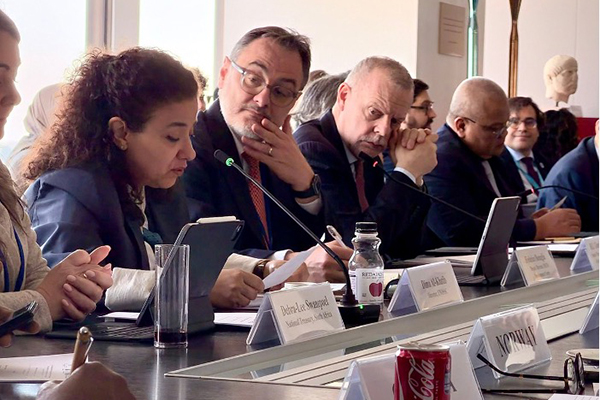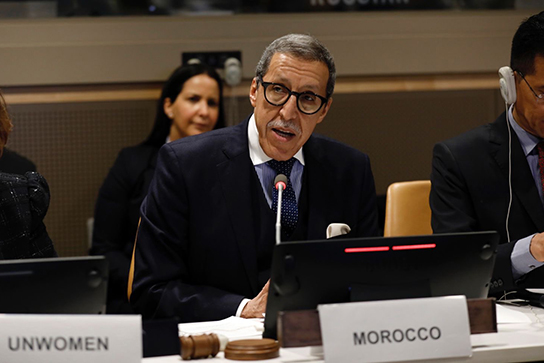
At a high-level side event on the margins of the 70th session of the Commission on the Status of Women (CSW70), hosted by the Permanent Mission of the Kingdom of Morocco to the United Nations, policymakers, United Nations entities, development partners and Member States came together to spotlight women’s central role in transforming food systems across the continent.
The discussion, chaired by Ambassador Omar Hilale, Permanent Representative of Morocco to the United Nations and President of the High-level Committee on South-South Cooperation, focused on the urgent need to place women at the centre of Africa’s food security agenda – not only as beneficiaries, but as leaders, producers, innovators and decision-makers.
Opening the event, Ambassador Hilale underscored both the scale of the challenge and the opportunity ahead. While Africa holds immense agricultural potential, including vast arable land and abundant solar resources, the continent continues to face hunger, food import dependence, climate shocks and structural inequalities that limit the productivity of smallholder farmers. Women, he stressed, are central to overcoming these barriers. “I’m convinced that women must remain at the center of policymaking, of designing solutions, and of shaping the future we aspire to,” he said.
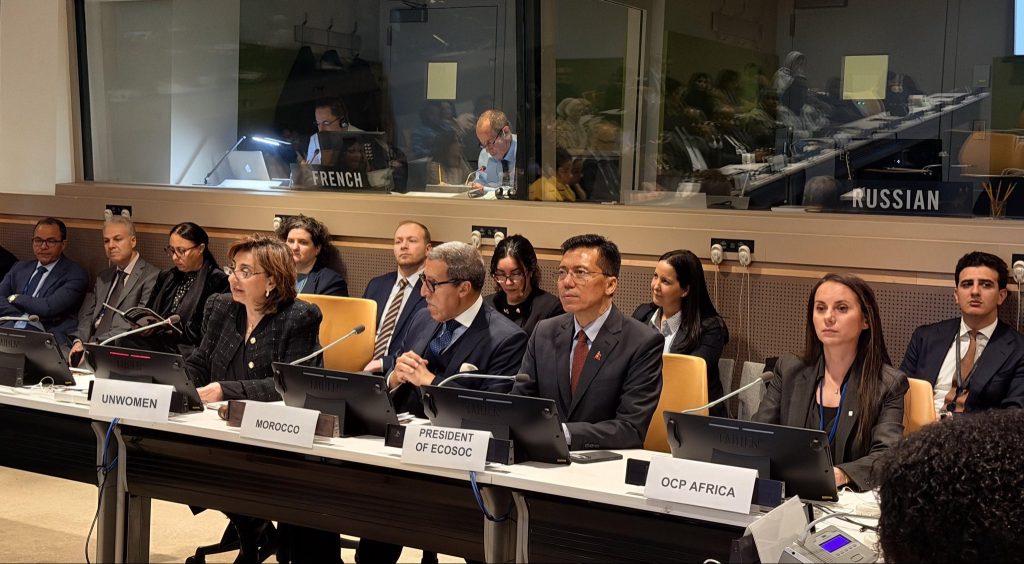
Across the discussion, speakers emphasized that women already form the backbone of Africa’s food systems. Yet they continue to face unequal access to land, finance, training, technologies, markets and social protection. These constraints not only undermine women’s rights and livelihoods, but also hold back broader progress on food security, resilience and sustainable development.
Dima Al-Khatib, Director of the United Nations Office for South-South Cooperation (UNOSSC), highlighted the stark inequity at the heart of the issue. “Women contribute about 50 per cent to global food production and up to 80 per cent in rural Africa,” she said. “Yet African women remain more food insecure than men, facing nearly a 27 per cent greater risk of hunger. This is not a paradox. It is inequity.”
The Director stressed that practical solutions already exist across the Global South – and that South-South and triangular cooperation offer powerful pathways to scale them.
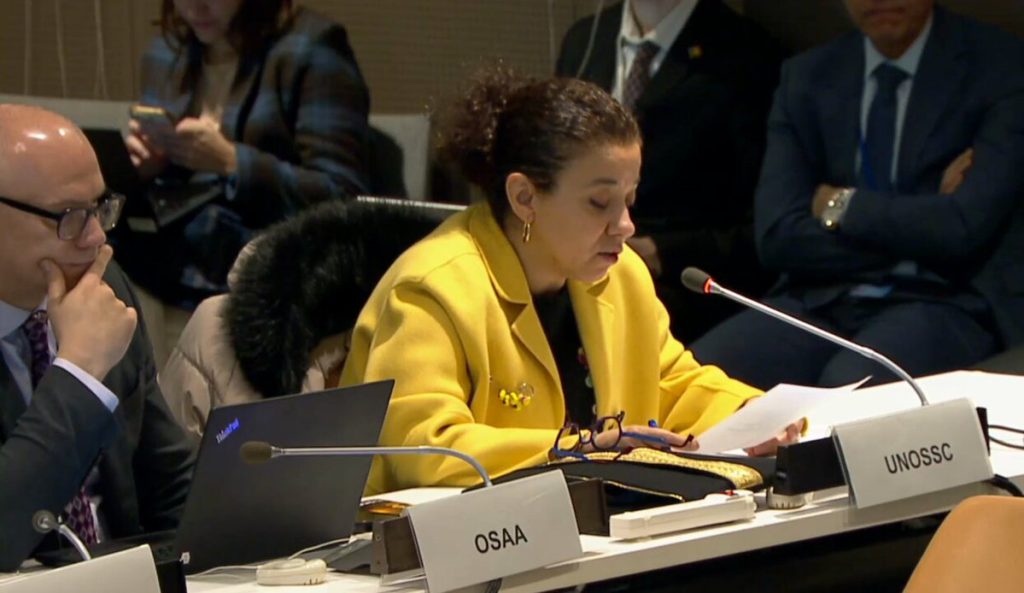
Drawing on examples supported through UNOSSC-managed trust funds, she pointed to initiatives in South Sudan, where women and youth are gaining irrigation systems, skills and market access; in The Gambia, where food processing training is reducing post-harvest losses and opening new agribusiness opportunities; in Liberia, where programmes are advancing gender-responsive governance; and in Gabon, where women-led cooperatives are being supported through cassava modernization projects.
“These are demonstrations of South-South cooperation,” Director Al-Khatib said, adding that the next step is to scale such efforts through stronger investment and enabling policies. “Women farmers are not asking for handouts. They are asking for fair access to opportunity, to finance, to technology and to markets.”
Other speakers reinforced this message by highlighting South-South cooperation as a practical means of adapting and scaling solutions across Africa.
UN Women pointed to the growing exchange of innovations among women smallholder farmers across regions, including climate-resilient techniques, digital tools and entrepreneurship models.
OCP Africa emphasized that African-led partnerships, knowledge-sharing and locally adapted solutions are essential to building productive and inclusive food systems. Its examples from Senegal and Morocco showed how training, entrepreneurship support and value-chain development can help women farmers move beyond subsistence and into stronger market participation.
Member States also underscored the importance of regional cooperation. Malawi highlighted its partnership with Morocco and OCP Africa to explore locally adapted fertilizer production tailored to national soil conditions.
Côte d’Ivoire described Morocco as a key agricultural cooperation partner and pointed to South-South cooperation as a means of opening new perspectives for agro-industrial development.
Kenya, Ethiopia and others stressed that stronger partnerships, targeted investment and shared learning are needed to remove the structural barriers women continue to face.
Participants from across the United Nations system, the World Bank and African institutions echoed the need for integrated action – linking gender equality, decent work, innovation, climate resilience and regional value chains. Several speakers also pointed to the importance of regional markets and peer learning, including through the African Continental Free Trade Area and broader South-South and triangular cooperation platforms.
The event reinforced a clear message: Africa’s food security transformation will depend on whether women are fully empowered to lead it. As Morocco and its partners highlighted throughout the discussion, when women farmers succeed, food systems grow stronger, communities become more resilient, and development outcomes become more inclusive and sustainable. South-South cooperation, many speakers made clear, is a practical pathway through which African countries and partners can share solutions, build capacity and accelerate change at scale.