
PROJECT PERIOD:2020-05-01
-2030-12-30
South-South cooperation is increasingly important for sustainable development, but historically global development debates have leaned exclusively on data from developed countries and multilateral organizations. The Addis Ababa Action Agenda (A/69/313) approached South-South cooperation as an important element of international cooperation for development as a complement to, not a substitute for North-South cooperation. However, data on South-South cooperation was never reported to SDG indicators due to the lack of agreed measures. It is the only form of development cooperation lacking systematic data. Without reliable data on South-South cooperation, the picture of international development cooperation remains incomplete, and the powerful force to pool resources and share knowledge, skills and technologies lacks visibility. It also hampers its strategic management and the effective allocation of financing for development and in-kind flows to achieve sustainable development.
The initiative aims to make South-South cooperation visible and measurable by operationalizing SDG indicator 17.3.1 and applying the voluntary Conceptual Framework to Measure South-South Cooperation. This responds to the challenge of fragmented and insufficient data on development flows among Global South countries. By enabling countries to collect, report, and analyze data, the initiative strengthens evidence-based policymaking and transparency, directly contributing to SDG 17 (Partnerships for the Goals) and indirectly supporting resource mobilization for other SDGs.
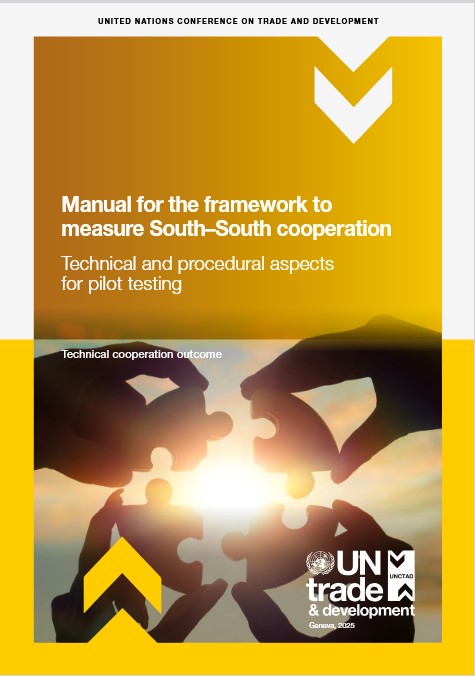
To achieve this, the initiative adopted a multi-pronged approach combining methodological development, capacity-building, and peer learning. UNCTAD, in collaboration with pioneering countries, UNOSSC, and UN Regional Commissions, supports developing economies in collecting South-South data for national policy and SDGs. It has developed tools and guidance, including the Manual for the Framework[1] and an e-learning course to assist countries in data collection and reporting.
The process was highly participatory. A group of Global South countries—chaired by India and including Brazil, China, Colombia, Cuba, Egypt, Ghana, Mexico, South Africa, and Tanzania—collaboratively developed the voluntary Framework. Countries invited UNCTAD to act as Secretariat, ensuring coordination and technical support. The initiative also enabled knowledge exchange by creating platforms for collaboration and technical assistance. For instance, experts from Brazil and Mexico supported Nigeria in establishing inter-agency collaboration for data collection and sharing. These efforts fostered mutual learning and capacity strengthening, supporting countries overcome transnational challenges such as the lack of standardized data on development finance.
Tangible outcomes have been achieved toward multiple SDG targets. Nine[2] countries have submitted preliminary data, and five[3] others are pilot testing the methodology globally with UN support, validating the process for broader application. Reported data reveal that non-financial modalities—such as scholarships, humanitarian assistance, technical cooperation, and in-kind contributions like expert deployment and donated goods—dominate South-South exchanges. This highlights the unique, non-monetary value of South-South partnerships rooted in solidarity and global development efforts. Reported activities contribute to a wide range of SDGs, primarily SDG 4 (Quality Education), SDG 9 (Industry, Innovation, and Infrastructure), and SDG 8 (Decent Work and Economic Growth), followed by SDG 17 and SDG 3 (Good Health and Well-being). Indirect contributions include SDG 16 (Peace, Justice, and Strong Institutions), SDG 2 (Zero Hunger), SDG 11 (Sustainable Cities and Communities), and SDG 1 (No Poverty). This diversity demonstrates the systemic impact of South-South cooperation and its potential to address transnational development challenges through tailored, innovative approaches.
The good practice was innovative because it was designed and led by Global South countries, reversing the traditional top-down model and ensuring contextual relevance. The Framework introduces a breakthrough by capturing in-kind contributions overlooked in conventional development finance metrics providing a more accurate and inclusive representation of South-South cooperation. Innovation also lies in the horizontal cooperation model: pioneering countries like Brazil, Colombia, and Mexico actively support pilot countries through experience sharing and technical assistance, fostering peer-to-peer learning rather than dependency, while UNCTAD facilitates global training and offers tools tested regionally and applicable globally. Additionally, the initiative leverages technology by developing new data sources and tools, including online reporting platforms, to streamline collection and enhance accessibility.
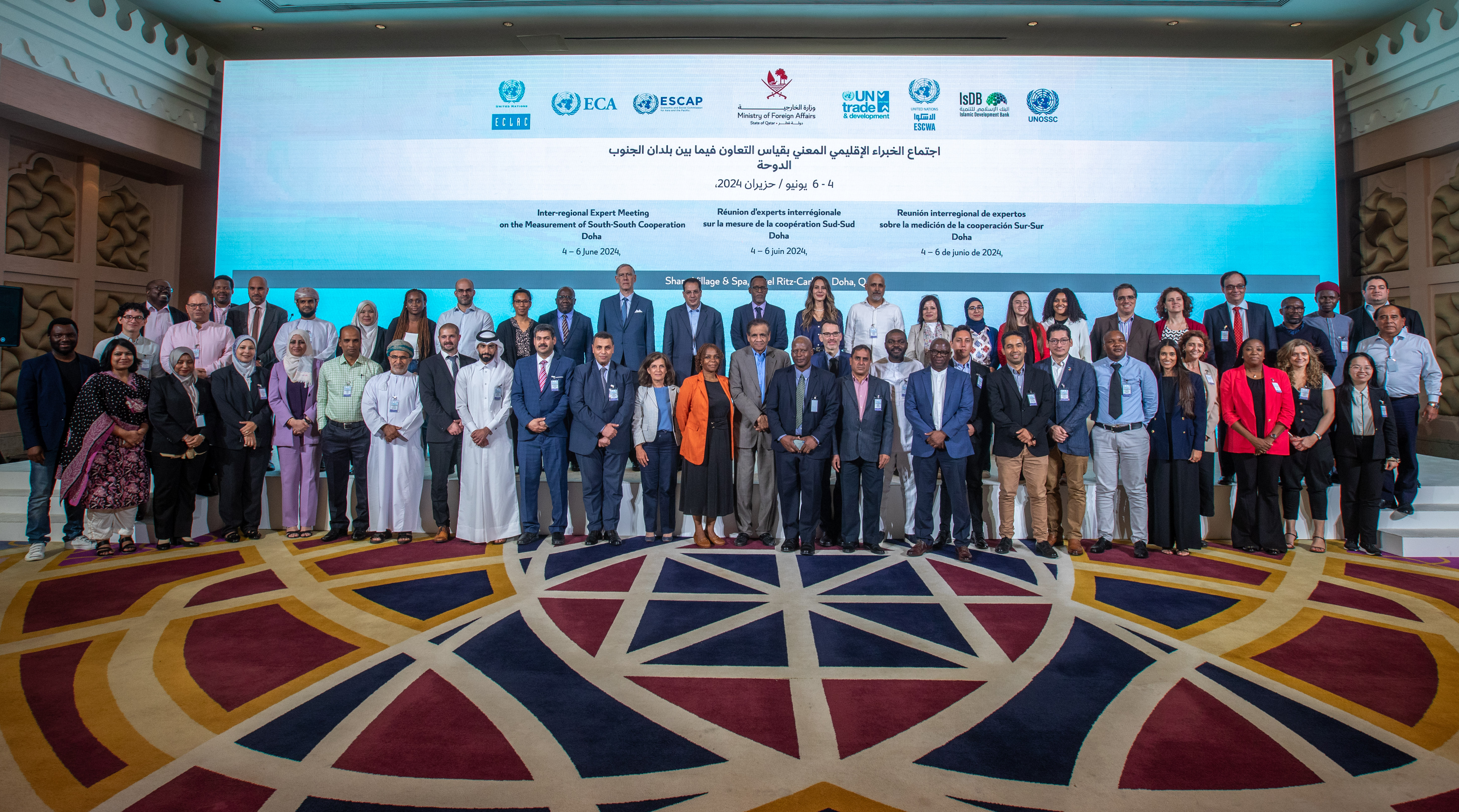
It shows strong sustainability prospects due to growing global demand and institutional endorsement. A 2023 UNCTAD survey revealed that over 60 member States requested technical training, methodological materials, advisory support, and exchange platforms—indicating broad commitment to capacity-building. In June 2024, nearly 70 member States at the Doha meeting called for harmonized tools for data collection, analysis, and reporting, as well as mechanisms for global data reporting and national system development reinforcing the initiative’s relevance.
Policy impact is evident: in 2025, the 22nd session of the High-Level Committee on South-South Cooperation welcomed the Manual for the Framework and encouraged its refinement and wider application. The fourth Conference on Financing for Development in Sevilla recognized UNCTAD’s coordinating role, and the 79th and 80th sessions of the General Assembly requested UNCTAD to strengthen support to countries, ensuring institutional backing, regional integration, and long-term sustainability.
The initiative is highly replicable due to its country-led design, peer-learning model, and flexible, inclusive approach. The Framework was developed and tested across multiple regions to capture diverse modalities of South-South cooperation, ensuring adaptability to different contexts. And to ensure sustainability and institutionalization, countries can integrate South-South cooperation data collection into national development planning and SDG monitoring systems. The initiative demonstrates how Southern-led innovation, supported by global collaboration, can be scaled and adapted to similar contexts. By building countries’ capacity to collect and report data for multiple purposes creates a self-sustaining system effective over the medium and long term, in addition to the launch of an e-learning course providing a long-term training platform.
The initiative showed that a globally agreed, voluntary, and flexible Framework fosters trust and engagement, while country-led design ensures ownership and sustainability. Peer learning and horizontal cooperation proved effective for capacity-building, and early results highlighted the need for tailored approaches to measure non-financial contributions. Harmonized tools and technical support are essential to overcome capacity gaps, and cross-agency collaboration strengthens data collection. Voluntary participation encourages inclusivity, while global facilitation by UNCTAD adds credibility. Growing demand and visibility at intergovernmental fora signal strong potential for scaling and long-term impact.
[1] https://unctad.org/publication/manual-framework-measure-south-south-cooperation
[2] Argentina, Brazil, Chile, Colombia, Dominican Republic, Ecuador, Mexico, Peru and Uruguay
[3] Jordan, Kazakhstan, Namibia, Nigeria and Qatar
Stay updated with the latest trends in South-South cooperation and access our vast repository of knowledge.
Copyright © UNOSSC/UNDP
