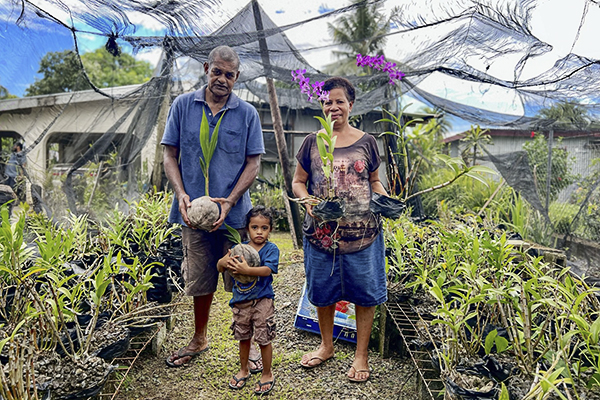
Fiji’s Ministry of Economy partnered with UN Capital Development Fund in 2020 on a pilot project aimed at providing parametric insurance to smallholder farmers to cushion them from the financial shocks caused by the cyclical nature of the region’s cyclones and other natural disasters. The defining feature of parametric insurance is that it pays out a previously agreed amount when a specific event occurs.
Funded by the India-UN Partnership Development Fund, the pilot phase of this project – the first parametric insurance offered in the region – insured 1,246 smallholder farmers by end of the project in 2021.ased on that success, the partners have now launched a second phase of the project so as to expand the number of farmers covered.
Unlike indemnity-based insurance, parametric insurance is event specific and offers a quick pay out on claims, often within as little as seven days, allowing the farmers to begin recovery immediately. It enables insurance to reach even remote communities that would otherwise be quite costly to insure based on verifications of damage, rather than on pre-determined weather events occurring.
“The Fiji Government understands the urgent need for innovative solutions to safeguard vulnerable segments of our communities such as women, persons with disabilities, smallholder farmers and our social welfare recipients, against the escalating threats posed by climate change,” said Professor Professor Biman Prasad, Deputy Prime Minister and Minister for Finance, Strategic Planning, National Development and Statistics, at the launch event held on 30 October 2023.
“To further ease the burden on vulnerable segments, the Government has retained the policy of keeping the premiums on all climate and disaster risk parametric insurance products VAT-free,” he continued. “This is expected to provide financial relief to these households and increase access to the product. In addition, as a government, we have set a target to include a minimum of 2,000 social welfare recipients under this scheme to broaden the safety net and build resilience across the country.”
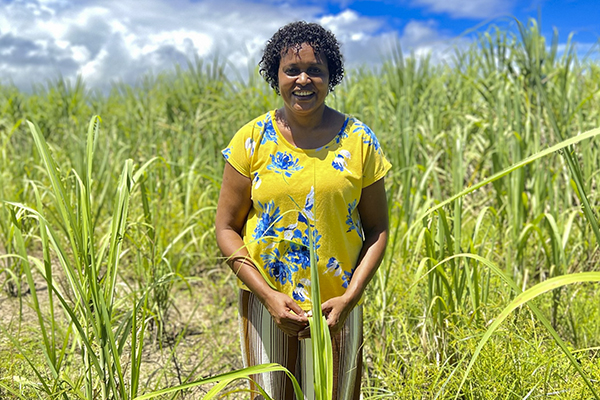
A project participant on her farm. ©UNCDF