The United Nations Fund for South-South Cooperation (UNFSSC), established by the General Assembly in 1996, has been instrumental in fostering collaboration among developing nations to achieve the Sustainable Development Goals (SDGs).
Administered by UNOSSC, following UNDP rules and regulations, and UNSDG guidelines for interagency collaboration, $50+ Million USD has been pledged to the UNFSSC from China, Republic of Korea, Russia, Qatar, UAE, Turkey, Thailand, Colombia, Japan, Norway, Nigeria, and Portugal among others. Additionally, the UNFSSC has built synergies with all Funds managed by UNOSSC, including the India-UN Development Partnership Fund as a sub-fund of UNFSSC; the India, Brazil and South Africa (IBSA) Fund; and the Perez-Guerrero Trust Fund (PGTF) of G77+China.
Within the UNFSSC framework, the Global South-South Development Center Project (2019-2024) was launched with full funding support from the Government of China. The GSSDC Project leverages the extensive expertise of 50 technical institutions under the China South-South Cooperation Network in supporting pragmatic South-South cooperation initiatives for developing countries.
“Building on past results, the Global South-South Development Center (GSSDC) Programme aims to deepen its impact in a new phase leading up to 2030, through enhanced partnership with UN Agencies and scalable initiatives with multilateral, regional and sub-regional mechanisms,” said Ms. Xiaojun Grace Wang, Trust Fund Director of UNOSSC. Ms. Wang conducted a series of trust fund and programme stakeholders’ consultations with UN Country Teams and key partners in Bangkok and Beijing in January 2024. Partners anticipate that the new phase will launch strategic initiatives spanning from food systems, new industrialization, to energy transition, focusing on women, youth, digital and green transformation.
South-South Cooperation Cities Project Final Review and GSSDC Project Next Phase Design
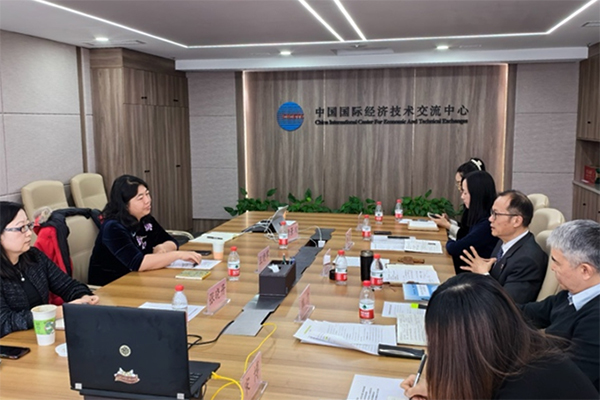
On 25 January 2024, UNOSSC and China International Center for Economic and Technical Exchanges (CICETE) held the South-South Cooperation Cities Project final review workshop and the China South-South Cooperation Network member institutions consultation to shape the next phase of GSSDC Project.
Key results of the Cities Project, recommendations from the joint Mid-Term Review (MTR), and management actions were reviewed and discussed towards the combination of the two project initiatives in the next phase of GSSDC, following a portfolio management approach.
Consultation with UNCT in China
On 26 January, a subsequent consultation brought together representatives of UNOSSC and more than 10 UNCT entities – including UNRCO, UNDP, WFP, UNAIDS, UNEP, WHO, UNV, UNWOMEN, IFAD, UNICEF, FAO, UNFPA and ILO. Discussions with UN Results Group on Partnerships in China centered on strategic focuses and synergies with the UNFSSC, which has engaged more than 20 UN agencies in joint projects and pilots across various developing countries.
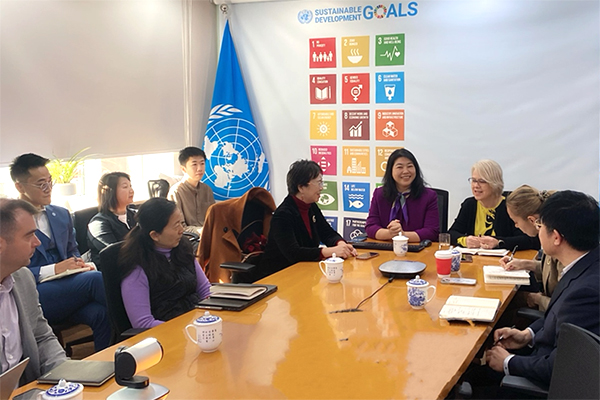 During the meeting with UNRCO China, the UN Resident Coordinator (UN RC) highlighted the importance of the Public-Private Partnership (PPP) modality in providing technical assistance at the country level, particularly in addressing poverty resulting from capacity limitations in many African countries. Given changes in local governments, support from UNCTs in recipient countries is essential to coordinate new cooperation efforts.
UNRCO China expressed keen interest in updating UNOSSC on the progress of the China-Africa-UN Transformative Partnerships Initiative (TPI) and exploring possible collaboration under UNFSSC on systematic mechanisms as well as specific project initiatives.
In meeting with the UNDP Resident Representative in China, UNOSSC introduced the funds and programmes, especially the PGTF projects, and GSSDC and Cities projects with support from China. UNOSSC also introduced the potential scope and collaboration opportunities of the next phase GSSDC project and welcomed concrete joint pilot initiatives with UNDP.
The meeting with WFP China Centre of Excellence (CoE) reviewed the results of two pilot initiatives conducted with WFP. The Director of WFP China CoE highlighted the importance of South-South cooperation in extending beyond demonstrative pilots or capacity building initiatives, to encompass entire value chain development. He emphasized the integration of South-South cooperation with the Belt and Road Initiative (BRI) to drive industries, equipment, and investments outward.
Think Tanks Consultations and Dialogue on Opportunities and Challenges for the Global South
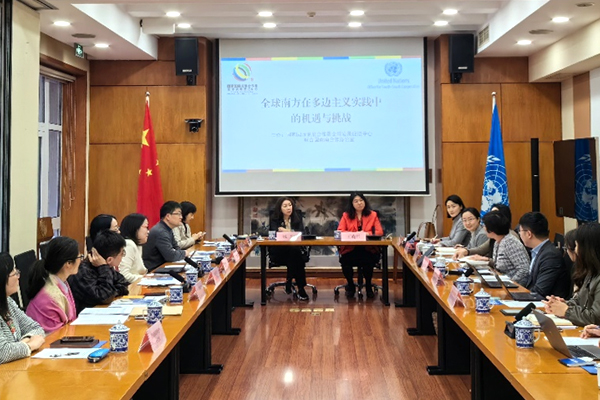
On 30 January, UNOSSC and Global Development Promotion Center (GDPC) of China International Development Cooperation Agency (CIDCA) jointly organized a consultation dialogue on “Opportunities and Challenges for Global South in the Practice of Multilateralism” in Beijing.
More than 15 representatives from CIDCA, CIKD/DRC, China Institute of International Studies, China Academy of International Trade and Economic Cooperation under MOFCOM, Institute of World Economics and Politics, Chinese Academy of Social Sciences, China Agricultural University, Renmin University of China, UNDP, and UNRCO participated in the consultation workshop, jointly chaired by CIDCA and UNOSSC.
During the meeting with UNRCO China, the UN Resident Coordinator (UN RC) highlighted the importance of the Public-Private Partnership (PPP) modality in providing technical assistance at the country level, particularly in addressing poverty resulting from capacity limitations in many African countries. Given changes in local governments, support from UNCTs in recipient countries is essential to coordinate new cooperation efforts.
UNRCO China expressed keen interest in updating UNOSSC on the progress of the China-Africa-UN Transformative Partnerships Initiative (TPI) and exploring possible collaboration under UNFSSC on systematic mechanisms as well as specific project initiatives.
In meeting with the UNDP Resident Representative in China, UNOSSC introduced the funds and programmes, especially the PGTF projects, and GSSDC and Cities projects with support from China. UNOSSC also introduced the potential scope and collaboration opportunities of the next phase GSSDC project and welcomed concrete joint pilot initiatives with UNDP.
The meeting with WFP China Centre of Excellence (CoE) reviewed the results of two pilot initiatives conducted with WFP. The Director of WFP China CoE highlighted the importance of South-South cooperation in extending beyond demonstrative pilots or capacity building initiatives, to encompass entire value chain development. He emphasized the integration of South-South cooperation with the Belt and Road Initiative (BRI) to drive industries, equipment, and investments outward.
Think Tanks Consultations and Dialogue on Opportunities and Challenges for the Global South
On 30 January, UNOSSC and Global Development Promotion Center (GDPC) of China International Development Cooperation Agency (CIDCA) jointly organized a consultation dialogue on “Opportunities and Challenges for Global South in the Practice of Multilateralism” in Beijing.
More than 15 representatives from CIDCA, CIKD/DRC, China Institute of International Studies, China Academy of International Trade and Economic Cooperation under MOFCOM, Institute of World Economics and Politics, Chinese Academy of Social Sciences, China Agricultural University, Renmin University of China, UNDP, and UNRCO participated in the consultation workshop, jointly chaired by CIDCA and UNOSSC.
 Representatives highlighted the rapidly evolving global landscape. Concerns were raised over setbacks experienced by the world in achieving the SDGs, and challenges faced by developing countries, including crosscutting issues like food security and energy shortages.
Participants emphasized the importance of leveraging multilateral mechanisms to share Southern perspectives and knowledge, focusing on pragmatic cooperation at regional and sub-regional levels. They stressed the need for developing countries to seize digital opportunities and foster cooperation synergies to enhance value chain development, and promote a stronger, greener, and healthier global development.
Strengthening human resources and capacities was highlighted as a vital long-term strategy for advancing global development and South-South cooperation. Suggestions included accelerating and deepening cooperation systems, with a focus on strengthening global development disciplines and curriculum design in academic education.
The meeting also included discussions on the theme and design of the second high-level meeting of the Global Shared Development Action Forum scheduled for late June 2024, with UNOSSC invited to participate.
At the consultation meeting with the Administrative Center for China’s Agenda 21 (ACCA21), under the Ministry of Science and Technology, Ministry of Emergency Management and Ministry of Water Resources, UNOSSC expressed keen interest in collaborating with public technical institutions to undertake more demonstration projects, through projects like GSSDC, focusing on key priorities of developing countries including the STI as put forward in outcome documents of the Third South Summit, and the Havana Declaration of the Group of 77 and China.
The National Disaster Reduction Center of China (NDRCC) also joined the meeting. The NDRCC worked closely with UN agencies, particularly under the UNOSSC Cities project, providing technical support for disaster risk governance in the city of Tripoli and implementing disaster reduction projects in other parts of Lebanon, Bangladesh, and Nepal.
Representatives highlighted the rapidly evolving global landscape. Concerns were raised over setbacks experienced by the world in achieving the SDGs, and challenges faced by developing countries, including crosscutting issues like food security and energy shortages.
Participants emphasized the importance of leveraging multilateral mechanisms to share Southern perspectives and knowledge, focusing on pragmatic cooperation at regional and sub-regional levels. They stressed the need for developing countries to seize digital opportunities and foster cooperation synergies to enhance value chain development, and promote a stronger, greener, and healthier global development.
Strengthening human resources and capacities was highlighted as a vital long-term strategy for advancing global development and South-South cooperation. Suggestions included accelerating and deepening cooperation systems, with a focus on strengthening global development disciplines and curriculum design in academic education.
The meeting also included discussions on the theme and design of the second high-level meeting of the Global Shared Development Action Forum scheduled for late June 2024, with UNOSSC invited to participate.
At the consultation meeting with the Administrative Center for China’s Agenda 21 (ACCA21), under the Ministry of Science and Technology, Ministry of Emergency Management and Ministry of Water Resources, UNOSSC expressed keen interest in collaborating with public technical institutions to undertake more demonstration projects, through projects like GSSDC, focusing on key priorities of developing countries including the STI as put forward in outcome documents of the Third South Summit, and the Havana Declaration of the Group of 77 and China.
The National Disaster Reduction Center of China (NDRCC) also joined the meeting. The NDRCC worked closely with UN agencies, particularly under the UNOSSC Cities project, providing technical support for disaster risk governance in the city of Tripoli and implementing disaster reduction projects in other parts of Lebanon, Bangladesh, and Nepal.
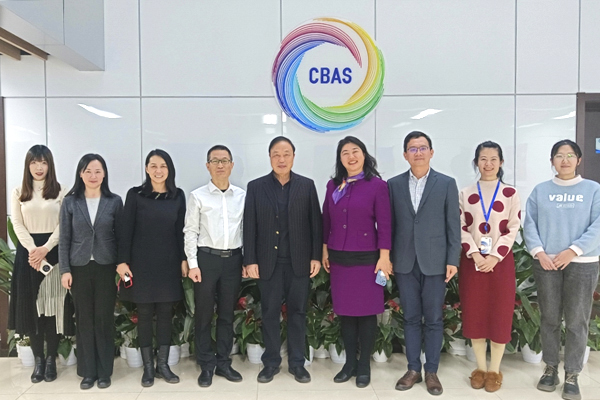 On 29 January, a meeting with International Research Center of Big Data for Sustainable Development Goals (CBAS) centered on advancing digitalization and big data applications for sustainable development.
In the new phase, UNOSSC and CBAS can explore collaborations in capacity building for big data applications in developing countries. Utilizing SDG satellite data in practical development projects can also be considered for relevant initiatives under the GSSDC project, particularly in regional or sub-regional initiatives involving mountains, rivers, lakes, oceans, and deserts. These collaborations aim to encourage greater participation in big data applications for SDGs among developing countries.
On 29 January, a meeting with International Research Center of Big Data for Sustainable Development Goals (CBAS) centered on advancing digitalization and big data applications for sustainable development.
In the new phase, UNOSSC and CBAS can explore collaborations in capacity building for big data applications in developing countries. Utilizing SDG satellite data in practical development projects can also be considered for relevant initiatives under the GSSDC project, particularly in regional or sub-regional initiatives involving mountains, rivers, lakes, oceans, and deserts. These collaborations aim to encourage greater participation in big data applications for SDGs among developing countries.
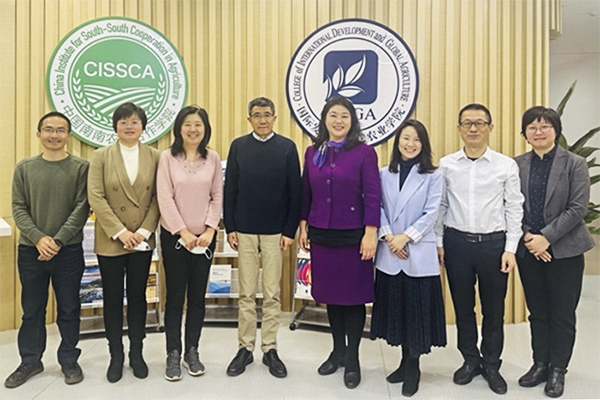 In parallel, meetings with the department of International Development Cooperation and Institute of New Structural Economics (INSE) at Peking University, as well as the College of International Development and Global Agriculture at China Agricultural University (CAU), delved into specific thematic areas for collaboration. Discussions revolved around technology cooperation, capacity building, and sustainable agricultural development, with an emphasis on sustainable industrial zone development and addressing the shortage of rural management talents.
Overall, the engagements underscored a shared commitment to leveraging expertise, resources, and partnerships to drive sustainable development and enhance South-South cooperation efforts. Through collaborative initiatives and knowledge-sharing endeavors, stakeholders aim to make meaningful strides towards realizing a more equitable and prosperous future for all.
In parallel, meetings with the department of International Development Cooperation and Institute of New Structural Economics (INSE) at Peking University, as well as the College of International Development and Global Agriculture at China Agricultural University (CAU), delved into specific thematic areas for collaboration. Discussions revolved around technology cooperation, capacity building, and sustainable agricultural development, with an emphasis on sustainable industrial zone development and addressing the shortage of rural management talents.
Overall, the engagements underscored a shared commitment to leveraging expertise, resources, and partnerships to drive sustainable development and enhance South-South cooperation efforts. Through collaborative initiatives and knowledge-sharing endeavors, stakeholders aim to make meaningful strides towards realizing a more equitable and prosperous future for all.
During the meeting with UNRCO China, the UN Resident Coordinator (UN RC) highlighted the importance of the Public-Private Partnership (PPP) modality in providing technical assistance at the country level, particularly in addressing poverty resulting from capacity limitations in many African countries. Given changes in local governments, support from UNCTs in recipient countries is essential to coordinate new cooperation efforts.
UNRCO China expressed keen interest in updating UNOSSC on the progress of the China-Africa-UN Transformative Partnerships Initiative (TPI) and exploring possible collaboration under UNFSSC on systematic mechanisms as well as specific project initiatives.
In meeting with the UNDP Resident Representative in China, UNOSSC introduced the funds and programmes, especially the PGTF projects, and GSSDC and Cities projects with support from China. UNOSSC also introduced the potential scope and collaboration opportunities of the next phase GSSDC project and welcomed concrete joint pilot initiatives with UNDP.
The meeting with WFP China Centre of Excellence (CoE) reviewed the results of two pilot initiatives conducted with WFP. The Director of WFP China CoE highlighted the importance of South-South cooperation in extending beyond demonstrative pilots or capacity building initiatives, to encompass entire value chain development. He emphasized the integration of South-South cooperation with the Belt and Road Initiative (BRI) to drive industries, equipment, and investments outward.
Think Tanks Consultations and Dialogue on Opportunities and Challenges for the Global South
On 30 January, UNOSSC and Global Development Promotion Center (GDPC) of China International Development Cooperation Agency (CIDCA) jointly organized a consultation dialogue on “Opportunities and Challenges for Global South in the Practice of Multilateralism” in Beijing.
More than 15 representatives from CIDCA, CIKD/DRC, China Institute of International Studies, China Academy of International Trade and Economic Cooperation under MOFCOM, Institute of World Economics and Politics, Chinese Academy of Social Sciences, China Agricultural University, Renmin University of China, UNDP, and UNRCO participated in the consultation workshop, jointly chaired by CIDCA and UNOSSC.
Representatives highlighted the rapidly evolving global landscape. Concerns were raised over setbacks experienced by the world in achieving the SDGs, and challenges faced by developing countries, including crosscutting issues like food security and energy shortages.
Participants emphasized the importance of leveraging multilateral mechanisms to share Southern perspectives and knowledge, focusing on pragmatic cooperation at regional and sub-regional levels. They stressed the need for developing countries to seize digital opportunities and foster cooperation synergies to enhance value chain development, and promote a stronger, greener, and healthier global development.
Strengthening human resources and capacities was highlighted as a vital long-term strategy for advancing global development and South-South cooperation. Suggestions included accelerating and deepening cooperation systems, with a focus on strengthening global development disciplines and curriculum design in academic education.
The meeting also included discussions on the theme and design of the second high-level meeting of the Global Shared Development Action Forum scheduled for late June 2024, with UNOSSC invited to participate.
At the consultation meeting with the Administrative Center for China’s Agenda 21 (ACCA21), under the Ministry of Science and Technology, Ministry of Emergency Management and Ministry of Water Resources, UNOSSC expressed keen interest in collaborating with public technical institutions to undertake more demonstration projects, through projects like GSSDC, focusing on key priorities of developing countries including the STI as put forward in outcome documents of the Third South Summit, and the Havana Declaration of the Group of 77 and China.
The National Disaster Reduction Center of China (NDRCC) also joined the meeting. The NDRCC worked closely with UN agencies, particularly under the UNOSSC Cities project, providing technical support for disaster risk governance in the city of Tripoli and implementing disaster reduction projects in other parts of Lebanon, Bangladesh, and Nepal.
On 29 January, a meeting with International Research Center of Big Data for Sustainable Development Goals (CBAS) centered on advancing digitalization and big data applications for sustainable development.
In the new phase, UNOSSC and CBAS can explore collaborations in capacity building for big data applications in developing countries. Utilizing SDG satellite data in practical development projects can also be considered for relevant initiatives under the GSSDC project, particularly in regional or sub-regional initiatives involving mountains, rivers, lakes, oceans, and deserts. These collaborations aim to encourage greater participation in big data applications for SDGs among developing countries.
In parallel, meetings with the department of International Development Cooperation and Institute of New Structural Economics (INSE) at Peking University, as well as the College of International Development and Global Agriculture at China Agricultural University (CAU), delved into specific thematic areas for collaboration. Discussions revolved around technology cooperation, capacity building, and sustainable agricultural development, with an emphasis on sustainable industrial zone development and addressing the shortage of rural management talents.
Overall, the engagements underscored a shared commitment to leveraging expertise, resources, and partnerships to drive sustainable development and enhance South-South cooperation efforts. Through collaborative initiatives and knowledge-sharing endeavors, stakeholders aim to make meaningful strides towards realizing a more equitable and prosperous future for all.