The ninth annual Multi-Stakeholder Forum on Science, Technology, and Innovation for the Sustainable Development Goals (STI Forum), held from May 9 -10, 2024, centered around the theme: ‘Science, Technology, and Innovation for Reinforcing the 2030 Agenda and Eradicating Poverty in Times of Multiple Crises: The Effective Delivery of Sustainable, Resilient, and Innovative Solutions.’
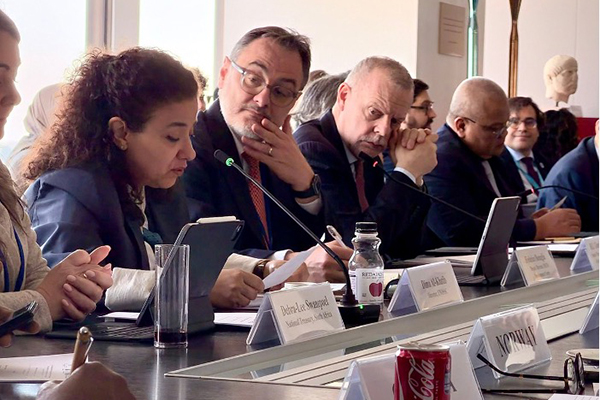
The fifth session of the Forum focused on harnessing the power of digital innovation for sustainable peace and resilience in the context of climate change (SDG 16). This session focused on promoting peaceful and inclusive societies, providing access to justice for all, and building effective, accountable, and inclusive institutions at all levels. The session also highlighted new opportunities and assessed their related social, environmental, and ethical challenges.
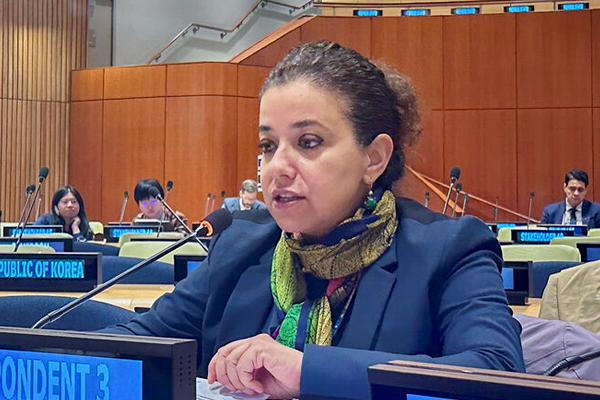
“We have science and technology to address development challenges, however capacities to leverage them remain uneven,” said UNOSSC Director Dima Al-Khatib at the STI Forum session on harnessing digital innovation for sustainable peace and resilience in the context of climate change. “Unrest, violence, and conflict continue, exacerbated by an increasing number and magnitude of climate-related disasters.”
Building the peaceful and inclusive societies envisioned in the 2030 Agenda is a daunting and urgent challenge. Unrest, violence, and conflict continue, are exacerbated by an increasing number and magnitude of climate-related disasters.
“In the Global South, we see these interlocking challenges play out with particular sense of urgency,” said the Director.
At the same time however, breakthrough solutions are also emerging from the Global South, and the UNOSSC Director, in her remarks, shared how these solutions are helping countries address development challenges. For example, South-South and triangular cooperation are being leveraged through the South-South University Cooperation Network (SUCN)’s “Greening Higher Education” project, under the Global South-South Development Centre programme. This project, undertaken in collaboration with the Chinese government and managed by UNOSSC, is boosting youth involvement and leadership in science, technology, and innovation to expedite progress towards the Sustainable Development Goals globally.
The Director called for greater collaboration particularly at the regional level to help address transborder challenges, to address the uneven capacities in leveraging STI and, to foster local STI capabilities, paving the way for transformative development strategies leading up to 2030.
The fifth session of the Forum was chaired by H.E. Christina Markus Lassen, Ambassador and Permanent Representative of Denmark to the United Nations, Co-Chair of the 2024 STI Forum. It brought together high-level speakers from the private sector and research institutes in the climate and STI sectors from different countries. Joining the UNOSSC Director as a high-level respondent during the session was Prof. Guo Huadong, Director General, International Research Center of Big Data for the SDGs (CBAS).
The Multi-Stakeholder Forum on Science, Technology, and Innovation for the Sustainable Development Goals is an annual event, and was convened by the President of ECOSOC, H.E. Paula Narváez; UN DESA; UNCTAD; and the UN Group of Ten High-level Representatives of Civil Society, Private Sector and Scientific Community to Promote Science, Technology, and Innovation for the SDGs appointed by the Secretary-General. The Forum was organized by the UN interagency task team on STI for the SDGs (IATT).