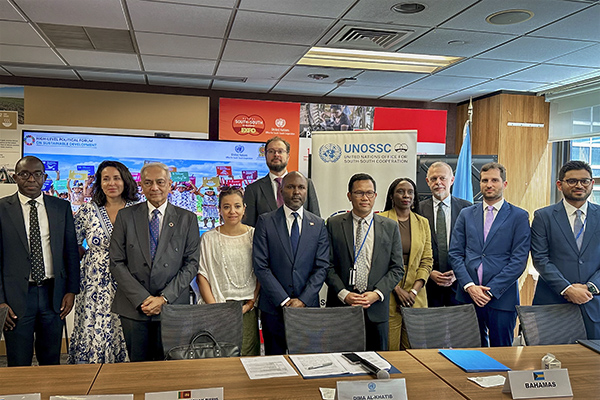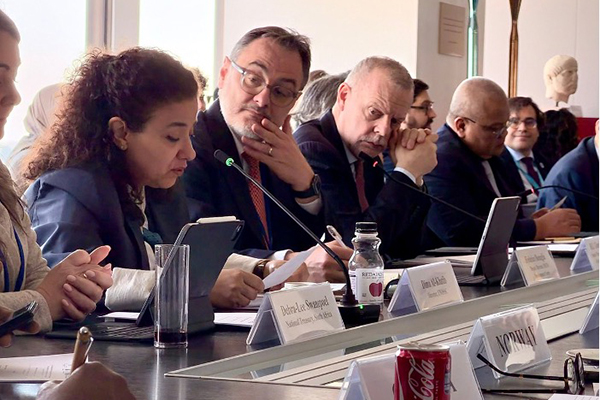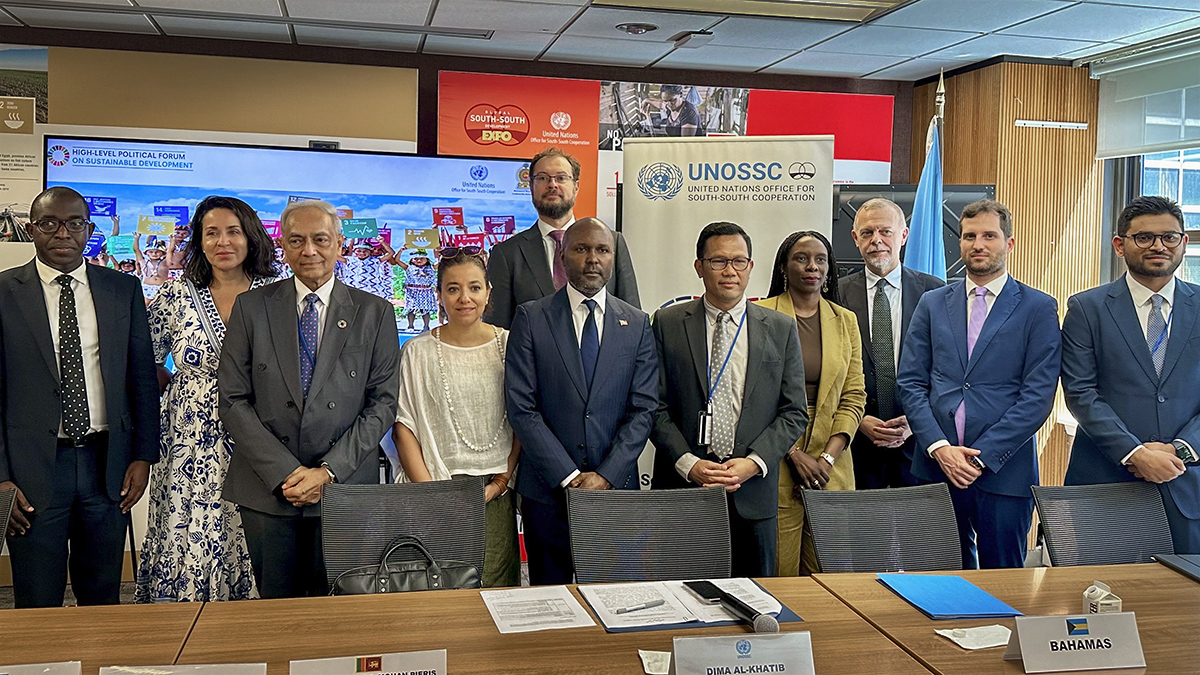
The United Nations Office for South-South Cooperation (UNOSSC) in partnership with the Government of Sri Lanka, serving as the President of the High-Level Committee on South-South Cooperation, organized an High-Level Political Forum on Sustainable Development side-event entitled “Exchanges of Innovative Solutions for Debt Relief: Country Experiences and the Role of South-South and Triangular Cooperation” on 11 July 2024.
The event harnessed the potential of South-South and triangular cooperation in addressing debt distress through knowledge exchanges, underscoring the importance of collaborative efforts in finding sustainable solutions. The event is a direct response to the UN General Assembly resolution on South-South Cooperation its 78th session which urged the UN development system to facilitate knowledge exchanges on debts.
“The implications of debt distress on sustainable development in the Global South are profound,” said
UNOSSC Director Ms. Dima Al-Khatib in her welcoming remarks, noting the alarming rise in external debt and its detrimental effects on sustainable development. She emphasized the need for innovative solutions and reforms in international financial architecture to better support developing countries. She highlighted that debt distress is a pressing challenge that affects numerous countries across Africa, Latin America, and Asia.
The external debt stocks of developing countries have surged to an alarming $11.4 trillion in 2023, more than double what it was a decade ago. This growing burden, exacerbated by economic shocks and the current international financial architecture, significantly hinders sustainable development.
According to recent 2024 UN report, the global public debt has reached a record $97 trillion, with developing countries accounting for nearly 30 percent of this total. A total of 54 countries, or almost 40 percent of the developing world, are in serious debt distress, dedicating at least 10 percent of their government funds to debt interest payments. These consequences are dire: countries are compelled to divert essential funds from health, education, and infrastructure to service their debt, affecting millions of lives.
Currently, 3.3 billion people live in countries that spend more on interest payments than on education and health.
“South-South and triangular cooperation can play a transformative role,” said the Director. “By leveraging collective strengths, knowledge, experiences, and resources in the Global South, we can develop and scale-up innovative solutions to mitigate the impacts of debt distress.”
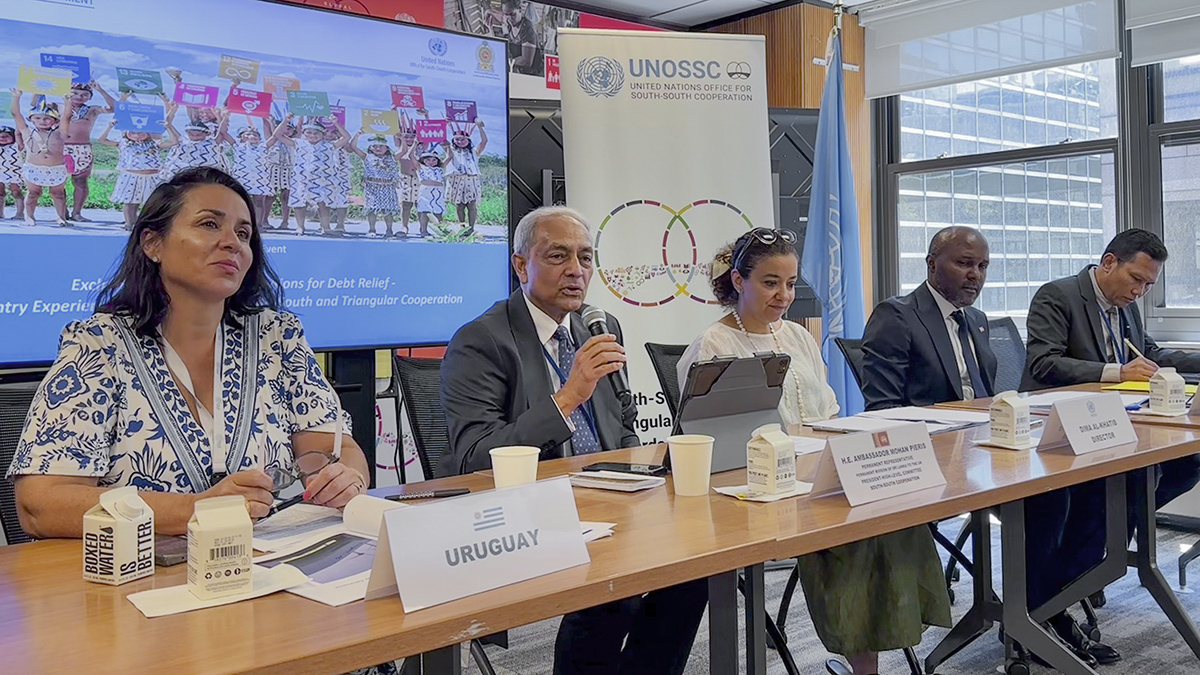
In his opening remarks, H.E. Peter Mohan Maithri Pieris, the President of the High-Level Committee on South-South Cooperation and Permanent Representative of
Sri Lanka, underscored the urgent need to address the financial crisis faced by countries in the Global South.
“Through South-South cooperation we must build trust and reignite Southern solidarity to access a more stable, equitable financial structure,” said the Ambassador. Highlighting the severe burden of mounting debt, he noted its impact on poverty alleviation, climate change, and economic development. He cited alarming statistics about rising external debt and debt service costs, stressing the need for debt relief to free up fiscal space for sustainable development.
The President called for innovative solutions, such as debt swaps and responsible lending practices, and emphasized the role of South-South and triangular cooperation in addressing these challenges. He also advocated for an overhaul of the global financial system to better support developing nations. He invited participants to discuss universal solutions for debt relief and the potential for South-South cooperation to accelerate achievement of the global development goals.
The panel discussion was moderated by Ms. Kereeta Whyte, Deputy Permanent Representative of
Barbados to the UN, and Rapporteur of the Bureau for the High-level Committee on South-South Cooperation.
During the Panel discussion, H.E. Amb. Stan O. Smith, Permanent Representative of the
Bahamas to the United Nations, elaborated on his country’s significant progress in public debt management through the implementation of the Public Debt Management Act in 2021. This Act, a key milestone of the
Strengthening Public Debt Management Framework and Developing Government Bond Market in the Bahamas project, supported by the
India-UN Development Partnership Fund and managed by the UNOSSC, established a comprehensive debt management framework, formed a dedicated structure within the Ministry of Finance, and facilitated an interagency agreement between the Central Bank and the Ministry of Finance. The Debt Management Office, established in 2022, has been crucial in promoting sound debt practices, improving debt transparency, and developing the domestic bond market, he said. These efforts have resulted in a notable improvement in the country’s fiscal health, with the debt-to-GDP ratio decreasing from 99.83% in 2021 to 78.1% in 2023-2024, with a target of 65% by 2026-2027. This success is attributed to the collaborative efforts of the project team, the Commonwealth Secretariat, and UNDP.
Mrs. Gabriela González, Minister Counsellor and Deputy Permanent Representative of
Uruguay to the UN , elaborated on her country’s experience. In 2022, Uruguay issued its first
Sovereign Sustainability-Linked Bond (SSLB), tying debt payments to environmental goals such as reducing greenhouse gas emissions and increasing forest cover. This innovative financial instrument, supported by collaboration across multiple government ministries, UNDP and regional development banks was pivotal in aligning Uruguay’s fiscal strategies with its commitments under the Paris Agreement. The SSLB issuance not only boosted investor confidence and economic stability but also set a precedent for integrating environmental, social, and governance (ESG) criteria into sovereign finance. Key achievements include a 46% reduction in greenhouse gas emissions per GDP unit since 1990 and maintaining 100% of native forest area compared to 2012 levels. These successes were bolstered by technical and external verification from UN reports, and Uruguay’s experience now serves as a model for other countries aiming to adopt similar sustainable financial instruments.
Mr. Pungkas Bahjuri Ali, Senior Advisor to the Minister on Social Affairs and Poverty Reduction, Ministry of National Development Planning of
Indonesia and Head of Indonesia’s National SDGs Secretariat, highlighted the efforts of Indonesia. Indonesia has emerged as a leader in issuing
Islamic Sukuk bonds, which adhere to Islamic financial principles and promote financial inclusion. These bonds provide an alternative financing mechanism, contributing to the country’s development goals. Sukuk bonds have been instrumental in financing essential sectors, including education, which mandates 20% of the state budget. Indonesia’s efforts align with its 2045 vision and the NDC goals, necessitating significant resource mobilization beyond the state budget, which accounts for only 10% of GDP. The significant potential of Islamic financing in Indonesia is highlighted by its large Muslim population, and Sukuk bonds have funded infrastructure projects, economic development, and social initiatives since 2018 including green and blue initiatives. The country has also adopted an Integrated National Financing Framework (INFF), with the support of UNDP, encouraging participation from both government and non-state actors. This framework includes innovative financing platforms, public spending improvements, fiscal policy reforms, and incentives for local SDG adoption. Indonesia’s SDG financing ecosystem encompasses various strategies, including aligning national priorities with SDGs, collaborating with ministries and the stock exchange, supporting sustainable taxonomy development, and issuing SDG bonds.
Last but not least, Mr. Fred Sesonga, First Counsellor, Permanent Mission of
Rwanda to the UN shared his country’s efforts in this area. Rwanda has successfully implemented a
Medium-Term Debt Management Strategy (MTDS) to ensure debt sustainability while funding critical infrastructure projects. This strategy involves prudent borrowing and effective risk management to maintain manageable debt levels. The MTDS focuses on good governance, accountability, and effective planning, ensuring borrowed funds are used efficiently for public investment. Key measures include prioritizing low-interest, long-term concessional funding and creating a stable, conducive environment for investors. Rwanda’s zero-corruption policy has also been crucial, fostering confidence among investors and ensuring efficient use of borrowed funds. Since implementing the MTDS, Rwanda has observed debt reduction alongside steady economic growth.
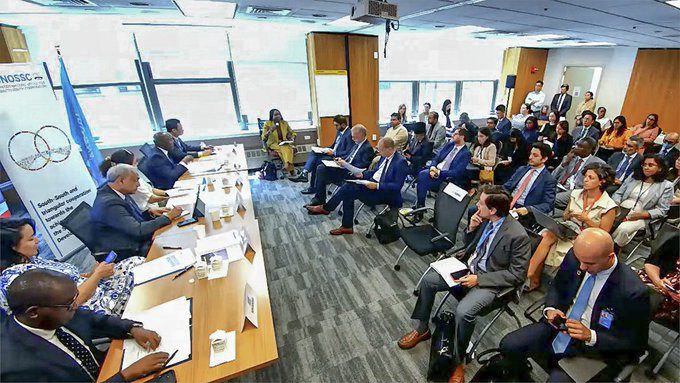
Following the panel discussion, the discussants added depth to the conversation.
Italy emphasized the crucial role of donors and partners in supporting debt-distressed countries. Transparency and information sharing are key, especially as new creditors emerge with different approaches. Italy is proud to be among the first to finance INFFs, and to support capacity building and South-South cooperation. Italy also noted strong political engagement from the G7, which called for an evolved international financial architecture to address today’s global challenges. The G7 leaders recognized that countries should not have to choose between combating poverty and protecting the environment; or between repaying creditors and investing in development. Transparency and collaboration among creditors remain essential in this evolving framework.
UNDP outlined three key points in debt management: (i) rethinking collaboration between financial and development institutions, (ii) redesigning financial instruments to assess both development and fiscal impact, and (iii) recalibrating risk and return calculations to integrate development and financial outcomes. The Integrated National Financing Framework exemplifies the need for collaboration across institutions and stakeholder engagement to unlock finance for sustainable development. Successful models, such as Indonesia’s SDG government securities framework and Uruguay’s linkage of progress to NDC implementation, illustrate effective blending of development and financial expertise. Lastly, UNDP emphasized the crucial role of South-South cooperation in reducing transaction costs and enhancing the effectiveness of these financial instruments.
ECLAC highlighted the Debt for Climate Adaptation Initiative, which aimed to swap debt for investment in climate projects in the Caribbean region. The importance of debt swaps and innovative financial mechanisms cannot be overstated as they address the critical issue of balancing fiscal pressures with development needs. Reducing debt burdens and securing new financial resources at lower costs are essential for achieving financial and environmental sustainability. ECLAC also emphasized that South-South cooperation is vital for enhancing financial resource mobilization. It supports the development of debt swap models and other financial mechanisms to alleviate debt burdens. South-South and triangular cooperation not only provide financial resources but also offer technical expertise and innovative solutions, particularly for climate adaptation and education. This collaboration promotes knowledge exchange and helps prioritize investment needs, leading to more effective and cost-efficient resource mobilization.
The
Islamic Development Bank (IsDB) emphasized the role of multilateral development banks in enhancing debt management capacities through innovative financing instruments and concessional or blended financing to reduce borrowing costs. Central to this effort is IsDB’s reverse linkage mechanism, which connects member countries with proven solutions and expertise, integrating contributions from the private sector and civil society in a demand-driven, results-oriented approach. South-South and triangular cooperation are integral to both the reverse linkage mechanism and IsDB’s broader mission as it complements its development efforts and contributes significantly to its member countries.
The Russian Federation emphasized the global significance of managing debt, noting that both World War I and II followed debt crises. It highlighted its collaboration with the WFP and Mozambique from 2019 to 2022, where debt relief funds were redirected to WFP for school feeding projects. This initiative successfully enhanced school conditions and positively impacted Mozambique’s development, showcasing the effectiveness of targeted debt relief programs.
In wrapping up, Ms. Dima Al-Khatib, reaffirmed UNOSSC’s commitment to facilitating discussions and leveraging digital knowledge platforms, announcing the upcoming launch of the South-South Solutions Lab as a significant step. She pledged to maintain and enrich these knowledge platforms, promising continuous updates as progress is made. The Director stressed the role of South-South and triangular cooperation in mobilizing resources, noting that sharing technical expertise and experiences can often be more impactful than financial aid.
In his closing remarks, H.E. Peter Mohan Maithri Pieris, acknowledged the challenges faced by countries in the Global South in securing debt write-offs, moratoriums, and reduced interest rates. The President underscored the importance of good governance and transparency as essential prerequisites for debt relief, which should align with poverty reduction strategies, and development goals. The President called for coordinated efforts between debtor countries, creditors, and international financial institutions, stressing that effective debt relief requires dialogue and equitable treatment. He also advocated for responsible borrowing and lending practices to prevent future financial mismanagement.
In summarizing the discussion, the President stressed that debt relief initiatives must be tailored to the specific needs and circumstances of developing countries, in line with the principle that “equals cannot be treated unequally and unequals cannot be treated equally”. The President urged that the insights gained from the discussions at the event be translated into concrete actions, and reiterated his commitment to enhancing the role of South-South cooperation in this critical area.