In global and regional dialogues and processes, such as the Regional Sustainable Development Forums and the High-Level Political Forums, stakeholders raised the need for greater regional cooperation on issues and challenges that transcend borders and affect neighboring countries in rapid ways, such as climate change, pandemics, disasters and financial shocks.
In an increasingly interconnected world, regional cooperation is also viewed as necessary to galvanize collective action on priorities that shape development trajectories of countries in proximity, of which one of the most concerning is related to weak capacities for science, technology and innovation (STI) in the midst of rapid technological change.
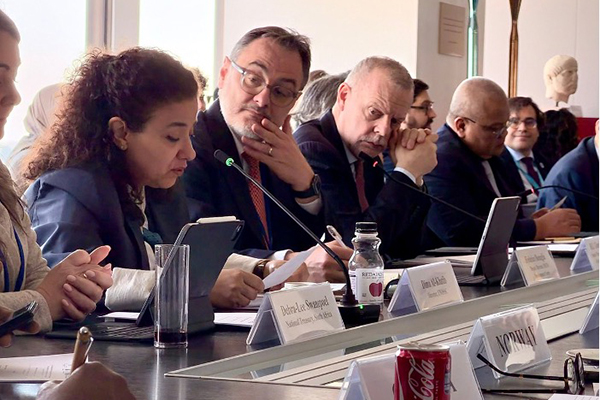
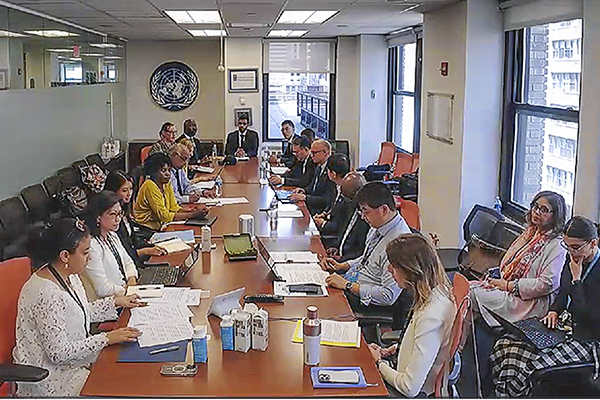
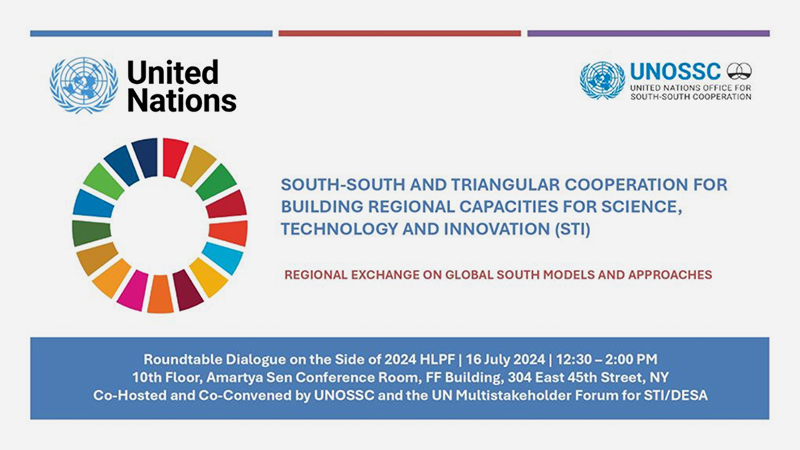
“Midway to 2030, we are alerted that our direction of travel is either slow, stalled, or going the wrong way: The Global Sustainable Development Report (GSDR) 2024 tells us that only 17% of the SDGs are on track, nearly half show minimal or moderate progress, and over one-third is either stalled or regressing,” said Dima Al-Khatib, UNOSSC Director, during a regional exchange of Global South models and approaches on the sidelines of the 2024 High-Level Political Forum. The roundtable was titled: South-South and Triangular Cooperation for Building Regional Capacities for Science, Technology and Innovation (STI).
“We need to build ecosystems of support and networked capacities in areas that can help amplify impact,” said the UNOSSC Director. “Science, technology and innovation (STI) are crucial to bring about breakthrough solutions that could accelerate the SDGs. But the STI landscape around the world is uneven.”
Many developing countries continue to play catch up in areas crucial to their sustainable development, with countries in special situations (such as the Small Island Developing States/SIDS and the Landlocked Developing Countries/LLDCs) and regions that face complex and intractable challenges (such as conflict, disasters, debt distress, etc.) requiring strategic support to build capacities at a scale and speed equal to the challenge, and in ways that could propel change but pose no additional burdens.
As the “global STI divide” continues to widen, the UN Secretary-General has raised concerns around inequalities that accompany uneven technology diffusion and further exacerbate social divides.
Member States have underlined the need for “viable pathways” at Summit on STI in September 2023 and at the UN Multistakeholder Forum on STI 2024, as well as pointed to the need to focus on the needs of the Global South at the SDG Summit in September 2023 and the Third South Summit in January 2024. Decisions and commitments made by Member States, such as in Antigua and Barbuda Agenda for SIDS (ABAS), also raise the need for greater concerted effort on STI to enable action grounded in evidence to leverage technologies for innovative solutions.
The multilevel and multistakeholder action essential to closing the “global STI divide” will lean on cooperation within and between countries, particularly those in proximity both in geography, experience, and development landscape.
South-South and triangular cooperation at the regional level can enable and leverage approaches that speak directly to contexts of individual countries and whole regions, are home grown, and propel progress on aspirations that are self-defined, for benefits that are widely shared.
 This dialogue focused attention on these challenges and opportunities; identified relevant models and approaches from the Global South; facilitated exchange on knowledge, tools and resources; and explored regional and cross-regional cooperation to help accelerate progress on regional priorities in alignment with the Sustainable Development Goals (SDGs).
The Dialogue was a multistakeholder contribution to the High-Level Political Forum (HLPF) processes, helping to inform thinking on regional dimensions of challenges and opportunities related to STI, and helping to shape attention to regional South-South and triangular cooperation as means of implementation in the UN Multistakeholder Forum for STI and in SDG acceleration.
?? 9th Multi-stakeholder Forum on Science, Technology and Innovation for the Sustainable Development Goals
?? Roundtable Dialogue on the Side of 2024 HLPF on “South-South and Triangular Cooperation for Building Regional Capacities for Science, Technology, and Innovation (STI)
This dialogue focused attention on these challenges and opportunities; identified relevant models and approaches from the Global South; facilitated exchange on knowledge, tools and resources; and explored regional and cross-regional cooperation to help accelerate progress on regional priorities in alignment with the Sustainable Development Goals (SDGs).
The Dialogue was a multistakeholder contribution to the High-Level Political Forum (HLPF) processes, helping to inform thinking on regional dimensions of challenges and opportunities related to STI, and helping to shape attention to regional South-South and triangular cooperation as means of implementation in the UN Multistakeholder Forum for STI and in SDG acceleration.
?? 9th Multi-stakeholder Forum on Science, Technology and Innovation for the Sustainable Development Goals
?? Roundtable Dialogue on the Side of 2024 HLPF on “South-South and Triangular Cooperation for Building Regional Capacities for Science, Technology, and Innovation (STI)
This dialogue focused attention on these challenges and opportunities; identified relevant models and approaches from the Global South; facilitated exchange on knowledge, tools and resources; and explored regional and cross-regional cooperation to help accelerate progress on regional priorities in alignment with the Sustainable Development Goals (SDGs).
The Dialogue was a multistakeholder contribution to the High-Level Political Forum (HLPF) processes, helping to inform thinking on regional dimensions of challenges and opportunities related to STI, and helping to shape attention to regional South-South and triangular cooperation as means of implementation in the UN Multistakeholder Forum for STI and in SDG acceleration.
?? 9th Multi-stakeholder Forum on Science, Technology and Innovation for the Sustainable Development Goals
?? Roundtable Dialogue on the Side of 2024 HLPF on “South-South and Triangular Cooperation for Building Regional Capacities for Science, Technology, and Innovation (STI)