Between 11 and 13 July 2024, the Second High-Level Conference of the Forum on Global Action for Shared Development was held in Beijing.
The event, hosted by the China International Development Cooperation Agency (CIDCA), focused on the theme “Promoting Sustainable Development: Continuous Actions for a Better Future.” Representatives from over 160 countries, UN agencies and international organizations (IGOs) participated both online and in person. In the nearly three years since the Global Development Initiative (GDI) was announced, it was noted that China has partnered with more than 20 UN agencies and IGOs across 60 countries and implemented over 140 cooperation projects. More than 40,000 practitioners have benefitted from over 1,000 capacity-building programs for developing countries.
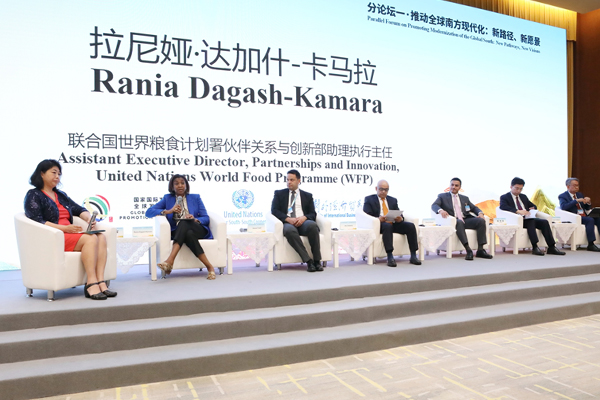
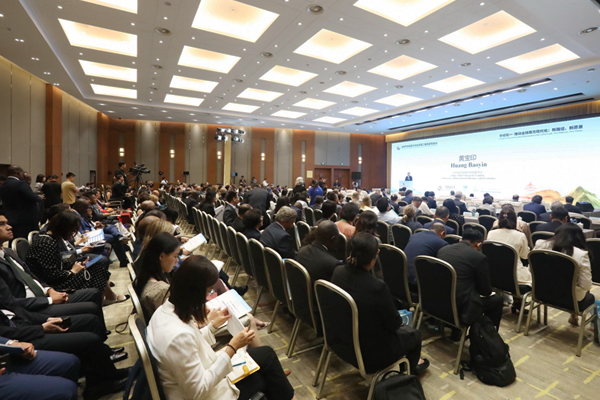
During the Conference, the United Nations Office for South-South Cooperation (UNOSSC), in collaboration with the Global Development Promotion Centre (GDPC) of CIDCA and the University of International Business and Economics (UIBE) of China, co-organized a Sub-forum on “Promoting Modernization in the Global South: New Pathways, New Visions.”
Over 300 guests attended the event, including ministers and senior officials from more than 50 countries, and representatives from the UN system, and other IGOs and think tanks.
Strengthened South-South and triangular cooperation was highlighted as essential for advancing modernization and development collaboration. This involves promoting equitable access to technology and education, fostering inclusive innovation ecosystems, and empowering marginalized communities to actively participate in and benefit from the modernization process.
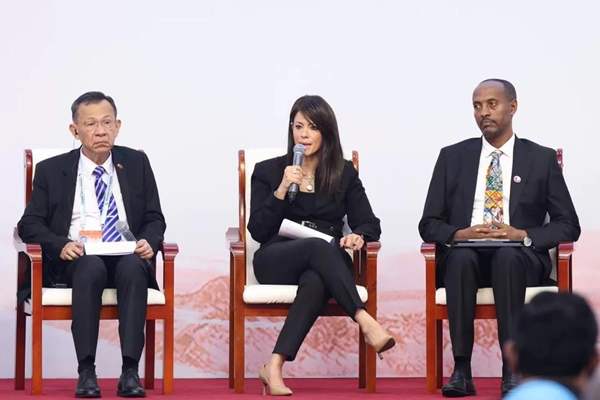 “The consequences of the compounded crises that the world has been facing since 2020 have proven that knowledge sharing among countries of the global south is fundamental to help develop effective institutions, build capacities, and create sustainable solutions toward growth and equity,” said H.E. Rania A. Al-Mashat Minister of Planning, Economic Development and International Cooperation, Egypt, in her keynote speech.
“Countries of the South have realized the importance of finding new and innovative ways to address common challenges, to explore and build a more prosperous and resilient future,” said H.E. Rania A. Al-Mashat. “In this context, Egypt’s commitment to South-South and triangular cooperation, especially with other African countries, is driven by the belief that nations with similar economic and social circumstances are better positioned to foster cooperation among themselves. This is achieved by sharing successful policies and best practices that have demonstrated effectiveness within their respective contexts.”
“The consequences of the compounded crises that the world has been facing since 2020 have proven that knowledge sharing among countries of the global south is fundamental to help develop effective institutions, build capacities, and create sustainable solutions toward growth and equity,” said H.E. Rania A. Al-Mashat Minister of Planning, Economic Development and International Cooperation, Egypt, in her keynote speech.
“Countries of the South have realized the importance of finding new and innovative ways to address common challenges, to explore and build a more prosperous and resilient future,” said H.E. Rania A. Al-Mashat. “In this context, Egypt’s commitment to South-South and triangular cooperation, especially with other African countries, is driven by the belief that nations with similar economic and social circumstances are better positioned to foster cooperation among themselves. This is achieved by sharing successful policies and best practices that have demonstrated effectiveness within their respective contexts.”
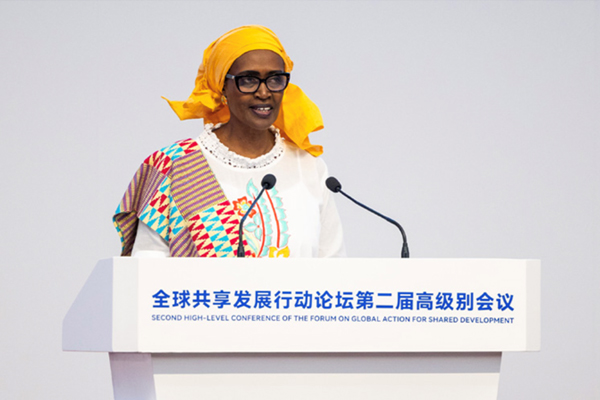 UN Under-Secretary-General and UNAIDS Executive Director, Winnie Byanyima, said, “China can play a role that can accelerate many countries towards the SDGs, and China’s Global Development Initiative is a framework that compliments and that can lead to the achievement of the Sustainable Development Goals.”
Experts also discussed the differences between modernity in the Global South today and previous concepts of modernization. They explored the strategic paths that countries pursue in their modernization processes to achieve a shared vision.
UN Under-Secretary-General and UNAIDS Executive Director, Winnie Byanyima, said, “China can play a role that can accelerate many countries towards the SDGs, and China’s Global Development Initiative is a framework that compliments and that can lead to the achievement of the Sustainable Development Goals.”
Experts also discussed the differences between modernity in the Global South today and previous concepts of modernization. They explored the strategic paths that countries pursue in their modernization processes to achieve a shared vision.
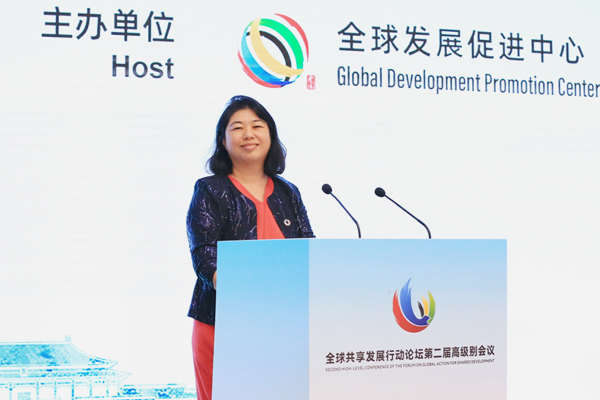 The sub-forum was moderated by Xiaojun Grace Wang, Trust Fund Director of UNOSSC.
The sub-forum featured distinguished speakers including honorable ministers from China, Gabon, Egypt and Pakistan, senior representatives from IFAD, OCED, GIZ and the South Centre.
The sub-forum was moderated by Xiaojun Grace Wang, Trust Fund Director of UNOSSC.
The sub-forum featured distinguished speakers including honorable ministers from China, Gabon, Egypt and Pakistan, senior representatives from IFAD, OCED, GIZ and the South Centre.
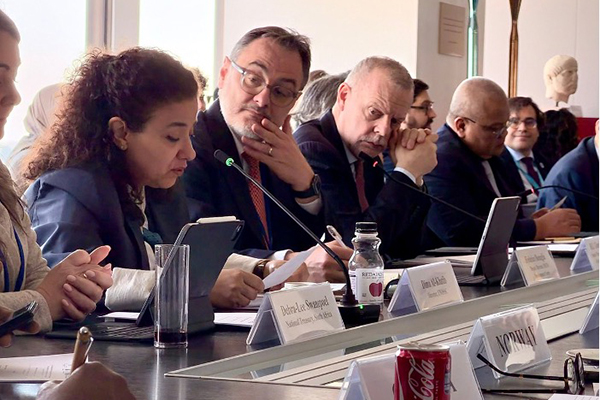
 A panel discussion featured panelists from Education Cannot Wait/UNICEF, WFP, India, UAE, Mekong Institute among others. The panel highlighted that modernization is a key driver for achieving sustainable development. They noted that the Global South faces both opportunities and challenges in this process, particularly in critical areas such as food security, education, health, industrialization, and infrastructure. In particular, it discussed the impact of crisis and strategies to address emergencies and recover from crisis and stressed on the importance of SSTC to achieve the vision. The importance of connecting global regional subregional and local level cooperation practices etc.
“The consequences of the compounded crises that the world has been facing since 2020 have proven that knowledge sharing among countries of the global south is fundamental to help develop effective institutions, build capacities, and create sustainable solutions toward growth and equity,” said H.E. Rania A. Al-Mashat Minister of Planning, Economic Development and International Cooperation, Egypt, in her keynote speech.
“Countries of the South have realized the importance of finding new and innovative ways to address common challenges, to explore and build a more prosperous and resilient future,” said H.E. Rania A. Al-Mashat. “In this context, Egypt’s commitment to South-South and triangular cooperation, especially with other African countries, is driven by the belief that nations with similar economic and social circumstances are better positioned to foster cooperation among themselves. This is achieved by sharing successful policies and best practices that have demonstrated effectiveness within their respective contexts.”
UN Under-Secretary-General and UNAIDS Executive Director, Winnie Byanyima, said, “China can play a role that can accelerate many countries towards the SDGs, and China’s Global Development Initiative is a framework that compliments and that can lead to the achievement of the Sustainable Development Goals.”
Experts also discussed the differences between modernity in the Global South today and previous concepts of modernization. They explored the strategic paths that countries pursue in their modernization processes to achieve a shared vision.
The sub-forum was moderated by Xiaojun Grace Wang, Trust Fund Director of UNOSSC.
The sub-forum featured distinguished speakers including honorable ministers from China, Gabon, Egypt and Pakistan, senior representatives from IFAD, OCED, GIZ and the South Centre.
A panel discussion featured panelists from Education Cannot Wait/UNICEF, WFP, India, UAE, Mekong Institute among others. The panel highlighted that modernization is a key driver for achieving sustainable development. They noted that the Global South faces both opportunities and challenges in this process, particularly in critical areas such as food security, education, health, industrialization, and infrastructure. In particular, it discussed the impact of crisis and strategies to address emergencies and recover from crisis and stressed on the importance of SSTC to achieve the vision. The importance of connecting global regional subregional and local level cooperation practices etc.