The Third Industrial Development Decade for Africa (#IDDA3) Requires South-South Sharing of Green Solutions
In July 2016, the United Nations General Assembly (UNGA) adopted resolution A/RES/70/293, proclaiming the period 2016-2025 as the Third Industrial Development Decade for Africa (IDDA III). IDDA III aims to foster Africa’s industrial growth in alignment with global frameworks such as the United Nations Sustainable Development Goals (SDGs), the African Union’s Agenda 2063, and the Action Plan for the Accelerated Industrial Development of Africa (AIDA). It also provides a platform for Africa to synchronize its industrial development efforts with international cooperation platforms like the Group of 20, the Tokyo International Conference on African Development (TICAD), the Forum on China-Africa Cooperation (FOCAC), among others.
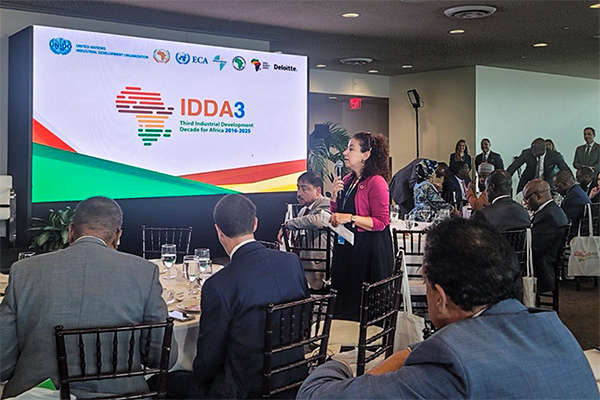
The IDDA III is in its final year and hence, a seventh and final annual High-Level gathering under IDDA III was jointly organized by the African Union Commission (AUC), United Nations Economic Commission for Africa (UNECA), and the United Nations Industrial Development Organization (UNIDO), in close collaboration with African Development Bank (AfDB), African Export-Import Bank (Afreximbank), African Business Council (AfBC), and Deloitte on 25 September on the sidelines of the 79th UN General Assembly. The meeting brought together high-level stakeholders including African Heads of State and Government; Ministers, the African Union Commission, Heads of UN agencies, African regional organizations, plus the private sector, financial institutions, donors, civil society, and non-governmental organizations, academia, and media.
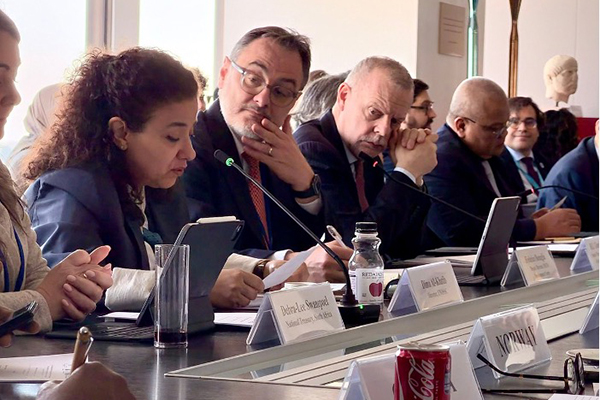
Dima Al-Khatib, Director of the United Nations Office for South-South Cooperation, addressed the meeting during the Public/Private Interactive Session on Industrialization, Innovation and Investment in the Future of Africa.
“Regional and cross-regional South-South and triangular cooperation are trusted mechanisms for sharing best-fit knowledge, tools and resources,” the UNOSSC Director noted, emphasizing that “IDDA3 highlights the call for collaborative approaches to aligning industrialization priorities with continental and global development agendas (such as #AU2063 and #Agenda2030).”
The Director’s remarks focused on the need for greater solidarity in the quest for Africa’s Industrialization, noting that, South-South cooperation is precisely the modality that is required to ensure that Africa is not left behind. The difference between South-South cooperation and other modalities is that it promotes cooperation and mutual gains, rather than competition as well as national ownership of the process. The idea of solidarity as a driver for that cooperation renders South-South cooperation unique.
“Collaboration becomes like a rising tide, lifting all boats on the water, with all the countries working together,” she said. This is the idea of leapfrogging, by learning from others, and through South-South technology transfers that eliminate or reduce time and other costs that characterize research and development. She noted that this, however, does not mean that Africa should only learn from others and not build its own path. African leadership should be at the core of its industrial development efforts, she said. “Through our various South-South cooperation tools and resources, UNOSSC takes its role as a partnership broker seriously, and strongly advocates for Africa’s vision for its development while working with other partners to provide support.”
The meeting took place following the adoption of the Pact for the Future and presented an opportunity to assess progress, celebrate successes and impacts achieved, highlight challenges encountered during the implementation of IDDA III and distil lessons learned from them. The final evaluation is ongoing as the IDDA III draws to a close in July 2025 and planning for the next phase commences.
The expected outcomes of this High-Level event included a joint communiqué by co-organizers on Sustainable Industry for Africa’s Tomorrow: Building Resilience Across Generations as well as the key actions and initiatives identified to implement the Pact for the Future in Africa. Themes addressed included: support of sustainable industrial development on the continent including those related to eradicating poverty; ending hunger; food security; technology transfer; digitalization; trade facilitation; infrastructure; renewable energy; green industrialization; Small and Medium-sized Enterprises (SME) development including women and youth startups; skills development; and the formation and renewal of partnerships among governments, the private sector, and international organizations to support sustainable industrial growth in Africa.
More details at: IDDA3 – Introduction | UNIDO