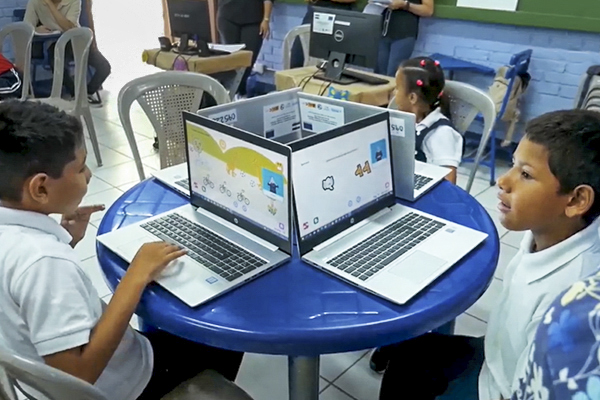
In Nicaragua, children with disabilities have faced significant barriers in accessing quality education. Limited resources, infrastructure, and a lack of inclusive teaching practices have been challenges for these students, preventing them from reaching their full potential.
The pressing need to ensure that every child, regardless of ability, receives an equitable opportunity to learn and thrive has driven the Ministry of Education (MINED), with the support of UNICEF, to initiate transformative efforts. At the core of this mission lies the ‘More Inclusion’ Communication Strategy for Social and Behavioral Change, designed to foster the seamless integration of children with disabilities into the national education system.
“Our commitment extends beyond the confines of government institutions; it’s about ensuring that individuals with disabilities are provided with the support they need,” said H.E. Lilliam Herrera, Nicaragua’s Minister of Education, underscoring the importance of this collaborative effort. “Together, we have made great strides, and our resolve remains unwavering. We will continue our efforts until Nicaragua sets a new benchmark for inclusivity.”
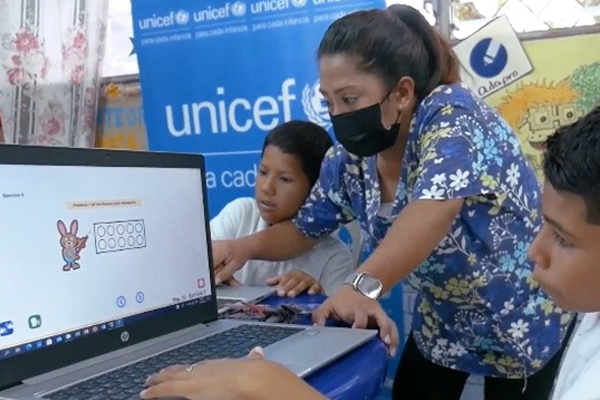 The project, funded by the India-UN Development Partnership Fund managed by the United Nations Office for South-South Cooperation, represents a collaborative approach to overcoming these challenges. With an investment of US$1,200,000, it is strengthening institutional capacities and creating inclusive classrooms across Nicaragua’s schools – ensuring that children, irrespective of their abilities, can learn and grow together.
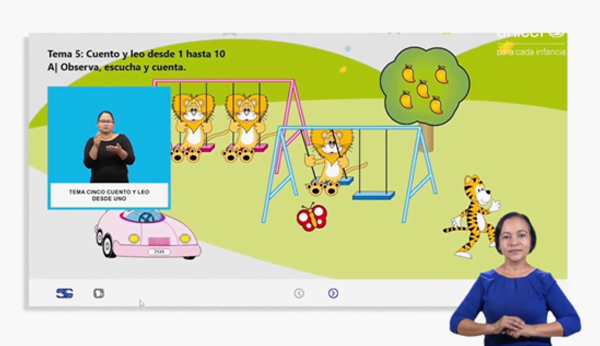
The project’s approach is built around the belief that enhancing institutional capacities, promoting inclusive teaching practices, and fostering a culture of community support can create a lasting impact on educational inclusivity. Central to this approach is the establishment of 15 prototype centers that embody the principles of Universal Design for Learning (UDL). These centers provide a blueprint for inclusive education, utilizing digital textbooks that incorporate sign language videos, audio support, and interactive exercises.
The project, funded by the India-UN Development Partnership Fund managed by the United Nations Office for South-South Cooperation, represents a collaborative approach to overcoming these challenges. With an investment of US$1,200,000, it is strengthening institutional capacities and creating inclusive classrooms across Nicaragua’s schools – ensuring that children, irrespective of their abilities, can learn and grow together.
The project’s approach is built around the belief that enhancing institutional capacities, promoting inclusive teaching practices, and fostering a culture of community support can create a lasting impact on educational inclusivity. Central to this approach is the establishment of 15 prototype centers that embody the principles of Universal Design for Learning (UDL). These centers provide a blueprint for inclusive education, utilizing digital textbooks that incorporate sign language videos, audio support, and interactive exercises.
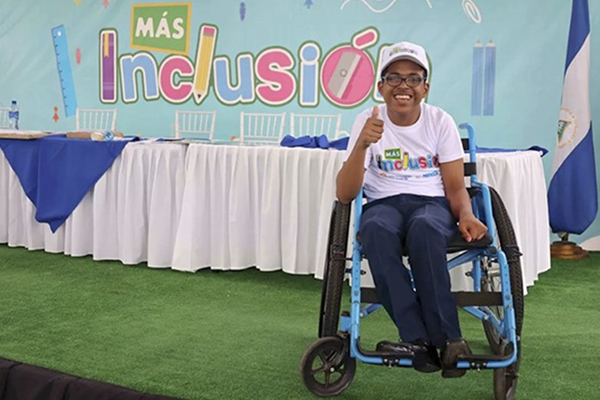 This beautiful experience has been transformative, thanks to the exceptional educational inclusion strategies implemented by our dedicated teachers,” said Josué, a student with a motor physical disability at the Experimental Public School Mexico. “These strategies have not only enabled me to excel but also to proudly represent my school. They’ve shown me, and indeed all of us, that disabilities do not define our capabilities. We all possess the warrior spirit within us, and with education as our most valuable inheritance, we’re equipped to face life’s challenges head-on.”
The collaborative project approach ensures that students with disabilities, like Josué, have access to tailored learning resources that accommodate their needs and allow them to thrive alongside their peers.
“We must work so that everyone, at all levels, from families to institutions, improve our knowledge and inclusive practices, so that children and adolescents, with and without disabilities, share spaces and develop, have fun, grow, and learn from each other, together, with more inclusion,” siad Eduardo Gallardo, Officer in Charge of UNICEF Nicaragua, highlighting the broader vision of the project.
This beautiful experience has been transformative, thanks to the exceptional educational inclusion strategies implemented by our dedicated teachers,” said Josué, a student with a motor physical disability at the Experimental Public School Mexico. “These strategies have not only enabled me to excel but also to proudly represent my school. They’ve shown me, and indeed all of us, that disabilities do not define our capabilities. We all possess the warrior spirit within us, and with education as our most valuable inheritance, we’re equipped to face life’s challenges head-on.”
The collaborative project approach ensures that students with disabilities, like Josué, have access to tailored learning resources that accommodate their needs and allow them to thrive alongside their peers.
“We must work so that everyone, at all levels, from families to institutions, improve our knowledge and inclusive practices, so that children and adolescents, with and without disabilities, share spaces and develop, have fun, grow, and learn from each other, together, with more inclusion,” siad Eduardo Gallardo, Officer in Charge of UNICEF Nicaragua, highlighting the broader vision of the project.
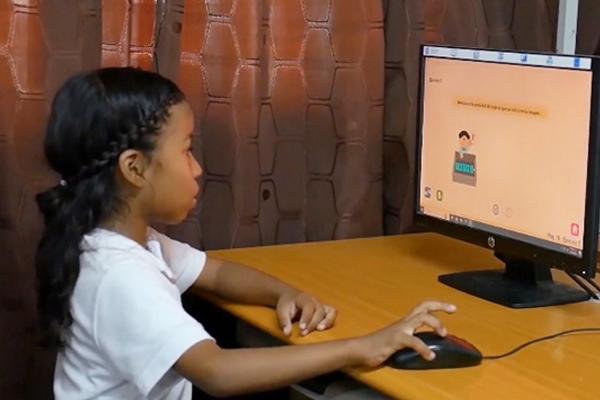 One of the project’s key achievements has been the creation of an accessible digital science textbook for second-grade students. This resource, designed with responsive technology, provides interactive learning experiences that are adaptable across various devices. It represents a shift towards digital learning in Nicaragua, offering a practical solution for students with and without disabilities to learn together.
MINED, in collaboration with UNICEF, has also focused on building a network of trained teachers equipped to implement inclusive practices. The project emphasizes a holistic approach, supporting both technical skills and a mindset change among educators, families, and communities.
The success of this initiative lies in sharing knowledge, expertise and standard practices from India and the broader international community to bring global best practices to Nicaragua’s local context. This partnership has enabled the creation of knowledge-sharing platforms and insights that can benefit other developing countries facing similar challenges.
One of the project’s key achievements has been the creation of an accessible digital science textbook for second-grade students. This resource, designed with responsive technology, provides interactive learning experiences that are adaptable across various devices. It represents a shift towards digital learning in Nicaragua, offering a practical solution for students with and without disabilities to learn together.
MINED, in collaboration with UNICEF, has also focused on building a network of trained teachers equipped to implement inclusive practices. The project emphasizes a holistic approach, supporting both technical skills and a mindset change among educators, families, and communities.
The success of this initiative lies in sharing knowledge, expertise and standard practices from India and the broader international community to bring global best practices to Nicaragua’s local context. This partnership has enabled the creation of knowledge-sharing platforms and insights that can benefit other developing countries facing similar challenges.
 As the project progresses towards its completion in November 2024, it continues to build a future where education is accessible to every child, demonstrating the power of South-South cooperation to create sustainable and impactful change, and most importantly serves as a reminder that, through collaboration and shared learning, we can build a world where every child has the opportunity to succeed – where no one is left behind.
The project, funded by the India-UN Development Partnership Fund managed by the United Nations Office for South-South Cooperation, represents a collaborative approach to overcoming these challenges. With an investment of US$1,200,000, it is strengthening institutional capacities and creating inclusive classrooms across Nicaragua’s schools – ensuring that children, irrespective of their abilities, can learn and grow together.
The project’s approach is built around the belief that enhancing institutional capacities, promoting inclusive teaching practices, and fostering a culture of community support can create a lasting impact on educational inclusivity. Central to this approach is the establishment of 15 prototype centers that embody the principles of Universal Design for Learning (UDL). These centers provide a blueprint for inclusive education, utilizing digital textbooks that incorporate sign language videos, audio support, and interactive exercises.
This beautiful experience has been transformative, thanks to the exceptional educational inclusion strategies implemented by our dedicated teachers,” said Josué, a student with a motor physical disability at the Experimental Public School Mexico. “These strategies have not only enabled me to excel but also to proudly represent my school. They’ve shown me, and indeed all of us, that disabilities do not define our capabilities. We all possess the warrior spirit within us, and with education as our most valuable inheritance, we’re equipped to face life’s challenges head-on.”
The collaborative project approach ensures that students with disabilities, like Josué, have access to tailored learning resources that accommodate their needs and allow them to thrive alongside their peers.
“We must work so that everyone, at all levels, from families to institutions, improve our knowledge and inclusive practices, so that children and adolescents, with and without disabilities, share spaces and develop, have fun, grow, and learn from each other, together, with more inclusion,” siad Eduardo Gallardo, Officer in Charge of UNICEF Nicaragua, highlighting the broader vision of the project.
One of the project’s key achievements has been the creation of an accessible digital science textbook for second-grade students. This resource, designed with responsive technology, provides interactive learning experiences that are adaptable across various devices. It represents a shift towards digital learning in Nicaragua, offering a practical solution for students with and without disabilities to learn together.
MINED, in collaboration with UNICEF, has also focused on building a network of trained teachers equipped to implement inclusive practices. The project emphasizes a holistic approach, supporting both technical skills and a mindset change among educators, families, and communities.
The success of this initiative lies in sharing knowledge, expertise and standard practices from India and the broader international community to bring global best practices to Nicaragua’s local context. This partnership has enabled the creation of knowledge-sharing platforms and insights that can benefit other developing countries facing similar challenges.
As the project progresses towards its completion in November 2024, it continues to build a future where education is accessible to every child, demonstrating the power of South-South cooperation to create sustainable and impactful change, and most importantly serves as a reminder that, through collaboration and shared learning, we can build a world where every child has the opportunity to succeed – where no one is left behind.