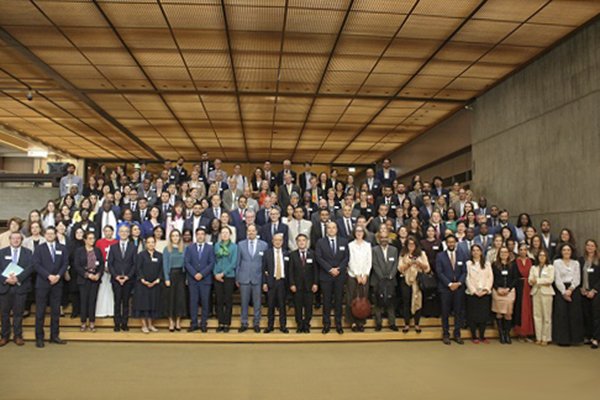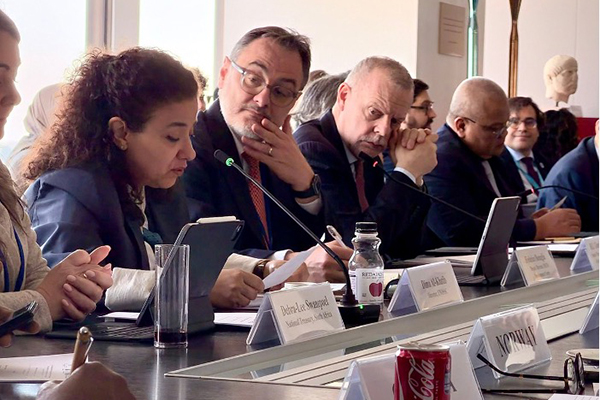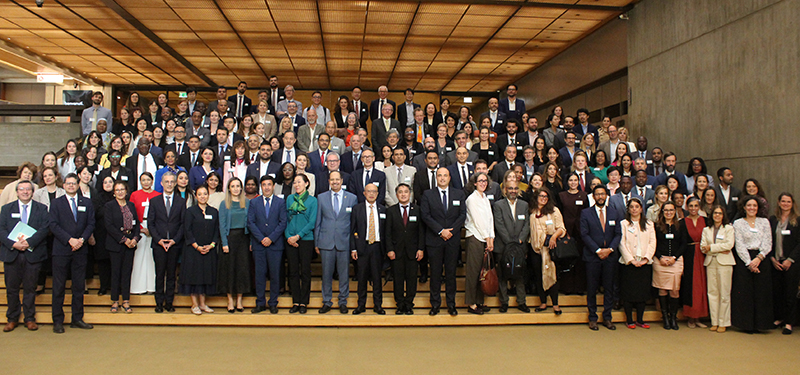
“Connecting Global Processes for Local Impact” was the motto for the 8th International Conference on Triangular Cooperation, co-hosted by Camões, I.P., the Portuguese Development Agency, and the Organization for Economic Cooperation and Development, on the 7 and 8 October 2024 in the headquarters of Calouste Gulbenkian Foundation in Lisbon.
Nuno Sampaio, the Portuguese Secretary of State for Foreign Affairs and Cooperation, welcomed 180 delegates from more than 50 countries and international and regional organizations, with a view to promote the international debate on how, in times of polycrisis, triangular cooperation contributes to boosting investment in inclusive partnerships and local impact.
Mayumi Endoh, Deputy Director of the Development Cooperation Directorate, OECD said: “It is fair to say that triangular cooperation has gone mainstream, and the level of participation and enthusiasm in the room was a testimony to this. Looking ahead, all eyes are on Seville and FFD4, and this is a unique opportunity to scale-up triangular cooperation”.
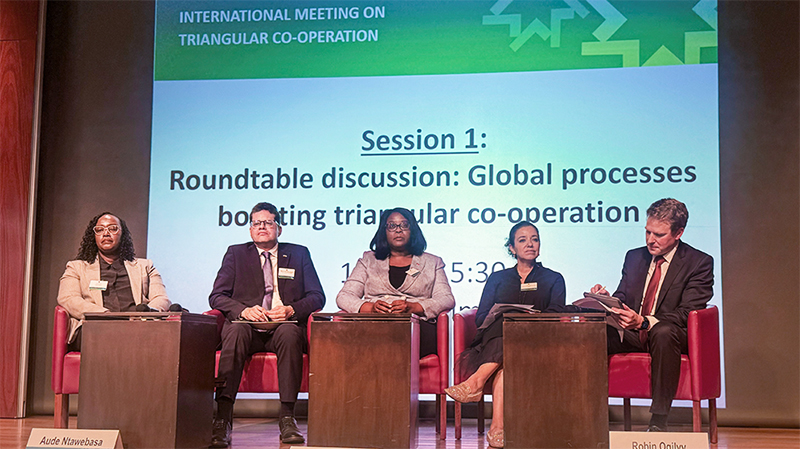
“We come together with a shared purpose, united in the key objective to forge stronger relationships within and through triangular cooperation partnerships,” said UNOSSC Director Dima Al-Khatib. “The Pact for the Future highlights South-South and triangular cooperation as a critical mechanism for advancing the digital economy, artificial intelligence governance, and science, technology, and innovation capacities in developing countries.”
“We are proud to partner with Portugal and Camões, I.P.,” said the UNOSSC Director, “and pleased to launch the new Triangular Cooperation Window of the United Nations Fund for South-South Cooperation, to facilitate robust South-South and triangular cooperation strategies to guide and support coordinated action among partners, ensuring that these efforts are well-targeted, impactful, and deliver accelerated results”.
“This Window is being established in response to the 2022 UN Secretary-General’s
Report on the State of South-South,” said Ms. Al-Khatib. “It will mobilize the full array of UN platforms, technologies, partnerships, and resources on a global scale. The Window is a demand-driven mechanism aligned with Member States’ priorities for South-South cooperation across various UN processes. Instead of fixed themes, it supports six key transitions, identified by the United Nations for SDG achievement: food security, energy access, digital connectivity, education, jobs and social protection, and climate change.”
The Director thanked key partners – the Republic of Korea, Portugal, Morocco, and the Islamic Development Bank – with whom UNOSSC had already begun collaborating closely with to identify complementarities and areas of convergence in support of the Window.
Yuri de Souza, General Coordinator for Technical Cooperation and Partnership of the Brazilian Cooperation Agency (ABC) said: “This week we discussed important ideas building on the G20 recognition that trilateral cooperation is a modality that contributes to promoting partnership and to achieve the 2030 Agenda SDGs. It was important to Brazil to take stock on valuable contributions from different participants which will support promoting the G20 knowledge sharing mechanism actions though the Trilateral Cooperation Co-Lab”.
“For Thailand, triangular cooperation is grounded in the principles of joint initiatives, efforts, and responsibility among partner countries through the implementation of development projects, trainings, and post-graduate programs that align with our partners’ needs. Thailand firmly believes that this modality is the way forward in international Development Cooperation through the 3P prism, political commitment, partnership and priority”, said Pimwadee Sovaratanapong, Acting Director-General Thailand International Cooperation Agency (TICA).
Edson Barreto, Director of the Staff Office of the President of the Republic of Angola said: “Being a newcomer to triangular cooperation, I realized I have been doing it for a long time, and that here we are doing the future”, said. He went on to say, “I see a role for triangular cooperation and its investment dimension, in a structural project led by Angola, together with RDC and Zambia, the development of value-chains along the Lobito Corridor.”
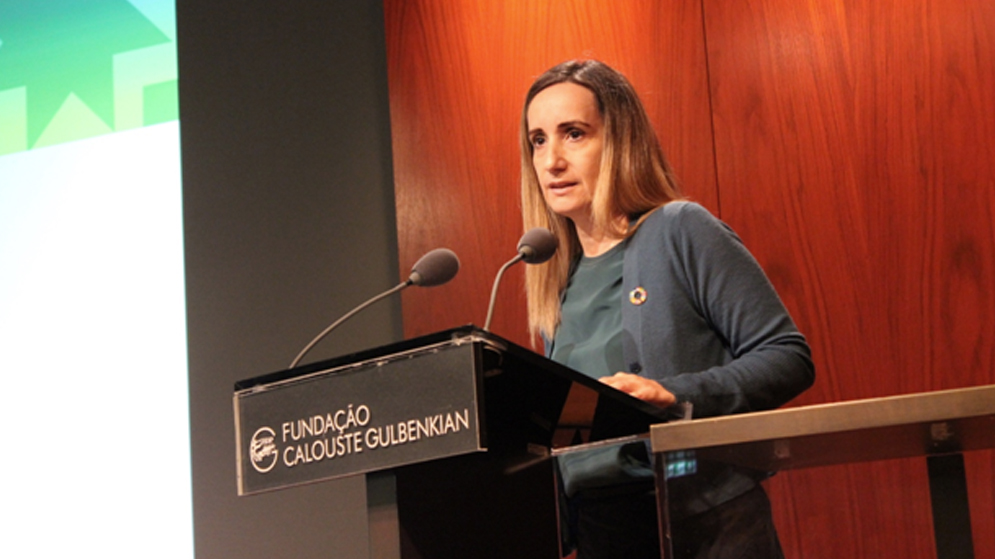
Florbela Paraíba, President of the Board of Directors of Camões, I.P. acknowledged the renewed dynamic of this 8th Conference, organized around 3 tracks – Strategy, Systems and Projects – and emphasized the significant contribution by Asia to this cooperation modality. In her closing remarks, she announced a first contribution from the Portuguese Development Cooperation to the new UNOSSC Triangular Cooperation Window.
OCDE and Camões, I.P. plan to co-organize the 9th edition of the International Conference on Triangular Cooperation in the autumn of 2025, in Lisbon.
Read more: https://www.instituto-camoes.pt/sobre/comunicacao/noticias/portugal-8-conferencia-internacional-sobre-cooperacao-triangular