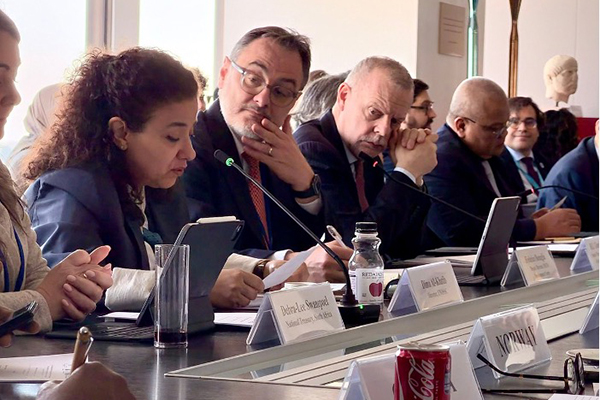
2 December 2024 – The India, Brazil and South Africa Facility for Poverty and Hunger Alleviation (IBSA Fund) Board of Directors convened at the Permanent Mission of India to the United Nations, bringing together representatives from the Permanent Missions of India, Brazil, and South Africa. The United Nations Office for South-South Cooperation (UNOSSC) is the Fund Manager and secretariat of the IBSA Fund, working closely with IBSA Fund experts and partners to provide monitoring, quality assurance and knowledge-management and communications across projects.
The IBSA Fund identifies replicable and scalable projects that can be disseminated to interested developing countries as examples of good practices in the fight against poverty and hunger. The IBSA Fund, established in 2004, supports projects on a demand-driven basis through partnerships with local governments, national institutions and implementing partners. The projects that it supports are concrete expressions of solidarity for the benefit of the most vulnerable and marginalized people, with the objectives of promoting food security, addressing HIV/AIDS, extending access to safe drinking water, and promoting quality education and gender equality, all with the aim of contributing to the achievement of the Sustainable Development Goals.
At its quarterly meeting, the Board reviewed the Fund’s portfolio of 13 active projects across Africa, Latin America, and Asia, which prioritize Sustainable Development Goals 1 and 2, targeting poverty eradication and zero hunger while addressing climate resilience and food security. Highlights included updates on initiatives in Angola, The Gambia, Lesotho, and Senegal, among others, which leverage South-South cooperation to deliver transformative impacts on communities.
The Board approved one new project proposal and one project document. In Liberia, a $1 million proposal was approved to strengthen the capacities of Liberia’s Women Legislative Caucus in partnership with UN Women.
This initiative aims to drive gender-responsive lawmaking and governance through tailored capacity development programs, informed by global best practices. Its objectives include developing an action plan for legislative reforms to address discriminatory laws, promoting access to sexual and reproductive health rights, advancing women’s equal rights to economic resources and employment, and supporting informal education and economic empowerment opportunities for women and young women, particularly in rural areas.
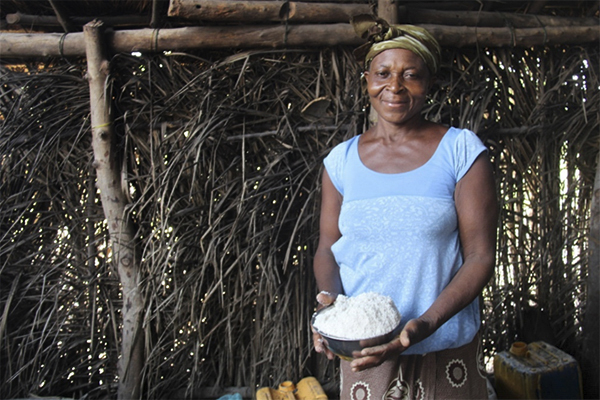
The Board also approved a $1 million project document to revitalize Gabon’s cassava value chain through collaboration between Gabon’s Ministries of Agriculture and Trade, Small and Medium Enterprises, and UNDP. The project will enhance food security by modernizing cassava production and processing, build capacity within government extension services to support smallholder farmers, provide micro-grants to 100 cassava smallholders with 60 percent targeting women and youth, and offer technical support to women-led organizations, MSMEs, and cooperatives. This initiative is expected to increase cassava yields, empower women and youth entrepreneurs, and strengthen Gabon’s food distribution systems.
Representatives from IBSA countries expressed satisfaction with the strategic relevance of the IBSA Fund in advancing multilateral cooperation and addressing pressing development challenges. With 80 percent of ongoing projects’ budgets dedicated to Africa and significant focus on Least Developed Countries, Landlocked Developing Countries and Small Island Developing States, the Fund continues to demonstrate its pivotal role in addressing global inequality.