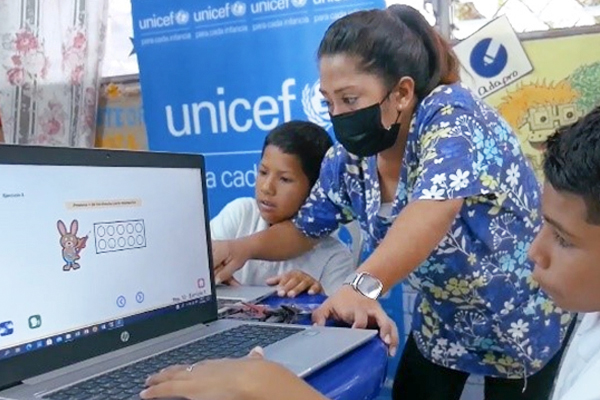
On this International Day of Education, 24 January, we can reflect on the progress made toward ensuring inclusive education for children with disabilities in Nicaragua, supported by the India-UN Development Partnership Fund.
The South-South cooperation project’s implementation, led by the Ministry of Education (MINED) in collaboration with UNICEF and supported by the Government of India through the India-UN Fund, managed by UNOSSC, is a testament to the shared global commitment to leaving no child behind.
“Together, we have made great strides, and our resolve remains unwavering,” said H.E. Lilliam Herrera, Nicaragua’s Minister of Education, underscoring the importance of this collaborative effort. “Together, we have made great strides, and our resolve remains unwavering. We will continue our efforts until Nicaragua sets a new benchmark for inclusivity.”
A key feature of the project was the launch of the ‘More Inclusion’ Communication Strategy for Social and Behavioral Change, which helps to foster a culture of inclusivity in the education system and beyond. The strategy highlighted the inspiring story of Josué, a determined student navigating the challenges of a motor physical disability. Josué’s testimony reflects the profound impact of this initiative: “This beautiful experience,” he said, “has been transformative, thanks to the exceptional educational inclusion strategies implemented by our dedicated teachers. These strategies have not only enabled me to excel but also to proudly represent my school. They’ve shown me, and indeed all of us, that disabilities do not define our capabilities.”
The communication strategy also served as a platform for outreach, awareness, and advocacy.
Multilingual materials, including TV and radio spots, posters, stickers, and inclusive didactic games, were disseminated widely to promote understanding and acceptance of inclusive education. Furthermore, 35 journalists participated in specialized training to equip them with the skills needed to report on inclusive education using respectful and inclusive language. This effort is helping to shape a more equitable narrative about education and disability, both in the media and in society.
Investments in teacher capacity-building have been central to the project’s success. Over the past year, 12 pedagogical videos were produced, and accessible digital textbooks were piloted to enrich inclusive learning environments. These resources are designed to empower teachers to support students with diverse learning needs. Meanwhile, the new Master’s Program on Disabilities and Universal Design for Learning (UDL) has been a game-changer in professional development. Currently, 36 participants are finalizing their thesis work, with defenses scheduled for later this year, marking a critical milestone in enhancing the quality of teaching.
Supported infrastructure improvements have further enabled accessibility in 15 prototype schools, ensuring that children with disabilities can physically navigate and fully participate in their learning environments. Facilities such as ramps, accessible bathrooms, and sensory-friendly spaces benefited over 7,748 children in 2023. An additional 6,709 students are set to benefit from technological resources distributed in 2024. These advancements ensure that schools are not just inclusive in policy but also in practice.
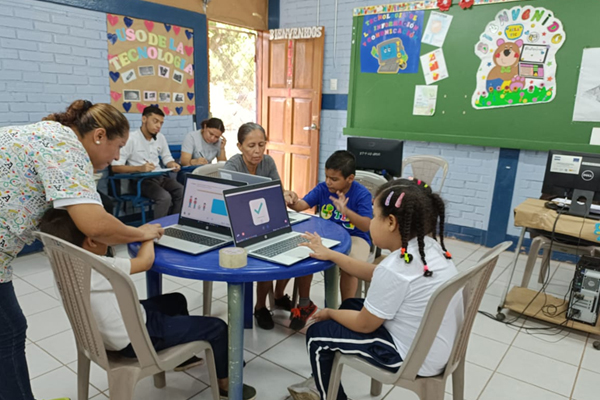 Community outreach and engagement have amplified the project’s impact, fostering a supportive ecosystem for inclusive education. Joint follow-up visits by MINED and UNICEF teams to educational centers across several municipalities have strengthened the implementation of inclusive practices. Teachers and school staff received actionable recommendations to adapt teaching methods and classroom environments, making them more inclusive for students with diverse needs.
Best practices in inclusive education are being documented and shared with other developing countries, strengthening international solidarity and collaboration. These achievements are a testament to the collective efforts of the Ministry of Education, UNICEF, and the Government of India, whose shared vision has been instrumental in driving change.
As we mark this International Day of Education, let us reaffirm our commitment to creating a world where every child has access to quality education and the opportunity to thrive.
Community outreach and engagement have amplified the project’s impact, fostering a supportive ecosystem for inclusive education. Joint follow-up visits by MINED and UNICEF teams to educational centers across several municipalities have strengthened the implementation of inclusive practices. Teachers and school staff received actionable recommendations to adapt teaching methods and classroom environments, making them more inclusive for students with diverse needs.
Best practices in inclusive education are being documented and shared with other developing countries, strengthening international solidarity and collaboration. These achievements are a testament to the collective efforts of the Ministry of Education, UNICEF, and the Government of India, whose shared vision has been instrumental in driving change.
As we mark this International Day of Education, let us reaffirm our commitment to creating a world where every child has access to quality education and the opportunity to thrive.
Community outreach and engagement have amplified the project’s impact, fostering a supportive ecosystem for inclusive education. Joint follow-up visits by MINED and UNICEF teams to educational centers across several municipalities have strengthened the implementation of inclusive practices. Teachers and school staff received actionable recommendations to adapt teaching methods and classroom environments, making them more inclusive for students with diverse needs.
Best practices in inclusive education are being documented and shared with other developing countries, strengthening international solidarity and collaboration. These achievements are a testament to the collective efforts of the Ministry of Education, UNICEF, and the Government of India, whose shared vision has been instrumental in driving change.
As we mark this International Day of Education, let us reaffirm our commitment to creating a world where every child has access to quality education and the opportunity to thrive.