South-South Trust Funds: Powering Progress and Clean Energy Solutions
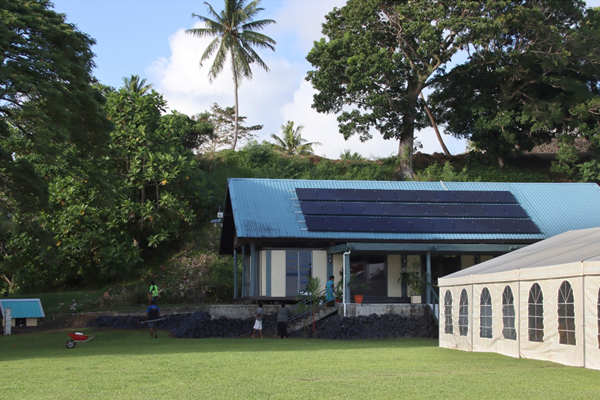
Installed solar panels in Bau Island as part of the Solarization of the Fiji State House project funded by the India-UN Development Partnership Fund. Photo: UNDP
The India-UN Development Partnership Fund, India, Brazil and South Africa Facility for Poverty and Hunger Alleviation (IBSA Fund), and Pérez-Guerrero Trust Fund, managed by the United Nations Office for South-South Cooperation (UNOSSC), have played a pivotal role in supporting clean energy interventions across the developing world, particularly in countries with limited access to renewable energy resources. These initiatives have demonstrated how South-South collaborative efforts can yield tangible results in addressing climate change and achieving Sustainable Development Goal 7 on affordable and clean energy.
A notable example supported by the India-UN Development Partnership Fund is the “Improving access to water through the installation of solar pumping systems” project in Haiti which expanded access to solar energy in rural and underserved communities. This project introduced solar pumping systems that provided reliable and sustainable access to water for agricultural and domestic use, benefiting over 40,000 people. By leveraging renewable energy, the initiative not only alleviated water scarcity but also enhanced the livelihoods of smallholder farmers, who were able to increase agricultural productivity and income. The project’s innovative approach to integrating solar technology into water resource management serves as a replicable model for other nations facing similar challenges.
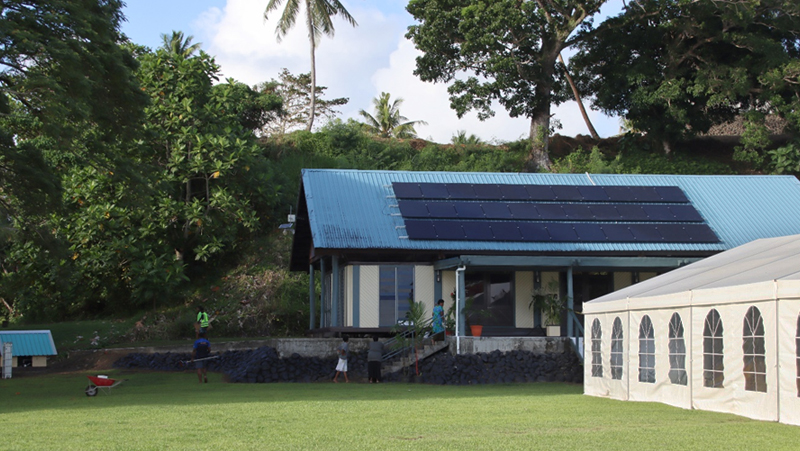
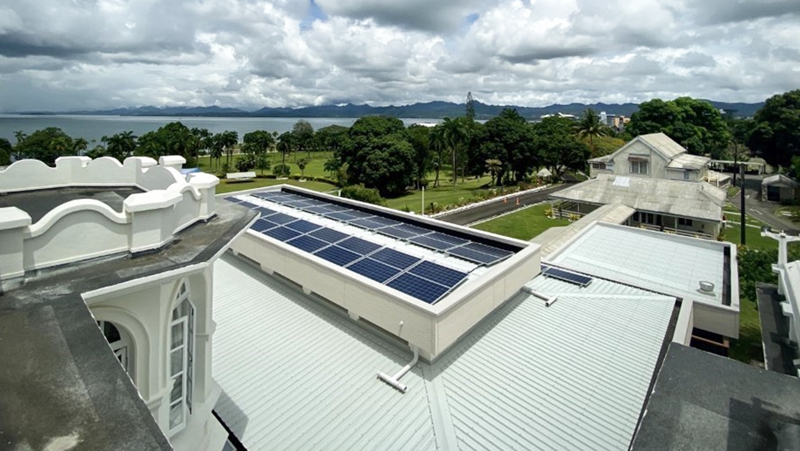
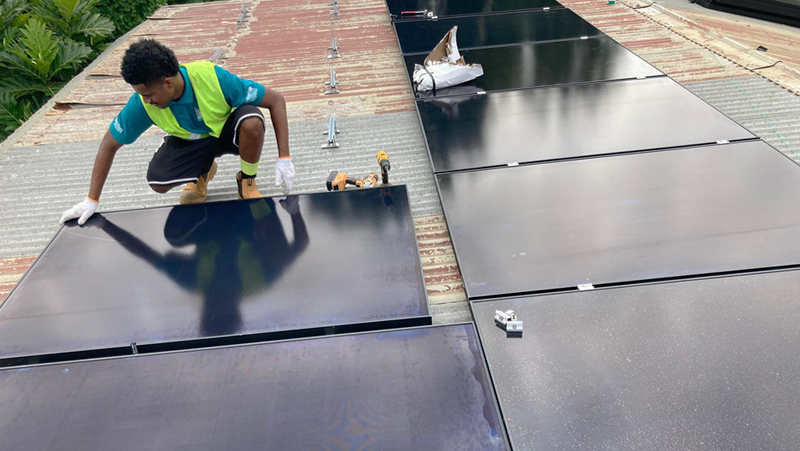
Implemented as part of a joint advocacy demonstration initiative involving 11 Pacific Island nations, Fiji introduced solar energy to power their State House thanks to India-UN Development Partnership Fund support. In 2023, an 18.25 kW solar generation system was launched at the State House, supplying approximately 20,000 units of clean electricity annually. This initiative not only reduces carbon emissions but also saves $3,198 in annual energy costs. During the launch, Fiji’s Head of State, His Excellency President Ratu Wiliame Katonivere, highlighted multi-stakeholder collaboration among the United Nations Development Programme (UNDP), the Pacific Island Development Forum (PIDF), and the Indian Government, underscoring its contribution to Fiji’s Nationally Determined Contributions (NDCs) and Sustainable Development Goal 7.
UNOSSC’s South-South Trust Funds have also contributed significantly to capacity building and policy support in programme countries. The IBSA Fund has provided long-standing support to rural electrification. Notably a project in Guinea-Bissau, providing solar-powered electrification to 20 villages, addresses critical issues related to security, education, food preservation and public health. More recently, an IBSA project in Eswatini offered three solar-powered boreholes, with a collective yield of four litres per second, suppling over 1,500 people in the communities of Mangenge, Moyeni and Masheleleni, as part of a 10-country project implemented through the International Solar Alliance.
As the world grapples with the urgent need to transition to sustainable energy systems, the contributions of the India-UN Development Partnership Fund and the IBSA Fund underscore the importance of South-South cooperation in driving progress. These funds not only deliver immediate benefits to communities but also lay the groundwork for long-term sustainability by fostering innovation, building local capacities, and promoting policy coherence.
The South-South, catalytic, small grants projects of the Pérez-Guerrero Trust Fund for South-South Cooperation (PGTF), also support capacity building on renewable energy. Institutions and experts from at least 11 Southern countries have exchanged knowledge and gained expertise on various forms of renewable energy including small hydropower and low-carbon technologies. For example, collaboration among experts from China, Nigeria, Kenya, and Ethiopia resulted in a feasibility study and identification of six potential small hydropower sites in the African countries.

 Implemented as part of a joint advocacy demonstration initiative involving 11 Pacific Island nations, Fiji introduced solar energy to power their State House thanks to India-UN Development Partnership Fund support. In 2023, an 18.25 kW solar generation system was launched at the State House, supplying approximately 20,000 units of clean electricity annually. This initiative not only reduces carbon emissions but also saves $3,198 in annual energy costs. During the launch, Fiji’s Head of State, His Excellency President Ratu Wiliame Katonivere, highlighted multi-stakeholder collaboration among the United Nations Development Programme (UNDP), the Pacific Island Development Forum (PIDF), and the Indian Government, underscoring its contribution to Fiji’s Nationally Determined Contributions (NDCs) and Sustainable Development Goal 7.
 UNOSSC’s South-South Trust Funds have also contributed significantly to capacity building and policy support in programme countries. The IBSA Fund has provided long-standing support to rural electrification. Notably a project in Guinea-Bissau, providing solar-powered electrification to 20 villages, addresses critical issues related to security, education, food preservation and public health. More recently, an IBSA project in Eswatini offered three solar-powered boreholes, with a collective yield of four litres per second, suppling over 1,500 people in the communities of Mangenge, Moyeni and Masheleleni, as part of a 10-country project implemented through the International Solar Alliance.
As the world grapples with the urgent need to transition to sustainable energy systems, the contributions of the India-UN Development Partnership Fund and the IBSA Fund underscore the importance of South-South cooperation in driving progress. These funds not only deliver immediate benefits to communities but also lay the groundwork for long-term sustainability by fostering innovation, building local capacities, and promoting policy coherence.
The South-South, catalytic, small grants projects of the Pérez-Guerrero Trust Fund for South-South Cooperation (PGTF), also support capacity building on renewable energy. Institutions and experts from at least 11 Southern countries have exchanged knowledge and gained expertise on various forms of renewable energy including small hydropower and low-carbon technologies. For example, collaboration among experts from China, Nigeria, Kenya, and Ethiopia resulted in a feasibility study and identification of six potential small hydropower sites in the African countries.
UNOSSC’s South-South Trust Funds have also contributed significantly to capacity building and policy support in programme countries. The IBSA Fund has provided long-standing support to rural electrification. Notably a project in Guinea-Bissau, providing solar-powered electrification to 20 villages, addresses critical issues related to security, education, food preservation and public health. More recently, an IBSA project in Eswatini offered three solar-powered boreholes, with a collective yield of four litres per second, suppling over 1,500 people in the communities of Mangenge, Moyeni and Masheleleni, as part of a 10-country project implemented through the International Solar Alliance.
As the world grapples with the urgent need to transition to sustainable energy systems, the contributions of the India-UN Development Partnership Fund and the IBSA Fund underscore the importance of South-South cooperation in driving progress. These funds not only deliver immediate benefits to communities but also lay the groundwork for long-term sustainability by fostering innovation, building local capacities, and promoting policy coherence.
The South-South, catalytic, small grants projects of the Pérez-Guerrero Trust Fund for South-South Cooperation (PGTF), also support capacity building on renewable energy. Institutions and experts from at least 11 Southern countries have exchanged knowledge and gained expertise on various forms of renewable energy including small hydropower and low-carbon technologies. For example, collaboration among experts from China, Nigeria, Kenya, and Ethiopia resulted in a feasibility study and identification of six potential small hydropower sites in the African countries.