
 This e-learning module – divided into six lessons – focuses on the ‘Guidelines for the Integration of South-South and triangular cooperation into the Country- and Regional-level Work of the United Nations Development System‘. It simplifies and clarifies the guidelines, making them more accessible for learners. The module guides UN staff on integration of South-South and triangular cooperation in UN Sustainable Development Cooperation Frameworks (UNSDCFs), Regional Collaborative frameworks and plans. The module, developed under the coordination of the United Nations Office for South-South Cooperation and with the guidance of the United Nations Development Coordination Office (UNDCO) and a UN task team drawn from the UN Inter-Agency Mechanism for South-South and triangular cooperation, aims at empowering UN professionals to realize the full potential of the UN development system support to South-South and triangular cooperation. The course was developed with financial contributions from FAO, PAHO, UNFPA, WFP and UNOSSC demonstrating the commitment of UN entities to the joint endeavour of capacity development for South-South and triangular cooperation at country and regional level.
Key Features of the e-Learning Module
- Comprehensive guidance on integrating South-South and triangular cooperation into UN Sustainable Development Cooperation Frameworks (UNSDCFs)
- Strategic approaches for leveraging cooperation initiatives to achieve national development objectives
- Access to South-South and Triangular Cooperation knowledge sources, networks, and funding mechanisms
- Case studies featuring successful integration of cooperation frameworks from various countries
- Practical tools for planning, implementation, monitoring, and evaluation
Course contents
- Lesson 1. South-South and triangular cooperation: definitions, principles, and policy context
- Lesson 2. Integration into the UNSDCF and country programming processes
- Lesson 3. Integrating South-South and triangular cooperation at Regional Level
- Lesson 4. Partnerships and Financing for south-south and triangular cooperation
- Lesson 5. South-South and triangular cooperation Monitoring
- Lesson 6. Recap, Knowledge and Tools
Target audience
This e-module is crafted for a broad spectrum of stakeholders within the United Nations Development system, attuned to the diverse roles and degrees of involvement in South-South and triangular cooperation. It recognizes two primary groups:
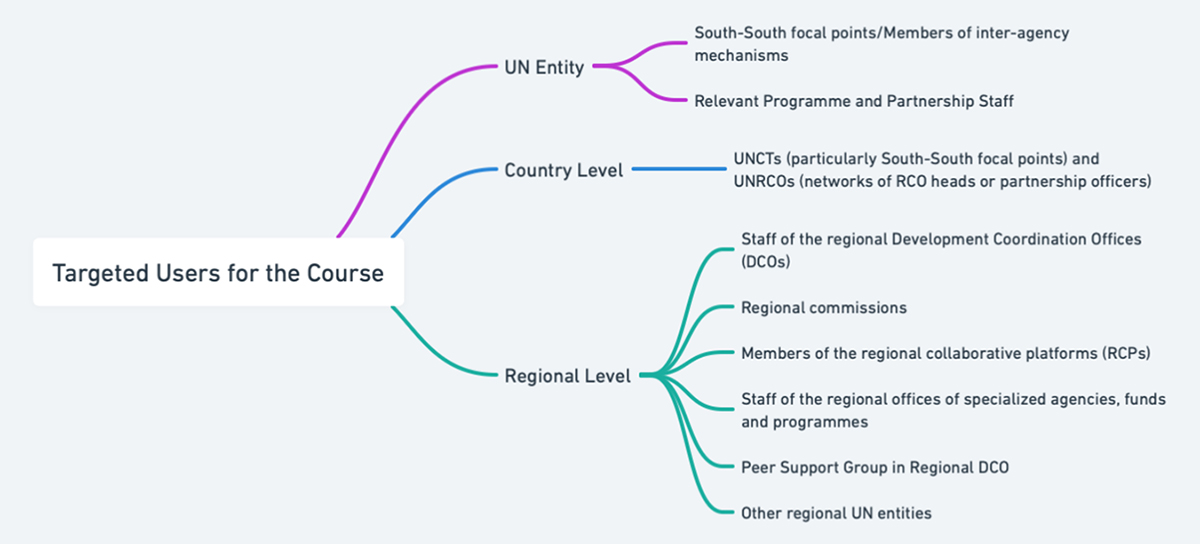
- Primary Audiences: Staff from UN entities directly engaged in contributing to the preparation of Common Country Analysis (CCAs), UN Sustainable Development Cooperation Frameworks (UNSDCFs), country programme documents, workplans of Regional Collaborative Platforms, Regional Commissions and UN entities at the regional level, and implementing South-South and triangular cooperation initiatives at both country and regional levels are the core focus (see specific target groups reflected in diagram below). They require an in-depth engagement with the Module and a comprehensive understanding of its content to contribute effectively to the UN’s objectives.
- Secondary Audiences: This group comprises high-level staff members performing diverse UN functions involved in the strategic review and negotiation of initiatives (such as Heads of Agencies, Heads of Partnerships or Programme Divisions, Co-Vice Chairs of Regional Collaborative Platforms, UN Resident Coordinators, amongst others). They hold pivotal roles in aligning initiatives with overarching organizational goals and negotiating strategic agreements. Additionally, other professionals form part of this group, providing essential support in implementing South-South and triangular cooperation efforts. While their roles may not involve direct participation in drafting documents such as CCAs, UNSDCFs, or country programme documents, they nonetheless require a fundamental understanding of South-South and triangular cooperation principles to support primary audiences in their respective capacities effectively.
The e-module’s design emphasizes balance and adaptability, aiming to cater to both the detailed requirements of the primary audience and the overarching understanding needed by the secondary audience. Through customizable content and flexible navigation, the e-module seeks to accommodate the diverse needs of its users, ensuring all stakeholders can engage effectively.
