South-South cooperation is increasingly important in advancing progress towards the 2030 Agenda, alongside other development support. But lack of data has kept its contribution largely invisible, making it difficult to manage the flows as a strategic resource.
A UN Statistical Commission side event titled
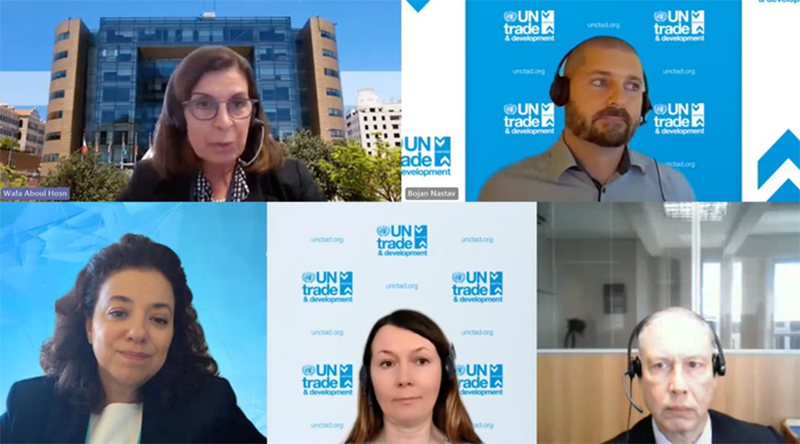
‘The first ever South-South data for SDGs – developed and reported by the countries’ was convened by UN Trade and Development (UNCTAD) on 17 February in a virtual format. Participants addressed the following questions: How national statistical offices help support the pooling of data from many agencies involved in South-South cooperation projects?; How to organize country-led global work to refine common methods and develop tools?; and How to support one another in data reporting to amplify the voices of the South in global debates?
Without accurate and detailed data, it is challenging to measure the impact, allocate resources, and make informed policy decisions.
“It is important for the Global South to take an active role in managing its data and narrative – through collaboration, standardization, and investment,” said Dima Al-Khatib, Director of the United Nations Office for South-South Cooperation. “We must ensure that South-South data is not just collected, but leveraged in global debates. Our data should be fully incorporated into SDG monitoring, particularly SDG 17, which recognizes international partnerships for sustainable development. We must also advocate for equitable representation in data governance discussions, ensuring that our methodologies, priorities, and realities shape the global statistical landscape.”
South-South and triangular cooperation have been recognized as a valuable catalyst in galvanizing political will and in enhancing knowhow to implement the much needed economic and social reforms to rescue the SDGs. Recognizing this, for example, countries are increasingly integrating South-South and triangular cooperation in the preparation and presentation of their voluntary national reviews (VNRs). In this regard, the Co-Chairs of the Group of Friends of VNRs and UNOSSC jointly prepared a
Handbook on Integrating South-South and Triangular Cooperation in the Voluntary National Reviews. The handbook provides step-by- step guidance, drawing from good practices, and examples, on integrating South-South and triangular cooperation in the preparation and presentation of VNRs.
“The Global South is a hub of innovation and human potential, and is fostering mutual development and progress towards sustainable development goals. However, the absence of data has hindered strategic management of these cooperation flows and limited the visibility of South-South cooperation,” said Anu Peltola, Director, UNCTAD Statistics Service, highlighting that “UNCTAD is honored to facilitate this country-led effort aiming to achieve a globally balanced SDG indicator that includes South-South cooperation data measured in terms defined by the Global South.”
Other speakers included: Ms. Wafa Aboul Hosn, Chief, ESCWA Statistics; Mr. Marcio Correa, Development Cooperation Agency ABC, Brazil; Mr. André de Mello e Souza, Institute of Inclusive Development Policies IPEA, Brazil; and Ms. Anne Ibrahim, National Bureau of Statistics, Nigeria.
In 2022, the UN Statistical Commission adopted a new SDG indicator 17.3.1, and welcomed the development of an initial Conceptual Framework for the Measurement of South-South Cooperation.
It is the first ever Framework developed and agreed upon by the countries of the global South for this specific purpose and enables the reporting of South-South data for SDGs, alongside long-established data on North-South development support flows.
The Commission asked the UN Trade and Development (UNCTAD) to test the Framework, provide capacity building support and enable the reporting of data globally. Now a new manual titled
Manual for the Framework to Measure South-South Cooperation: Technical and procedural aspects for pilot testing has been developed with pioneering countries, and first data are reported.
Over 60 countries have now requested UNCTAD’s support to start reporting South-South data.
?? Read the
Manual for the Framework to Measure South-South Cooperation: Technical and procedural aspects for pilot testing