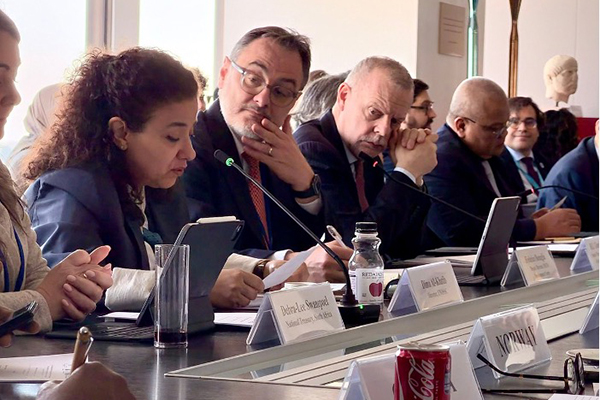
The United Nations Office for South-South Cooperation hosted a presentation on the
“System for Recommendations Monitoring” (SIMORE PLUS), developed by the Government of Paraguay, through a gradual process of improvement initiated in 2011 with a “Human Rights Recommendations searching tool”, which then gave rise in 2014 to SIMORE as a follow-up and reporting mechanism, and later took a qualitative leap to SIMORE Plus version in 2017. The project was supported by the United Nations Development Program at its inception.
In 2015 SIMORE was established as a National Mechanism for Implementation, Reporting and Follow-up (NMIRF) in Paraguay, supported by two complementary and mutually reinforcing components: an online platform (digital tool) and a national network of around 130 focal points belonging to 65 institutions of the 3 State branches (Executive, Judiciary and Parliament), as well as other bodies. This network is jointly coordinated by the Ministries of Foreign Affairs and Justice. Both Ministries are responsible for training and guidance in the identification, review and upload of relevant data, information and documents to the platform by the focal points.
While promoting the UN Human Rights Council’s resolutions to support NMIRFs, Paraguay has designed the “SIMORE Paraguay Technical Cooperation Program” to share its national experience in order to establish or strengthen NMIRFs based on SIMORE Plus working methods through South-South cooperation.
The briefing on the initiative reflected Paraguay’s pride and confidence that SIMORE Plus could benefit many countries willing to establish or strengthen their national mechanisms for implementation, reporting and follow-up of human rights recommendations.
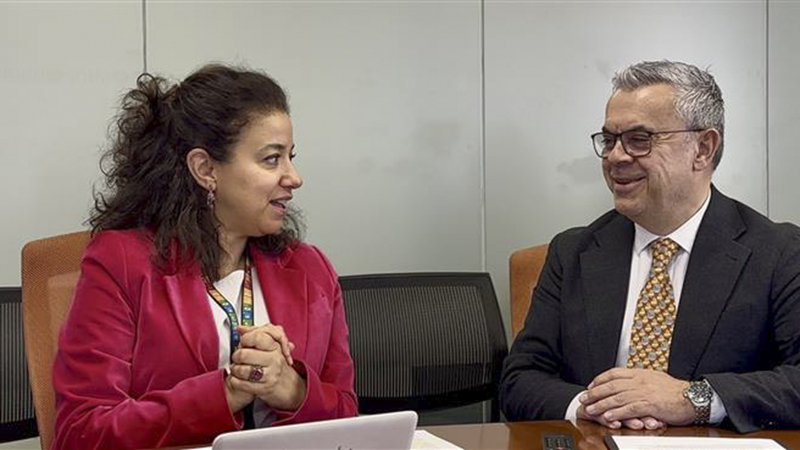
“The BAPA+40 Outcome Document of the Second High-level United Nations Conference on South-South Cooperation underscores the importance of promoting peaceful and inclusive societies to achieve sustainable development,” said Director Dima Al-Khatib, opening the briefing. “SIMORE embodies the principles of South-South cooperation. It provides for follow-up to the SDGs; has been recognized at the UN Human Rights Council; and has already been successfully implemented in several Latin American countries including Argentina, Dominican Republic, Chile, Costa Rica, Guatemala, Honduras, and Uruguay.”
The briefing also opened channels for discussion and for exploring potential collaboration between the Government of Paraguay and UN Agencies, particularly with agencies that could help expand the adaptation of SIMORE Plus in other developing countries. Human rights transcend the mandates of all UN entities.
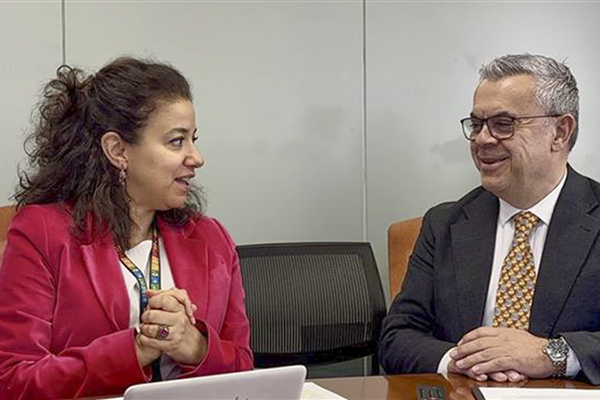
H.E. Amb. Marcelo Scarppini Ricciardi, Permanent Representative of Paraguay to the UN and Dima Al-Khatib, Director of the United Nations Office for South-South Cooperation explored next steps, which included collaborating on sharing this valuable experience through similar presentations to Member States. Both noted that the cooperation program could be shared with other countries there-by enhancing South-South and triangular cooperation modalities.
Furthermore, the UNOSSC Director indicated that where there is demand from Member States for support in adapting SIMORE Plus, it would be best for the prospective partner to approach UN entities in their respective countries.
Other aspects discussed related to the packaging of the presentation. The Permanent Representative of Paraguay to the United Nations suggested that a short video could be prepared on SIMORE Plus working methods. Furthermore, participants raised the idea to compile frequently asked questions to enable better understanding of the needs and to serve as reference for prospective partners in their own efforts. These additional measures would help strengthen the adaptability of the SIMORE Plus’ Cooperation Programme.