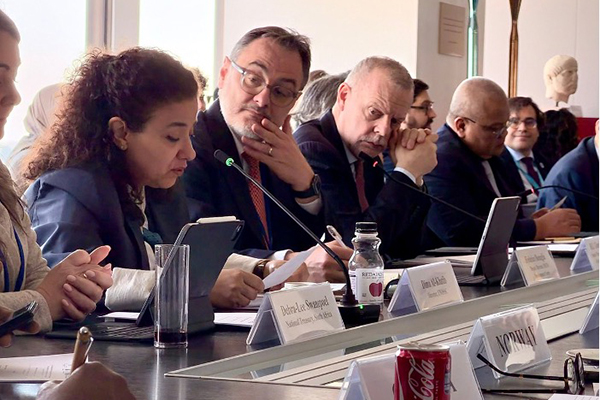
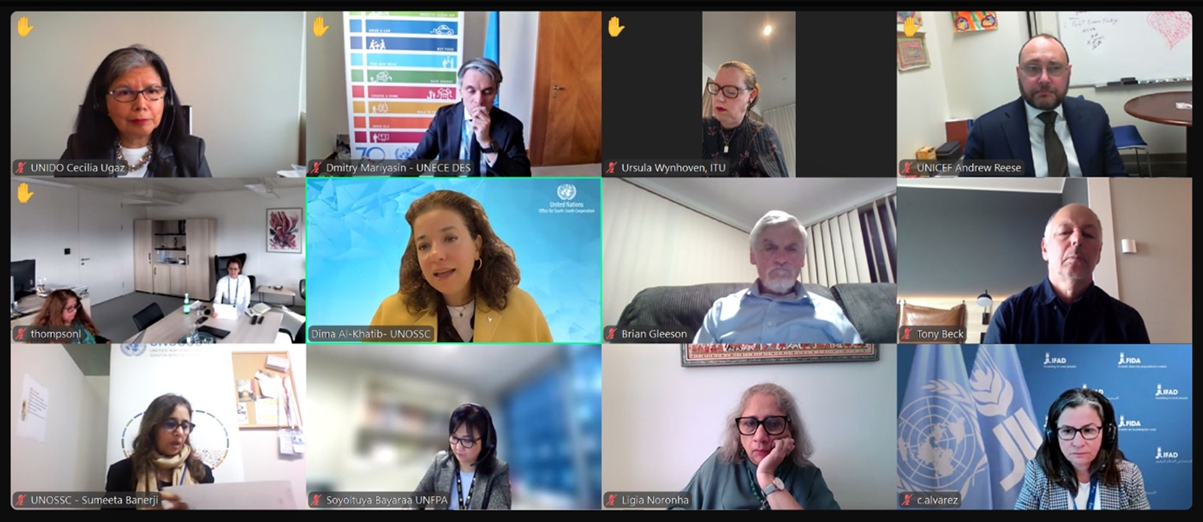
The first quarter Interagency Mechanism Meeting for South-South and Triangular Cooperation convened on March 18, following the first meeting of the South-South Advisory Group held a day earlier.
South-South Advisory Group
During the first Advisory Group meeting with UNOSSC, senior UN representatives engaged in a strategic discussion on the role of the UN system in leveraging South-South and triangular cooperation for SDG achievement – guided by the UN System-wide Strategy on South-South and Triangular Cooperation.
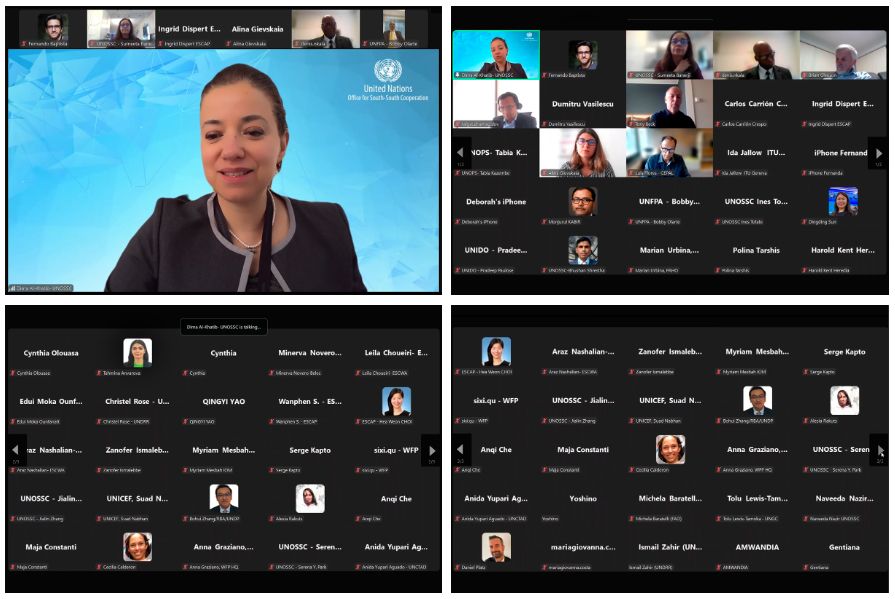
UNOSSC Director Ms. Dima Al-Khatib outlined the Advisory Group’s key objectives aimed at advancing South-South and triangular cooperation within the UN system.
She emphasized three primary goals:
 The critical role of the UN System-Wide Strategy in harnessing the knowledge, skills, and resources of the Global South to accelerate progress toward the Sustainable Development Goals (SDGs) was highlighted. The Advisory Group, the Director emphasized, aims to enhance collaboration and ensure that South-South cooperation remains a core pillar of global development efforts. It will play a key role in shaping the strategic processes, and reinforce UNOSSC’s commitment to strengthening South-South and triangular cooperation across the UN system.
Interagency Mechanism Meeting
The Interagency Mechanism Meeting, chaired by UNOSSC Director Dima Al-Khatib, brought together over 50 UN South-South focal points to discuss key initiatives and strategic planning efforts for the year ahead.
The meeting began with updates from UNOSSC on ongoing initiatives. These included preparations for the 22nd Session of the High-level Committee on South-South Cooperation, the formulation of a new UNOSSC Strategic Framework, and the development of a new UN Systemwide Strategy on South-South and Triangular Cooperation. A second segment focused on evaluating the current UN Systemwide Strategy, while the third featured presentations from regional UN entities.
The critical role of the UN System-Wide Strategy in harnessing the knowledge, skills, and resources of the Global South to accelerate progress toward the Sustainable Development Goals (SDGs) was highlighted. The Advisory Group, the Director emphasized, aims to enhance collaboration and ensure that South-South cooperation remains a core pillar of global development efforts. It will play a key role in shaping the strategic processes, and reinforce UNOSSC’s commitment to strengthening South-South and triangular cooperation across the UN system.
Interagency Mechanism Meeting
The Interagency Mechanism Meeting, chaired by UNOSSC Director Dima Al-Khatib, brought together over 50 UN South-South focal points to discuss key initiatives and strategic planning efforts for the year ahead.
The meeting began with updates from UNOSSC on ongoing initiatives. These included preparations for the 22nd Session of the High-level Committee on South-South Cooperation, the formulation of a new UNOSSC Strategic Framework, and the development of a new UN Systemwide Strategy on South-South and Triangular Cooperation. A second segment focused on evaluating the current UN Systemwide Strategy, while the third featured presentations from regional UN entities.
 The United Nations Economic and Social Commission for Asia and the Pacific (ESCAP) introduced its South-South Connector Platform, emphasizing its role in fostering collaboration across the Asia-Pacific region. Meanwhile, the Development Coordination Office (DCO) in Latin America and the Caribbean presented findings from a survey of UN Resident Coordinators, assessing their support for South-South and triangular cooperation.
UNOSSC Director Dima Al-Khatib provided insights into ongoing evaluations, the establishment of the South-South Advisory Group, and progress on the South-South and Triangular Cooperation Solutions Lab initiative. She also announced the forthcoming completion and launch of the Global Report on South-South and Triangular Cooperation.
As part of long-term strategic planning, the Director highlighted that assessments of the current UNOSSC Strategic Framework and Systemwide Strategy will inform the development of a new framework and strategy, both expected to be finalized by the end of 2025.
Additionally, UN agencies were informed that invitations for the 22nd High-level Committee Session (HLC) had been dispatched to Member States, UN entities, Intergovernmental Organizations, and accredited NGOs. Participants also received briefings on the HLC session’s theme (“Accelerating the 2030 Agenda for Sustainable Development: South-South Cooperation as a Driver for Transformation”), speaker selection, and opportunities to propose side events.
A lead consultant overseeing the Systemwide Strategy evaluation outlined the methodology for the review process, emphasizing the importance of inter-agency involvement through focus groups and individual consultations. Notably, UN representatives raised concerns over the absence of a structured evaluation framework for South-South cooperation, with several agencies sharing their own assessment approaches.
ESCAP’s presentation on their South-South Connector Platform drew significant interest, particularly regarding its integration with the Regional Directors-General Forum aimed at addressing development challenges in the Asia-Pacific. The platform, developed in collaboration with regional Directors-General, was initially launched in a meeting co-hosted by ESCAP, UNOSSC, and the Government of Thailand.
Meanwhile, the UN Development Coordination Office in Latin America underscored the growing role of Development Cooperation Offices and UN Resident Coordinators in embedding South-South collaboration into regional and country-level UN initiatives. As part of a broader assessment, UNOSSC and DCO LAC plan to analyze findings from their surveys and share insights with other regional DCOs to identify trends, constraints, and opportunities for strengthening collaboration.
Closing the meeting, Denis Nkala, UNOSSC Chief of Intergovernmental and UN System Affairs, expressed appreciation for the collective efforts of UN agencies in advancing South-South and triangular cooperation. He highlighted the development of new Guidelines for Integrating South-South Cooperation into UN frameworks, along with the launch of the E-module: Leveraging South-South and Triangular Cooperation to Accelerate Transformation Towards Sustainable Development, a training tool aimed at supporting UN staff in embedding South-South cooperation within development planning.
The meeting reinforced the UN system’s commitment to expanding South-South and triangular cooperation a key driver of sustainable development.
The United Nations Economic and Social Commission for Asia and the Pacific (ESCAP) introduced its South-South Connector Platform, emphasizing its role in fostering collaboration across the Asia-Pacific region. Meanwhile, the Development Coordination Office (DCO) in Latin America and the Caribbean presented findings from a survey of UN Resident Coordinators, assessing their support for South-South and triangular cooperation.
UNOSSC Director Dima Al-Khatib provided insights into ongoing evaluations, the establishment of the South-South Advisory Group, and progress on the South-South and Triangular Cooperation Solutions Lab initiative. She also announced the forthcoming completion and launch of the Global Report on South-South and Triangular Cooperation.
As part of long-term strategic planning, the Director highlighted that assessments of the current UNOSSC Strategic Framework and Systemwide Strategy will inform the development of a new framework and strategy, both expected to be finalized by the end of 2025.
Additionally, UN agencies were informed that invitations for the 22nd High-level Committee Session (HLC) had been dispatched to Member States, UN entities, Intergovernmental Organizations, and accredited NGOs. Participants also received briefings on the HLC session’s theme (“Accelerating the 2030 Agenda for Sustainable Development: South-South Cooperation as a Driver for Transformation”), speaker selection, and opportunities to propose side events.
A lead consultant overseeing the Systemwide Strategy evaluation outlined the methodology for the review process, emphasizing the importance of inter-agency involvement through focus groups and individual consultations. Notably, UN representatives raised concerns over the absence of a structured evaluation framework for South-South cooperation, with several agencies sharing their own assessment approaches.
ESCAP’s presentation on their South-South Connector Platform drew significant interest, particularly regarding its integration with the Regional Directors-General Forum aimed at addressing development challenges in the Asia-Pacific. The platform, developed in collaboration with regional Directors-General, was initially launched in a meeting co-hosted by ESCAP, UNOSSC, and the Government of Thailand.
Meanwhile, the UN Development Coordination Office in Latin America underscored the growing role of Development Cooperation Offices and UN Resident Coordinators in embedding South-South collaboration into regional and country-level UN initiatives. As part of a broader assessment, UNOSSC and DCO LAC plan to analyze findings from their surveys and share insights with other regional DCOs to identify trends, constraints, and opportunities for strengthening collaboration.
Closing the meeting, Denis Nkala, UNOSSC Chief of Intergovernmental and UN System Affairs, expressed appreciation for the collective efforts of UN agencies in advancing South-South and triangular cooperation. He highlighted the development of new Guidelines for Integrating South-South Cooperation into UN frameworks, along with the launch of the E-module: Leveraging South-South and Triangular Cooperation to Accelerate Transformation Towards Sustainable Development, a training tool aimed at supporting UN staff in embedding South-South cooperation within development planning.
The meeting reinforced the UN system’s commitment to expanding South-South and triangular cooperation a key driver of sustainable development.
- Elevating UN system discussions on supporting South-South and triangular cooperation.
- Providing guidance for the evaluation and formulation of a new UN System-Wide Strategy on South-South and triangular cooperation.
- Strengthening UN engagement and ownership in fostering South-South and triangular cooperation efforts.
The critical role of the UN System-Wide Strategy in harnessing the knowledge, skills, and resources of the Global South to accelerate progress toward the Sustainable Development Goals (SDGs) was highlighted. The Advisory Group, the Director emphasized, aims to enhance collaboration and ensure that South-South cooperation remains a core pillar of global development efforts. It will play a key role in shaping the strategic processes, and reinforce UNOSSC’s commitment to strengthening South-South and triangular cooperation across the UN system.
Interagency Mechanism Meeting
The Interagency Mechanism Meeting, chaired by UNOSSC Director Dima Al-Khatib, brought together over 50 UN South-South focal points to discuss key initiatives and strategic planning efforts for the year ahead.
The meeting began with updates from UNOSSC on ongoing initiatives. These included preparations for the 22nd Session of the High-level Committee on South-South Cooperation, the formulation of a new UNOSSC Strategic Framework, and the development of a new UN Systemwide Strategy on South-South and Triangular Cooperation. A second segment focused on evaluating the current UN Systemwide Strategy, while the third featured presentations from regional UN entities.
The United Nations Economic and Social Commission for Asia and the Pacific (ESCAP) introduced its South-South Connector Platform, emphasizing its role in fostering collaboration across the Asia-Pacific region. Meanwhile, the Development Coordination Office (DCO) in Latin America and the Caribbean presented findings from a survey of UN Resident Coordinators, assessing their support for South-South and triangular cooperation.
UNOSSC Director Dima Al-Khatib provided insights into ongoing evaluations, the establishment of the South-South Advisory Group, and progress on the South-South and Triangular Cooperation Solutions Lab initiative. She also announced the forthcoming completion and launch of the Global Report on South-South and Triangular Cooperation.
As part of long-term strategic planning, the Director highlighted that assessments of the current UNOSSC Strategic Framework and Systemwide Strategy will inform the development of a new framework and strategy, both expected to be finalized by the end of 2025.
Additionally, UN agencies were informed that invitations for the 22nd High-level Committee Session (HLC) had been dispatched to Member States, UN entities, Intergovernmental Organizations, and accredited NGOs. Participants also received briefings on the HLC session’s theme (“Accelerating the 2030 Agenda for Sustainable Development: South-South Cooperation as a Driver for Transformation”), speaker selection, and opportunities to propose side events.
A lead consultant overseeing the Systemwide Strategy evaluation outlined the methodology for the review process, emphasizing the importance of inter-agency involvement through focus groups and individual consultations. Notably, UN representatives raised concerns over the absence of a structured evaluation framework for South-South cooperation, with several agencies sharing their own assessment approaches.
ESCAP’s presentation on their South-South Connector Platform drew significant interest, particularly regarding its integration with the Regional Directors-General Forum aimed at addressing development challenges in the Asia-Pacific. The platform, developed in collaboration with regional Directors-General, was initially launched in a meeting co-hosted by ESCAP, UNOSSC, and the Government of Thailand.
Meanwhile, the UN Development Coordination Office in Latin America underscored the growing role of Development Cooperation Offices and UN Resident Coordinators in embedding South-South collaboration into regional and country-level UN initiatives. As part of a broader assessment, UNOSSC and DCO LAC plan to analyze findings from their surveys and share insights with other regional DCOs to identify trends, constraints, and opportunities for strengthening collaboration.
Closing the meeting, Denis Nkala, UNOSSC Chief of Intergovernmental and UN System Affairs, expressed appreciation for the collective efforts of UN agencies in advancing South-South and triangular cooperation. He highlighted the development of new Guidelines for Integrating South-South Cooperation into UN frameworks, along with the launch of the E-module: Leveraging South-South and Triangular Cooperation to Accelerate Transformation Towards Sustainable Development, a training tool aimed at supporting UN staff in embedding South-South cooperation within development planning.
The meeting reinforced the UN system’s commitment to expanding South-South and triangular cooperation a key driver of sustainable development.