• Home
  • /
  • Events
  • /
  • Advancing Financing for Development through South-South and Triangular Cooperation in the Arab Region

Advancing Financing for Development through South-South and Triangular Cooperation in the Arab Region


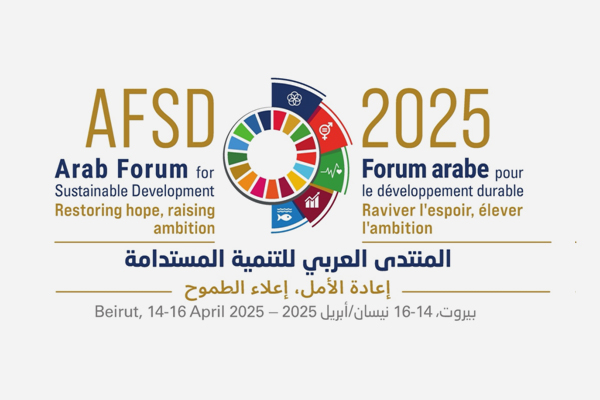
The Regional Commissions of the United Nations conduct annual Sustainable Development Forums to review progress on five SDGs around a specific theme, with outcomes feeding into the High-Level Political Forum (HLPF) in New York each July. For 2025, the SDGs under review are SDG 3 (health and wellbeing), SDG 5 (gender equality), SDG 8 (decent work and economic growth), SDG 14 (life below water), and SDG 17 (partnerships, reviewed every year). The 2025 theme is “Advancing sustainable, inclusive, science- and evidence-based solutions for the 2030 Agenda and its SDGs for leaving no one behind”. The Arab Forum for Sustainable Development (AFSD) convened 14-16 April 2025 on the theme “Restoring hope, raising ambition”, calling attention to inclusive, science- and evidence-based solutions for the 2030 Agenda and its Sustainable Development Goals (SDGs). A high-level segment during the Forum (at Ministerial level) focused on financing for development, given the upcoming Fourth Conference on Financing for Development (FfD4) in Seville, Spain 30 June – 3July 2025. The Ministerial-level discussion at AFSD on 15 April (“On the Road to FfD4: Advancing a renewed global FfD framework and reforming the international financial architecture”) addressed the regional position on financing for development in the lead up to the FfD4 and deliberated on the First Draft Outcome Document released on 10 March (leaning on the priorities of the region). In the session were:
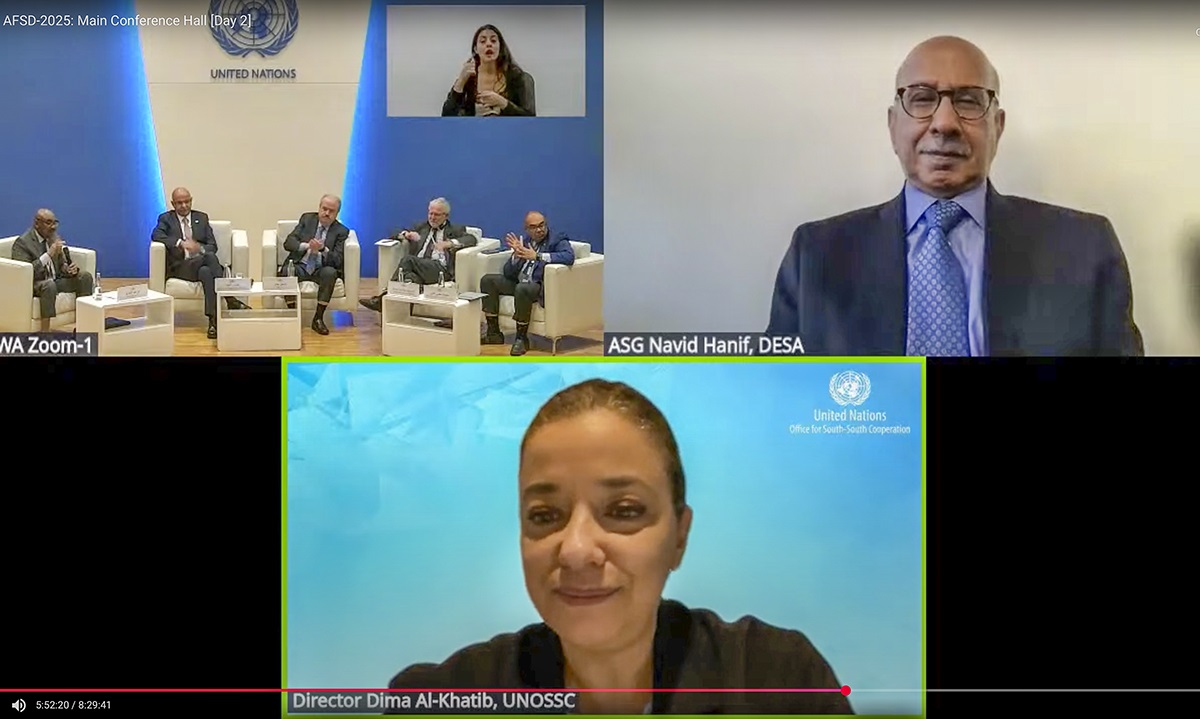
  • Moderator: Ibrahim Ahmed Elbadawi Founder and Managing Director of the Gulf Economic Policy and Research Center
  • Panelists: Yassine Jaber, Minister of Finance of Lebanon; Abbas Kadhom Obaid, Chair of the Group of 77 and Permanent Representative of the Republic of Iraq to the United Nations; Jesús Ignacio Santos Aguado, Ambassador of Spain to Lebanon; and, Mahmoud Mohieldin, United Nations Special Envoy on Financing the 2030 Agenda for Sustainable Development
  • Discussants (live from New York): Navid Hanif, Assistant Secretary-General for Economic Development, United Nations Department of Economic and Social Affairs (UNDESA) and Dima Al-Khatib Director of the United Nations Office for South-South Cooperation.
With just five years remaining until the 2030 deadline for achieving the SDGs, only 17% of our global targets are currently on track, and the annual SDG investment gap for developing countries remains high at $4 trillion. In the Arab region, keeping in mind that the region faces challenges related to data availability, experts raise that it will take 60 more years to meet regional targets. The annual development financing gap remains significant at $660 billion.  
The Arab region is diverse in socio-economic makeup, reflected in the groupings of the 22 Arab States used in the Arab Sustainable Development Report (ASDR): Gulf Cooperation Council (GCC) subregion: Bahrain, Kuwait, Oman, Qatar, Saudi Arabia and the United Arab Emirates; Middle-income countries (MICs) subregion excludes countries in situations of conflict and those classified as least developed countries: Algeria, Egypt, Jordan, Lebanon, Morocco and Tunisia; Least developed countries (LDCs) subregion follows the United Nations classification: the Comoros, Djibouti, Mauritania, Somalia, the Sudan and Yemen; Countries in conflict subregion: Iraq, Libya, Somalia, the State of Palestine, the Sudan, the Syrian Arab Republic and Yemen (Somalia, Sudan and Yemen are grouped in both LDCs and countries in conflict).
  The Arab Sustainable Development Report 2024 highlights key challenges that need urgent attention to protect or speed up progress on the Sustainable Development Goals (SDGs). These include:
  • Food security: The region imports most of its staple foods, and one-third of its countries are affected by conflict. This makes it especially vulnerable to price spikes and food shortages.
  • Climate crisis: The region faces rising temperatures and water scarcity, along with more frequent droughts, sandstorms, and other natural disasters that worsen the effects of shocks.
  • Ongoing conflict: Many countries – such as Iraq, Libya, Somalia, Sudan, Syria, and Yemen – are affected facing major setbacks in development and human suffering.
South-South and triangular cooperation has power and potential to help accelerate progress on the SDGs in the region by enabling and facilitating exchanges on best-fit solutions rooted in the regional context. The Arab region has produced numerous solutions that can be applied more systematically across the region through South-South cooperation. Also, by providing and channeling support that recognizes individual strengths and needs, and poses no additional burden.     During the Ministerial dialogue on financing for development at AFSD, the UNOSSC Director Dima Al-Khatib framed the imperatives for leveraging the full potential of South-South and triangular cooperation to advance regional aspirations for fairer financial architecture. She raised the need to rethink the way we view the Global South, to recognize their evolution alongside the shifts in the development landscape; and, to also rethink the way we do development, recognizing the assets that the Global South also possess and could be leveraged for the benefit of peers. Please click here to read full remarks of UNOSSC Director Dima Al-Khatib). The G77 Chair pointed out that, in the context of financing for development, South-South and triangular cooperation needs to be viewed as additional strengths that serve as complements, and not alternatives, to traditional development cooperation (please see full session here).   ?? Download UNOSSC Director Dima Al-Khatib’s statement.  
Related Post


  • All Post
  • ATCT Featured Publications POM
  • BAPA+40
  • Blog
  • Capacity Development Initiatives
  • CICETE Featured Publications POM
  • CIKD
  • Cities Clusters - Agriculture
  • Cities Clusters - COVID-19
  • Cities Clusters - COVID-19 Knowledge Products
  • Cities Clusters - DRR
  • Cities Clusters - E-commerce
  • Cities Clusters - Tourism
  • Cities Clusters - Tourism Knowledge Products
  • Cities Clusters - Transport
  • Cities Clusters - Waste
  • Cities Project
  • Cities Project COVID-19 Newsletters
  • Cities Project COVID-19 Response
  • Cities Project Knowledge Products
  • Classic (untouched)
  • Climate Action
  • COMSATS Featured Publications POM
  • COMSATS Featured Solutions POM
  • Converted from Divi
  • Converted from Mixed
  • Converted from WPBakery
  • COVID-19
  • COVID-19 Page Featured Solutions
  • DRR Knowledge Products
  • DRR News
  • Empty Post
  • Events
  • Featured Event UN-Habitat POM
  • Financing for Development
  • Financing Mechanisms
  • g7+
  • Gender Events
  • Gender News
  • Good Practices in SSTrC Series
  • Good Practices Publications
  • Good Practices Thematic Series & Special Editions
  • Good Practices Vol. 2
  • Good Practices Vol. 3
  • GSSDC
  • Highlighted
  • Highlighted Publications
  • IAEA Featured Solutions POM
  • IBRAF Featured Publications POM
  • IBSA Fund
  • IBSA Fund Annual Reports
  • IBSA Fund News and Stories
  • IBSA Fund Publication
  • IBSA Fund Story
  • ICGEB Featured Events POM
  • ICGEB Featured Publications POM
  • ICGEB Featured Solutions POM
  • ILO Featured Events POM
  • ILO Featured Publications POM
  • ILO Featured Solutions POM
  • India-UN Development Partnership Fund
  • India-UN Fund Publication
  • India-UN Fund Story
  • IsDB
  • IsDB Featured Publications POM
  • IsDB SCC
  • News
  • Norec Featured Publications POM
  • Norec Featured Solutions POM
  • Peace and Development
  • PGTF Publications
  • PGTF Story
  • PICA Featured News POM
  • PICA Featured Publications POM
  • PICA Featured Solutions POM
  • PIDF Featured Publications POM
  • Publications
  • Regional Updates
  • Research
  • ROK-UNOSSC Facility
  • SGP Featured Publication POM
  • SGP Featured Solutions POM
  • Solution
  • South South in Action
  • South-South Global Thinkers
  • South-South Ideas
  • South-South Ideas Series
  • South-South in Action Series
  • Southern Response to COVID-19
  • SSN4PSI Featured Publications POM
  • SSN4PSI Featured Solutions POM
  • Training
  • UN Day for SSC 2020
  • UN Fund for SSC
  • UN SSC Day Publications
  • UN-Habitat Featured Publications POM
  • UN-HABITAT Featured Solutions POM
  • UNCCT
  • UNEP Featured Publications POM
  • UNFPA
  • UNFSSC Publication
  • UNFSSC Story
  • UNIDO Featured Publications POM
  • UNIDO Featured Solutions POM
  • UNIDO POM Events
  • UNOCT Featured Publications POM
  • UNV
  • UNV Featured Publications POM
  • WB Featured Publications POM
  • WB Featured Solutions POM
  • Webinars
  • WFP Featured Events POM
  • WFP Featured Publication POM
  • WFP Featured Solutions POM
  • WIPO
  • Workshops and Seminars
  • Youth4South
  • z Across the Globe 1
  • z Across the Globe 2
  • z Across the Globe 4
  • z Across the Globe 5
  • z Across the Globe 6
  • z Across the Globe 7
  • z Across the Globe 8
  • z ES BAPA+40
  • z ES Eventos
  • z ES Noticias
  • z ES Noticias Destacadas
  • z ES Publicaciones
  • z ES Publicaciones Destacadas
  • z ES Serie Buenas Prácticas en la CSSyT
  • z ES Serie El Sur-Sur en Acción
  • z FR Actualités
  • z FR BAPA+40
  • z FR Événements
  • z FR Publications
  • z FR Publications en vedette
  • z FR Série Bonnes pratiques en CSST
  • z FR Série Sud-Sud en action
  • z Highlighted News
  • z Photos
  • z Videos
  • z ZH BAPA+40
  • z ZH Events
  • z ZH News

ABOUT

Terms of Service

Privacy Policy

Disclosures

RESOURCES

Terms of Service

Privacy Policy

Disclosures

ENGAGE

Terms of Service

Privacy Policy

Disclosures

Copyright © UNOSSC/UNDP

wpChatIcon
wpChatIcon

Alliance Application Form

Submit an Expression of Interest and/or Demand Signal. UNOSSC reviews submissions on a rolling basis.

1. Official name of organization / institution / government entity (exclusions to apply) *
2. Country *
3. Region *
4. SDG *
Secondary SDG *
5. Partner category *
6. Website *
7. Brief description of your institution (max. 150 words) *
Name for the Lead *
Title for the Lead *
Email address for the Lead *
Name for the co-lead
Title for the co-lead
Email address for the co-lead
Section 3. Expression of Interest in the Alliance *
Additional information on proposed areas of engagement may be requested through the platform following initial review by the Alliance Secretariat.
Section 4. Due Diligence and Integrity Declaration *

Submission Note:

  • Submission of this Expression of Interest form does not automatically confer participation in the Alliance.
  • All submissions will be reviewed by the Alliance Secretariat, including basic eligibility screening and proportionate due diligence, as appropriate.
  • Participation in Alliance activities is determined based on relevance to articulated cooperation needs, alignment with Alliance principles, and integrity considerations.
  • Engagement under the Alliance is voluntary, non-binding, and facilitative in nature, and does not constitute funding approval, contractual commitment, or institutional membership.
  • The Alliance Secretariat may contact submitting entities for additional information or clarification during the review process.

Submission of Demand Form

Description of Demand

Indicate the type of support or cooperation requested through the Alliance.
Please briefly describe the challenge, gap, or priority. (Max. 300 words)

Thematic and Geographic Focus

Please indicate the main focus areas of your demand:

A. Thematic Areas (select up to three)
B. Geographic Focus (select all that apply)

Proposed Engagement Modalities

Please indicate how you would like to engage through the Alliance (select all that apply):

Expected Outcomes

Please indicate the main results you seek to achieve through this engagement. (Max. 200 words)
Examples:
• Capacity strengthened
• Partnerships established
• Sectoral or regional strategies co-developed
• Solutions piloted
• Knowledge generated
• Policies informed

Timeline and Readiness (if applicable)

1. Expected timeframe for engagement:
2. Current stage:

Additional Information

Please provide any additional information, documents, or links relevant to this submission.
(Max. 200 words or upload link)

Submission of Offer Form

Description of Contribution

Indicate the type of contribution your institution can provide and describe the expertise, resources, or solutions you may offer.
Please briefly describe your proposed contribution. (Max. 300 words)

Thematic and Geographic Focus

Please indicate the main focus areas of your interest:

A. Thematic Areas (select up to three)
B. Geographic Focus (select all that apply)

Proposed Engagement Modalities

Please indicate how you would like to engage through the Alliance (select all that apply):

Expected Outcomes

Please indicate the main results you aim to achieve through this engagement. (Max. 200 words)
Examples:
• Capacity strengthened
• Partnerships established
• Sectoral or regional strategies co-developed
• Solutions piloted
• Knowledge generated
• Policies informed

Timeline and Readiness (if applicable)

1. Expected timeframe for engagement:
2. Current stage:

Additional Information

Please provide any additional information, documents, or links relevant to this submission.
(Max. 200 words or upload link)

Organization Registration

Authentication & Due Diligence This prototype simulates identity verification, due diligence confirmation, and an authentication step before submission. *

First Name *
Last Name *
Email address *
Password *
Confirm Password *
Name of institution / organization *
Country / Region *
Organization Type *
Organization other *
Function / role *
Organization logo *
Maximum file size: 1 GB

Login

Login / email *
Password *
Remember me

Forgot password?

Connect form

Your name *
Email *
Organization / institution *
Job title / role *
Reason for connecting:
Short message

Scroll to Top