• Home
  • /
  • News
  • /
  • ILO Reaffirms Commitment to South-South Cooperation through Knowledge Exchange and Capacity-Building

ILO Reaffirms Commitment to South-South Cooperation through Knowledge Exchange and Capacity-Building


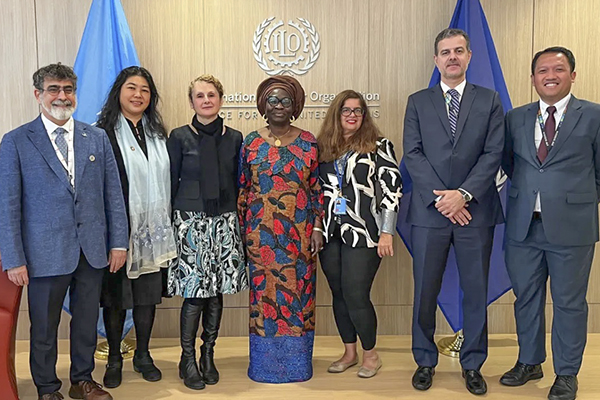
From left to right: Carlos Carrion-Crespo, Multilateral Relations Officer, ILO; Xiaojun Grace Wang, Trust Fund Director, UNOSSC; Muserref Yetim, Clinical Professor in the Program in International Relations, NYU; Cynthia Samuel-Olonjuwon, Special Representative to the UN and Director of ILO Office for the UN; Anita Amorim, Head, Emerging and Special Partnerships Unit, ILO; José Gilberto Scandiucci, Minister Counsellor, Permanent Mission of Brazil to the UN; and Dwi Wisnu Budi Prabowo, First Secretary, Permanent Mission of Indonesia to the UN.
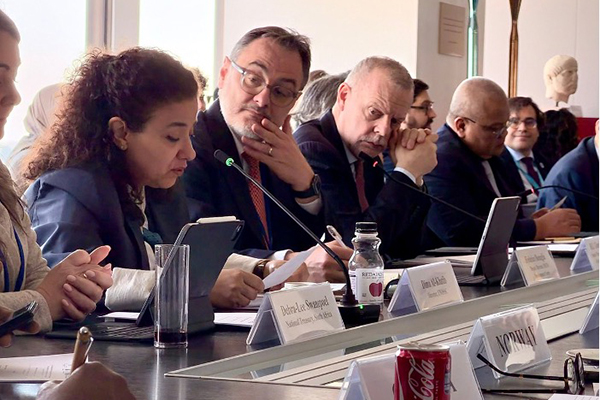
  The ILO and its UN partners also organized a discussion on AI’s potential to drive inclusive growth and social justice, all of which took place at the High-Level Committee on South-South (SSTC) of the UN General Assembly.   NEW YORK (ILO News) – The International Labour Organization (ILO) has reaffirmed its unwavering dedication to promoting social justice and decent work through South-South and Triangular Cooperation (SSTC) at the 22nd Session of the High-Level Committee on South-South Cooperation, held at the United Nations General Assembly (UNGA) in New York on 28 May. Representing the ILO, Anita Amorim, Head of the Emerging and Special Partnerships Unit, highlighted the organization’s pivotal role in facilitating knowledge exchange and capacity-building among developing countries. She emphasised the ILO’s commitment to supporting the Global South as they share best practices and lessons learned in areas such as social protection, skills development, and labour market policies, to better equip them to address a range of challenges that they face. In addition, the ILO and the United Nations Office for South-South Cooperation (UNOSSC) organized a panel discussion on the sidelines of the SSTC, to explore ways in which Artificial Intelligence (AI) and Science, Technology, and Innovation (STI) can be leveraged to tackle pressing development challenges in the Global South. The government of Indonesia and Brazil, global leaders, diplomats, and leading experts took part, and the discussion was informed by policy frameworks and collaborative models emerging from BRICS, the G20, and broader SSTC networks. The event addressed the dual promise and peril of AI in transforming economies, societies, and labour markets in developing countries. Key topics discussed included the role of AI in job transformation, skills development, and social protection in the Global South; the value of social dialogue and collective bargaining in designing inclusive technology strategies; and policy recommendations emphasizing investment in underfunded sectors such as the care and green economies, as well as worker redeployment over displacement. Cynthia Samuel-Olonjuwon, Director of the ILO Office for the United Nations in New York, moderated the session. Drawing from her leadership in labour and social policy across Africa, she emphasised that “AI is not just about automation—it is about equity, capacity, and decent work. Through South-South cooperation, we can shape a digital future that includes everyone.” The panel included José Gilberto Scandiucci, Minister-Counsellor at the Permanent Mission of Brazil to the UN, who reflected on Brazil’s G20 and BRICS leadership roles and highlighted Brazil’s push for just transitions, worker protections, and inclusive AI governance. He stressed that AI was a central theme in the BRICS Employment Working Group under Brazil’s 2025 presidency and a key priority for South Africa’s G20 chair personship. Dwi Wisnu Budi Prabowo, Permanent Mission of Indonesia to the UN, highlighted Indonesia’s efforts to promote South-South and Triangular Cooperation, particularly in digital inclusion and capacity-building. He underscored that AI is a double-edged transformation and called for multi-stakeholder dialogue, employment-centred policies, and inclusive innovation to ensure no one is left behind. Joining remotely, a representative of the International Organisation of Employers (IOE) reinforced the employers’ participation in the debate regarding inclusive AI and reaffirmed the importance of social dialogue. ITUC provided key comments as well on workers’ perspectives. Xiaojun Grace Wang, from the UNOSSC, concluded the event by highlighting the power of innovative financing and partnerships in scaling STI solutions across the Global South. She reinforced the call for global labour standards that address AI-related inclusion. The event concluded with clear policy recommendations for strengthening cooperation on AI governance and digital equity and renewed partnerships across governments, UN agencies, academia, and the private sector to support sustainable AI adoption in the Global South. Lessons from these forums, including policy frameworks on digital skilling and responsible AI use, are expected to inform further recommendations on aligning technology with social justice and labour standards. For countries across the Global South, South-South Cooperation remains not only a practical tool, but it is also a political choice to build digital futures that are inclusive, worker-centred, and anchored in social justice. By serving as a platform for participants to share best practices and solutions based on their own experiences, the ILO-organized session provided a space for countries of the Global South to provide recommendations and policy proposals based on their own experiences and needs. The ILO’s overall participation in the SSTC, and its leading role in advocating for social justice and decent work, aligns with the organization’s broader strategy to leverage SSTC to help achieve the Sustainable Development Goals (SDGs). This is in line with the ILO’s commitment to strengthening solidarity and collaboration among developing nations, and its own goal of enhancing the effectiveness of its programmes and initiatives, ensuring that they are tailored to the specific needs and contexts of partner countries.   Source: https://www.ilo.org/resource/news/ilo-reaffirms-commitment-south-south-cooperation-through-knowledge-exchange  
Related Post


  • All Post
  • ATCT Featured Publications POM
  • BAPA+40
  • Blog
  • Capacity Development Initiatives
  • CICETE Featured Publications POM
  • CIKD
  • Cities Clusters - Agriculture
  • Cities Clusters - COVID-19
  • Cities Clusters - COVID-19 Knowledge Products
  • Cities Clusters - DRR
  • Cities Clusters - E-commerce
  • Cities Clusters - Tourism
  • Cities Clusters - Tourism Knowledge Products
  • Cities Clusters - Transport
  • Cities Clusters - Waste
  • Cities Project
  • Cities Project COVID-19 Newsletters
  • Cities Project COVID-19 Response
  • Cities Project Knowledge Products
  • Classic (untouched)
  • Climate Action
  • COMSATS Featured Publications POM
  • COMSATS Featured Solutions POM
  • Converted from Divi
  • Converted from Mixed
  • Converted from WPBakery
  • COVID-19
  • COVID-19 Page Featured Solutions
  • DRR Knowledge Products
  • DRR News
  • Empty Post
  • Events
  • Featured Event UN-Habitat POM
  • Financing for Development
  • Financing Mechanisms
  • g7+
  • Gender Events
  • Gender News
  • Good Practices in SSTrC Series
  • Good Practices Publications
  • Good Practices Thematic Series & Special Editions
  • Good Practices Vol. 2
  • Good Practices Vol. 3
  • GSSDC
  • Highlighted
  • Highlighted Publications
  • IAEA Featured Solutions POM
  • IBRAF Featured Publications POM
  • IBSA Fund
  • IBSA Fund Annual Reports
  • IBSA Fund News and Stories
  • IBSA Fund Publication
  • IBSA Fund Story
  • ICGEB Featured Events POM
  • ICGEB Featured Publications POM
  • ICGEB Featured Solutions POM
  • ILO Featured Events POM
  • ILO Featured Publications POM
  • ILO Featured Solutions POM
  • India-UN Development Partnership Fund
  • India-UN Fund Publication
  • India-UN Fund Story
  • IsDB
  • IsDB Featured Publications POM
  • IsDB SCC
  • News
  • Norec Featured Publications POM
  • Norec Featured Solutions POM
  • Peace and Development
  • PGTF Publications
  • PGTF Story
  • PICA Featured News POM
  • PICA Featured Publications POM
  • PICA Featured Solutions POM
  • PIDF Featured Publications POM
  • Publications
  • Regional Updates
  • Research
  • ROK-UNOSSC Facility
  • SGP Featured Publication POM
  • SGP Featured Solutions POM
  • Solution
  • South South in Action
  • South-South Global Thinkers
  • South-South Ideas
  • South-South Ideas Series
  • South-South in Action Series
  • Southern Response to COVID-19
  • SSN4PSI Featured Publications POM
  • SSN4PSI Featured Solutions POM
  • Training
  • UN Day for SSC 2020
  • UN Fund for SSC
  • UN SSC Day Publications
  • UN-Habitat Featured Publications POM
  • UN-HABITAT Featured Solutions POM
  • UNCCT
  • UNEP Featured Publications POM
  • UNFPA
  • UNFSSC Publication
  • UNFSSC Story
  • UNIDO Featured Publications POM
  • UNIDO Featured Solutions POM
  • UNIDO POM Events
  • UNOCT Featured Publications POM
  • UNV
  • UNV Featured Publications POM
  • WB Featured Publications POM
  • WB Featured Solutions POM
  • Webinars
  • WFP Featured Events POM
  • WFP Featured Publication POM
  • WFP Featured Solutions POM
  • WIPO
  • Workshops and Seminars
  • Youth4South
  • z Across the Globe 1
  • z Across the Globe 2
  • z Across the Globe 4
  • z Across the Globe 5
  • z Across the Globe 6
  • z Across the Globe 7
  • z Across the Globe 8
  • z ES BAPA+40
  • z ES Eventos
  • z ES Noticias
  • z ES Noticias Destacadas
  • z ES Publicaciones
  • z ES Publicaciones Destacadas
  • z ES Serie Buenas Prácticas en la CSSyT
  • z ES Serie El Sur-Sur en Acción
  • z FR Actualités
  • z FR BAPA+40
  • z FR Événements
  • z FR Publications
  • z FR Publications en vedette
  • z FR Série Bonnes pratiques en CSST
  • z FR Série Sud-Sud en action
  • z Highlighted News
  • z Photos
  • z Videos
  • z ZH BAPA+40
  • z ZH Events
  • z ZH News

ABOUT

Terms of Service

Privacy Policy

Disclosures

RESOURCES

Terms of Service

Privacy Policy

Disclosures

ENGAGE

Terms of Service

Privacy Policy

Disclosures

Copyright © UNOSSC/UNDP

wpChatIcon
wpChatIcon

Alliance Application Form

Submit an Expression of Interest and/or Demand Signal. UNOSSC reviews submissions on a rolling basis.

1. Official name of organization / institution / government entity (exclusions to apply) *
2. Country *
3. Region *
4. SDG *
Secondary SDG *
5. Partner category *
6. Website *
7. Brief description of your institution (max. 150 words) *
Name for the Lead *
Title for the Lead *
Email address for the Lead *
Name for the co-lead
Title for the co-lead
Email address for the co-lead
Section 3. Expression of Interest in the Alliance *
Additional information on proposed areas of engagement may be requested through the platform following initial review by the Alliance Secretariat.
Section 4. Due Diligence and Integrity Declaration *

Submission Note:

  • Submission of this Expression of Interest form does not automatically confer participation in the Alliance.
  • All submissions will be reviewed by the Alliance Secretariat, including basic eligibility screening and proportionate due diligence, as appropriate.
  • Participation in Alliance activities is determined based on relevance to articulated cooperation needs, alignment with Alliance principles, and integrity considerations.
  • Engagement under the Alliance is voluntary, non-binding, and facilitative in nature, and does not constitute funding approval, contractual commitment, or institutional membership.
  • The Alliance Secretariat may contact submitting entities for additional information or clarification during the review process.

Submission of Demand Form

Description of Demand

Indicate the type of support or cooperation requested through the Alliance.
Please briefly describe the challenge, gap, or priority. (Max. 300 words)

Thematic and Geographic Focus

Please indicate the main focus areas of your demand:

A. Thematic Areas (select up to three)
B. Geographic Focus (select all that apply)

Proposed Engagement Modalities

Please indicate how you would like to engage through the Alliance (select all that apply):

Expected Outcomes

Please indicate the main results you seek to achieve through this engagement. (Max. 200 words)
Examples:
• Capacity strengthened
• Partnerships established
• Sectoral or regional strategies co-developed
• Solutions piloted
• Knowledge generated
• Policies informed

Timeline and Readiness (if applicable)

1. Expected timeframe for engagement:
2. Current stage:

Additional Information

Please provide any additional information, documents, or links relevant to this submission.
(Max. 200 words or upload link)

Submission of Offer Form

Description of Contribution

Indicate the type of contribution your institution can provide and describe the expertise, resources, or solutions you may offer.
Please briefly describe your proposed contribution. (Max. 300 words)

Thematic and Geographic Focus

Please indicate the main focus areas of your interest:

A. Thematic Areas (select up to three)
B. Geographic Focus (select all that apply)

Proposed Engagement Modalities

Please indicate how you would like to engage through the Alliance (select all that apply):

Expected Outcomes

Please indicate the main results you aim to achieve through this engagement. (Max. 200 words)
Examples:
• Capacity strengthened
• Partnerships established
• Sectoral or regional strategies co-developed
• Solutions piloted
• Knowledge generated
• Policies informed

Timeline and Readiness (if applicable)

1. Expected timeframe for engagement:
2. Current stage:

Additional Information

Please provide any additional information, documents, or links relevant to this submission.
(Max. 200 words or upload link)

Organization Registration

Authentication & Due Diligence This prototype simulates identity verification, due diligence confirmation, and an authentication step before submission. *

First Name *
Last Name *
Email address *
Password *
Confirm Password *
Name of institution / organization *
Country / Region *
Organization Type *
Organization other *
Function / role *
Organization logo *
Maximum file size: 1 GB

Login

Login / email *
Password *
Remember me

Forgot password?

Connect form

Your name *
Email *
Organization / institution *
Job title / role *
Reason for connecting:
Short message

Scroll to Top