Data to Policy: South-South Cooperation and Triangular Cooperation in Action
In an age of compounding societal and international issues, policymakers need more than just access to data. They also require the capacity, trust, and a shared community to act on it. In 2023, UNDP – in partnership with the German Development Cooperation and the United Nations Office for South-South Cooperation (UNOSSC) – launched the Data to Policy Network for Policymakers: a collaborative platform for peer-to-peer exchange, continuous learning, and global cooperation centred on data-informed policymaking. A dedicated Community of Practice was also established on the UNOSSC South-South Galaxy online platform.
The Data to Policy Network for Policymakers emerged as a concrete response to growing calls from UN Member States and partners – including those voiced at the UN World Data Forums, High-level Political Forums, and UN Statistical Commission – for stronger support in transforming data into actionable policy. It addresses the need not only for better access to data, but also for building the trust, capacity, and collaborative community required to act effectively on it.
Rooted in the principles of solidarity, mutual benefit, shared vision, collective experience, and collaborative action that underpin South-South and triangular cooperation, the network was shaped by those it aims to serve.
Now, as we look ahead, we take stock of the milestones achieved in the Network’s first phase – and share how, in response to growing interest and evolving demands from policymakers, we are building on that momentum by evolving into the network’s exciting next chapter.
A global impact
It began with an open house event attended virtually by more than 60 policymakers and members of the wider data community. Participants were invited to speak openly and share their experiences and learnings from using data in decision-making.
In just over a year, the network welcomed more than 300 policymakers and data experts from over 30 countries, engaging in events, use-case discussions, and facilitated peer exchanges. These activities created a space not only to share success stories, but also to tackle challenges collectively – drawing on diverse experiences to shape context-sensitive solutions.
“(I) am eager to join the global Network because it offers a unique platform for connecting with like-minded professionals from diverse backgrounds, fostering a rich environment for collaboration and knowledge exchange. I believe that being part of this network will not only enhance my professional growth but also allow me to contribute to and learn from a global community of experts.”– Network member
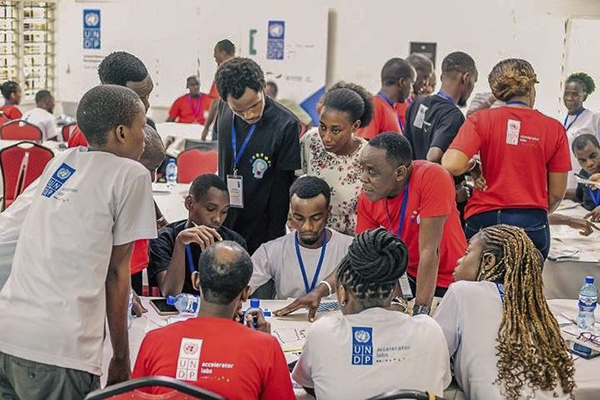
An insightful story of peer-to-peer learning came from Kenya’s Tana River County, where water reserves are projected to fall 70 percent below internationally acceptable thresholds by 2050. Victor Awuor, Head of Solutions Mapping at the UNDP Kenya Accelerator Lab, had been collaborating with local farmers, herders, the county government and national water authorities to gather data for more informed water management strategies.
In March 2024, a project coordinator in the Democratic Republic of the Congo (DRC) came across Victor’s work on the Data to Policy Navigator. She had been leading a similar initiative to address water scarcity through community mapping and immediately recognized the parallels. After connecting, the two discovered that while Kenya had spent US$9,700 on software licenses to aggregate community data, the DRC team used a free tool, mWater.
Recognizing the potential savings and sustainability benefits, Victor recommended to local Kenyan policymakers that they transition to the mWater platform. This shift offered cost efficiency while also improving scalability and ensuring long-term viability for their efforts to safeguard water resources.
This collaboration was made possible by the Data to Policy Network and the power of peer-to-peer exchange.
Discover Victor’s and other projects on the Data to Policy Navigator.
The network in action
Throughout 2023 and into 2024, the network became a living example of South-South and triangular cooperation in action. A 2024 High-Level Political Forum (HLPF) side session on gender and data brought together representatives from Asia, Africa and Latin America, highlighting the importance of intersectional data in policymaking for women’s empowerment.
This exchange was echoed in an April 2024 triangular cooperation session on the use of AI in policymaking. Data and AI experts from Germany and the United Kingdom engaged with more than 100 participants to explore how various AI tools could enhance policy responsiveness, while also reaffirming the importance of piloting, experimentation, inclusivity and transparency.
“You can use AI to form detailed decisions while still being fast and efficient. However, you need AI literacy in order to assess the quality of the output.”– Dr. Iliya Nickelt, Chief Data Scientist at the German Federal Ministry for Economic Cooperation and Development (BMZ)
One particularly grounded moment came through a series of use case workshops on the Multidimensional Poverty Index (MPI), developed and hosted by UNOSSC. Designed to equip policymakers with practical tools, the sessions drew on the lived experiences of India and Mexico – two countries that have helped shape this field through their deep experience in measuring and addressing multidimensional poverty.
“AI is a very new topic, it is very interesting to know more about it. I got very interested, so I already looked for related books so I will continue learning more about it following this session.”– Participants of the Data & AI Learning Session
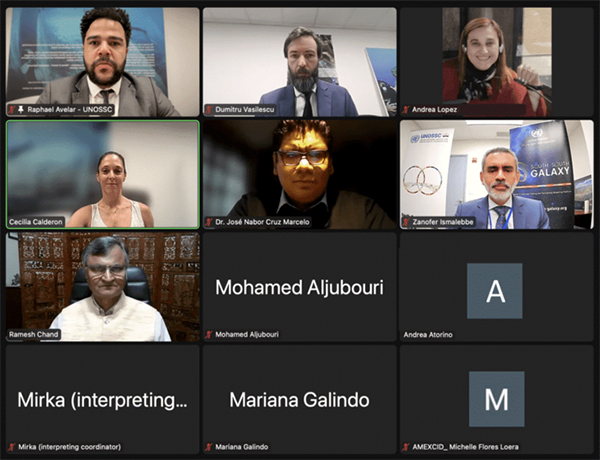
Prof. Ramesh Chand of NITI Aayog recounted India’s journey in developing a national MPI, sharing the challenges faced, data requirements, and policy impact of tracking poverty down to district level. Dr. José Nabor Cruz Marcelo of CONEVAL offered Mexico’s pioneering approach, showing how multidimensional poverty metrics are embedded in social policy, and describing the country’s support for more than 27 others through extensive South-South technical cooperation.
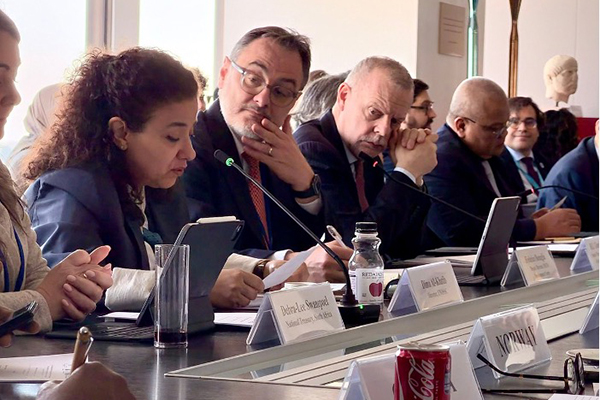
Data to Policy Network’s MPI Workshop (2024).
At the start of 2025, UNDP and its partners took stock of the journey so far – reflecting on key lessons, feedback from participants, and the growing momentum behind the Network. This reflection sparked the next step that we are taking, transitioning the Data to Policy Network into a more focused community – the Data to Policy Champions – led by UNDP, deepening in-country engagement and embedding practical support directly within policymaking institutions. This next chapter marks a shift toward closer membership, deeper collaboration and more peer-to-peer exchange among policymakers.
UNOSSC aims to continue contributing to this journey, championing the values of co-creation, mutual respect and practical exchange that define South-South and triangular cooperation, in partnerships with UNDP and other partners.

 In an age of compounding societal and international issues, policymakers need more than just access to data. They also require the capacity, trust, and a shared community to act on it. In 2023, UNDP – in partnership with the German Development Cooperation and the United Nations Office for South-South Cooperation (UNOSSC) – launched the Data to Policy Network for Policymakers: a collaborative platform for peer-to-peer exchange, continuous learning, and global cooperation centred on data-informed policymaking. A dedicated Community of Practice was also established on the UNOSSC South-South Galaxy online platform.
The Data to Policy Network for Policymakers emerged as a concrete response to growing calls from UN Member States and partners – including those voiced at the UN World Data Forums, High-level Political Forums, and UN Statistical Commission – for stronger support in transforming data into actionable policy. It addresses the need not only for better access to data, but also for building the trust, capacity, and collaborative community required to act effectively on it.
Rooted in the principles of solidarity, mutual benefit, shared vision, collective experience, and collaborative action that underpin South-South and triangular cooperation, the network was shaped by those it aims to serve.
Now, as we look ahead, we take stock of the milestones achieved in the Network’s first phase – and share how, in response to growing interest and evolving demands from policymakers, we are building on that momentum by evolving into the network’s exciting next chapter.
In an age of compounding societal and international issues, policymakers need more than just access to data. They also require the capacity, trust, and a shared community to act on it. In 2023, UNDP – in partnership with the German Development Cooperation and the United Nations Office for South-South Cooperation (UNOSSC) – launched the Data to Policy Network for Policymakers: a collaborative platform for peer-to-peer exchange, continuous learning, and global cooperation centred on data-informed policymaking. A dedicated Community of Practice was also established on the UNOSSC South-South Galaxy online platform.
The Data to Policy Network for Policymakers emerged as a concrete response to growing calls from UN Member States and partners – including those voiced at the UN World Data Forums, High-level Political Forums, and UN Statistical Commission – for stronger support in transforming data into actionable policy. It addresses the need not only for better access to data, but also for building the trust, capacity, and collaborative community required to act effectively on it.
Rooted in the principles of solidarity, mutual benefit, shared vision, collective experience, and collaborative action that underpin South-South and triangular cooperation, the network was shaped by those it aims to serve.
Now, as we look ahead, we take stock of the milestones achieved in the Network’s first phase – and share how, in response to growing interest and evolving demands from policymakers, we are building on that momentum by evolving into the network’s exciting next chapter.