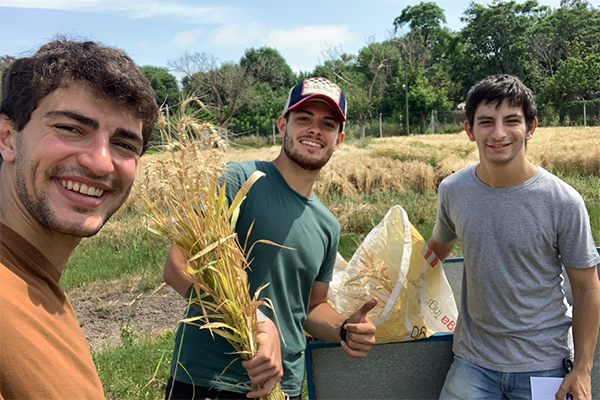
Farmers around the world are on the frontlines of climate change. Rising temperatures, shifting rainfall patterns, and increasingly extreme weather events are placing agricultural systems – and food security –at risk. In response, scientists from Argentina, Chile, and Uruguay have joined forces under a Pérez-Guerrero Trust Fund (PGTF) project to develop practical, science-based tools to help farmers adapt.
The project, titled “Rethinking climate change mitigation strategies by improving phenological adaptability and tolerance to abiotic stresses in temperate crops”, focuses on expanding and refining CRONOS crop models – innovative, technology-based tools that simulate how key crops respond to environmental conditions such as temperature and rainfall.
These models help farmers and agricultural advisors make informed decisions about planting schedules, stress management, and climate adaptation strategies. For example, if higher-than-normal temperatures are predicted during the growing season, CRONOS can recommend optimal sowing dates to reduce the risk of crop failure.
A Collaborative South-South Effort
The PGTF project brought together scientists from three Southern countries to address shared climate challenges in agriculture. Their work focused on:
- Designing CRONOS prediction models for temperate cereals and rapeseed
- Studying how crops respond to climate stressors like heat and waterlogging
- Sharing research and tools with farmers, technicians, and the wider scientific community
- CRONOTRIGO (wheat)
- CRONOCEBADA (malting barley)
- CRONOCANOLA (canola and Brassica carinata, used in biofuels and fish feed)