Ministerial Meeting on South-South Cooperation at LLDC3 Charts Path for Transformation
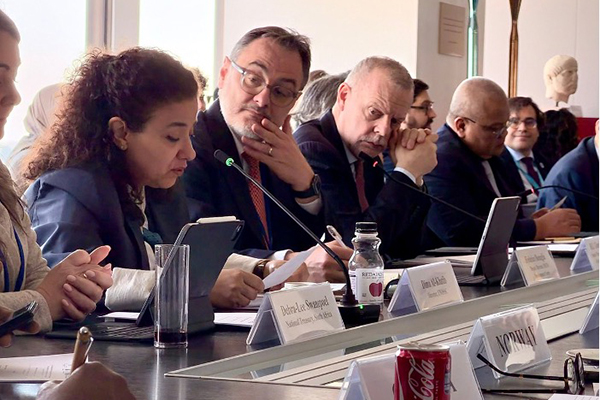
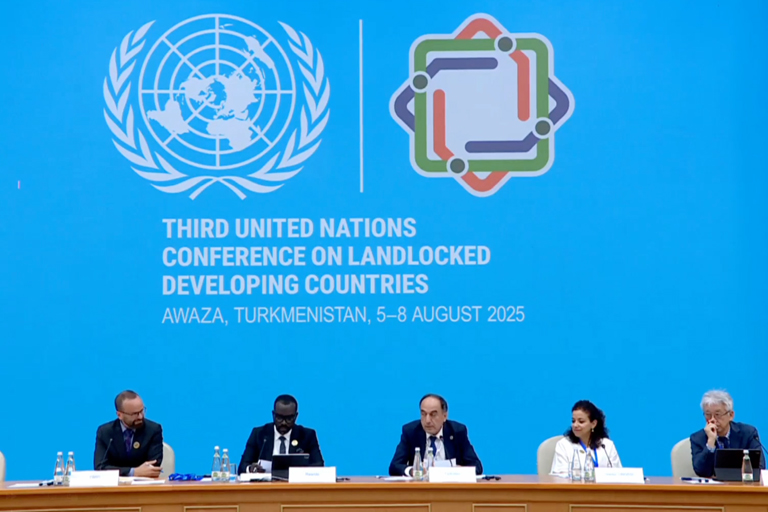
The Ministerial Meeting on South-South Cooperation, held during the Third United Nations Conference on Landlocked Developing Countries (LLDC3) in Awaza, Turkmenistan, brought together a coalition of Member States, international organizations, and development partners committed to advancing the development of the world’s landlocked developing countries (LLDCs).
Organized by the Office of the High Representative for the Least Developed Countries, Landlocked Developing Countries and Small Island Developing States (UNOHRLLS) and the United Nations Office for South-South Cooperation (UNOSSC), under the theme “Unlocking the potential of South-South cooperation for sustainable, resilient and transformative development in LLDCs”, the gathering served as a vital platform to exchange experiences, lessons, and innovative solutions to accelerate inclusive growth and sustainable prosperity.
Reimagining Partnerships for Development
High-level representatives from LLDCs, countries from the Global South and North, United Nations agencies, multilateral development banks, and intergovernmental organizations engaged in the meeting. Despite geographic constraints, participants stressed that LLDCs can build resilience and transform their economies by harnessing the power of global partnerships.
“The Awaza Programme of Action for LLDCs 2024–2034 brings much-needed optimism and direction. It presents a forward-looking and practical roadmap, anchored in structural transformation. And in this endeavor, South-South cooperation can be instrumental to support LLDCs,” said Rt. Hon. Prime Minister Mr. K.P. Sharma Oli of Nepal. He emphasized: “Geography should never limit human ambition, especially in today’s interconnected and technologically advanced world.”
“It is through South-South and triangular cooperation partnerships that we can translate the ambitions of the Programme of Action into concrete, transformative outcomes on the ground,” said United Nations Under-Secretary-General Rabab Fatima. “When effectively aligned, South-South cooperation becomes a force multiplier – amplifying development outcomes, scaling innovation, and delivering tangible results where they are needed most.”
H.E. Ambassador Omar Hilale, President of the High-level Committee on South-South Cooperation, underlined the leadership of LLDCs themselves. “LLDCs are not merely recipients of development assistance, they are co-creators of solutions and innovations,” he said. “While geography imposes real constraints, it does not limit their ambition, innovation, or capacity for cooperation. Let us take the Awaza Spirit with us for overcoming geographical distances and build coalitions that harness the full potential of South-South and triangular cooperation.”
“The Awaza Programme of Action affirms that South-South and triangular cooperation play a pivotal role in fostering regional integration, facilitating knowledge exchange, promoting technology transfer, and mobilizing resources in line with LLDC priorities,” said Ms. Dima Al-Khatib, Director of the United Nations Office for South-South Cooperation.
Proven Impact: Stories of Change from the Global South
The second session showcased concrete results through South-South and triangular cooperation. Ms. Al-Khatib presented five country case studies demonstrating tangible, scalable outcomes aligned with the Awaza Programme of Action:
Ethiopia: Over 150,000 jobs created, US$500 million in manufactured exports, and major foreign direct investment flows from China, Turkey, and Saudi Arabia.
Rwanda: A 700% surge in coffee exports, the launch of the Kigali Logistics Platform, and innovative trade facilitation systems, including One-Stop Border Posts developed in partnership with Uganda, Kenya, India, and the UAE – empowering small-scale and women traders.
Tajikistan: US$2.5 billion in integrated infrastructure and digital modernization across 64 projects, advancing the country from “landlocked” toward “land-linked”. Customs digitization and corridor development under TRACECA and the Belt and Road Initiative were highlighted.
Paraguay: Over US$6 billion invested in the Bioceanic Corridor, enhancing climate-resilient infrastructure and connectivity.
These stories underscored how South-South cooperation has evolved into a primary driver of inclusive and sustainable development.
Policy Innovations and Regional Commitments
National leaders illustrated how South-South cooperation is shaping long-term strategies:
Rwanda’s Minister of Trade and Industry, H.E. Mr. Prudence Sebahizi, described transformative customs and trade systems enabling real-time cargo tracking, enhanced security, and faster border crossings.
Tajikistan’s Minister of Transport, H.E. Mr. Azim Ibrohim, unveiled plans for a fully renewable energy-based economy by 2037, supported by South-South investments in infrastructure and digital connectivity.
From the financing perspective, Mr. Hun Kim of the Asian Infrastructure Investment Bank (AIIB) highlighted nearly US$7.5 billion in investments, and showcased the AIIB’s InfraTech Portal—a hub connecting technology providers with LLDC infrastructure needs.
Other multilateral development banks were engaged in the discussion as well, and presented initiatives in support of LLDCs through the South-South cooperation, including the European Bank for Reconstruction and Development, Asian Development Bank and the World Bank.
A New Framework: The Awaza Declaration
The meeting concluded with strong consensus on institutionalizing South-South and triangular cooperation as central pillars of global development. Delegates endorsed the Awaza Declaration and Programme of Action (2024–2034), which outlines concrete steps to strengthen structural transformation, expand sustainable transport, boost resilience, and energize partnerships among LLDCs, transit countries, and the wider international community.
Turkmenistan’s leadership and new South-South and triangular initiatives – such as the Global Atlas for Sustainable Transport Connectivity and the Caspian Environmental Initiative – were welcomed as milestones for shaping future cooperation in the region and beyond.
By championing knowledge-sharing, technical cooperation, and innovative financing, the LLDC3 Ministerial Meeting charted a bold, actionable roadmap to ensure that LLDCs are not left behind, but emerge as vital contributors to a more sustainable and inclusive global future.
Click below to watch the Ministerial Meeting on South-South Cooperation on UNWebTV:
?? Ministerial Meeting on South-South Cooperation: Opening, Sessions 1 and 2 (LLDC3)
?? Ministerial Meeting on South-South Cooperation: Sessions 3 and 4, Closing (LLDC3)

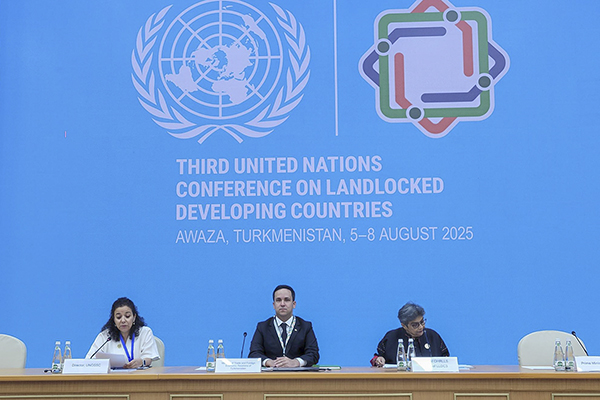
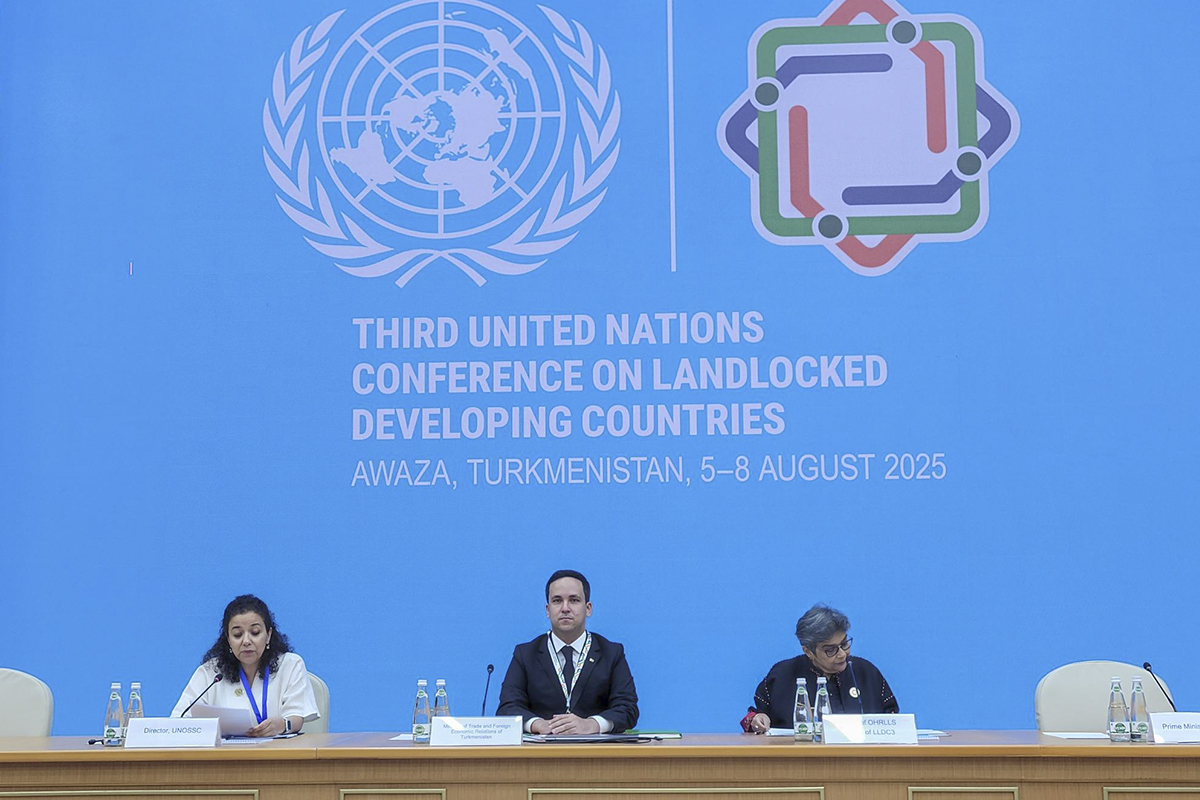 The Ministerial Meeting on South-South Cooperation, held during the Third United Nations Conference on Landlocked Developing Countries (LLDC3) in Awaza, Turkmenistan, brought together a coalition of Member States, international organizations, and development partners committed to advancing the development of the world’s landlocked developing countries (LLDCs).
Organized by the Office of the High Representative for the Least Developed Countries, Landlocked Developing Countries and Small Island Developing States (UNOHRLLS) and the United Nations Office for South-South Cooperation (UNOSSC), under the theme “Unlocking the potential of South-South cooperation for sustainable, resilient and transformative development in LLDCs”, the gathering served as a vital platform to exchange experiences, lessons, and innovative solutions to accelerate inclusive growth and sustainable prosperity.
Reimagining Partnerships for Development
High-level representatives from LLDCs, countries from the Global South and North, United Nations agencies, multilateral development banks, and intergovernmental organizations engaged in the meeting. Despite geographic constraints, participants stressed that LLDCs can build resilience and transform their economies by harnessing the power of global partnerships.
The Ministerial Meeting on South-South Cooperation, held during the Third United Nations Conference on Landlocked Developing Countries (LLDC3) in Awaza, Turkmenistan, brought together a coalition of Member States, international organizations, and development partners committed to advancing the development of the world’s landlocked developing countries (LLDCs).
Organized by the Office of the High Representative for the Least Developed Countries, Landlocked Developing Countries and Small Island Developing States (UNOHRLLS) and the United Nations Office for South-South Cooperation (UNOSSC), under the theme “Unlocking the potential of South-South cooperation for sustainable, resilient and transformative development in LLDCs”, the gathering served as a vital platform to exchange experiences, lessons, and innovative solutions to accelerate inclusive growth and sustainable prosperity.
Reimagining Partnerships for Development
High-level representatives from LLDCs, countries from the Global South and North, United Nations agencies, multilateral development banks, and intergovernmental organizations engaged in the meeting. Despite geographic constraints, participants stressed that LLDCs can build resilience and transform their economies by harnessing the power of global partnerships.
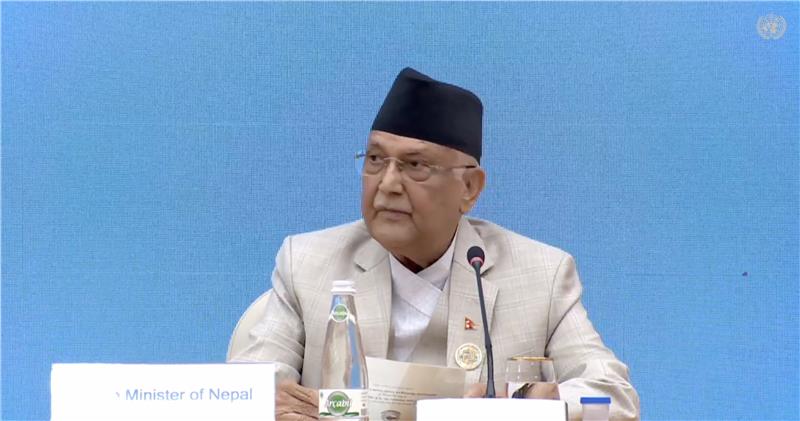 “The Awaza Programme of Action for LLDCs 2024–2034 brings much-needed optimism and direction. It presents a forward-looking and practical roadmap, anchored in structural transformation. And in this endeavor, South-South cooperation can be instrumental to support LLDCs,” said Rt. Hon. Prime Minister Mr. K.P. Sharma Oli of Nepal. He emphasized: “Geography should never limit human ambition, especially in today’s interconnected and technologically advanced world.”
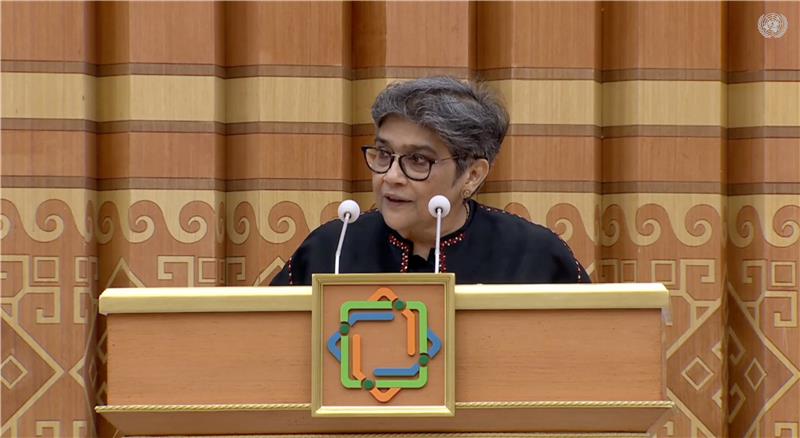 “It is through South-South and triangular cooperation partnerships that we can translate the ambitions of the Programme of Action into concrete, transformative outcomes on the ground,” said United Nations Under-Secretary-General Rabab Fatima. “When effectively aligned, South-South cooperation becomes a force multiplier – amplifying development outcomes, scaling innovation, and delivering tangible results where they are needed most.”
H.E. Ambassador Omar Hilale, President of the High-level Committee on South-South Cooperation, underlined the leadership of LLDCs themselves. “LLDCs are not merely recipients of development assistance, they are co-creators of solutions and innovations,” he said. “While geography imposes real constraints, it does not limit their ambition, innovation, or capacity for cooperation. Let us take the Awaza Spirit with us for overcoming geographical distances and build coalitions that harness the full potential of South-South and triangular cooperation.”
“The Awaza Programme of Action affirms that South-South and triangular cooperation play a pivotal role in fostering regional integration, facilitating knowledge exchange, promoting technology transfer, and mobilizing resources in line with LLDC priorities,” said Ms. Dima Al-Khatib, Director of the United Nations Office for South-South Cooperation.
“It is through South-South and triangular cooperation partnerships that we can translate the ambitions of the Programme of Action into concrete, transformative outcomes on the ground,” said United Nations Under-Secretary-General Rabab Fatima. “When effectively aligned, South-South cooperation becomes a force multiplier – amplifying development outcomes, scaling innovation, and delivering tangible results where they are needed most.”
H.E. Ambassador Omar Hilale, President of the High-level Committee on South-South Cooperation, underlined the leadership of LLDCs themselves. “LLDCs are not merely recipients of development assistance, they are co-creators of solutions and innovations,” he said. “While geography imposes real constraints, it does not limit their ambition, innovation, or capacity for cooperation. Let us take the Awaza Spirit with us for overcoming geographical distances and build coalitions that harness the full potential of South-South and triangular cooperation.”
“The Awaza Programme of Action affirms that South-South and triangular cooperation play a pivotal role in fostering regional integration, facilitating knowledge exchange, promoting technology transfer, and mobilizing resources in line with LLDC priorities,” said Ms. Dima Al-Khatib, Director of the United Nations Office for South-South Cooperation.

 Policy Innovations and Regional Commitments
National leaders illustrated how South-South cooperation is shaping long-term strategies:
Policy Innovations and Regional Commitments
National leaders illustrated how South-South cooperation is shaping long-term strategies: