• Home
  • /
  • Events
  • /
  • UNOSSC and Saudi Arabia Co-Host UNGA 80 Roundtable Calling for Scalable Action to Accelerate the 2030 Agenda

UNOSSC and Saudi Arabia Co-Host UNGA 80 Roundtable Calling for Scalable Action to Accelerate the 2030 Agenda


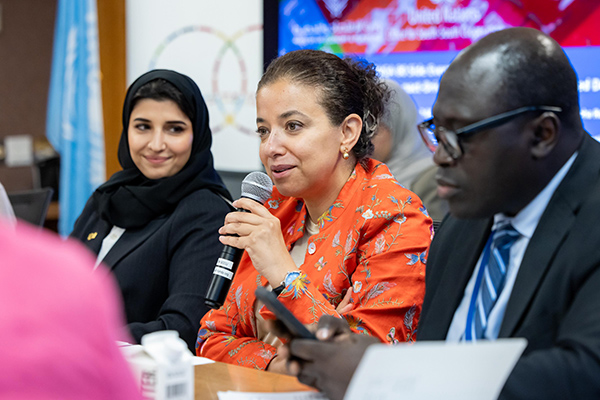
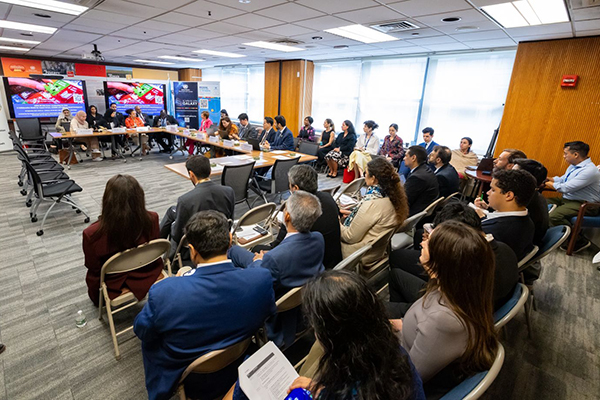
Representatives from governments, the United Nations, and development partners convened at the United Nations Headquarters for a high-level roundtable aimed at accelerating progress on the Sustainable Development Goals (SDGs) through South-South and triangular cooperation. Co-hosted by the Kingdom of Saudi Arabia, the United Nations Office for South-South Cooperation (UNOSSC), and the High-Level Committee on South-South Cooperation, the dialogue highlighted the urgent need for impact-driven, scalable, and evidence-based partnerships to deliver transformative results in the final five years before the 2030 deadline.

Facilitated by Dr. Alaa Murabit, UN SDG Advocate and High-Level Commissioner on Health, Employment, and Economic Growth, the event brought together participants from Bahrain, Colombia, The Gambia, Nepal, Saudi Arabia, Türkiye, UNOSSC, and UNDP, alongside over 100 in-person and online attendees. Discussions focused on overcoming persistent global challenges such as poverty, inequality, climate change, and financing gaps.

“What I’m hearing is a recognition of the importance of collaborative, evidence-based, action-oriented partnerships,” Dr. Murabit said. “These are essential to turning ambition into measurable progress that leaves no one behind.”


Urgency Amidst Global Challenges

The Roundtable took place at a critical moment. According to the 2025 SDG Report, only 35% of SDG targets are on track or showing moderate progress, while extreme poverty still affects more than 800 million people. Climate pressures are mounting, with 2024 recorded as the hottest year in millennia. Against this backdrop, South-South and triangular cooperation were recognized as indispensable tools for delivering context-sensitive, scalable solutions rooted in solidarity and national ownership.
 

Scalable Solutions and Shared Learning

Speakers shared experiences demonstrating how South-South cooperation strengthens institutional capacity and drives sustainable development.

The Gambia highlighted how lesson-sharing and low-cost, high-impact technologies have supported progress in social protection, youth empowerment, and climate resilience. Ambassador Lamin B. Dibba stressed that capacity-building and technology transfer are critical for food security and poverty eradication. “We need scalable, affordable, and sustainable solutions tailored to our realities,” he said.

Nepal showcased achievements in reducing multidimensional poverty and expanding access to electricity and education, while emphasizing the role of youth and women in driving transformation. Counsellor Shivani Basnet called for cooperation in renewable energy, digital infrastructure, and climate-smart agriculture, urging policies accountable to future generations: “We do not have a minute to lose – whether on climate, economics, or any other area,” she said.

Türkiye underscored its dual role as both provider and recipient of cooperation. Ambassador Aylin Sekizkökhighlighted the UN Technology Bank for LDCs and the Turkish Cooperation and Coordination Agency (TIKA) as mechanisms for technology transfer and scalable development solutions, while stressing the value of triangular partnerships bridging developing countries, donors, and multilateral organizations.

Colombia emphasized the central role of data in sustainable development. APC-Colombia’s Daniel Rodríguez presented the Medellín Action Framework on Data for Sustainable Development, which promotes inclusive, nationally owned data systems to strengthen accountability and evidence-based policymaking. “Robust data systems are instruments of sovereignty and empowerment,” he said, “enabling countries to identify gaps, measure progress, and engage effectively with development partners.”

From Saudi Arabia, speakers highlighted the importance of prioritizing resources for maximum impact. Under Vision 2030, the Kingdom has developed national sustainability missions aligned with emerging needs. Hajar Algosair emphasized sustainable development as a shared global mindset, while Abdulrahman Alzamil pointed to water management innovations and the establishment of the Global Water Organization as scalable solutions with global relevance.

Bahrain shared its experience as a regional hub for cooperation in the Middle East, with a focus on digital governance and data-driven monitoring systems to track SDG progress and foster transparency.


Cross-Cutting Priorities

Throughout the discussion, several common themes emerged:

  • Capacity building over aid dependency, with emphasis on empowering youth and women as drivers of inclusive development.
  • Climate resilience, with LDCs calling for scaled-up financing and technology transfer.
  • Data as a foundation for transparency, accountability, and the replication of successful solutions across regions.
  • The need for scaling pilots into broader regional and global programs, guided by evidence and stakeholder collaboration.

UNOSSC Director Dima Al-Khatib underscored these priorities. “To turn ambition into acceleration, we must strengthen collaboration across a broad range of stakeholders,” she said. “Our focus must be on impact, scalability, and evidence.”

The insights shared will inform efforts to mainstream South-South and triangular cooperation as integral to global development strategies, reinforcing cooperation as a cornerstone for sustainable, inclusive, and just progress worldwide.

As the world enters the final stretch toward 2030, the Roundtable’s call to action was clear: partnerships must be bold, scalable, and impact-driven to ensure no one is left behind.

  Click here to read more about the event.
Related Post


  • All Post
  • ATCT Featured Publications POM
  • BAPA+40
  • Blog
  • Capacity Development Initiatives
  • CICETE Featured Publications POM
  • CIKD
  • Cities Clusters - Agriculture
  • Cities Clusters - COVID-19
  • Cities Clusters - COVID-19 Knowledge Products
  • Cities Clusters - DRR
  • Cities Clusters - E-commerce
  • Cities Clusters - Tourism
  • Cities Clusters - Tourism Knowledge Products
  • Cities Clusters - Transport
  • Cities Clusters - Waste
  • Cities Project
  • Cities Project COVID-19 Newsletters
  • Cities Project COVID-19 Response
  • Cities Project Knowledge Products
  • Classic (untouched)
  • Climate Action
  • COMSATS Featured Publications POM
  • COMSATS Featured Solutions POM
  • Converted from Divi
  • Converted from Mixed
  • Converted from WPBakery
  • COVID-19
  • COVID-19 Page Featured Solutions
  • DRR Knowledge Products
  • DRR News
  • Empty Post
  • Events
  • Featured Event UN-Habitat POM
  • Financing for Development
  • Financing Mechanisms
  • g7+
  • Gender Events
  • Gender News
  • Good Practices in SSTrC Series
  • Good Practices Publications
  • Good Practices Thematic Series & Special Editions
  • Good Practices Vol. 2
  • Good Practices Vol. 3
  • GSSDC
  • Highlighted
  • Highlighted Publications
  • IAEA Featured Solutions POM
  • IBRAF Featured Publications POM
  • IBSA Fund
  • IBSA Fund Annual Reports
  • IBSA Fund News and Stories
  • IBSA Fund Publication
  • IBSA Fund Story
  • ICGEB Featured Events POM
  • ICGEB Featured Publications POM
  • ICGEB Featured Solutions POM
  • ILO Featured Events POM
  • ILO Featured Publications POM
  • ILO Featured Solutions POM
  • India-UN Development Partnership Fund
  • India-UN Fund Publication
  • India-UN Fund Story
  • IsDB
  • IsDB Featured Publications POM
  • IsDB SCC
  • News
  • Norec Featured Publications POM
  • Norec Featured Solutions POM
  • Peace and Development
  • PGTF Publications
  • PGTF Story
  • PICA Featured News POM
  • PICA Featured Publications POM
  • PICA Featured Solutions POM
  • PIDF Featured Publications POM
  • Publications
  • Regional Updates
  • Research
  • ROK-UNOSSC Facility
  • SGP Featured Publication POM
  • SGP Featured Solutions POM
  • Solution
  • South South in Action
  • South-South Global Thinkers
  • South-South Ideas
  • South-South Ideas Series
  • South-South in Action Series
  • Southern Response to COVID-19
  • SSN4PSI Featured Publications POM
  • SSN4PSI Featured Solutions POM
  • Training
  • UN Day for SSC 2020
  • UN Fund for SSC
  • UN SSC Day Publications
  • UN-Habitat Featured Publications POM
  • UN-HABITAT Featured Solutions POM
  • UNCCT
  • UNEP Featured Publications POM
  • UNFPA
  • UNFSSC Publication
  • UNFSSC Story
  • UNIDO Featured Publications POM
  • UNIDO Featured Solutions POM
  • UNIDO POM Events
  • UNOCT Featured Publications POM
  • UNV
  • UNV Featured Publications POM
  • WB Featured Publications POM
  • WB Featured Solutions POM
  • Webinars
  • WFP Featured Events POM
  • WFP Featured Publication POM
  • WFP Featured Solutions POM
  • WIPO
  • Workshops and Seminars
  • Youth4South
  • z Across the Globe 1
  • z Across the Globe 2
  • z Across the Globe 4
  • z Across the Globe 5
  • z Across the Globe 6
  • z Across the Globe 7
  • z Across the Globe 8
  • z ES BAPA+40
  • z ES Eventos
  • z ES Noticias
  • z ES Noticias Destacadas
  • z ES Publicaciones
  • z ES Publicaciones Destacadas
  • z ES Serie Buenas Prácticas en la CSSyT
  • z ES Serie El Sur-Sur en Acción
  • z FR Actualités
  • z FR BAPA+40
  • z FR Événements
  • z FR Publications
  • z FR Publications en vedette
  • z FR Série Bonnes pratiques en CSST
  • z FR Série Sud-Sud en action
  • z Highlighted News
  • z Photos
  • z Videos
  • z ZH BAPA+40
  • z ZH Events
  • z ZH News

ABOUT

Terms of Service

Privacy Policy

Disclosures

RESOURCES

Terms of Service

Privacy Policy

Disclosures

ENGAGE

Terms of Service

Privacy Policy

Disclosures

Copyright © UNOSSC/UNDP

wpChatIcon
wpChatIcon

Alliance Application Form

Submit an Expression of Interest and/or Demand Signal. UNOSSC reviews submissions on a rolling basis.

1. Official name of organization / institution / government entity (exclusions to apply) *
2. Country *
3. Region *
4. SDG *
Secondary SDG *
5. Partner category *
6. Website *
7. Brief description of your institution (max. 150 words) *
Name for the Lead *
Title for the Lead *
Email address for the Lead *
Name for the co-lead
Title for the co-lead
Email address for the co-lead
Section 3. Expression of Interest in the Alliance *
Additional information on proposed areas of engagement may be requested through the platform following initial review by the Alliance Secretariat.
Section 4. Due Diligence and Integrity Declaration *

Submission Note:

  • Submission of this Expression of Interest form does not automatically confer participation in the Alliance.
  • All submissions will be reviewed by the Alliance Secretariat, including basic eligibility screening and proportionate due diligence, as appropriate.
  • Participation in Alliance activities is determined based on relevance to articulated cooperation needs, alignment with Alliance principles, and integrity considerations.
  • Engagement under the Alliance is voluntary, non-binding, and facilitative in nature, and does not constitute funding approval, contractual commitment, or institutional membership.
  • The Alliance Secretariat may contact submitting entities for additional information or clarification during the review process.

Submission of Demand Form

Description of Demand

Indicate the type of support or cooperation requested through the Alliance.
Please briefly describe the challenge, gap, or priority. (Max. 300 words)

Thematic and Geographic Focus

Please indicate the main focus areas of your demand:

A. Thematic Areas (select up to three)
B. Geographic Focus (select all that apply)

Proposed Engagement Modalities

Please indicate how you would like to engage through the Alliance (select all that apply):

Expected Outcomes

Please indicate the main results you seek to achieve through this engagement. (Max. 200 words)
Examples:
• Capacity strengthened
• Partnerships established
• Sectoral or regional strategies co-developed
• Solutions piloted
• Knowledge generated
• Policies informed

Timeline and Readiness (if applicable)

1. Expected timeframe for engagement:
2. Current stage:

Additional Information

Please provide any additional information, documents, or links relevant to this submission.
(Max. 200 words or upload link)

Submission of Offer Form

Description of Contribution

Indicate the type of contribution your institution can provide and describe the expertise, resources, or solutions you may offer.
Please briefly describe your proposed contribution. (Max. 300 words)

Thematic and Geographic Focus

Please indicate the main focus areas of your interest:

A. Thematic Areas (select up to three)
B. Geographic Focus (select all that apply)

Proposed Engagement Modalities

Please indicate how you would like to engage through the Alliance (select all that apply):

Expected Outcomes

Please indicate the main results you aim to achieve through this engagement. (Max. 200 words)
Examples:
• Capacity strengthened
• Partnerships established
• Sectoral or regional strategies co-developed
• Solutions piloted
• Knowledge generated
• Policies informed

Timeline and Readiness (if applicable)

1. Expected timeframe for engagement:
2. Current stage:

Additional Information

Please provide any additional information, documents, or links relevant to this submission.
(Max. 200 words or upload link)

Organization Registration

Authentication & Due Diligence This prototype simulates identity verification, due diligence confirmation, and an authentication step before submission. *

First Name *
Last Name *
Email address *
Password *
Confirm Password *
Name of institution / organization *
Country / Region *
Organization Type *
Organization other *
Function / role *
Organization logo *
Maximum file size: 1 GB

Login

Login / email *
Password *
Remember me

Forgot password?

Connect form

Your name *
Email *
Organization / institution *
Job title / role *
Reason for connecting:
Short message

Scroll to Top