Strengthening South-South Solidarity: Russian Federation’s Support Advances Climate-Smart Sustainable Agriculture in Fergana Valley and Sahel Region
Building on a strong legacy of collaboration between the Russian Federation and the United Nations system, the Government of the Russian Federation has pledged a new contribution of US$4.4 million to the United Nations Fund for South-South Cooperation (UNFSSC). The contribution underscores the country’s commitment to promoting South-South and triangular cooperation for sustainable development, with a particular focus on Africa and Central Asia.
Guided by the Fund’s Joint Steering Committee, two subregional-level South-South and triangular cooperation projects have been endorsed for implementation under the leadership of the Food and Agriculture Organization of the United Nations (FAO).
Each initiative will receive US$1.5 million for a two-year implementation period, translating the principles of South-South and triangular cooperation into tangible action by connecting regional institutions, national ministries, research networks, local authorities, and farmers’ cooperatives across nine partner countries. Both projects aim to advance sustainable and climate-resilient agricultural development.
Climate-Smart Agriculture in the Fergana Valley (Central Asia)
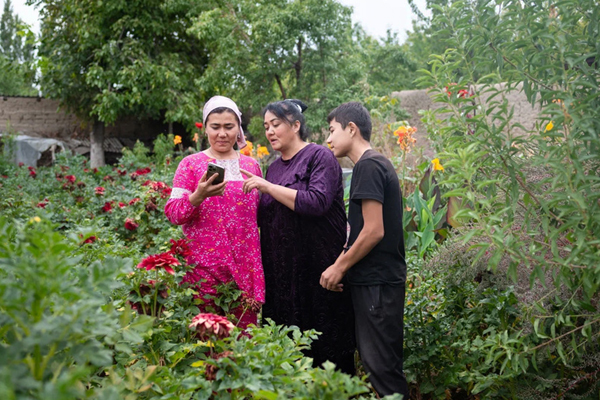
The first project, already under implementation, focuses on enhancing climate resilience, agricultural productivity, and economic performance in the Fergana Valley – one of Central Asia’s most fertile yet climate-vulnerable regions shared by Kyrgyzstan, Tajikistan, and Uzbekistan.
Through a comprehensive South-South and triangular approach, FAO is collaborating with the ministries of agriculture, local governments, and farmers’ cooperatives in the three countries, as well as with scientific institutions including the Federal Scientific Center for Agroecology and the Federal Scientific Center of Hydraulic Engineering and Melioration.
This initiative is promoting the adoption of climate-smart agriculture (CSA) technologies, sustainable water and soil management, and value-chain diversification for key crops such as cotton, wheat, and fruit.
Enhancing Irrigation, Water and Land Management in the Sahel (Africa)
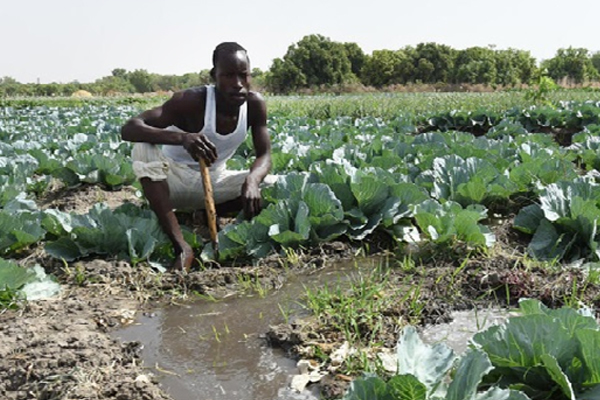
The second FAO-led project is targeting the Sahel region, specifically Burkina Faso, Chad, Mali, Mauritania, and Niger, where harsh climatic conditions, drought, and land degradation threaten agricultural productivity and rural livelihoods.
Over a 24-month period (2025–2027), the project will strengthen irrigation infrastructure, promote efficient water-use technologies, and advance sustainable land and soil management practices.
Through capacity-building workshops, field trials, and community-led initiatives, farmers and agricultural institutions will gain the tools and knowledge to adopt climate-resilient techniques that increase yields while conserving scarce natural resources.
FAO irrigation project in Sahel, @FAO
Together, these initiatives demonstrate the power of South-South and triangular cooperation to bridge regions and co-create shared solutions to global challenges. By linking agricultural expertise with the development priorities of countries in Central Asia and the Sahel, they promote mutual learning, technology exchange, and regional solidarity.
Through the combined strengths of financial support, technical know-how, and shared commitment to sustainable development, these projects will help strengthen food systems, enhance climate resilience, and reaffirm the transformative role of South-South and triangular cooperation in advancing the 2030 Agenda for Sustainable Development.
About the United Nations Fund for South-South Cooperation (UNFSSC)
Established by United Nations General Assembly resolution in 1995, the United Nations Fund for South-South Cooperation (UNFSSC) is the UN system’s flagship trust fund dedicated to the promotion of South-South cooperation. The United Nations Office for South-South Cooperation (UNOSSC) serves as its technical secretariat and fund manager. Since its establishment, the Fund has mobilized over US$60 million from partners including Algeria, Bangladesh, China, Colombia, Japan, Nigeria, Norway, the Philippines, Portugal, Qatar, the Republic of Korea, the Russian Federation, South Africa, Thailand, Türkiye, and the United Arab Emirates, among others.