The newly launched China-UN Global South-South Development Facility – a flagship initiative to support demand-driven South-South and triangular cooperation among countries of the Global South – was introduced and highlighted at the Hongqiao International Economic Forum, convened during the 8th China International Import Expo (CIIE).
The Facility was formally announced by H.E. Li Qiang, Premier of the State Council of the People’s Republic of China, during the 80th Session of the United Nations General Assembly, marking a new phase in China-UN cooperation in advancing sustainable development.
A CIIE thematic session, titled “Free Trade Zones Driving Industrial Innovation and Global Trade,” was co-hosted by the United Nations Industrial Development Organization (UNIDO) and the Ministry of Commerce of the People’s Republic of China, and gathered representatives from governments, international organizations, financial institutions, the private sector, research institutes and academia to explore innovation-driven development through Free Trade Zones.
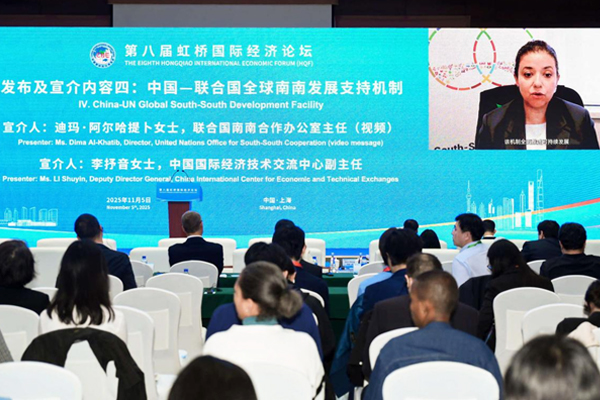 Participating via a pre-recorded video message, Ms. Dima Al-Khatib, Director of the United Nations Office for South-South Cooperation (UNOSSC), underscored the strategic significance of the Facility. She noted that Premier Li Qiang announced the launch of the “China–UN Global South-South Development Facility (2025–2030), supported by USD 10 million in budgetary funding,” and emphasized that this represents a shift from supporting projects to co-creating scalable solutions and shared development outcomes.
Reflecting on the Facility’s development process, Ms. Li Shuyin, Deputy Director General of the China International Center for Economic and Technical Exchanges (CICETE), recalled that the Ministry of Commerce and UNOSSC jointly signed the initial Statement of Intent for the Facility during the previous CIIE in 2024. Over the past year, all partners have been working collaboratively to shape the Facility’s institutional design – culminating in the formal announcement at the UN General Assembly in September.
Participating via a pre-recorded video message, Ms. Dima Al-Khatib, Director of the United Nations Office for South-South Cooperation (UNOSSC), underscored the strategic significance of the Facility. She noted that Premier Li Qiang announced the launch of the “China–UN Global South-South Development Facility (2025–2030), supported by USD 10 million in budgetary funding,” and emphasized that this represents a shift from supporting projects to co-creating scalable solutions and shared development outcomes.
Reflecting on the Facility’s development process, Ms. Li Shuyin, Deputy Director General of the China International Center for Economic and Technical Exchanges (CICETE), recalled that the Ministry of Commerce and UNOSSC jointly signed the initial Statement of Intent for the Facility during the previous CIIE in 2024. Over the past year, all partners have been working collaboratively to shape the Facility’s institutional design – culminating in the formal announcement at the UN General Assembly in September.
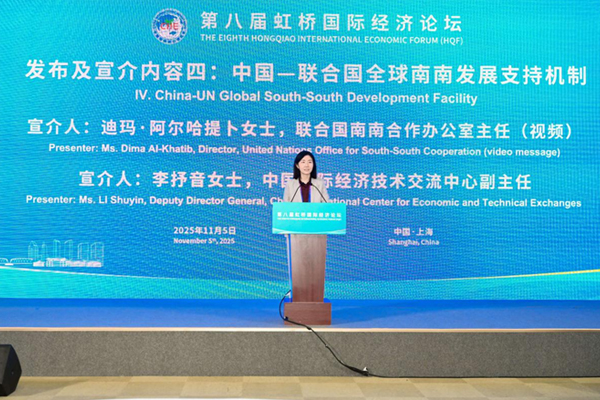 For more than two decades, UNOSSC and CICETE have maintained a strong and strategic partnership in advancing South-South cooperation. Together, they have jointly designed and implemented a series of flagship initiatives – including the China South-South Development Centre, the Global South-South Development Centre, and the South-South Silk Road Cities Project – supporting more than 50 developing countries across sectors such as renewable energy, agricultural technology, waste management, digital governance, and cross-border e-commerce.
These joint efforts have generated tangible development results, strengthened institutional capacities, and delivered a wide range of knowledge products for the Global South. This accumulated cooperation experience provides a solid foundation for the new Facility and positions it to further scale up impact in its next phase.
The Facility adopts an integrated approach to sustainable development, with priority focus areas including agricultural and rural transformation, food security and climate resilience; green and low-carbon transition; digitalization and new industrialization; and the creative economy – with gender equality and youth empowerment serving as cross-cutting priorities.
UNOSSC Director Ms. Dima Al-Khatib underlined that “the Facility is not only a China-UN partnership – it is a global public good for the South, fostering technological cooperation, youth-led innovation, and inclusive, green development.”
For more than two decades, UNOSSC and CICETE have maintained a strong and strategic partnership in advancing South-South cooperation. Together, they have jointly designed and implemented a series of flagship initiatives – including the China South-South Development Centre, the Global South-South Development Centre, and the South-South Silk Road Cities Project – supporting more than 50 developing countries across sectors such as renewable energy, agricultural technology, waste management, digital governance, and cross-border e-commerce.
These joint efforts have generated tangible development results, strengthened institutional capacities, and delivered a wide range of knowledge products for the Global South. This accumulated cooperation experience provides a solid foundation for the new Facility and positions it to further scale up impact in its next phase.
The Facility adopts an integrated approach to sustainable development, with priority focus areas including agricultural and rural transformation, food security and climate resilience; green and low-carbon transition; digitalization and new industrialization; and the creative economy – with gender equality and youth empowerment serving as cross-cutting priorities.
UNOSSC Director Ms. Dima Al-Khatib underlined that “the Facility is not only a China-UN partnership – it is a global public good for the South, fostering technological cooperation, youth-led innovation, and inclusive, green development.”
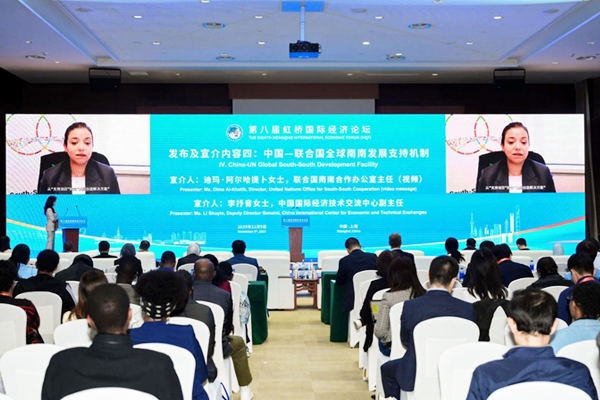 Forum participants also reaffirmed the critical role of Free Trade Zones in enabling South-South trade and investment – positioning Free Trade Zones not only as trade platforms, but also as engines for industrial upgrading, digital transformation, green transition, regional integration, and inclusive growth.
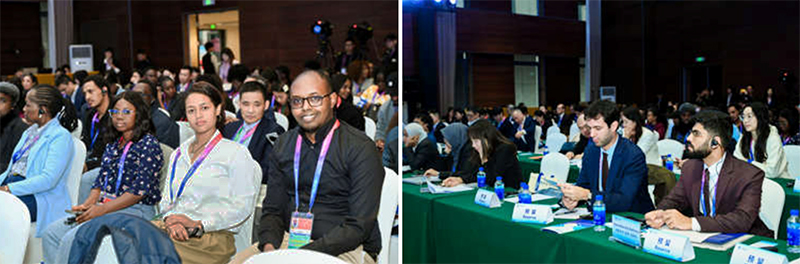 Looking ahead, UNOSSC will continue working closely with United Nations entities and a wide range of partners to advance South-South and triangular cooperation. Building on the strong foundation laid by long-standing China-UN collaboration, the China-UN Global South-South Development Facility will serve as a central platform for translating shared ambition into practical solutions, scalable results, and expanded opportunities for developing countries as they work to accelerate progress toward the 2030 Agenda for Sustainable Development.
Participating via a pre-recorded video message, Ms. Dima Al-Khatib, Director of the United Nations Office for South-South Cooperation (UNOSSC), underscored the strategic significance of the Facility. She noted that Premier Li Qiang announced the launch of the “China–UN Global South-South Development Facility (2025–2030), supported by USD 10 million in budgetary funding,” and emphasized that this represents a shift from supporting projects to co-creating scalable solutions and shared development outcomes.
Reflecting on the Facility’s development process, Ms. Li Shuyin, Deputy Director General of the China International Center for Economic and Technical Exchanges (CICETE), recalled that the Ministry of Commerce and UNOSSC jointly signed the initial Statement of Intent for the Facility during the previous CIIE in 2024. Over the past year, all partners have been working collaboratively to shape the Facility’s institutional design – culminating in the formal announcement at the UN General Assembly in September.
For more than two decades, UNOSSC and CICETE have maintained a strong and strategic partnership in advancing South-South cooperation. Together, they have jointly designed and implemented a series of flagship initiatives – including the China South-South Development Centre, the Global South-South Development Centre, and the South-South Silk Road Cities Project – supporting more than 50 developing countries across sectors such as renewable energy, agricultural technology, waste management, digital governance, and cross-border e-commerce.
These joint efforts have generated tangible development results, strengthened institutional capacities, and delivered a wide range of knowledge products for the Global South. This accumulated cooperation experience provides a solid foundation for the new Facility and positions it to further scale up impact in its next phase.
The Facility adopts an integrated approach to sustainable development, with priority focus areas including agricultural and rural transformation, food security and climate resilience; green and low-carbon transition; digitalization and new industrialization; and the creative economy – with gender equality and youth empowerment serving as cross-cutting priorities.
UNOSSC Director Ms. Dima Al-Khatib underlined that “the Facility is not only a China-UN partnership – it is a global public good for the South, fostering technological cooperation, youth-led innovation, and inclusive, green development.”
Forum participants also reaffirmed the critical role of Free Trade Zones in enabling South-South trade and investment – positioning Free Trade Zones not only as trade platforms, but also as engines for industrial upgrading, digital transformation, green transition, regional integration, and inclusive growth.
Looking ahead, UNOSSC will continue working closely with United Nations entities and a wide range of partners to advance South-South and triangular cooperation. Building on the strong foundation laid by long-standing China-UN collaboration, the China-UN Global South-South Development Facility will serve as a central platform for translating shared ambition into practical solutions, scalable results, and expanded opportunities for developing countries as they work to accelerate progress toward the 2030 Agenda for Sustainable Development.