• Home
  • /
  • Events
  • /
  • ASEAN’s 47th Summit Highlights Southern-Led Multilateralism and Expanding Pathways for South-South and Triangular Cooperation

ASEAN’s 47th Summit Highlights Southern-Led Multilateralism and Expanding Pathways for South-South and Triangular Cooperation


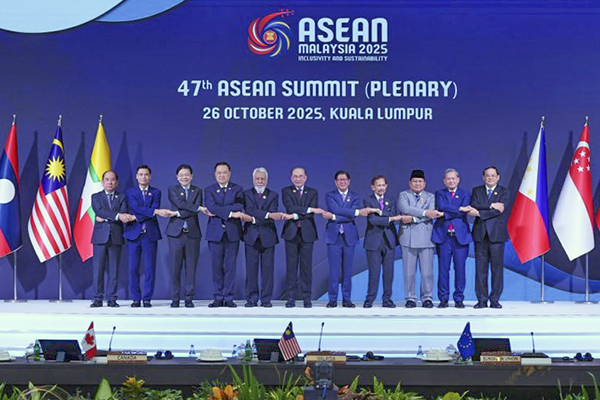
ASEAN concluded its 47th Summit and Related Summits on 28 October 2025, in Kuala Lumpur, with a series of high-level engagements that underscored the bloc’s growing global influence, its distinctive model of regional cooperation, and its expanding role in shaping South-South and triangular cooperation. Hosted by Malaysia as current Chair under the theme “Inclusivity and Sustainability,” the three-day summit brought together leaders from the 11 ASEAN members and nearly two dozen partner countries across regions. Established in 1967 by its five founding members, ASEAN has grown into a comprehensive regional community of 11 states, with Timor-Leste formally welcomed as the newest member during this year’s summit. What began as a subregional grouping navigating the geopolitical pressures of the Vietnam War has evolved into one of the world’s most influential regional blocs and the fourth-largest economic entity globally.   A Multi-Layered Summit with Global Reach The annual ASEAN Summit remains the group’s highest decision-making body. Per tradition, it was accompanied by a number of “Related Summits” geared toward deepening ASEAN’s ties with key partners. This year’s meetings included:
  • ASEAN Plus One Summits with seven dialogue partners – Australia, China, India, Japan, the Republic of Korea, Russia, and the United States – where trade, particularly US tariff pressures, shaped deliberations.
  • ASEAN Plus Three Summit, focusing on the digital economy, energy, connectivity, and macroeconomic stability, supported by briefings from the ASEAN+3 (ASEAN countries plus China, Japan, and Korea) Macroeconomic Research Office (AMRO) and the East Asia Business Council.
  • The 20th East Asia Summit, a flagship forum on regional security and economic strategy, notably attended by the Presidents of Brazil and South Africa, reflecting ASEAN’s intention to broaden ties with the wider Global South.
  • ASEAN-United Nations Summit, marking its 15th edition, where leaders adopted the ASEAN-UN Plan of Action 2026–2030, including a new action point on South-South and triangular cooperation championed by the United Nations Office for South-South Cooperation (UNOSSC).
  • Regional Comprehensive Economic Partnership (RCEP) Summit, celebrating five years of the world’s largest free trade agreement amid emerging global trends.
  • ASEAN-New Zealand Commemorative Summit, elevating relations to a Comprehensive Strategic Partnership.
ASEAN’s meetings do not culminate in negotiated outcome documents. Instead, they release Chairman’s Statements, joint declarations and, crucially, new frameworks or action plans – such as the newly launched ASEAN–UN Plan of Action (2026-2030) – that strengthen and guide cooperation towards long-term gains. The full list of these Statements and Declarations (along with the Plans of Action) are available here.   ASEAN’s Multilateralism: A Southern Model of Solidarity Throughout the Summit, delegates and observers alike highlighted the enduring relevance of the “ASEAN Way’’ – the bloc’s signature approach characterized by dialogue, consensus-building, non-interference, and persistent diplomacy. Originally forged to contain regional conflict and stabilize newly independent states, this approach has become one of the Global South’s most influential models of multilateralism. Over nearly five decades, ASEAN has transformed even former adversaries into partners — strengthened cross-border cooperation through coordinated policies on a range of shared priorities (such as connectivity and trade) and people-to-people exchanges. ASEAN’s strategic neutrality has also enabled it to maintain constructive ties with all major powers, serving as a stabilizing anchor amid shifting geopolitical dynamics within its sphere and beyond. At this year’s Summit, ASEAN leaders reiterated their commitment to ongoing dialogue and reaffirmed their role as a platform for peaceful engagement.   ASEAN’s Economic Diplomacy: A Blueprint for the Global South ASEAN’s rise from a modest regional grouping with a combined GDP of US$24 billion in 1967 to a US$4.13 trillion economic powerhouse in 2024 has become a defining example of how South-South cooperation can transform regional and global economies. Central to this transformation is ASEAN’s long-standing push for economic integration, fortifying economic relations by lowering intra-regional tariffs to zero. It also forges innovative approaches for mutual benefit, such as the ASEAN Free Trade Area and the landmark ASEAN Digital Economy Framework Agreement (DEFA) concluded at this Summit. DEFA – the region’s first digital-economy pact – will harmonize digital payments, data governance, e-trade rules, and the ASEAN Unique Business Identification Number, positioning Southeast Asia as a future digital hub. DEFA serves as a model for other regions of the Global South seeking to accelerate integration, with countries form other regions participating in its Summits increasing through the years. ASEAN’s experience in building regional markets and fostering investment-friendly corridors across borders have been drawing strong interest. This year’s Summit also saw Uruguay, the incoming 2026 Chair of Community of Latin American and Caribbean States (CELAC), participating as signatory to the ASEAN Treaty of Amity and Cooperation (TAC), opening channels for cross-regional cooperation between CELAC and ASEAN. (Uruguay and the Philippines, the incoming Chair of ASEAN, engaged in the recent cross-regional dialogue on SS&TrC for regional integration and cooperation co-hosted by UNOSSC and the UN-Regional Commission New York Office (RCNYO)/Regional Commissions. (Please see more here.)   Global South-South Partnership ASEAN’s engagement with global powers and regional organizations continues to broaden its reach and amplify its impact. The Treaty of Amity and Cooperation (TAC) – ASEAN’s key diplomatic instrument for building peaceful relations – now counts 58 signatories, including five new accessions in recent years. At this Summit, Finland signed the Treaty and Uruguay participated for the first time as a signatory, reaffirming ASEAN’s growing global relevance. ASEAN’s strategic dialogues with Australia, China, India, Japan, Korea, the EU, Russia, and the United States is anchored in South-South principles of sovereignty, non-interference, and peaceful cooperation.   ASEAN–UN Cooperation: Renewed Commitment to Multilateralism A major highlight of the week was the adoption of the ASEAN-UN Plan of Action 2026–2030, which sets forth cooperation across peace and security, disaster management, humanitarian action, climate resilience, education, gender equality, and youth empowerment. UNOSSC contributed to the development process, helping frame a cross-cutting action point on South-South and triangular cooperation and affirming ASEAN’s potential as a hub for sharing regional integration lessons with other parts of the Global South. UN Member States welcomed ASEAN’s deepening engagement with the UN system. Many, including Viet Nam, Timor-Leste, Thailand, and the Philippines, called for enhanced cooperation on preventive diplomacy, early-warning systems, digital governance, marine biodiversity, and peacekeeping.   Next Steps: Leveraging ASEAN’s Experience As regional organizations take on greater roles in the international system, ASEAN’s 2025 Summit demonstrated how Southern-led blocs can drive development, shape global economic rules, and elevate collective diplomacy and Southern role in the future of multilateralism. For UNOSSC, ASEAN is a unique partner for deepening South-South and triangular cooperation, including through:
  • Implementation of the ASEAN-UN Plan of Action 2026-2030, particularly its new South-South and triangular components;
  • Cross-regional exchanges (such as between ASEAN and CELAC);
  • Support to and leveraging of ASEAN’s emerging frameworks, including DEFA; and
  • Engagement with ASEAN’s cooperation platforms with other regions to channel Southern-led approaches.
As Malaysia concluded its chairmanship, leaders praised ASEAN’s continued stability and expanding influence and welcomed the Philippines chairmanship in 2026. The year ahead offers critical opportunities to advance cross-regional South-South cooperation anchored in ASEAN’s decades-long experience in solidarity-driven multilateralism.   More Reading:   Chairman’s Statements, joint declarations, new frameworks of the 47th ASEAN Summit and Related Summits:  

Related Post


  • All Post
  • Agriculture and Food Security Publications
  • ATCT Featured Publications POM
  • BAPA+40
  • Blog
  • Capacity Development Initiatives
  • CASS Featured Publications POM
  • CICETE Featured Publications POM
  • CIKD
  • Cities Clusters - Agriculture
  • Cities Clusters - COVID-19
  • Cities Clusters - COVID-19 Knowledge Products
  • Cities Clusters - DRR
  • Cities Clusters - DRR Knowledge Products
  • Cities Clusters - E-commerce
  • Cities Clusters - E-commerce Knowledge Products
  • Cities Clusters - Tourism
  • Cities Clusters - Tourism Knowledge Products
  • Cities Clusters - Transport
  • Cities Clusters - Waste
  • Cities Project
  • Cities Project COVID-19 Newsletters
  • Cities Project COVID-19 Response
  • Cities Project Knowledge Products
  • Classic (untouched)
  • Climate Action
  • Climate Publications
  • COMSATS Featured Publications POM
  • COMSATS Featured Solutions POM
  • Converted from Divi
  • Converted from Mixed
  • Converted from WPBakery
  • COVID-19
  • COVID-19 Page Featured Solutions
  • DRR Knowledge Products
  • DRR News
  • Empty Post
  • ESCWA Featured Publications POM
  • Events
  • FAO Featured Publications POM
  • Featured Event UN-Habitat POM
  • Featured Partner Publications Panama
  • Financing for Development
  • Financing Mechanisms
  • g7+
  • Gender Events
  • Gender News
  • Gender Publications
  • Good Practices in SSTrC Series
  • Good Practices Publications
  • Good Practices Thematic Series & Special Editions
  • Good Practices Vol. 2
  • Good Practices Vol. 3
  • GSSDC
  • Handbook
  • Highlighted
  • Highlighted Publications
  • IAEA Featured Solutions POM
  • IBRAF Featured Publications POM
  • IBSA Fund
  • IBSA Fund Annual Reports
  • IBSA Fund News and Stories
  • IBSA Fund Publication
  • IBSA Fund Story
  • ICGEB Featured Events POM
  • ICGEB Featured Publications POM
  • ICGEB Featured Solutions POM
  • IFAD Featured Publications POM
  • ILO Featured Events POM
  • ILO Featured Publications POM
  • ILO Featured Solutions POM
  • India-UN Development Partnership Fund
  • India-UN Fund Publication
  • India-UN Fund Story
  • IsDB
  • IsDB Featured Publications POM
  • IsDB SCC
  • News
  • Norec Featured Publications POM
  • Norec Featured Solutions POM
  • PAHO Featured Publications POM
  • Peace and Development
  • PGTF Publications
  • PGTF Story
  • PICA Featured News POM
  • PICA Featured Publications POM
  • PICA Featured Solutions POM
  • PIDF Featured Publications POM
  • Policy Brief
  • PPD Featured Publications POM
  • Publications
  • Regional Updates
  • Report
  • Research
  • ROK-UNOSSC Facility
  • SCP Featured Publications POM
  • SGP Featured Publication POM
  • SGP Featured Solutions POM
  • Solution
  • South South in Action
  • South-South Global Thinkers
  • South-South Ideas
  • South-South Ideas Series
  • South-South in Action Series
  • Southern Response to COVID-19
  • SSN4PSI Featured Publications POM
  • SSN4PSI Featured Solutions POM
  • Survey
  • TIKA Featured Publications pom
  • Training
  • UN Day for SSC 2020
  • UN Fund for SSC
  • UN SSC Day Publications
  • UN-Habitat Featured Publications POM
  • UN-HABITAT Featured Solutions POM
  • UNCCT
  • UNCDF Featured Publications POM
  • UNEP Featured Publications POM
  • UNESCAP Featured Publications POM
  • UNESCO Featured Publications POM
  • UNFPA
  • UNFSSC Publication
  • UNFSSC Story
  • UNIDO Featured Publications POM
  • UNIDO Featured Solutions POM
  • UNIDO POM Events
  • UNOCT Featured Publications POM
  • UNOHRLLS Featured Publications POM
  • UNV
  • UNV Featured Publications POM
  • WB Featured Publications POM
  • WB Featured Solutions POM
  • Webinars
  • WFP Featured Events POM
  • WFP Featured Publication POM
  • WFP Featured Solutions POM
  • WIPO
  • Workshops and Seminars
  • Youth4South
  • z Across the Globe 1
  • z Across the Globe 2
  • z Across the Globe 4
  • z Across the Globe 5
  • z Across the Globe 6
  • z Across the Globe 7
  • z Across the Globe 8
  • z ES BAPA+40
  • z ES Eventos
  • z ES Noticias
  • z ES Noticias Destacadas
  • z ES Publicaciones
  • z ES Publicaciones Destacadas
  • z ES Serie Buenas Prácticas en la CSSyT
  • z ES Serie El Sur-Sur en Acción
  • z FR Actualités
  • z FR BAPA+40
  • z FR Événements
  • z FR Publications
  • z FR Publications en vedette
  • z FR Série Bonnes pratiques en CSST
  • z FR Série Sud-Sud en action
  • z Highlighted News
  • z Photos
  • z Videos
  • z ZH BAPA+40
  • z ZH Events
  • z ZH News

Connect with UNOSSC

Stay updated with the latest trends in South-South cooperation and access our vast repository of knowledge.

Copyright © UNOSSC/UNDP

Register

Registration Form (INDIVIDUAL EXPERT)

Use this form to register as an individual expert and become discoverable for knowledge exchange, advisory services, technical support, mentorship, and South-South and triangular cooperation initiatives.

SECTION A. PERSONAL INFORMATION

First name *
Last Name *
Image
Maximum file size: 1 GB
Country of Residence: *
Current Organization/Institution (if applicable):
Position/Title:
Email *
LinkedIn/Professional Profile (optional):
Short professional biography *
CV
Maximum file size: 1 GB

SECTION B. EXPERTISE PROFILE

SDGs
Specific Expertise / Keywords (max. 10 keywords, separate with , ):
Experience in Regions
Experience in Countries

SECTION C. TYPE OF SUPPORT YOU CAN PROVIDE

I am available to provide: (Select all that apply)

SECTION D. PRO-BONO EXPERT SUPPORT

Would you be willing to provide pro bono support to governments, development organizations, UN entities, academia, civil society organizations, or other stakeholders through the platform?

SECTION E. MODALITIES & AVAILABILITY

Mode of support:
Estimated availability:
Indicative level of effort (optional):
SECTION F. SHORT DESCRIPTION OF SUPPORT OFFER (Max. 500 characters)

SECTION G. CONSENT & CONDITIONS

I would like my profile to be: *
Consent: *

1. Official name of organization / institution / government entity (exclusions to apply) *
Organizational Logo *
Maximum file size: 2 MB
2. Country *
3. Region *
4. SDGs *
5. Partner category *
6. Website *
7. Which is your Parent organization?
8. Indicate which unit/project/department you work in at your organization. *
9.Industry / sector of your organization *
10. Brief description of your institution (max. 150 words) *
11. Name for the Lead *
12. Title for the Lead *
13. Email address for the Lead *
14. Name for the co-lead
15. Title for the co-lead
16. Email address for the co-lead
17. Due Diligence and Integrity Declaration *

Registration Form (INDIVIDUAL EXPERT)

Use this form to register as an individual expert and become discoverable for knowledge exchange, advisory services, technical support, mentorship, and South-South and triangular cooperation initiatives.

SECTION A. PERSONAL INFORMATION

First name *
Last Name *
Image
Maximum file size: 1 GB
Nationality:
Country of Residence: *
Current Organization/Institution (if applicable):
Position/Title:
Email *
LinkedIn/Professional Profile (optional):
Short professional biography *
CV
Maximum file size: 1 GB

SECTION B. EXPERTISE PROFILE

SDGs
Specific Expertise / Keywords (max. 10 keywords, separate with , ):
Experience in Regions
Experience in Countries

SECTION C. TYPE OF SUPPORT YOU CAN PROVIDE

I am available to provide: (Select all that apply)

SECTION E. MODALITIES & AVAILABILITY

Mode of support:
Estimated availability:
Indicative level of effort (optional):
SECTION F. SHORT DESCRIPTION OF SUPPORT OFFER (Max. 500 characters)

SECTION G. CONSENT & CONDITIONS

I would like my profile to be: *
Consent: *

1. Official name of organization / institution / government entity (exclusions to apply) *
Organization logo
Maximum file size: 20 MB
2. Country *
3. Region *
4. SDG *
5. Partner category *
6. Website *
7. Brief description of your institution (max. 150 words) *
8. Name for the Lead *
9. Title for the Lead *
10. Email address for the Lead *
11. Name for the co-lead
12. Title for the co-lead
13. Email address for the co-lead
14. Expression of Interest in the Alliance *
Additional information on proposed areas of engagement may be requested through the platform following initial review by the Alliance Secretariat.
15. Due Diligence and Integrity Declaration *

Submission Note:

  • Submission of this Expression of Interest form does not automatically confer participation in the Alliance.
  • All submissions will be reviewed by the Alliance Secretariat, including basic eligibility screening and proportionate due diligence, as appropriate.
  • Participation in Alliance activities is determined based on relevance to articulated cooperation needs, alignment with Alliance principles, and integrity considerations.
  • Engagement under the Alliance is voluntary, non-binding, and facilitative in nature, and does not constitute funding approval, contractual commitment, or institutional membership.
  • The Alliance Secretariat may contact submitting entities for additional information or clarification during the review process.

Submission of Demand Form

Description of Demand

Indicate the type of support or cooperation requested through the Alliance.
Please briefly describe the challenge, gap, or priority. (Max. 300 words)

Thematic and Geographic Focus

Please indicate the main focus areas of your demand:

A. Thematic Areas (select up to three)
B. Geographic Focus (select all that apply)

Proposed Engagement Modalities

Please indicate how you would like to engage through the Alliance (select all that apply):

Expected Outcomes

Please indicate the main results you seek to achieve through this engagement. (Max. 200 words)
Examples:
• Capacity strengthened
• Partnerships established
• Sectoral or regional strategies co-developed
• Solutions piloted
• Knowledge generated
• Policies informed

Timeline and Readiness (if applicable)

1. Expected timeframe for engagement:
2. Current stage:

Additional Information

Please provide any additional information, documents, or links relevant to this submission.
(Max. 200 words or upload link)

Submission of Offer Form

Description of Contribution

Indicate the type of contribution your institution can provide and describe the expertise, resources, or solutions you may offer.
Please briefly describe your proposed contribution. (Max. 300 words)

Thematic and Geographic Focus

Please indicate the main focus areas of your interest:

A. Thematic Areas (select up to three)
B. Geographic Focus (select all that apply)

Proposed Engagement Modalities

Please indicate how you would like to engage through the Alliance (select all that apply):

Expected Outcomes

Please indicate the main results you aim to achieve through this engagement. (Max. 200 words)
Examples:
• Capacity strengthened
• Partnerships established
• Sectoral or regional strategies co-developed
• Solutions piloted
• Knowledge generated
• Policies informed

Timeline and Readiness (if applicable)

1. Expected timeframe for engagement:
2. Current stage:

Additional Information

Please provide any additional information, documents, or links relevant to this submission.
(Max. 200 words or upload link)

Organization Registration

Authentication & Due Diligence This prototype simulates identity verification, due diligence confirmation, and an authentication step before submission. *

First Name *
Last Name *
Email address *
Password *
Confirm Password *
Name of institution / organization *
Country / Region *
Organization Type *
Organization other *
Function / role *
Organization logo *
Maximum file size: 1 GB

Login

Login / email *
Password *
Remember me

Forgot password?

Connect form

Your name *
Email *
Organization / institution *
Job title / role *
Reason for connecting:
Short message

Add Knowledge Product

A. Publication Basics (Mandatory)

Exact Title of the Publication *
Featured image *
Maximum file size: 2 MB
Executive Summary *
Publication Available Online *
Direct Link to Publication

B. Publication Details

Subtitle
Publication Type *
Year of Publication *
Authors / Editors
Key Messages

C. Organizations

Partner Organizations

D. Discoverability (Optional)

Keywords *
SDGs *
Geographic Coverage *
Countries *

Add Good Practice

My form is: *

SECTION 1. BASIC INFORMATION

Title of the Good Practice *
A South-South cooperation good practice is a documented experience, approach, methodology or initiative that has produced positive results, generated useful lessons, and demonstrated relevance for other countries or institutions facing similar development challenges. A good practice should be credible, evidence-based, contextually explained, and useful for learning, policy dialogue, adaptation or scaling.
Name of the Solution(s) *
A South-South cooperation solution is a concrete, tested or implementable policy, programme, technology, institutional model, service, financing mechanism, methodology or partnership approach developed or applied by countries and institutions of the Global South, which responds to a clearly identified development challenge and has potential to be adapted, replicated or scaled in other contexts through South-South or triangular cooperation.
Short Summary *
max. 60 words
Lead Implementing Institution *
Partner Institutions *
Countries / Territories Involved *
Regions Involved *
Type of Cooperation *

SECTION 2. DEVELOPMENT CONTEXT & SDG ALIGNMENT

Primary SDG(s) Addressed *
SDG Target(s) *
Secondary SDGs (if applicable)
Development Challenge Addressed *
100–150 words

SECTION 3. DESCRIPTION OF THE GOOD PRACTICE & SOLUTION

Objectives of the Good Practice / Solution *
max. 100 words
Description of the Solution(s) *
max. 300 words
Innovation Dimension *
max. 150 words

SECTION 4. SOUTH-SOUTH & TRIANGULAR COOPERATION VALUE

South-South Knowledge Exchange *
max. 200 words
Role of Triangular Partners (if applicable)

SECTION 5. PARTICIPATION & GOVERNANCE

Were participatory approaches used in the design and implementation of the solution? If yes, describe the stakeholders involved (e.g., beneficiaries, communities, civil society, private sector, government agencies) *
max. 150 words
What governance and institutional arrangements supported the implementation of this solution? Please describe the roles and responsibilities of key institutions and any collaboration with government entities, development partners, civil society, academia, or the private sector *

SECTION 6. PRODUCED IMPACT (Partner-Validated)

Description of Produced Impact *
max. 250 words
Quantitative Results *
Please provide measurable results achieved through the solution.
Quantitative Results
Please provide measurable results achieved through the solution.
Qualitative Results *
Please describe the most significant qualitative changes resulting from the solution.
Qualitative Results
Please describe the most significant qualitative changes resulting from the solution.

Timeframe of Impact

Timeframe of Impact of the solution: *

SECTION 7. SUSTAINABILITY & SCALABILITY

7.1 What measures have been taken to ensure the sustainability of the good practice beyond the project or intervention period? *
Please describe institutional, financial, policy, technical, community ownership, or capacity-building measures that support long-term sustainability. (max. 150 words)
7.2 Is the solution replicable and adaptable in other contexts? *
Please explain whether the solution can be adapted or replicated in different countries, regions, sectors, communities, or development settings. Highlight any enabling conditions or prerequisites. (max. 150 words)

SECTION 8. RISKS & LESSONS LEARNED

Key Risks and Mitigation Measures
max. 100 words
Lessons Learned *
max. 150 words

SECTION 9. RESOURCES & EVIDENCE

Supporting Materials *
Maximum file size: 1 GB
manuals, toolkits, evaluations, media
URL of the Good Practice / Solution *
Please provide URLs to publicly available resources that demonstrate, validate, or document the good practice. Examples include: Project or programme website/microsite, published evaluation report, case study, knowledge product, policy document, news article or media coverage, technical report, blog or publication etc.
URL of the Solution *
Please provide URLs to publicly available resources that demonstrate, validate, or document the solution. Examples include: Project or programme website/microsite, published evaluation report, case study, knowledge product, policy document, news article or media coverage, technical report, blog or publication etc.
Additional URLs (optional)

SECTION 10. CONTACT INFORMATION & VALIDATION

Focal Point – Partner Institution (Impact Validation)

Name *
Title *
Organization *
Email *
Declaration *

Scroll to Top