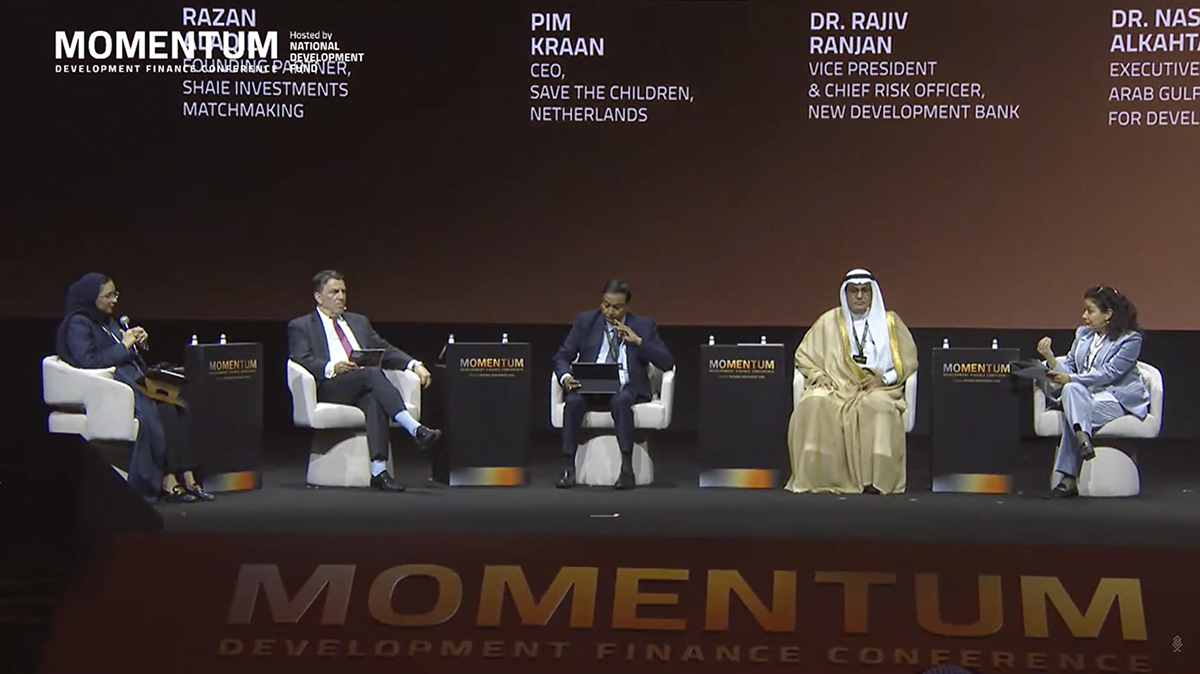
The Global Development Finance Conference Momentum 2025, held in Riyadh under the theme “Leading Development Transformation,” highlighted South-South and triangular cooperation as indispensable pillars for delivering sustainable, inclusive development in an increasingly complex global landscape.
Convened by the Saudi Arabia National Development Fund (NDF) at the King Abdulaziz International Conference Center under the patronage of His Royal Highness Crown Prince Mohammed bin Salman, the three-day conference brought together decision-makers, development banks, investors, innovators and international organizations from across regions. With more than 100 speakers and participation from over 120 local and international entities, Momentum 2025 was a global platform for translating development ambition into impact. The National Development Fund and its affiliates sealed 45 agreements worth a reported SR6 billion at Momentum 2025, strengthening private-sector growth, supporting SMEs, and advancing national priorities across tourism, infrastructure, culture, digitalisation, and sustainability.
Discussions reflected Saudi Arabia’s Vision 2030 as a model of transformation driven by diversification, innovation and strategic investment. NDF Vice Chairman Mohammed Al-Tuwaijri emphasized that the Kingdom is entering a new phase of development financing – one centered on impact, sustainability and empowerment of human capital – supported by strong partnerships across public, private and international actors.
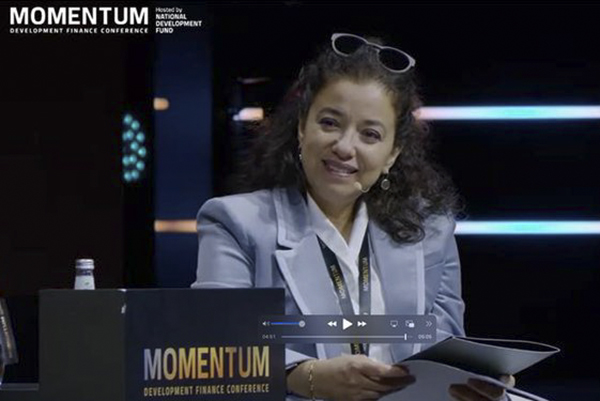
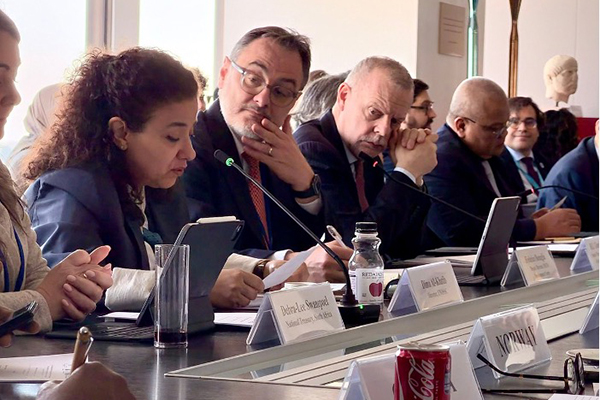
Within this broader agenda, South-South and triangular cooperation featured prominently as practical and scalable modalities for addressing shared development challenges. Speaking during the high-level session on “Maximizing Developmental Impact through Triangular Cooperation,” Ms. Dima Al-Khatib, Director of the United Nations Office for South-South Cooperation (UNOSSC), underscored that development today is no longer linear or siloed, but a shared space shaped by collaboration and complementary strengths.
“Triangular cooperation was born in a shared development space – dynamic, interconnected and shaped by the strengths of many actors,” the Director noted. Over time, it has evolved from a donor-driven complement into a demand-driven, Southern-led modality aligned with national priorities and regional agendas. This evolution, she recalled, has been reinforced by global frameworks such as the Nairobi Outcome Document and the Buenos Aires Plan of Action+40 (BAPA+40), which recognize triangular cooperation as a valuable instrument for strengthening national development efforts.
Ms. Al-Khatib emphasized that triangular cooperation today operates as a multi-actor ecosystem involving governments, UN entities, multilateral and regional development banks, the private sector, civil society and academia. This ecosystem approach allows successful pilots to be scaled into long-term platforms by combining financing, policy dialogue, technology and knowledge in ways that reflect country-owned priorities.
Concrete examples – from electric mobility initiatives in Central America and water-energy-food nexus solutions in the Mekong, to vocational training partnerships in Africa and solar-powered water systems in Somalia – demonstrate how South-South and triangular cooperation deliver results when anchored in local priorities and strengthened through complementary expertise.
The conference also highlighted the leadership of Global South institutions in shaping this evolving cooperation landscape. For example, addressing a high-level panel, H.E. Dr. Muhammad Al Jasser, Chairman of the Islamic Development Bank (IsDB) Group, emphasized the strength of South-South cooperation as a development model rooted in shared experience and solidarity.
“While our paid-up capital is around $10 billion, we have provided over $200 billion in development financing, demonstrating the Bank’s ability to deliver strong development impact under a robust Global South development model,” Dr. Al Jasser stated. With all its membership drawn from the Global South, IsDB’s partnerships across infrastructure, agriculture, health, energy and education exemplify the scale and effectiveness of South-South cooperation in advancing the Sustainable Development Goals.
His Excellency Ahmed bin Aqeel Al-Khatib, Chairman of the Saudi Fund for Development (SFD) Board of Directors, underscored the Fund’s achievements in more than 100 developing countries reaffirmed its commitment to financing development projects and programs in developing and least developed countries worldwide. On the sidelines of the conference, the SFD signed five development memoranda of understanding with Imam Muhammad ibn Saud Islamic University, the Islamic Military Counter Terrorism Coalition, the Green Middle East Initiative, the Saudi Agricultural and Livestock Investment Company (SALIC), and the Arab Urban Development Institute. These agreements aim to expand international cooperation and support sustainable economic and social development, enabling new opportunities, strategic partnerships, and integrated frameworks for joint development projects.
Looking ahead, Ms. Al-Khatib stressed the need to move from short-term projects to long-term platforms that enable continuous learning, flexible financing and strengthened institutional capacity. “Triangular cooperation is not just a modality,” she concluded. “It is a mindset – one that recognizes that sustainable development depends on shared capabilities, not the transfer of isolated solutions.”
Momentum 2025 demonstrated that South-South and triangular cooperation are central engines of development transformation – grounded in solidarity, innovation and shared progress across the Global South and beyond.
https://gccbusinesswatch.com/news/saudi-arabia-signs-sr6-billion-in-development-agreements-at-momentum-2025-to-accelerate-national-transformation/#:~:text=The%20Digital%20Cooperation%20Organization%20also,innovation%2C%20and%20sustainable%20economic%20transformation
https://x.com/NDF/status/1998323016262946831