Uruguay Assumes 2026 Group of 77 Chairmanship as Global South Reaffirms Unity and Solidarity
The United Nations Office for South-South Cooperation (UNOSSC) congratulates Uruguay on taking over the chairmanship of the Group of 77 (G77) and China for the year 2026 and looks forward to greater solidarity and cooperation under its leadership, as the Group continues to advance the collective interests of developing countries within the United Nations system.
Founded in 1964 by 77 countries, the G77 has since grown to 134 Member States and has emerged as the voice of the Global South. It provides a unified platform for developing countries to advocate for their shared interests within the multilateral system and to promote South-South and triangular cooperation as a complement to other forms of international partnership.
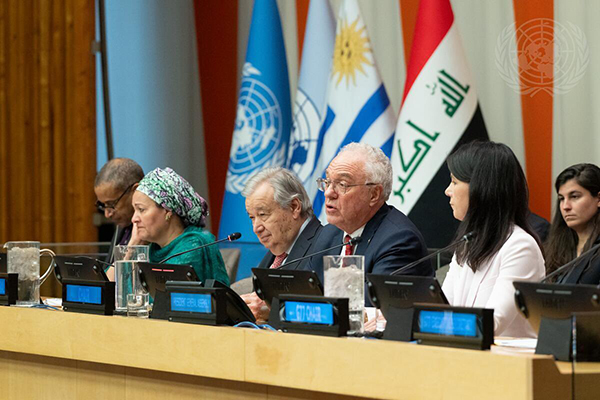
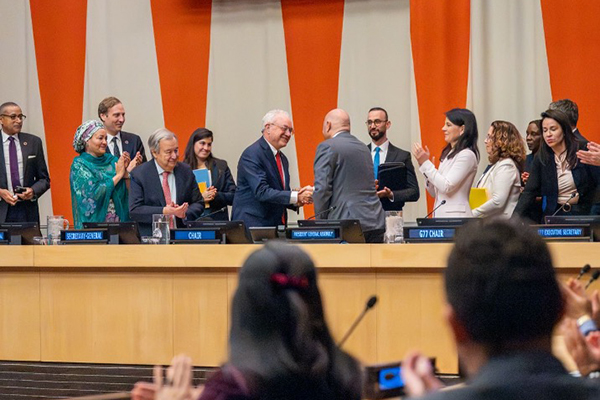
The ceremonial handover of the Chairmanship took place at United Nations Headquarters in New York on 14 January 2026, marking the transition from the Republic of Iraq’s leadership in 2025 to Uruguay’s leadership in 2026. The ceremony featured remarks by the UN Secretary-General and the President of the General Assembly, as well as addresses by the Minister for Foreign Affairs of Uruguay and the Permanent Representative of Iraq to the United Nations, as incoming and outgoing Chairs of the Group, respectively.
Addressing the ceremony on behalf of the outgoing Chair, H.E. Mr. Lukman Al-Faily, Permanent Representative of the Republic of Iraq to the United Nations, described Iraq’s tenure as both a privilege and a historic responsibility, noting that it was the first time Iraq had chaired the Group since its establishment more than six decades ago. He expressed deep appreciation to all members of the Group for the trust placed in Iraq and for the spirit of unity, cooperation and solidarity that characterized the Group’s work throughout 2025.
Ambassador Al-Faily highlighted that, under Iraq’s Chairmanship, the Group of 77 and China played an active and coordinated role in shaping intergovernmental processes and outcomes across the United Nations system. He noted the Group’s substantive engagement in preparations for major global processes, including the Fourth International Conference on Financing for Development, the World Summit for Social Development, reforms of the international financial architecture, and discussions on digital cooperation and artificial intelligence. Across these processes, he said, the Group consistently emphasized the centrality of development, equity, common but differentiated responsibilities, and the need for predictable and adequate means of implementation for developing countries.
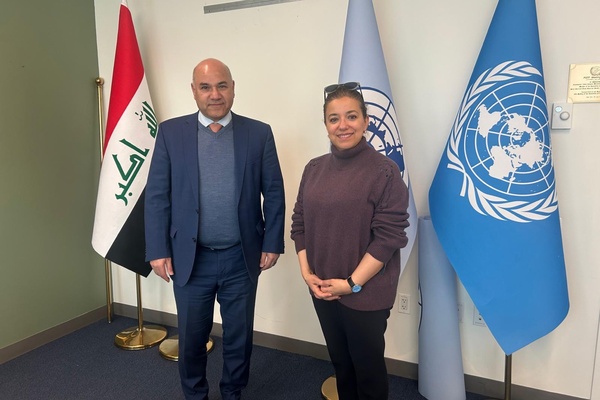
Grateful for strong Group of 77 leadership, UNOSSC Director Dima Al-Khatib met H.E. Ambassador Lukman Al-Faily, Permanent Representative of Iraq to the UN and outgoing Chair of the G77 in January, to thank him for advancing South-South and triangular cooperation.
Reflecting on the priorities set at the outset of Iraq’s Chairmanship, Ambassador Al-Faily recalled the Group’s collective commitment to accelerating implementation of the 2030 Agenda for Sustainable Development; strengthening action on climate change, biodiversity loss and environmental degradation; mobilizing financing for development; combating illicit financial flows; and promoting inclusive digital transformation. He underscored that, despite an intense and challenging geopolitical environment, the Group remained united and forward-looking, describing this unity as its greatest strength.
As Iraq handed over the Chairmanship, Ambassador Al-Faily expressed full confidence in Uruguay’s leadership and commitment to multilateralism, noting that Iraq stands ready to extend its full cooperation and support to the incoming Chair and to continue playing an active and constructive role as a committed member of the Group of 77 and China.
Collaboration between UNOSSC and the Iraq Chairmanship of the G77 included, among other actions: (i) a joint high-level policy dialogue on Global South leadership in climate negotiations, entitled “From Marrakech to Belém: The Global South’s Role and Experience in Shaping the Climate Agenda,” which took place on 21 July 2025; (ii) a partnership during the Arab Forum for Sustainable Development (AFSD) 2025, held in Beirut, Lebanon, in April, including a high-level event entitled “Advancing a Renewed Global FFD Framework and Reforming the International Financial Architecture”; (iii) celebrations of the UN Day for South-South Cooperation (12 September) and Science, Technology and Innovation Day for the Global South (16 September); and (iv) close collaboration during Second Committee negotiations, particularly on the South-South cooperation resolution under the 80th UNGA. This resolution aims, among other objectives, to initiate a review of the BAPA+40 outcome document, building on the UNDP Administrator’s report recommendations.
Assuming the Chairmanship for 2026, H.E. Mr. Mario Lubetkin, Minister for Foreign Affairs of Uruguay, said his country was taking over the presidency at a critical moment for the United Nations and for the rules-based international order. He paid tribute to Iraq’s stewardship and acknowledged the high standard set during its tenure. “We will defend the interests of our group, and we will strengthen its position within the UN system,” he said.
“Strengthening South-South and triangular cooperation is essential to achieving the Sustainable Development Goals, as a complement to traditional North-South cooperation,” said Minister Lubetkin. “In line with the Seville Commitment, adopted at the Fourth International Conference on Financing for Development, Uruguay will promote initiatives aimed at strengthening cooperation mechanisms and discussing the reform of the international financial architecture from more inclusive spaces.”
Minister Lubetkin also emphasized that the growing international challenges facing the world “require ever more collective cooperation to reach our common goals in the context of an international law that is ever more affected.” He reaffirmed Uruguay’s commitment to exercising a facilitating and inclusive chairmanship, aimed at strengthening internal cohesion within the Group and ensuring that the voice of the Global South remains coordinated, constructive and relevant in the multilateral system.
Building on the previous chairmanship, UNOSSC looks forward to working closely with Uruguay during its Chairmanship to strengthen South-South and triangular cooperation and to support the Group of 77 and China in advancing sustainable development, equity and solidarity across the United Nations system.
In his remarks, UN Secretary-General António Guterres stressed that, more than six decades on, the Group of 77 and China remains a “strong pillar of multilateralism” and an indispensable force for global cooperation at a time when international cooperation is under strain. “We begin this year amid raging conflicts, widening inequalities, mounting debt burdens, and an erosion of trust,” he said. “That is why we need a renewed commitment to cooperation – in a truly interconnected, multipolar world. And that is why the Group of 77 and China remain indispensable.”
Commending the Group’s unity, the Secretary-General added: “Time and again, you have shown unity and strength,” and emphasized the need for reforms to ensure developing countries have greater participation and influence in international financial institutions. Drawing attention to the rapidly evolving technological landscape, he also warned against deepening inequalities, stating: “We must ensure the digital age becomes an engine of inclusion, not an accelerator of inequality.”
President of the General Assembly H.E. Annalena Baerbock highlighted the Group’s unique diversity, representing more than 80 per cent of the world’s population, and underscored its critical role in fostering inclusive dialogue and cross-regional cooperation at a time of unprecedented strain on multilateralism.

 As Iraq handed over the Chairmanship, Ambassador Al-Faily expressed full confidence in Uruguay’s leadership and commitment to multilateralism, noting that Iraq stands ready to extend its full cooperation and support to the incoming Chair and to continue playing an active and constructive role as a committed member of the Group of 77 and China.
Collaboration between UNOSSC and the Iraq Chairmanship of the G77 included, among other actions: (i) a joint high-level policy dialogue on Global South leadership in climate negotiations, entitled “From Marrakech to Belém: The Global South’s Role and Experience in Shaping the Climate Agenda,” which took place on 21 July 2025; (ii) a partnership during the Arab Forum for Sustainable Development (AFSD) 2025, held in Beirut, Lebanon, in April, including a high-level event entitled “Advancing a Renewed Global FFD Framework and Reforming the International Financial Architecture”; (iii) celebrations of the UN Day for South-South Cooperation (12 September) and Science, Technology and Innovation Day for the Global South (16 September); and (iv) close collaboration during Second Committee negotiations, particularly on the South-South cooperation resolution under the 80th UNGA. This resolution aims, among other objectives, to initiate a review of the BAPA+40 outcome document, building on the UNDP Administrator’s report recommendations.
Assuming the Chairmanship for 2026, H.E. Mr. Mario Lubetkin, Minister for Foreign Affairs of Uruguay, said his country was taking over the presidency at a critical moment for the United Nations and for the rules-based international order. He paid tribute to Iraq’s stewardship and acknowledged the high standard set during its tenure. “We will defend the interests of our group, and we will strengthen its position within the UN system,” he said.
“Strengthening South-South and triangular cooperation is essential to achieving the Sustainable Development Goals, as a complement to traditional North-South cooperation,” said Minister Lubetkin. “In line with the Seville Commitment, adopted at the Fourth International Conference on Financing for Development, Uruguay will promote initiatives aimed at strengthening cooperation mechanisms and discussing the reform of the international financial architecture from more inclusive spaces.”
Minister Lubetkin also emphasized that the growing international challenges facing the world “require ever more collective cooperation to reach our common goals in the context of an international law that is ever more affected.” He reaffirmed Uruguay’s commitment to exercising a facilitating and inclusive chairmanship, aimed at strengthening internal cohesion within the Group and ensuring that the voice of the Global South remains coordinated, constructive and relevant in the multilateral system.
Building on the previous chairmanship, UNOSSC looks forward to working closely with Uruguay during its Chairmanship to strengthen South-South and triangular cooperation and to support the Group of 77 and China in advancing sustainable development, equity and solidarity across the United Nations system.
In his remarks, UN Secretary-General António Guterres stressed that, more than six decades on, the Group of 77 and China remains a “strong pillar of multilateralism” and an indispensable force for global cooperation at a time when international cooperation is under strain. “We begin this year amid raging conflicts, widening inequalities, mounting debt burdens, and an erosion of trust,” he said. “That is why we need a renewed commitment to cooperation – in a truly interconnected, multipolar world. And that is why the Group of 77 and China remain indispensable.”
Commending the Group’s unity, the Secretary-General added: “Time and again, you have shown unity and strength,” and emphasized the need for reforms to ensure developing countries have greater participation and influence in international financial institutions. Drawing attention to the rapidly evolving technological landscape, he also warned against deepening inequalities, stating: “We must ensure the digital age becomes an engine of inclusion, not an accelerator of inequality.”
President of the General Assembly H.E. Annalena Baerbock highlighted the Group’s unique diversity, representing more than 80 per cent of the world’s population, and underscored its critical role in fostering inclusive dialogue and cross-regional cooperation at a time of unprecedented strain on multilateralism.
As Iraq handed over the Chairmanship, Ambassador Al-Faily expressed full confidence in Uruguay’s leadership and commitment to multilateralism, noting that Iraq stands ready to extend its full cooperation and support to the incoming Chair and to continue playing an active and constructive role as a committed member of the Group of 77 and China.
Collaboration between UNOSSC and the Iraq Chairmanship of the G77 included, among other actions: (i) a joint high-level policy dialogue on Global South leadership in climate negotiations, entitled “From Marrakech to Belém: The Global South’s Role and Experience in Shaping the Climate Agenda,” which took place on 21 July 2025; (ii) a partnership during the Arab Forum for Sustainable Development (AFSD) 2025, held in Beirut, Lebanon, in April, including a high-level event entitled “Advancing a Renewed Global FFD Framework and Reforming the International Financial Architecture”; (iii) celebrations of the UN Day for South-South Cooperation (12 September) and Science, Technology and Innovation Day for the Global South (16 September); and (iv) close collaboration during Second Committee negotiations, particularly on the South-South cooperation resolution under the 80th UNGA. This resolution aims, among other objectives, to initiate a review of the BAPA+40 outcome document, building on the UNDP Administrator’s report recommendations.
Assuming the Chairmanship for 2026, H.E. Mr. Mario Lubetkin, Minister for Foreign Affairs of Uruguay, said his country was taking over the presidency at a critical moment for the United Nations and for the rules-based international order. He paid tribute to Iraq’s stewardship and acknowledged the high standard set during its tenure. “We will defend the interests of our group, and we will strengthen its position within the UN system,” he said.
“Strengthening South-South and triangular cooperation is essential to achieving the Sustainable Development Goals, as a complement to traditional North-South cooperation,” said Minister Lubetkin. “In line with the Seville Commitment, adopted at the Fourth International Conference on Financing for Development, Uruguay will promote initiatives aimed at strengthening cooperation mechanisms and discussing the reform of the international financial architecture from more inclusive spaces.”
Minister Lubetkin also emphasized that the growing international challenges facing the world “require ever more collective cooperation to reach our common goals in the context of an international law that is ever more affected.” He reaffirmed Uruguay’s commitment to exercising a facilitating and inclusive chairmanship, aimed at strengthening internal cohesion within the Group and ensuring that the voice of the Global South remains coordinated, constructive and relevant in the multilateral system.
Building on the previous chairmanship, UNOSSC looks forward to working closely with Uruguay during its Chairmanship to strengthen South-South and triangular cooperation and to support the Group of 77 and China in advancing sustainable development, equity and solidarity across the United Nations system.
In his remarks, UN Secretary-General António Guterres stressed that, more than six decades on, the Group of 77 and China remains a “strong pillar of multilateralism” and an indispensable force for global cooperation at a time when international cooperation is under strain. “We begin this year amid raging conflicts, widening inequalities, mounting debt burdens, and an erosion of trust,” he said. “That is why we need a renewed commitment to cooperation – in a truly interconnected, multipolar world. And that is why the Group of 77 and China remain indispensable.”
Commending the Group’s unity, the Secretary-General added: “Time and again, you have shown unity and strength,” and emphasized the need for reforms to ensure developing countries have greater participation and influence in international financial institutions. Drawing attention to the rapidly evolving technological landscape, he also warned against deepening inequalities, stating: “We must ensure the digital age becomes an engine of inclusion, not an accelerator of inequality.”
President of the General Assembly H.E. Annalena Baerbock highlighted the Group’s unique diversity, representing more than 80 per cent of the world’s population, and underscored its critical role in fostering inclusive dialogue and cross-regional cooperation at a time of unprecedented strain on multilateralism.