Credit ratings shape countries’ access to development financing and influence the cost of borrowing and, for Africa, as the UNDP 2025 Report Sovereign Credit Ratings: Perspectives for Africa’s Development pointed out, “the stakes couldn’t be higher.”
Only four of the 32 African countries with ratings from the “Big Three” credit rating agencies (S&P, Moodys and Fitch) are rated “investment grade” (Botswana, Morocco, Mauritius and St. Helena). African countries on average have high debt service costs (1.5% points higher interest rates than similarly rated nations in other regions), which claim up to 25% of government revenues that could have been used for development priorities.
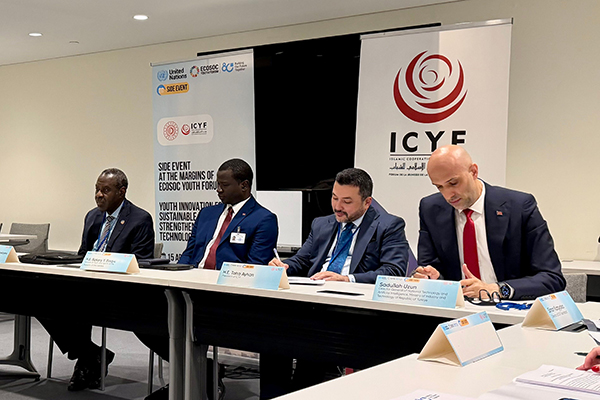
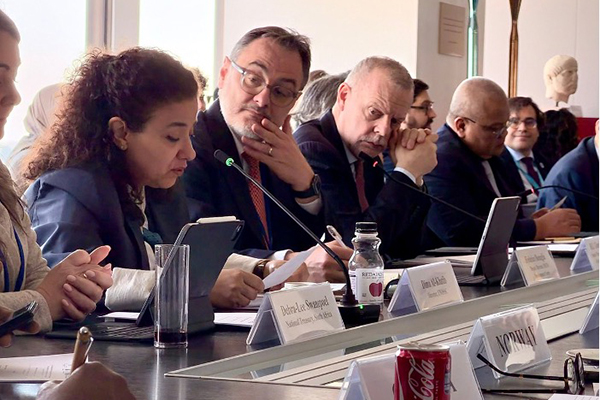
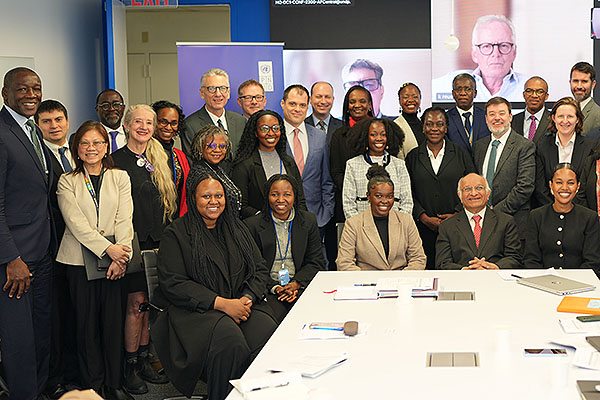
To help address systemic challenges that influence cost of borrowing, UNDP launched the Africa Credit Ratings Initiative in 2024, in partnership with AfriCatalyst and with support from the Government of Japan. In February, it convened a roundtable discussion among its Concilium of Advisors with experts and partners within and beyond the UN system (including representatives from the the Big Three), followed by briefing with the Permanent Representatives of Member States from the region.
The intent and goals of the initiative, and the way it advances these, are in line with the priorities of the United Nations Office for South-South Cooperation, as established in its UNOSSC Strategic Framework 2026-2029. The initiative is designed to strengthen Global South capacities, the core of the mandate of UNOSCC – in this case, the African countries’ capacity to navigate the credit ratings process, boost credit ratings, and broaden sources of, or access to, affordable capital.
The mandate and services of UNOSSC speak directly to the call for strengthening financial mechanisms, cross-border investments, resource mobilization and knowledge sharing on a modality anchored in solidarity and mutual benefit. In the context of tightening fiscal space and declining ODA, these cooperation modalities are becoming particularly impactful because they pose no additional burdens to countries and they ensure mutual benefit. As driver of catalytic finance, South-South and triangular cooperation is oriented not just towards increasing the speed and volume of financing for SDG acceleration, but also towards transforming the very architecture of the system that shapes countries’ development paths and prospects.
As the entity in the UN system mandated to advance and facilitate South-South and triangular cooperation within and beyond the UN system, UNOSSC aims to leverage these cooperation modalities to help, among others, deepen understanding of issues related to credit ratings in the context of the Global South and build capacities suited to context.
Please click here to read about the UNDP Consultations on Sovereign Credit Ratings, 11-12 February 2026, in New York, “Africa Credit Ratings Initiative: Unlocking Affordable Finance in Africa”.