• Home
  • /
  • News
  • /
  • UNFSSC: P-LINK Viet Nam Pilot Delivers Clean Water to Mekong Delta Communities through WEF Nexus Innovation

UNFSSC: P-LINK Viet Nam Pilot Delivers Clean Water to Mekong Delta Communities through WEF Nexus Innovation


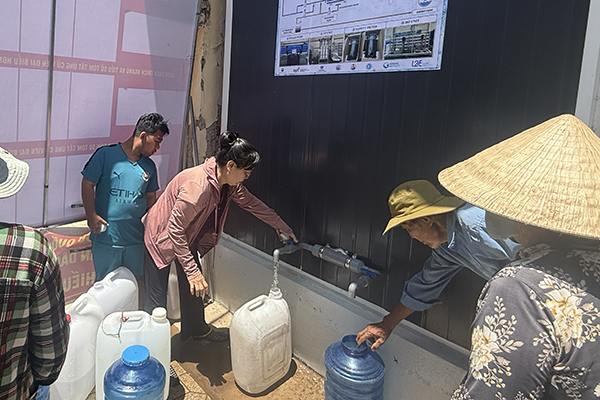
Vinh Long Province, Viet Nam – 16 March 2026 — A climate-resilient water treatment facility has been officially handed over to local authorities and communities in Con Linh Island, marking a major step forward in securing clean water access and strengthening livelihoods in the Mekong Delta. The pilot was implemented under the Triangular Cooperation Project on Sustainable Development in the Lower Mekong River Basin based on the Water–Energy–Food (WEF) Nexus (RoK–UNOSSC Facility Phase 3/P-LINK), demonstrating how science, technology, and multi-stakeholder partnerships can be translated into practical, scalable solutions for vulnerable communities. From Salinity Crisis to Safe Water Access For years, Con Linh Island has faced severe saline intrusion, leaving households dependent on rainwater and costly external supply. The newly operational system now delivers safe, treated water for over 2,000 residents, while also supporting aquaculture through circular water reuse. “This project has significant practical value for the local community and demonstrates what strong coordination and shared responsibility can achieve,” said Dr. Truong Hong Tien, Deputy Director General, Viet Nam National Mekong Committee. “Access to clean water is increasingly urgent due to salinity intrusion, and this facility provides a timely and sustainable solution for local residents,” added Mr. Bui Van Tham, Deputy Director, Vinh Long Department of Agriculture and Environment. Turning Innovation into Immediate Impact The solution—co-designed through extensive consultations with Vinh Long provincial authorities, community representatives, and project partners (UNOSSC, MRCS, MI and STEPI)—was delivered by a Korean start-up L2E Solution, combining local needs with advanced technology. The system integrates: • Ultrafiltration (UF) and Reverse Osmosis (RO) technologies to address high salinity • Solar-assisted energy systems to reduce operational costs • A circular water use model, enabling reuse of brine for aquaculture Key results include: • Reliable daily water supply aligned with WHO standards • 50 m³/day treatment capacity for domestic use • Additional water supply supporting local livelihoods • Up to 78% reduction in energy consumption through solar integration • Stable performance despite extreme salinity fluctuations (up to 7,900 mg/L)
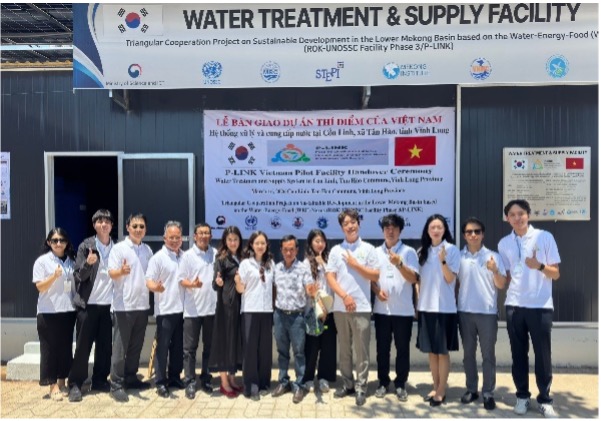
“This pilot shows how science and technology can translate into tangible improvements in daily life and livelihoods,” underscored Ms. Eunyoung Huh, Director, Multilateral Cooperation Division, International Cooperation Bureau, Ministry of Science and ICT (MSIT). Partnership in Action: From Global Innovation to Local Impact

The Viet Nam pilot reflects a true public–private and multi-level partnership, bringing together: – Viet Nam National Mekong Committee (VNMC) – Vinh Long provincial authorities and communities – UN Office for South-South Cooperation (UNOSSC) – Mekong River Commission (MRCS) – Mekong Institute (MI) – Science and Technology Policy Institute (STEPI) – L2E Solution

Throughout implementation, the project combined policy dialogue, technical design, and community engagement, ensuring that solutions were both technically sound and locally appropriate. Capacity Building and Regional Learning A key feature of the pilot has been hands-on, community-focused capacity building led by the Mekong Institute, which translated complex treatment technologies into practical, user-friendly training for local operators—enabling effective system operation, maintenance, and long-term ownership. The handover also served as a platform for regional exchange, with participation from the Thai National Mekong Committee Secretariat/the Office of National Water Resources (TNMCS/ONWR), where stakeholders from Viet Nam and Thailand shared experiences on managing water challenges under climate stress and explored opportunities for replication. Together, these efforts highlight P-LINK’s role in combining technology transfer with knowledge sharing, strengthening sustainability and scaling through South-South and triangular cooperation. Local Ownership Driving Long-Term Impact With the official handover, the facility is now operated by local authorities and technical teams, supported by an established operation and maintenance framework. A community representative from Tan Hao Commune emphasized: “We will work closely with relevant agencies to manage and operate the facility effectively, ensuring long-term sustainability and benefits for our community.” “Today’s handover marks a transition from partnership to local ownership. This facility now belongs to the community, reflecting how cooperation, innovation, and trust can come together to deliver real improvements in people’s lives,” said Ms. Xiaojun Grace Wang, UNOSSC Trust Fund Director. Scaling What Works Across the Mekong The Con Linh pilot demonstrates how integrated WEF Nexus solutions can deliver immediate and lasting impact, while also offering a replicable model for other salinity-affected areas across the Mekong Delta and beyond.

Partners reaffirmed their commitment to: • Scale similar solutions across the region • Strengthen regional knowledge-sharing platforms • Mobilize future investments for Nexus-based innovations

“This pilot shows how science, technology, and innovation can be applied in an integrated way to address complex challenges. More importantly, it provides a practical model that can be refined and replicated across the Mekong region,” highlighted Dr. Ji Woong Yoon, President, STEPI. About P-LINK The P-LINK initiative enhances water, energy, and food security across the Mekong region through innovative, demand-driven solutions and triangular cooperation, improving livelihoods for vulnerable communities.
Related Post


  • All Post
  • ATCT Featured Publications POM
  • BAPA+40
  • Blog
  • Capacity Development Initiatives
  • CICETE Featured Publications POM
  • CIKD
  • Cities Clusters - Agriculture
  • Cities Clusters - COVID-19
  • Cities Clusters - COVID-19 Knowledge Products
  • Cities Clusters - DRR
  • Cities Clusters - E-commerce
  • Cities Clusters - Tourism
  • Cities Clusters - Tourism Knowledge Products
  • Cities Clusters - Transport
  • Cities Clusters - Waste
  • Cities Project
  • Cities Project COVID-19 Newsletters
  • Cities Project COVID-19 Response
  • Cities Project Knowledge Products
  • Classic (untouched)
  • Climate Action
  • COMSATS Featured Publications POM
  • COMSATS Featured Solutions POM
  • Converted from Divi
  • Converted from Mixed
  • Converted from WPBakery
  • COVID-19
  • COVID-19 Page Featured Solutions
  • DRR Knowledge Products
  • DRR News
  • Empty Post
  • Events
  • Featured Event UN-Habitat POM
  • Financing for Development
  • Financing Mechanisms
  • g7+
  • Gender Events
  • Gender News
  • Good Practices in SSTrC Series
  • Good Practices Publications
  • Good Practices Thematic Series & Special Editions
  • Good Practices Vol. 2
  • Good Practices Vol. 3
  • GSSDC
  • Highlighted
  • Highlighted Publications
  • IAEA Featured Solutions POM
  • IBRAF Featured Publications POM
  • IBSA Fund
  • IBSA Fund Annual Reports
  • IBSA Fund News and Stories
  • IBSA Fund Publication
  • IBSA Fund Story
  • ICGEB Featured Events POM
  • ICGEB Featured Publications POM
  • ICGEB Featured Solutions POM
  • ILO Featured Events POM
  • ILO Featured Publications POM
  • ILO Featured Solutions POM
  • India-UN Development Partnership Fund
  • India-UN Fund Publication
  • India-UN Fund Story
  • IsDB
  • IsDB Featured Publications POM
  • IsDB SCC
  • News
  • Norec Featured Publications POM
  • Norec Featured Solutions POM
  • Peace and Development
  • PGTF Publications
  • PGTF Story
  • PICA Featured News POM
  • PICA Featured Publications POM
  • PICA Featured Solutions POM
  • PIDF Featured Publications POM
  • Publications
  • Regional Updates
  • Research
  • ROK-UNOSSC Facility
  • SGP Featured Publication POM
  • SGP Featured Solutions POM
  • Solution
  • South South in Action
  • South-South Global Thinkers
  • South-South Ideas
  • South-South Ideas Series
  • South-South in Action Series
  • Southern Response to COVID-19
  • SSN4PSI Featured Publications POM
  • SSN4PSI Featured Solutions POM
  • Training
  • UN Day for SSC 2020
  • UN Fund for SSC
  • UN SSC Day Publications
  • UN-Habitat Featured Publications POM
  • UN-HABITAT Featured Solutions POM
  • UNCCT
  • UNEP Featured Publications POM
  • UNFPA
  • UNFSSC Publication
  • UNFSSC Story
  • UNIDO Featured Publications POM
  • UNIDO Featured Solutions POM
  • UNIDO POM Events
  • UNOCT Featured Publications POM
  • UNV
  • UNV Featured Publications POM
  • WB Featured Publications POM
  • WB Featured Solutions POM
  • Webinars
  • WFP Featured Events POM
  • WFP Featured Publication POM
  • WFP Featured Solutions POM
  • WIPO
  • Workshops and Seminars
  • Youth4South
  • z Across the Globe 1
  • z Across the Globe 2
  • z Across the Globe 4
  • z Across the Globe 5
  • z Across the Globe 6
  • z Across the Globe 7
  • z Across the Globe 8
  • z ES BAPA+40
  • z ES Eventos
  • z ES Noticias
  • z ES Noticias Destacadas
  • z ES Publicaciones
  • z ES Publicaciones Destacadas
  • z ES Serie Buenas Prácticas en la CSSyT
  • z ES Serie El Sur-Sur en Acción
  • z FR Actualités
  • z FR BAPA+40
  • z FR Événements
  • z FR Publications
  • z FR Publications en vedette
  • z FR Série Bonnes pratiques en CSST
  • z FR Série Sud-Sud en action
  • z Highlighted News
  • z Photos
  • z Videos
  • z ZH BAPA+40
  • z ZH Events
  • z ZH News

ABOUT

Terms of Service

Privacy Policy

Disclosures

RESOURCES

Terms of Service

Privacy Policy

Disclosures

ENGAGE

Terms of Service

Privacy Policy

Disclosures

Copyright © UNOSSC/UNDP

wpChatIcon
wpChatIcon

Alliance Application Form

Submit an Expression of Interest and/or Demand Signal. UNOSSC reviews submissions on a rolling basis.

1. Official name of organization / institution / government entity (exclusions to apply) *
2. Country *
3. Region *
4. SDG *
Secondary SDG *
5. Partner category *
6. Website *
7. Brief description of your institution (max. 150 words) *
Name for the Lead *
Title for the Lead *
Email address for the Lead *
Name for the co-lead
Title for the co-lead
Email address for the co-lead
Section 3. Expression of Interest in the Alliance *
Additional information on proposed areas of engagement may be requested through the platform following initial review by the Alliance Secretariat.
Section 4. Due Diligence and Integrity Declaration *

Submission Note:

  • Submission of this Expression of Interest form does not automatically confer participation in the Alliance.
  • All submissions will be reviewed by the Alliance Secretariat, including basic eligibility screening and proportionate due diligence, as appropriate.
  • Participation in Alliance activities is determined based on relevance to articulated cooperation needs, alignment with Alliance principles, and integrity considerations.
  • Engagement under the Alliance is voluntary, non-binding, and facilitative in nature, and does not constitute funding approval, contractual commitment, or institutional membership.
  • The Alliance Secretariat may contact submitting entities for additional information or clarification during the review process.

Submission of Demand Form

Description of Demand

Indicate the type of support or cooperation requested through the Alliance.
Please briefly describe the challenge, gap, or priority. (Max. 300 words)

Thematic and Geographic Focus

Please indicate the main focus areas of your demand:

A. Thematic Areas (select up to three)
B. Geographic Focus (select all that apply)

Proposed Engagement Modalities

Please indicate how you would like to engage through the Alliance (select all that apply):

Expected Outcomes

Please indicate the main results you seek to achieve through this engagement. (Max. 200 words)
Examples:
• Capacity strengthened
• Partnerships established
• Sectoral or regional strategies co-developed
• Solutions piloted
• Knowledge generated
• Policies informed

Timeline and Readiness (if applicable)

1. Expected timeframe for engagement:
2. Current stage:

Additional Information

Please provide any additional information, documents, or links relevant to this submission.
(Max. 200 words or upload link)

Submission of Offer Form

Description of Contribution

Indicate the type of contribution your institution can provide and describe the expertise, resources, or solutions you may offer.
Please briefly describe your proposed contribution. (Max. 300 words)

Thematic and Geographic Focus

Please indicate the main focus areas of your interest:

A. Thematic Areas (select up to three)
B. Geographic Focus (select all that apply)

Proposed Engagement Modalities

Please indicate how you would like to engage through the Alliance (select all that apply):

Expected Outcomes

Please indicate the main results you aim to achieve through this engagement. (Max. 200 words)
Examples:
• Capacity strengthened
• Partnerships established
• Sectoral or regional strategies co-developed
• Solutions piloted
• Knowledge generated
• Policies informed

Timeline and Readiness (if applicable)

1. Expected timeframe for engagement:
2. Current stage:

Additional Information

Please provide any additional information, documents, or links relevant to this submission.
(Max. 200 words or upload link)

Organization Registration

Authentication & Due Diligence This prototype simulates identity verification, due diligence confirmation, and an authentication step before submission. *

First Name *
Last Name *
Email address *
Password *
Confirm Password *
Name of institution / organization *
Country / Region *
Organization Type *
Organization other *
Function / role *
Organization logo *
Maximum file size: 1 GB

Login

Login / email *
Password *
Remember me

Forgot password?

Connect form

Your name *
Email *
Organization / institution *
Job title / role *
Reason for connecting:
Short message

Scroll to Top