• Home
  • /
  • News
  • /
  • DISCUSSION BRIEF – Global South Perspectives on the Peace and Development Nexus: Potential of South-South and Triangular Cooperation for Addressing the Impact of Conflict on Global South Countries

DISCUSSION BRIEF – Global South Perspectives on the Peace and Development Nexus: Potential of South-South and Triangular Cooperation for Addressing the Impact of Conflict on Global South Countries


DISCUSSION BRIEF – Global South Perspectives on the Peace and Development Nexus: Potential of South-South and Triangular Cooperation for Addressing the Impact of Conflict on Global South Countries

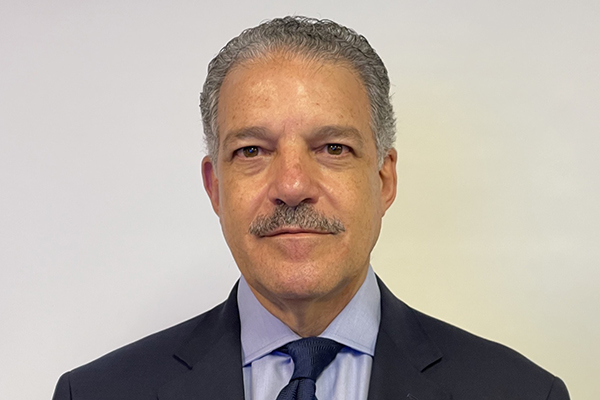
by Adel M. Abdellatif*

March 2026   Introduction: A Moment of Reckoning We are living through a convergence of crises: conflicts, climate disruption, economic fragmentation, and digital fracture. These forces do not bear down equally. Their weight falls most heavily on countries of the Global South — those least responsible for generating global instability, yet absorbing a disproportionate and compounding share of its consequences. This is not a new dynamic, but its contemporary scale is. The deep integration of the global economy means that conflicts no longer remain contained within their geographies. Through interconnected markets for energy, food, finance, and trade, they cascade across borders, triggering secondary crises in countries often thousands of miles from the front lines. Global South countries — characterised by structural heterogeneity, limited fiscal buffers, and constrained institutional capacity — are the most exposed and the least equipped to absorb these shocks. With only 35 per cent of Sustainable Development Goal targets on track for 2030, and with the United Nations projecting a global economic downturn that could spiral beyond manageable parameters, the structural position of Global South countries demands urgent analytical and policy attention. This brief initiates a structured conversation among development practitioners, policymakers, and scholars on how South-South and Triangular Cooperation (SSTrC) can serve as a strategic, peer-grounded mechanism to help Global South countries anticipate, absorb, and recover from the development shocks that conflicts generate. It draws its analytical foundation from the 2025 UNOSSC Global Report, which — for the first time — introduces a strategic foresight lens into SSTrC analysis.   I. The Asymmetric Logic of Conflict Shocks The starting point for any serious engagement with this topic is asymmetry. Conflict-generated shocks flow through the global economy with little regard for borders, but with acute sensitivity to structural position. Least Developed Countries (LDCs), Small Island Developing States (SIDS), landlocked developing countries, and net importers of food and energy face cascade effects they did not cause and cannot easily absorb. The 2025 UNOSSC Global Report documents how shocks since 2020 — the COVID-19 pandemic, the war in Ukraine, and escalating trade tensions — have become ‘more intense, widespread, and interlinked,’ leaving lasting impacts on development across the Global South. The ongoing conflict in the Middle East reinforces this trajectory. The development implications are multidimensional. Landlocked economies dependent on transit corridors face different exposure than agriculture-based economies disrupted by fertilizer supply chains, or emerging markets susceptible to capital flight and currency depreciation. Across all profiles, the consequences are similar: inflationary pressure, fiscal stress, rising debt burdens, eroding social gains, and sharpened gender inequalities, with women and girls bearing heightened costs.   II. The Peace and Development Nexus: Towards a Southern Lens The linkage between peace and development is well-established in international policy discourse. The distinctive contribution of the 2025 UNOSSC Global Report lies in its Southern-centred reading of this nexus: one that positions peace not as a precondition externally delivered, but as a dynamic that development cooperation can actively build from within. The report argues that SSTrC — extended through triangular partnerships — is uniquely positioned to address the root causes of conflict: poverty, inequality, resource scarcity, and weak governance. Joint initiatives in sustainable agriculture and water management can mitigate resource-based tensions in transboundary regions; shared educational programmes can foster intercultural understanding; and the dialogue platforms inherent in SSTrC can serve as mechanisms for preventive diplomacy, confidence-building, and conflict resolution — reducing reliance on external interventions that may not align with local realities. This represents a shift from an instrumental view of peace as a prerequisite for development, to an integrated view in which development cooperation is itself a peacebuilding modality. The report frames this through a ‘human security’ lens — encompassing physical safety, economic security, social protection, environmental resilience, and political stability — as ‘a powerful pathway to sustainable peace.’ Critically, SSTrC does not replace multilateral frameworks or North-South cooperation; it complements and strengthens them, injecting greater equity, national ownership, and contextual relevance into the global development architecture.   III. SSTrC as a Strategic Response: Priority Dimensions for Reflection How can SSTrC serve as an effective mechanism for Global South countries responding to conflict-generated development shocks? The following questions are offered to guide practitioner and policy dialogue:
  • Transmission pathways and visibility. Through what mechanisms do conflict shocks reach geographically distant countries — and why do the development costs borne by secondary shock-absorbers (net food importers, remittance-dependent economies, landlocked transit states) remain systematically underweighted in global analysis and policy response? What would it take to make these exposure pathways legible to international frameworks?
  • Limits of multilateral architecture. Where do current multilateral frameworks — in trade, finance, food security, and debt relief — reveal structural limits when tested against the development scenarios Global South countries are most likely to face? What does that gap imply about the kind of architecture — regional, South-led, or hybrid — needed to fill it?
  • Counter-cyclical design. How can SSTrC be operationalised as a counter-cyclical, conflict-responsive mechanism — capable of expanding support precisely when conflict shocks contract the fiscal space and institutional capacity of vulnerable countries? What financing, institutional, and governance innovations are required?
  • Comparative advantage. Where does SSTrC hold the greatest comparative advantage relative to other cooperation modalities in addressing the peace-development nexus? In what contexts — fragile states, conflict-adjacent regions, countries experiencing secondary shocks — does SSTrC offer pathways that conventional North-South cooperation cannot, or should not, attempt to replicate?
  • Knowledge systems and Southern epistemic capacity. What investments in data, research infrastructure, and Southern knowledge systems are needed to enable Global South countries to better anticipate, document, and respond to conflict-generated shocks through SSTrC — and how can this platform contribute to building that capacity?
  IV. Towards an Agenda for Action The compounding crises of our time are not impersonal forces. They are structured by decisions and architectures that systematically advantage some countries and disadvantage others. Addressing the impact of conflict on the Global South is therefore a matter not only of humanitarian urgency, but of structural justice. SSTrC, as documented in the 2025 Global Report, offers a framework equal to this complexity — grounded in solidarity, mutual benefit, and national ownership; flexible enough to span technical cooperation, knowledge exchange, investment, and preventive diplomacy; and ambitious enough to reimagine the peace-development nexus from a Southern vantage point. Realising this potential requires deliberate investment: in institutional capacities, financing mechanisms, data systems, and — above all — in the quality of practitioner dialogue that this platform seeks to initiate. Contributions to this discussion bring Southern thinking, experience, and innovation to bear on one of the defining governance challenges of our era.   *Dr. Adel M. Abdellatif is a distinguished international development strategist with over four decades of executive leadership across the United Nations system, diplomatic service, and global advisory practice. As a former UN Director, Director a.i. of the United Nations Office for South-South Cooperation (UNOSSC), and Ambassador-rank diplomat representing Egypt, he has shaped seminal global and regional development agendas at the highest levels of multilateral governance. Throughout his tenure at the United Nations Development Programme (UNDP) and UNOSSC, Dr. Abdellatif led flagship initiatives in human development, governance reform, and South-South and triangular cooperation. He is widely recognized as the principal architect of the Arab Human Development Reports — landmark publications that redefined evidence-based policy dialogue across the Arab world — and as the lead author of the 2025 UNOSSC Global Report on South-South and Triangular Cooperation. His work has consistently translated complex global frameworks into operational strategies, mobilizing multi-partner coalitions and building system-wide capacities across regions. Today, Dr. Abdellatif advises governments, UN entities, and leading think tanks on SDG acceleration, human capital investment, resilient social protection systems, and innovative models of South-South and triangular cooperation. He brings rare fluency in navigating complex multilateral environments — combining strategic foresight, policy architecture, and high-level convening power to address the defining development challenges of the 21st century.    

Related Post


  • All Post
  • ATCT Featured Publications POM
  • BAPA+40
  • Blog
  • Capacity Development Initiatives
  • CICETE Featured Publications POM
  • CIKD
  • Cities Clusters - Agriculture
  • Cities Clusters - COVID-19
  • Cities Clusters - COVID-19 Knowledge Products
  • Cities Clusters - DRR
  • Cities Clusters - E-commerce
  • Cities Clusters - Tourism
  • Cities Clusters - Tourism Knowledge Products
  • Cities Clusters - Transport
  • Cities Clusters - Waste
  • Cities Project
  • Cities Project COVID-19 Newsletters
  • Cities Project COVID-19 Response
  • Cities Project Knowledge Products
  • Classic (untouched)
  • Climate Action
  • COMSATS Featured Publications POM
  • COMSATS Featured Solutions POM
  • Converted from Divi
  • Converted from Mixed
  • Converted from WPBakery
  • COVID-19
  • COVID-19 Page Featured Solutions
  • DRR Knowledge Products
  • DRR News
  • Empty Post
  • Events
  • Featured Event UN-Habitat POM
  • Financing for Development
  • Financing Mechanisms
  • g7+
  • Gender Events
  • Gender News
  • Good Practices in SSTrC Series
  • Good Practices Publications
  • Good Practices Thematic Series & Special Editions
  • Good Practices Vol. 2
  • Good Practices Vol. 3
  • GSSDC
  • Highlighted
  • Highlighted Publications
  • IAEA Featured Solutions POM
  • IBRAF Featured Publications POM
  • IBSA Fund
  • IBSA Fund Annual Reports
  • IBSA Fund News and Stories
  • IBSA Fund Publication
  • IBSA Fund Story
  • ICGEB Featured Events POM
  • ICGEB Featured Publications POM
  • ICGEB Featured Solutions POM
  • ILO Featured Events POM
  • ILO Featured Publications POM
  • ILO Featured Solutions POM
  • India-UN Development Partnership Fund
  • India-UN Fund Publication
  • India-UN Fund Story
  • IsDB
  • IsDB Featured Publications POM
  • IsDB SCC
  • News
  • Norec Featured Publications POM
  • Norec Featured Solutions POM
  • Peace and Development
  • PGTF Publications
  • PGTF Story
  • PICA Featured News POM
  • PICA Featured Publications POM
  • PICA Featured Solutions POM
  • PIDF Featured Publications POM
  • Publications
  • Regional Updates
  • Research
  • ROK-UNOSSC Facility
  • SGP Featured Publication POM
  • SGP Featured Solutions POM
  • Solution
  • South South in Action
  • South-South Global Thinkers
  • South-South Ideas
  • South-South Ideas Series
  • South-South in Action Series
  • Southern Response to COVID-19
  • SSN4PSI Featured Publications POM
  • SSN4PSI Featured Solutions POM
  • Training
  • UN Day for SSC 2020
  • UN Fund for SSC
  • UN SSC Day Publications
  • UN-Habitat Featured Publications POM
  • UN-HABITAT Featured Solutions POM
  • UNCCT
  • UNEP Featured Publications POM
  • UNFPA
  • UNFSSC Publication
  • UNFSSC Story
  • UNIDO Featured Publications POM
  • UNIDO Featured Solutions POM
  • UNIDO POM Events
  • UNOCT Featured Publications POM
  • UNV
  • UNV Featured Publications POM
  • WB Featured Publications POM
  • WB Featured Solutions POM
  • Webinars
  • WFP Featured Events POM
  • WFP Featured Publication POM
  • WFP Featured Solutions POM
  • WIPO
  • Workshops and Seminars
  • Youth4South
  • z Across the Globe 1
  • z Across the Globe 2
  • z Across the Globe 4
  • z Across the Globe 5
  • z Across the Globe 6
  • z Across the Globe 7
  • z Across the Globe 8
  • z ES BAPA+40
  • z ES Eventos
  • z ES Noticias
  • z ES Noticias Destacadas
  • z ES Publicaciones
  • z ES Publicaciones Destacadas
  • z ES Serie Buenas Prácticas en la CSSyT
  • z ES Serie El Sur-Sur en Acción
  • z FR Actualités
  • z FR BAPA+40
  • z FR Événements
  • z FR Publications
  • z FR Publications en vedette
  • z FR Série Bonnes pratiques en CSST
  • z FR Série Sud-Sud en action
  • z Highlighted News
  • z Photos
  • z Videos
  • z ZH BAPA+40
  • z ZH Events
  • z ZH News

ABOUT

Terms of Service

Privacy Policy

Disclosures

RESOURCES

Terms of Service

Privacy Policy

Disclosures

ENGAGE

Terms of Service

Privacy Policy

Disclosures

Copyright © UNOSSC/UNDP

wpChatIcon
wpChatIcon

Alliance Application Form

Submit an Expression of Interest and/or Demand Signal. UNOSSC reviews submissions on a rolling basis.

1. Official name of organization / institution / government entity (exclusions to apply) *
2. Country *
3. Region *
4. SDG *
Secondary SDG *
5. Partner category *
6. Website *
7. Brief description of your institution (max. 150 words) *
Name for the Lead *
Title for the Lead *
Email address for the Lead *
Name for the co-lead
Title for the co-lead
Email address for the co-lead
Section 3. Expression of Interest in the Alliance *
Additional information on proposed areas of engagement may be requested through the platform following initial review by the Alliance Secretariat.
Section 4. Due Diligence and Integrity Declaration *

Submission Note:

  • Submission of this Expression of Interest form does not automatically confer participation in the Alliance.
  • All submissions will be reviewed by the Alliance Secretariat, including basic eligibility screening and proportionate due diligence, as appropriate.
  • Participation in Alliance activities is determined based on relevance to articulated cooperation needs, alignment with Alliance principles, and integrity considerations.
  • Engagement under the Alliance is voluntary, non-binding, and facilitative in nature, and does not constitute funding approval, contractual commitment, or institutional membership.
  • The Alliance Secretariat may contact submitting entities for additional information or clarification during the review process.

Submission of Demand Form

Description of Demand

Indicate the type of support or cooperation requested through the Alliance.
Please briefly describe the challenge, gap, or priority. (Max. 300 words)

Thematic and Geographic Focus

Please indicate the main focus areas of your demand:

A. Thematic Areas (select up to three)
B. Geographic Focus (select all that apply)

Proposed Engagement Modalities

Please indicate how you would like to engage through the Alliance (select all that apply):

Expected Outcomes

Please indicate the main results you seek to achieve through this engagement. (Max. 200 words)
Examples:
• Capacity strengthened
• Partnerships established
• Sectoral or regional strategies co-developed
• Solutions piloted
• Knowledge generated
• Policies informed

Timeline and Readiness (if applicable)

1. Expected timeframe for engagement:
2. Current stage:

Additional Information

Please provide any additional information, documents, or links relevant to this submission.
(Max. 200 words or upload link)

Submission of Offer Form

Description of Contribution

Indicate the type of contribution your institution can provide and describe the expertise, resources, or solutions you may offer.
Please briefly describe your proposed contribution. (Max. 300 words)

Thematic and Geographic Focus

Please indicate the main focus areas of your interest:

A. Thematic Areas (select up to three)
B. Geographic Focus (select all that apply)

Proposed Engagement Modalities

Please indicate how you would like to engage through the Alliance (select all that apply):

Expected Outcomes

Please indicate the main results you aim to achieve through this engagement. (Max. 200 words)
Examples:
• Capacity strengthened
• Partnerships established
• Sectoral or regional strategies co-developed
• Solutions piloted
• Knowledge generated
• Policies informed

Timeline and Readiness (if applicable)

1. Expected timeframe for engagement:
2. Current stage:

Additional Information

Please provide any additional information, documents, or links relevant to this submission.
(Max. 200 words or upload link)

Organization Registration

Authentication & Due Diligence This prototype simulates identity verification, due diligence confirmation, and an authentication step before submission. *

First Name *
Last Name *
Email address *
Password *
Confirm Password *
Name of institution / organization *
Country / Region *
Organization Type *
Organization other *
Function / role *
Organization logo *
Maximum file size: 1 GB

Login

Login / email *
Password *
Remember me

Forgot password?

Connect form

Your name *
Email *
Organization / institution *
Job title / role *
Reason for connecting:
Short message

Scroll to Top