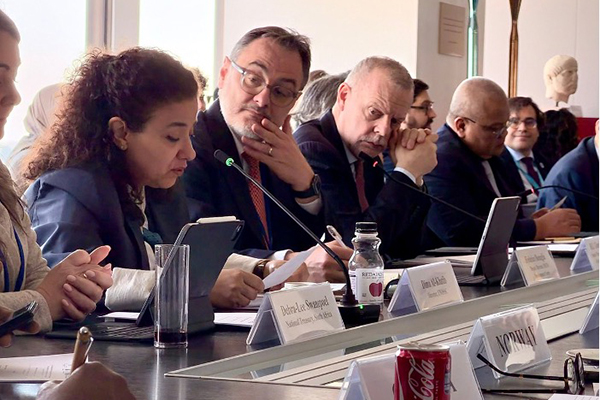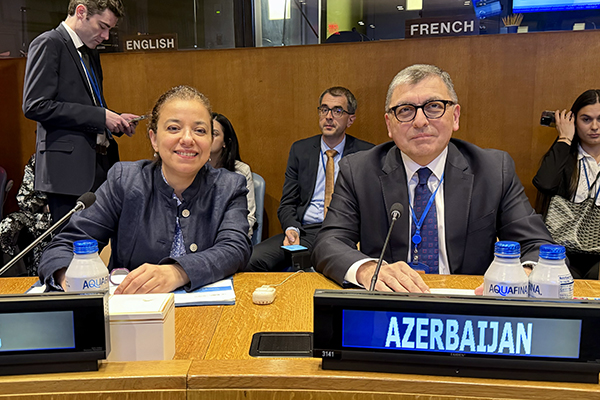
A high-level side event convened on the margins of the twenty-fifth session of the Committee of Experts on Public Administration (CEPA) was held on 14 April 2026 at United Nations Headquarters in New York under the theme “Excellence in Public Service Delivery for SDG Achievement: Building Trust and Enabling Innovation through South-South and Triangular Cooperation.” The event brought together policymakers, experts and practitioners to examine how stronger, more responsive public services can accelerate progress toward the Sustainable Development Goals (SDGs).
The discussion underscored a clear message: public service delivery is central to SDG achievement. It is through public services that trust is built, institutions are tested, and the SDGs become tangible in people’s daily lives.
The event was organized by the Government of the Republic of Azerbaijan, in collaboration with the United Nations Department of Economic and Social Affairs (UN DESA) Division for Public Institutions and Digital Government.
Opening the event, H.E. Mr. Tofig Musayev, Permanent Representative of the Republic of Azerbaijan to the United Nations, stressed that effective, inclusive and accountable public institutions are essential to building trust between governments and citizens and to advancing the 2030 Agenda. Delivering remarks on behalf of Mr. Li Junhua, Under-Secretary-General for Economic and Social Affairs, Mr. Juwang Zhu, Director of the Division for Public Institutions and Digital Government and Acting Director of the Division for Sustainable Development Goals at UN DESA, emphasized that with only 35 per cent of SDG targets on track, stronger institutions and better services are more urgent than ever.
In her keynote remarks, Ms. Dima Al-Khatib, Director of the United Nations Office for South-South Cooperation (UNOSSC), situated the discussion within a broader global context of intensifying pressures on public administration systems. Public institutions, she noted, are facing rising demands at a time of widening development gaps, growing instability and increasing strain on basic services. Without effective service delivery, she stressed, the SDGs will not be achieved.
Ms. Al-Khatib underscored that these pressures are especially acute in the Global South, where countries are navigating overlapping challenges, from conflict and economic vulnerability to food insecurity and uneven access to essential services. This, she said, calls for stronger institutions and more deliberate efforts to deliver inclusive, accountable and high-quality public services. At the same time, she highlighted an important shift: countries of the Global South are increasingly emerging not only as recipients of development support, but also as leaders, innovators and providers of practical solutions.
Azerbaijan’s experience, the Director noted, is one such example. Through its Azerbaijani Service and Assessment Network (ASAN) model, the country has demonstrated how sustained investment in public service systems can strengthen trust, improve efficiency and deliver results for citizens. With levels of citizen satisfaction reported at 95 per cent, the model shows how innovation, institutional reform and a people-centred approach can reinforce confidence in public institutions while improving service delivery outcomes.
Expanding on this experience, Mr. Mahammadali Khudaverdiyev, Director General for International Affairs at the State Agency for Public Service and Social Innovations under the President of Azerbaijan, presented the ASAN Service Index as a practical tool for measuring and improving service quality across government institutions. Introduced in 2016, the Index evaluates public services through a structured assessment framework, supported by citizen feedback and service-user experience. He explained that the system has helped strengthen accessibility, responsiveness, transparency and digital integration across public services, while encouraging continuous improvement. Beyond Azerbaijan, the ASAN model is also being shared with other countries as an example of how public service innovation can be adapted across different contexts through peer learning and cooperation.
Director Al-Khatib emphasized that such experiences are increasingly relevant across the Global South. Through South-South and triangular cooperation, countries are sharing and adapting proven approaches in ways that are grounded in context and mutual benefit. She pointed to UNOSSC platforms and mechanisms, including the South-South Galaxy and South-South Trust Fund-supported initiatives, as examples of how countries can connect with relevant expertise, identify workable solutions and strengthen institutional capacities.
She also highlighted UNOSSC’s upcoming voluntary Global Alliance for South-South and Triangular Cooperation as a platform that will broaden this approach by connecting country-identified needs with expertise, partnerships and solutions. Through matchmaking, knowledge-sharing and collaboration, the Alliance aims to help scale proven approaches across regions and respond more effectively to development demands.
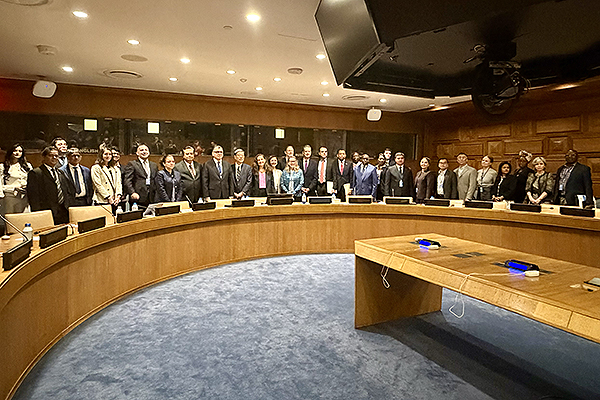 The event also featured substantive presentations by Ms. Adriana Alberti, Chief of the Programme Management and Capacity Development Unit in UN DESA’s Division for Public Institutions and Digital Government, and a roundtable discussion with H.E. Mr. Ulugbek Lapasov, Permanent Representative of Uzbekistan to the United Nations; H.E. Mr. Umar Hadi, Permanent Representative of Indonesia to the United Nations; H.E. Mr. Hameed Opeloyeru, Permanent Observer of the Organization of Islamic Cooperation to the United Nations; Dr. Katalin Ágnes Uzsák, Deputy State Secretary, Ministry of Public Administration and Regional Development of Hungary; and Dr. Rolf Alter, Professor at the Hertie School in Germany and Member of CEPA. Moderation was led by Ms. Cristina A. Rodriguez-Acosta of UN DESA.
A central theme throughout the event was that excellence in public service delivery is not a one-time achievement, but a continuous process of improvement, adaptation and engagement. As the global community moves closer to the 2030 deadline, the discussion reaffirmed that better public services are fundamental to sustainable development. Strengthening institutions, learning from practical experiences and deepening cooperation across countries will be essential to ensuring that governments can serve people effectively, equitably and with trust at the centre.
The event also featured substantive presentations by Ms. Adriana Alberti, Chief of the Programme Management and Capacity Development Unit in UN DESA’s Division for Public Institutions and Digital Government, and a roundtable discussion with H.E. Mr. Ulugbek Lapasov, Permanent Representative of Uzbekistan to the United Nations; H.E. Mr. Umar Hadi, Permanent Representative of Indonesia to the United Nations; H.E. Mr. Hameed Opeloyeru, Permanent Observer of the Organization of Islamic Cooperation to the United Nations; Dr. Katalin Ágnes Uzsák, Deputy State Secretary, Ministry of Public Administration and Regional Development of Hungary; and Dr. Rolf Alter, Professor at the Hertie School in Germany and Member of CEPA. Moderation was led by Ms. Cristina A. Rodriguez-Acosta of UN DESA.
A central theme throughout the event was that excellence in public service delivery is not a one-time achievement, but a continuous process of improvement, adaptation and engagement. As the global community moves closer to the 2030 deadline, the discussion reaffirmed that better public services are fundamental to sustainable development. Strengthening institutions, learning from practical experiences and deepening cooperation across countries will be essential to ensuring that governments can serve people effectively, equitably and with trust at the centre.
The event also featured substantive presentations by Ms. Adriana Alberti, Chief of the Programme Management and Capacity Development Unit in UN DESA’s Division for Public Institutions and Digital Government, and a roundtable discussion with H.E. Mr. Ulugbek Lapasov, Permanent Representative of Uzbekistan to the United Nations; H.E. Mr. Umar Hadi, Permanent Representative of Indonesia to the United Nations; H.E. Mr. Hameed Opeloyeru, Permanent Observer of the Organization of Islamic Cooperation to the United Nations; Dr. Katalin Ágnes Uzsák, Deputy State Secretary, Ministry of Public Administration and Regional Development of Hungary; and Dr. Rolf Alter, Professor at the Hertie School in Germany and Member of CEPA. Moderation was led by Ms. Cristina A. Rodriguez-Acosta of UN DESA.
A central theme throughout the event was that excellence in public service delivery is not a one-time achievement, but a continuous process of improvement, adaptation and engagement. As the global community moves closer to the 2030 deadline, the discussion reaffirmed that better public services are fundamental to sustainable development. Strengthening institutions, learning from practical experiences and deepening cooperation across countries will be essential to ensuring that governments can serve people effectively, equitably and with trust at the centre.