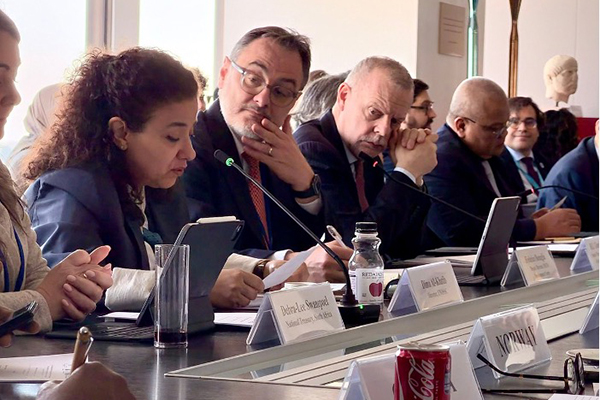
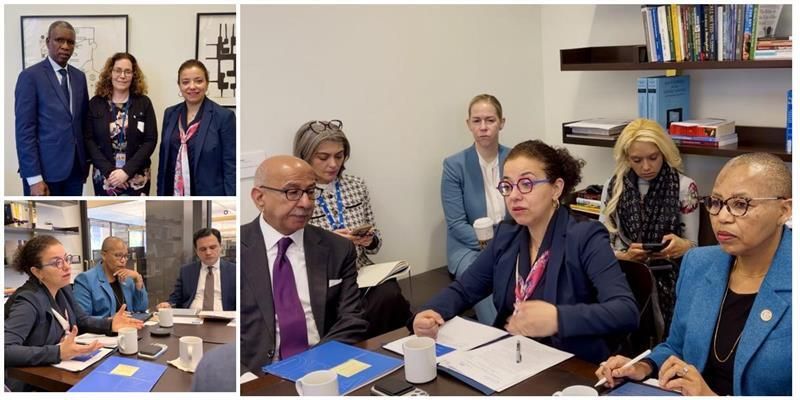
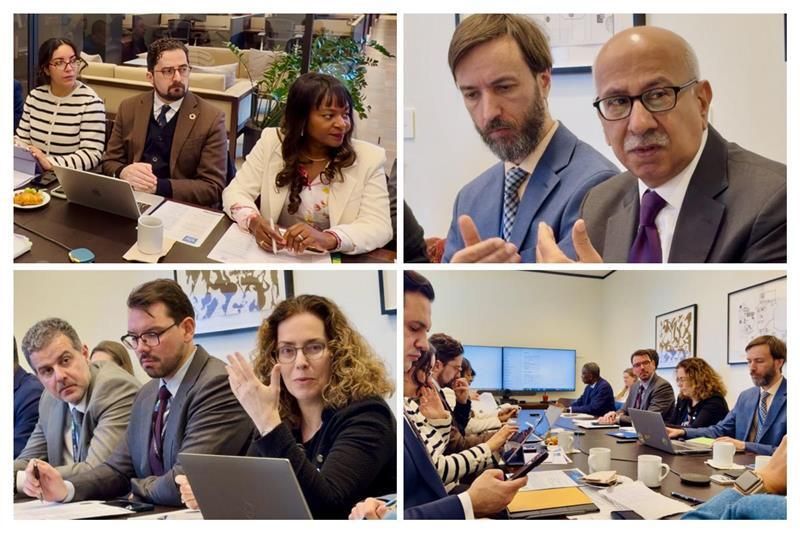
As momentum builds toward the launch of the Global Alliance for South-South and Triangular Cooperation, a diverse group of partners convened for the first in a series of brainstorming sessions to help shape its design, priorities, and operational approach. Co-hosted by the United Nations Office for South-South Cooperation (UNOSSC) and the United Nations Foundation, the session marked an important step in ensuring the Global Alliance is grounded in real-world needs and ready to deliver results from day one.
Bringing together representatives from governments, the United Nations system, development banks, academia, and the private sector, the roundtable underscored a shared message: solutions already exist across the Global South – but they must be better connected, financed, and scaled. Participants emphasized that – on a voluntary basis – the Global Alliance has a unique opportunity to bridge persistent gaps between demand and supply, turning knowledge into implementation and accelerating progress toward sustainable development.
 The session forms part of an ongoing series of consultations open to partners interested in contributing to the Global Alliance ahead of its formal launch. These discussions are designed not only to inform the Alliance’s development, but also to foster early engagement, build ownership, and ensure that the platform reflects the priorities of its future users.
A strong consensus emerged around the Alliance’s core value proposition as a practical, implementation-oriented mechanism. Participants highlighted the importance of avoiding duplication and instead building on existing platforms, initiatives, and partnerships. The Alliance was widely seen as a connector – linking national development priorities with proven solutions, technical expertise, and financing opportunities.
Central to this vision is matchmaking. Participants stressed the need for a dynamic system capable of linking country-identified needs with relevant solutions and partners in real time. This includes not only knowledge exchange, but also support in translating ideas into bankable, investment-ready proposals that can attract financing and deliver tangible outcomes.
At the same time, participants pointed to the importance of flexibility in how stakeholders engage. Countries, institutions, and organizations often act simultaneously as both providers and beneficiaries of cooperation. Reflecting this reality, the Alliance has inclusive and adaptable voluntary participation models that enable actors to contribute across multiple roles.
Digital innovation also featured prominently in the discussion. Participants highlighted the potential of digital tools, including artificial intelligence, to enhance matchmaking, track results, and improve transparency. The Global Alliance’s digital backbone – UNOSSC’s South-South Galaxy+ – is expected to play a critical role in reducing transaction costs, improving efficiency, and ensuring that solutions are both accessible and actionable.
The session forms part of an ongoing series of consultations open to partners interested in contributing to the Global Alliance ahead of its formal launch. These discussions are designed not only to inform the Alliance’s development, but also to foster early engagement, build ownership, and ensure that the platform reflects the priorities of its future users.
A strong consensus emerged around the Alliance’s core value proposition as a practical, implementation-oriented mechanism. Participants highlighted the importance of avoiding duplication and instead building on existing platforms, initiatives, and partnerships. The Alliance was widely seen as a connector – linking national development priorities with proven solutions, technical expertise, and financing opportunities.
Central to this vision is matchmaking. Participants stressed the need for a dynamic system capable of linking country-identified needs with relevant solutions and partners in real time. This includes not only knowledge exchange, but also support in translating ideas into bankable, investment-ready proposals that can attract financing and deliver tangible outcomes.
At the same time, participants pointed to the importance of flexibility in how stakeholders engage. Countries, institutions, and organizations often act simultaneously as both providers and beneficiaries of cooperation. Reflecting this reality, the Alliance has inclusive and adaptable voluntary participation models that enable actors to contribute across multiple roles.
Digital innovation also featured prominently in the discussion. Participants highlighted the potential of digital tools, including artificial intelligence, to enhance matchmaking, track results, and improve transparency. The Global Alliance’s digital backbone – UNOSSC’s South-South Galaxy+ – is expected to play a critical role in reducing transaction costs, improving efficiency, and ensuring that solutions are both accessible and actionable.
 Beyond identifying “what works,” participants stressed the importance of understanding “how it works.” Documenting the processes, enabling conditions, and pathways behind successful initiatives was seen as essential to ensuring that solutions can be adapted and replicated across different country contexts.
The discussion also highlighted the importance of strong alignment with existing United Nations frameworks and processes. Participants emphasized that the Alliance should complement – not duplicate – current mechanisms, while strengthening coherence across the system. The role of United Nations Country Teams and Resident Coordinators was underscored as critical in translating national priorities into actionable demand and supporting implementation on the ground.
Engagement with the private sector emerged as a key opportunity – and a critical area for further development. Participants noted that clear incentives, defined entry points, and access to valuable data and market intelligence will be essential to attracting and sustaining business participation.
Across all interventions, there was strong support for this multi-stakeholder, demand-driven, and voluntary platform that prioritizes results. The Global Alliance is expected to initially focus on key thematic areas such as climate resilience, disaster risk reduction, digital transformation, sustainable industrialization, and peacebuilding – while remaining responsive to evolving country needs.
Looking ahead, UNOSSC will continue to convene partners through similar consultations, including targeted bilateral discussions and broader information sessions. These engagements offer an opportunity for stakeholders to shape the Alliance, explore areas of collaboration, and position themselves as early contributors to a platform designed to connect, catalyze, and scale solutions.
As preparations for the launch advance, partners are encouraged to join upcoming sessions and contribute their perspectives. The Global Alliance is being built as a shared platform – one that reflects collective ambition and delivers practical results.
Beyond identifying “what works,” participants stressed the importance of understanding “how it works.” Documenting the processes, enabling conditions, and pathways behind successful initiatives was seen as essential to ensuring that solutions can be adapted and replicated across different country contexts.
The discussion also highlighted the importance of strong alignment with existing United Nations frameworks and processes. Participants emphasized that the Alliance should complement – not duplicate – current mechanisms, while strengthening coherence across the system. The role of United Nations Country Teams and Resident Coordinators was underscored as critical in translating national priorities into actionable demand and supporting implementation on the ground.
Engagement with the private sector emerged as a key opportunity – and a critical area for further development. Participants noted that clear incentives, defined entry points, and access to valuable data and market intelligence will be essential to attracting and sustaining business participation.
Across all interventions, there was strong support for this multi-stakeholder, demand-driven, and voluntary platform that prioritizes results. The Global Alliance is expected to initially focus on key thematic areas such as climate resilience, disaster risk reduction, digital transformation, sustainable industrialization, and peacebuilding – while remaining responsive to evolving country needs.
Looking ahead, UNOSSC will continue to convene partners through similar consultations, including targeted bilateral discussions and broader information sessions. These engagements offer an opportunity for stakeholders to shape the Alliance, explore areas of collaboration, and position themselves as early contributors to a platform designed to connect, catalyze, and scale solutions.
As preparations for the launch advance, partners are encouraged to join upcoming sessions and contribute their perspectives. The Global Alliance is being built as a shared platform – one that reflects collective ambition and delivers practical results.
The session forms part of an ongoing series of consultations open to partners interested in contributing to the Global Alliance ahead of its formal launch. These discussions are designed not only to inform the Alliance’s development, but also to foster early engagement, build ownership, and ensure that the platform reflects the priorities of its future users.
A strong consensus emerged around the Alliance’s core value proposition as a practical, implementation-oriented mechanism. Participants highlighted the importance of avoiding duplication and instead building on existing platforms, initiatives, and partnerships. The Alliance was widely seen as a connector – linking national development priorities with proven solutions, technical expertise, and financing opportunities.
Central to this vision is matchmaking. Participants stressed the need for a dynamic system capable of linking country-identified needs with relevant solutions and partners in real time. This includes not only knowledge exchange, but also support in translating ideas into bankable, investment-ready proposals that can attract financing and deliver tangible outcomes.
At the same time, participants pointed to the importance of flexibility in how stakeholders engage. Countries, institutions, and organizations often act simultaneously as both providers and beneficiaries of cooperation. Reflecting this reality, the Alliance has inclusive and adaptable voluntary participation models that enable actors to contribute across multiple roles.
Digital innovation also featured prominently in the discussion. Participants highlighted the potential of digital tools, including artificial intelligence, to enhance matchmaking, track results, and improve transparency. The Global Alliance’s digital backbone – UNOSSC’s South-South Galaxy+ – is expected to play a critical role in reducing transaction costs, improving efficiency, and ensuring that solutions are both accessible and actionable.
Beyond identifying “what works,” participants stressed the importance of understanding “how it works.” Documenting the processes, enabling conditions, and pathways behind successful initiatives was seen as essential to ensuring that solutions can be adapted and replicated across different country contexts.
The discussion also highlighted the importance of strong alignment with existing United Nations frameworks and processes. Participants emphasized that the Alliance should complement – not duplicate – current mechanisms, while strengthening coherence across the system. The role of United Nations Country Teams and Resident Coordinators was underscored as critical in translating national priorities into actionable demand and supporting implementation on the ground.
Engagement with the private sector emerged as a key opportunity – and a critical area for further development. Participants noted that clear incentives, defined entry points, and access to valuable data and market intelligence will be essential to attracting and sustaining business participation.
Across all interventions, there was strong support for this multi-stakeholder, demand-driven, and voluntary platform that prioritizes results. The Global Alliance is expected to initially focus on key thematic areas such as climate resilience, disaster risk reduction, digital transformation, sustainable industrialization, and peacebuilding – while remaining responsive to evolving country needs.
Looking ahead, UNOSSC will continue to convene partners through similar consultations, including targeted bilateral discussions and broader information sessions. These engagements offer an opportunity for stakeholders to shape the Alliance, explore areas of collaboration, and position themselves as early contributors to a platform designed to connect, catalyze, and scale solutions.
As preparations for the launch advance, partners are encouraged to join upcoming sessions and contribute their perspectives. The Global Alliance is being built as a shared platform – one that reflects collective ambition and delivers practical results.