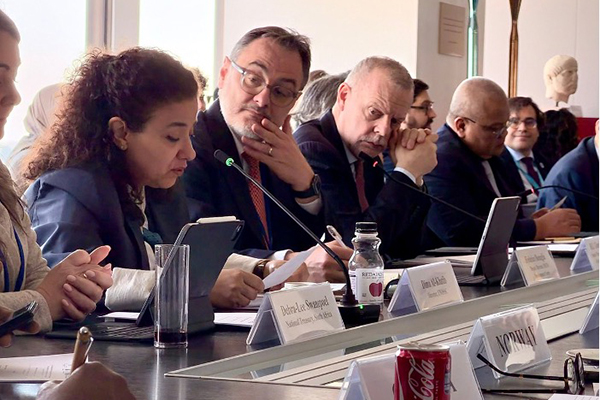
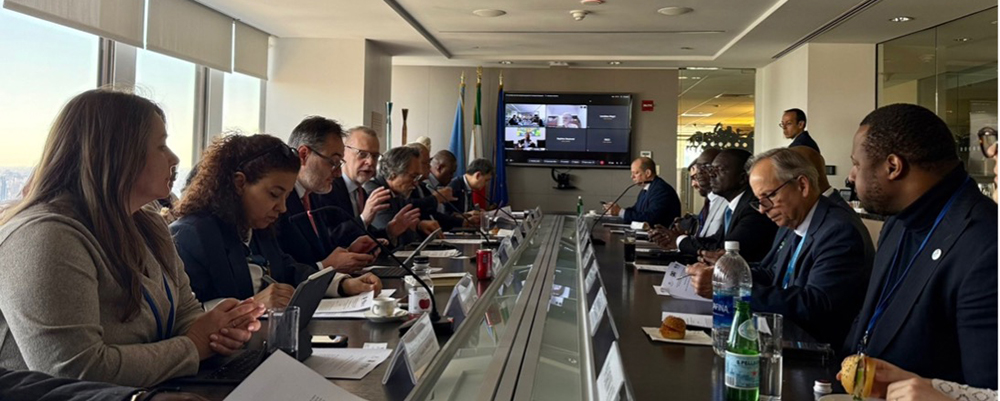
The discussion underscored that effective capacity-building must move beyond fragmented training activities. It should strengthen institutions, support country-led financing strategies, and be aligned with national priorities. Speakers highlighted the need for more coordinated, demand-driven and practical approaches that connect technical assistance to real policy challenges, including domestic resource mobilization, public financial management, project preparation, debt management, investment promotion and engagement with development banks.
In her intervention, Dima Al-Khatib, Director of the United Nations Office for South-South Cooperation (UNOSSC), welcomed the Sevilla Platform for Action as a key mechanism to accelerate delivery on Financing for Development commitments. She stressed that the initiative addresses one of the most pressing systemic constraints to sustainable development: the gap in institutional and technical capacities needed to navigate an evolving development finance architecture.
She emphasized that capacity-building and technical assistance are most effective when grounded in practice, co-created among partners and aligned with national priorities. This, she noted, is where South-South and triangular cooperation bring particular value – by mobilizing policy expertise, technical know-how and institutional partnerships across the Global South and beyond.
The Director highlighted that South-South and triangular cooperation complement traditional cooperation by promoting peer learning, mutual benefit and context-specific solutions. In the Financing for Development context, she noted that strengthening capacities requires not only financial resources, but also embedded knowledge, institutional learning and long-term partnerships.
The Director also cautioned that technical assistance and capacity-building efforts often remain fragmented, supply-driven and insufficiently targeted to specific institutional bottlenecks. Delivering results at scale, she said, requires a more strategic and integrated approach – one that aligns institutions and platforms, pools resources and expertise, and ensures that support responds to country-defined priorities.
The event also explored the role of development banks and regional financial institutions in advancing financing for development. Participants highlighted their importance in project preparation, risk mitigation, blended finance, local investment, and strengthening pipelines of bankable projects. Domestic resource mobilization was also identified as a priority area, with calls for stronger tax administration, improved compliance, and enhanced institutional capacity at national and subnational levels.
Looking ahead, UNOSSC underlined the relevance of its forthcoming Global Alliance for South-South and Triangular Cooperation, being developed under its Strategic Framework 2026-2029. The Global Alliance is envisioned as a voluntary multistakeholder platform to connect initiatives such as the Sevilla Platform for Action with a broader ecosystem of partners, solutions and financing instruments.
Through this platform, UNOSSC aims to support peer learning, thematic exchanges, matchmaking and the scaling of proven solutions. It will also help bring evidence and practical lessons from South-South and triangular cooperation into global policy discussions, including the Development Cooperation Forum in 2027.
The event concluded with a clear message: delivering on the Sevilla Call to Action will require more than individual initiatives. It calls for a system-wide shift towards coherent, coordinated and well-targeted capacity-building – linking knowledge, institutions, finance and partnerships to accelerate sustainable development outcomes.