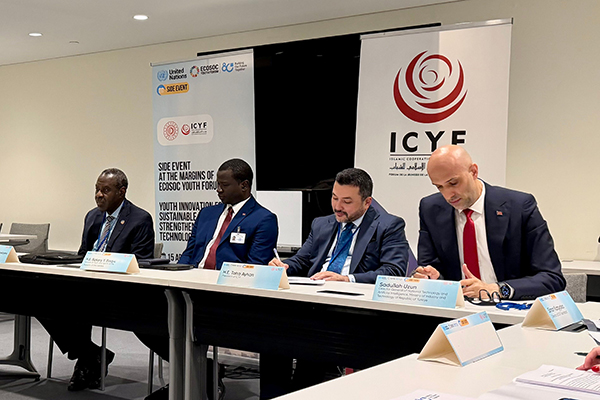
With just five years remaining to deliver on the 2030 Agenda, a clear message is emerging: empowering young innovators will be critical to accelerating progress on sustainable development. This was the focus of a side event at the ECOSOC Youth Forum 2026, where global leaders, policymakers and youth representatives convened under the theme “Youth Innovation for Sustainable Development: Strengthening Inclusive Technology Ecosystems.”
Co-organized by the Islamic Cooperation Youth Forum and the Ministry of Industry and Technology of the Republic of Türkiye, the session underscored the importance of inclusive innovation ecosystems in enabling young people to transform ideas into scalable solutions. With a strong focus on Sustainable Development Goals 9 and 17, discussions highlighted that strengthening innovation capacity and fostering multi-stakeholder partnerships are essential to building resilient and inclusive economies.
Participants emphasized the growing role of youth in driving technological transformation across sectors – from climate resilience to digital platforms and sustainable urban development. At the same time, they pointed to persistent gaps in access to infrastructure, financing and opportunity, particularly in developing countries. Addressing these challenges requires coordinated action across governments, international organizations, academia and the private sector.
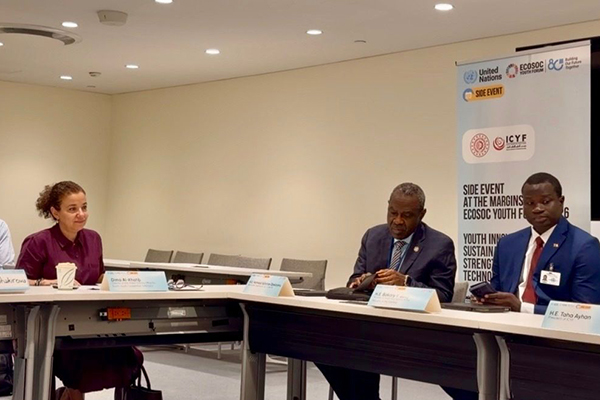
In her intervention, Dima Al-Khatib, Director of the United Nations Office for South-South Cooperation, stressed that the central challenge is not whether young people can innovate, but whether systems are equipped to support them at scale and in an inclusive manner. With nearly 90 per cent of the world’s youth living in the Global South, she underscored that expanding access to technology and strengthening innovation ecosystems is critical to accelerating progress on the Sustainable Development Goals.
She highlighted South-South and triangular cooperation as key enablers of youth innovation. These approaches facilitate affordable and context-appropriate technology transfer, promote peer-to-peer learning, and support the co-creation of locally grounded solutions. In doing so, they are helping shift development models toward more collaborative and networked ecosystems across the Global South. She also emphasized the importance of institutionalizing youth engagement, noting that UNOSSC’s Strategic Framework 2026-2029 integrates youth as a core component across all its programmes and results.
The event brought together a diverse group of high-level speakers, including H.E. Taha Ayhan, President of the Islamic Cooperation Youth Forum; H.E. Ahmet Yıldız, Permanent Representative of the Republic of Türkiye to the United Nations; Mr. Sadullah Uzun, Director General of National Technology and Artificial Intelligence at the Ministry of Industry and Technology of the Republic of Türkiye; H.E. Bakary Y. Badjie, Minister of Youth and Sports of the Republic of the Gambia; H.E. Hameed Ajibaiye Opeloyeru, Permanent Observer for the Organization of Islamic Cooperation to the United Nations; and Ms. Rukhsora Shakirova, Director of the World Youth Office of the Republic of Uzbekistan; among others.
Looking ahead, participants emphasized the importance of scaling youth-led innovation through strengthened partnerships. The forthcoming Global Alliance for South-South and Triangular Cooperation was highlighted as a practical platform to connect country-identified needs with expertise, resources and solutions – positioning young people not only as beneficiaries, but as active partners in shaping and sustaining development outcomes.
The discussion reaffirmed a clear message: empowering young innovators and building inclusive technology ecosystems will be essential to delivering on the promise of the 2030 Agenda.