In the Pact for the Future, UN Member States reaffirm their enduring commitment to the 2030 Agenda for Sustainable Development and its Sustainable Development Goals, committing to urgently accelerating progress towards achieving the goals, including through concrete political steps and adequate finance. The Agenda 2030, the Addis Ababa Action Agenda and the Buenos Aires outcome document of the second High-level United Nations Conference on South-South Cooperation (BAPA+40), all acknowledge the contribution of triangular cooperation to this end. More recently, the Outcome Document of the Third South Summit and the Rabat Declaration on Middle-Income Countries (MICs) reaffirmed the important role of triangular cooperation, as a complement to South-South cooperation, in providing developing financing and expertise towards achieving the SDGs, with developing countries repeatedly emphasizing the need for support in industrialization, science, technology, innovation (STI), technology transfer, digitalization, trade facilitation, and human capacity development. The Pact for the Future itself calls for the strengthening of North-South, South-South and triangular cooperation to build capacity and improve access to science, technology and innovation, and to increase resources for the implementation of technical and scientific initiatives (Action 31 (d)).
Recognizing the potential of triangular cooperation, the 2022 Report of the UN Secretary-General on the State of South-South Cooperation called for the establishment of a Triangular Cooperation Window. Progress has been made in response to this call, with efforts underway to mobilize partnerships and leverage expertise through triangular cooperation. Along with partners interested in triangular cooperation, UNOSSC aims to advance in the establishment of the Triangular Cooperation Window within the United Nations Fund for South-South Cooperation (UNFSCC). As called by the UN Secretary-General, advocacy for development needs to expand by collectively showcasing results.
Given the forward-looking nature of the Summit of the Future and the ability of triangular cooperation to not only contribute to the acceleration of progress in the achievement of the SDGs but to do so in an innovative and multistakeholder manner, bringing together actors from various sectors and corners of the world, whether as beneficiaries, pivotal or facilitating partners, Portugal and UNOSSC organized a side-event focusing on the financing of triangular cooperation as a way to accelerate progress towards the SDGs; in partnership with the ImPACT Coalition on International Financial Architecture Reform and Financing for Development, and the Organisation for Economic Co-operation and Development (OECD).
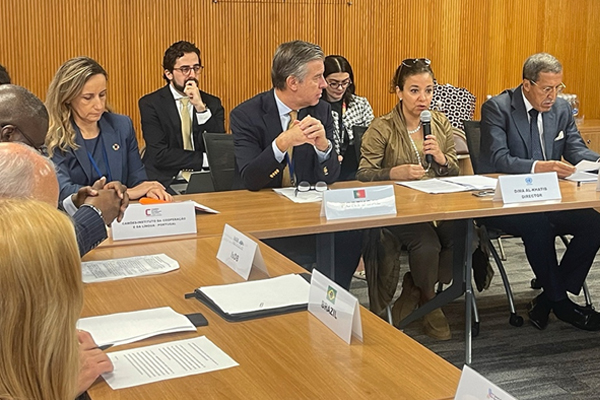
“Triangular cooperation has been advocated for within the UN system since the genesis of the idea in the 1978 Buenos Aires Plan of Action, and the terminology was introduced by the New Directions for Technical Cooperation among Developing Countries report back in 1995; but a new momentum for triangular cooperation has been growing in the years following the adoption of the BAPA+40 Outcome Document in 2019,” said UNOSSC Director, Ms. Dima Al-Khatib. “UNOSSC is mandated to advance triangular cooperation; and to that end, we host and proactively engage in numerous platforms and mechanisms to enhance collaboration.”
Ms. Dima Al-Khatib highlighted the critical role of triangular cooperation in addressing global challenges, fostering multilateral solutions, and accelerating SDG progress. She emphasized the importance of partnerships, including with Portugal, in driving triangular cooperation; and reiterated the call for financing and political will to ensure sustainable development and the realization of the SDGs.
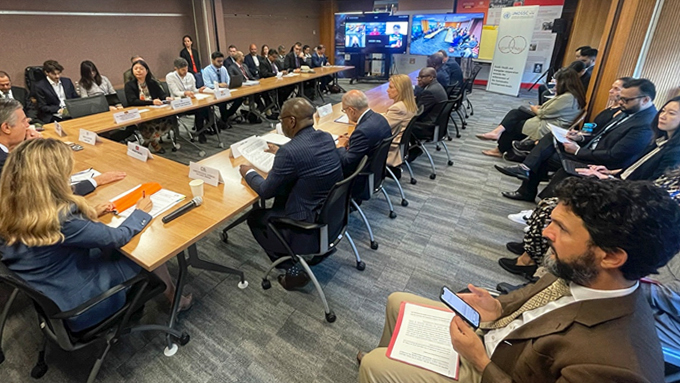 Ambassador Rui Vinhas, Permanent Representative of Portugal to the United Nations, highlighted Portugal’s leadership in triangular cooperation, especially through events like the upcoming 8th International Meeting on Triangular Cooperation on the theme Linking Global Processes to Create Local Impact, in Lisbon (7 and 8 October). He stressed the importance of innovative solutions through triangular cooperation in an increasingly uncertain world. He also showcased Portugal’s commitment, including its 1 million EUR Triangular Cooperation Fund with Africa and Latin America, emphasizing collaboration in areas including health, climate change, digital transformation, and education.
During a panel discussion focusing on Triangular Cooperation Projects and the SDGs, H.E. Mr. Mateo Estremé, Ambassador, Director of International Cooperation at the Ministry of Foreign Affairs, International Trade and Worship of Argentina, shared insights on the evolution of triangular cooperation, following the historical milestone of BAPA+40. He shared examples of Argentina’s engagement with partner countries on triangular cooperation to advance SDGs, and presented the “Peoples Livelihood Initiative” project, focused on water-energy-food sustainability in Southeast Asia.
H.E. Mr. Omar Hilale, Permanent Representative of Morocco to the United Nations, presented Morocco’s success in triangular cooperation projects in sectors such as health, fisheries, and climate change, in partnership with Japan, Germany, and Singapore. He also emphasized the role of private sector partnerships and digital tools, including AI, in future triangular cooperation efforts.
“Triangular cooperation presents an opportunity for dialogue an synergy between traditional North-South and South-South partners, and is very much in line with the conclusions of the BAPA+40 conference on South-South cooperation,” said H.E. Mr. Mateo Estremé, Ambassador, Director of International Cooperation at the Ministry of Foreign Affairs, International Trade and Worship of Argentina. “Argentina considers that working together with partner countries and organizations through triangular cooperation is a mechanism that maximizes the impact of cooperation actions by adding experience and systematization as well as human and financial resources.” He shared Argentina’s experience in triangular cooperation, including initiatives with Japan and the Caribbean to improve health infrastructure and combat antimicrobial resistance; and highlighted Argentina’s long-standing commitment to South-South and triangular cooperation through various development frameworks.
Dr. Dong-Un Park, Research Fellow, Science and Technology Policy Institute (Korea), described Korea’s role as a facilitating partner in triangular cooperation, especially in digital technology and climate change initiatives in the Mekong region. He also presented the “Peoples Livelihood Initiative” project, focused on water-energy-food sustainability in Southeast Asia.
Ms. Pilar Garrido, Director, OECD Development Co-operation Directorate, highlighted OECD’s strategies in promoting triangular cooperation, emphasizing its role in reducing inequality and promoting sustainable development. She stressed the importance of country ownership and demand-driven approaches to ensure effective cooperation.
During a panel focusing on Financing Triangular Cooperation, Ambassador Florbela Paraíba, President of Portugal’s Development Agency, discussed Portugal’s triangular cooperation fund, which supports capacity-building projects in areas such as health and climate change across Africa and Latin America. He shared that six projects from 21 countries were selected in the first call for proposals, aiming to strengthen interregional ties through knowledge sharing.
Dr. Issa Faye, IsDB Director-General for Global Practice & Partnership, showcased IsDB’s innovative financing models for triangular cooperation, focusing on leveraging South-South collaboration in sectors like food security and renewable energy. He highlighted the role of trust and knowledge exchange in expanding triangular cooperation projects across IsDB’s 57 Member Countries – all from the Global South.
Mr. Sergio Colina Martín, Director-General for Sustainable Development Policies at the Ministry of Foreign Affairs, European Union and Cooperation of Spain, explained Spain’s support to sustainable development including through engagement in triangular cooperation. He highlighted the importance of sub-national and regional cooperation mechanisms.
Ambassador Rui Vinhas, Permanent Representative of Portugal to the United Nations, highlighted Portugal’s leadership in triangular cooperation, especially through events like the upcoming 8th International Meeting on Triangular Cooperation on the theme Linking Global Processes to Create Local Impact, in Lisbon (7 and 8 October). He stressed the importance of innovative solutions through triangular cooperation in an increasingly uncertain world. He also showcased Portugal’s commitment, including its 1 million EUR Triangular Cooperation Fund with Africa and Latin America, emphasizing collaboration in areas including health, climate change, digital transformation, and education.
During a panel discussion focusing on Triangular Cooperation Projects and the SDGs, H.E. Mr. Mateo Estremé, Ambassador, Director of International Cooperation at the Ministry of Foreign Affairs, International Trade and Worship of Argentina, shared insights on the evolution of triangular cooperation, following the historical milestone of BAPA+40. He shared examples of Argentina’s engagement with partner countries on triangular cooperation to advance SDGs, and presented the “Peoples Livelihood Initiative” project, focused on water-energy-food sustainability in Southeast Asia.
H.E. Mr. Omar Hilale, Permanent Representative of Morocco to the United Nations, presented Morocco’s success in triangular cooperation projects in sectors such as health, fisheries, and climate change, in partnership with Japan, Germany, and Singapore. He also emphasized the role of private sector partnerships and digital tools, including AI, in future triangular cooperation efforts.
“Triangular cooperation presents an opportunity for dialogue an synergy between traditional North-South and South-South partners, and is very much in line with the conclusions of the BAPA+40 conference on South-South cooperation,” said H.E. Mr. Mateo Estremé, Ambassador, Director of International Cooperation at the Ministry of Foreign Affairs, International Trade and Worship of Argentina. “Argentina considers that working together with partner countries and organizations through triangular cooperation is a mechanism that maximizes the impact of cooperation actions by adding experience and systematization as well as human and financial resources.” He shared Argentina’s experience in triangular cooperation, including initiatives with Japan and the Caribbean to improve health infrastructure and combat antimicrobial resistance; and highlighted Argentina’s long-standing commitment to South-South and triangular cooperation through various development frameworks.
Dr. Dong-Un Park, Research Fellow, Science and Technology Policy Institute (Korea), described Korea’s role as a facilitating partner in triangular cooperation, especially in digital technology and climate change initiatives in the Mekong region. He also presented the “Peoples Livelihood Initiative” project, focused on water-energy-food sustainability in Southeast Asia.
Ms. Pilar Garrido, Director, OECD Development Co-operation Directorate, highlighted OECD’s strategies in promoting triangular cooperation, emphasizing its role in reducing inequality and promoting sustainable development. She stressed the importance of country ownership and demand-driven approaches to ensure effective cooperation.
During a panel focusing on Financing Triangular Cooperation, Ambassador Florbela Paraíba, President of Portugal’s Development Agency, discussed Portugal’s triangular cooperation fund, which supports capacity-building projects in areas such as health and climate change across Africa and Latin America. He shared that six projects from 21 countries were selected in the first call for proposals, aiming to strengthen interregional ties through knowledge sharing.
Dr. Issa Faye, IsDB Director-General for Global Practice & Partnership, showcased IsDB’s innovative financing models for triangular cooperation, focusing on leveraging South-South collaboration in sectors like food security and renewable energy. He highlighted the role of trust and knowledge exchange in expanding triangular cooperation projects across IsDB’s 57 Member Countries – all from the Global South.
Mr. Sergio Colina Martín, Director-General for Sustainable Development Policies at the Ministry of Foreign Affairs, European Union and Cooperation of Spain, explained Spain’s support to sustainable development including through engagement in triangular cooperation. He highlighted the importance of sub-national and regional cooperation mechanisms.
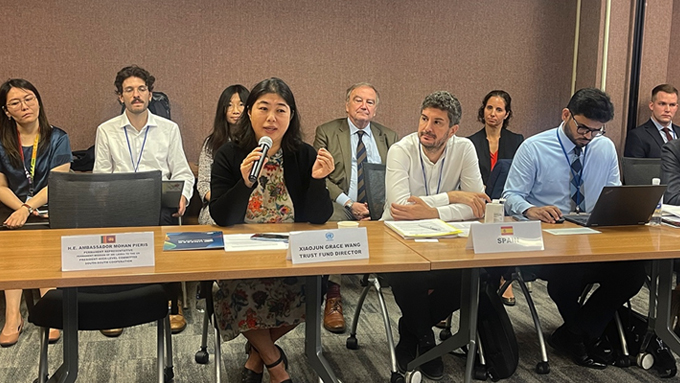 Ms. Xiaojun Grace Wang, UNOSSC Trust Fund Director and Chief of Programme Support, highlighted the importance of financing triangular cooperation, and provided an update on the launch of the new Triangular Cooperation Window which would take place in Lisbon at the 8th International Conference on Triangular Cooperation. She introduced the Triangular Cooperation Window under the UN Fund for South-South Cooperation, which is designed to institutionalize financing for triangular cooperation, provide a dynamic partnership space to co-create programmes, and leverage solid UN procedures on the ground. She addressed key financing challenges of triangular cooperation, including the need for institutionalized funding, streamlined fund management, and flexible programming options; and highlighted the Triangular Cooperation Window’s focus on demand-driven projects that target key transitions for the SDGs, with inclusive themes like gender equality and youth empowerment. She also introduced the flexible programming options and operational scenarios offered by the Triangular Cooperation Window; enabling pooled resources, technical contribution, as well as “parallel but coordinated implementation”.
H.E. Mr. Norberto Moretti, Ambassador and Deputy Permanent Representative of Brazil to the United Nations, introduced Brazil’s trilateral cooperation priority in the G20 Development Working Group; and emphasized the important principles of South-South cooperation that are adhered to in trilateral cooperation.
“The ImPACT Coalition firmly believes that triangular cooperation, supported by innovative financing mechanisms, is key to achieving the SDGs,” said Dr. Laura Muro, Professor of Accounting and International Business Sustainability at Saint Louis University’s Madrid Campus, speaking on behalf of the ImPACT Coalition on International Financial Architecture Reform and Financing for Development. “Triangular cooperation is not only a mechanism for collaboration, but also for innovation,” she said. “The ImPACT Coalition strongly advocates for improving coherence and international coordination in efforts to mobilize the means of implementation in the form of finance, particularly through progressive taxation, technology co-development and capacity building for just transitions away from fossil fuel while reducing inequalities between and within countries.”
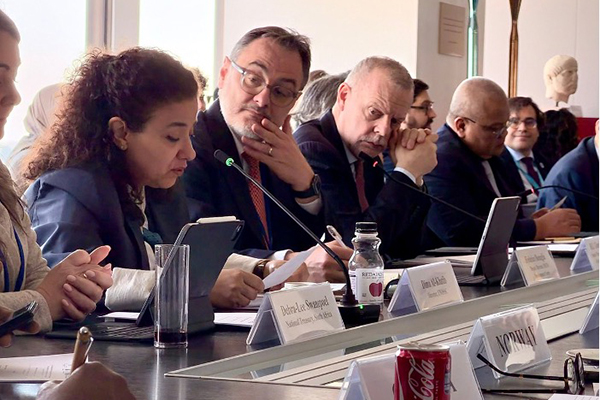
Participants helped to inform global thinking on the future of development cooperation, engaging partners from across sectors and regions on the role of triangular cooperation in the evolving system and architecture of development support. It contributed to building future foresight on triangular cooperation, including how it can most instrumentally enable sustainable development, climate resilience, global and intergenerational equity, and the reduction of major conflicts, as well as leveraging cutting-edge technologies like AI, blockchain, and renewable energy to drive equitable growth and address pressing global challenges. It showcased successful triangular cooperation projects and their contributions to specific SDGs, spotlighting their transformational impact as case studies to advocate for further triangular cooperation, share good practices and recommendations to enhance effectiveness and a focus on results. It also shared knowledge on financing mechanisms for triangular cooperation such as the Portugal-Latin America-Africa triangular cooperation fund, recently launched by Portugal in partnership with the General Secretariat of the Ibero-American Conference (SEGIB). Finally, it updated Member States on the consultations towards creating a dedicated triangular cooperation window within the United Nations Fund for South-South Cooperation (UNFSSC).
The side event served as a stepping-stone towards the annual International Meeting on Triangular Cooperation that Portugal is organizing with the OECD in Lisbon, on 7-8 October, back-to-back with the 2nd G20 Multiregional Technical Meeting on Triangular Cooperation.
In her closing remarks Ms. Dima Al-Khatib reaffirmed UNOSSC’s commitment to scaling up triangular cooperation, ensuring that financing remains central to advancing the SDGs. Ambassador Florbela Paraíba, Portugal, encouraged stakeholders to continue fostering horizontal partnerships for sustainable development and invited all to join the upcoming Lisbon meeting on triangular cooperation.
Ms. Xiaojun Grace Wang, UNOSSC Trust Fund Director and Chief of Programme Support, highlighted the importance of financing triangular cooperation, and provided an update on the launch of the new Triangular Cooperation Window which would take place in Lisbon at the 8th International Conference on Triangular Cooperation. She introduced the Triangular Cooperation Window under the UN Fund for South-South Cooperation, which is designed to institutionalize financing for triangular cooperation, provide a dynamic partnership space to co-create programmes, and leverage solid UN procedures on the ground. She addressed key financing challenges of triangular cooperation, including the need for institutionalized funding, streamlined fund management, and flexible programming options; and highlighted the Triangular Cooperation Window’s focus on demand-driven projects that target key transitions for the SDGs, with inclusive themes like gender equality and youth empowerment. She also introduced the flexible programming options and operational scenarios offered by the Triangular Cooperation Window; enabling pooled resources, technical contribution, as well as “parallel but coordinated implementation”.
H.E. Mr. Norberto Moretti, Ambassador and Deputy Permanent Representative of Brazil to the United Nations, introduced Brazil’s trilateral cooperation priority in the G20 Development Working Group; and emphasized the important principles of South-South cooperation that are adhered to in trilateral cooperation.
“The ImPACT Coalition firmly believes that triangular cooperation, supported by innovative financing mechanisms, is key to achieving the SDGs,” said Dr. Laura Muro, Professor of Accounting and International Business Sustainability at Saint Louis University’s Madrid Campus, speaking on behalf of the ImPACT Coalition on International Financial Architecture Reform and Financing for Development. “Triangular cooperation is not only a mechanism for collaboration, but also for innovation,” she said. “The ImPACT Coalition strongly advocates for improving coherence and international coordination in efforts to mobilize the means of implementation in the form of finance, particularly through progressive taxation, technology co-development and capacity building for just transitions away from fossil fuel while reducing inequalities between and within countries.”
Participants helped to inform global thinking on the future of development cooperation, engaging partners from across sectors and regions on the role of triangular cooperation in the evolving system and architecture of development support. It contributed to building future foresight on triangular cooperation, including how it can most instrumentally enable sustainable development, climate resilience, global and intergenerational equity, and the reduction of major conflicts, as well as leveraging cutting-edge technologies like AI, blockchain, and renewable energy to drive equitable growth and address pressing global challenges. It showcased successful triangular cooperation projects and their contributions to specific SDGs, spotlighting their transformational impact as case studies to advocate for further triangular cooperation, share good practices and recommendations to enhance effectiveness and a focus on results. It also shared knowledge on financing mechanisms for triangular cooperation such as the Portugal-Latin America-Africa triangular cooperation fund, recently launched by Portugal in partnership with the General Secretariat of the Ibero-American Conference (SEGIB). Finally, it updated Member States on the consultations towards creating a dedicated triangular cooperation window within the United Nations Fund for South-South Cooperation (UNFSSC).
The side event served as a stepping-stone towards the annual International Meeting on Triangular Cooperation that Portugal is organizing with the OECD in Lisbon, on 7-8 October, back-to-back with the 2nd G20 Multiregional Technical Meeting on Triangular Cooperation.
In her closing remarks Ms. Dima Al-Khatib reaffirmed UNOSSC’s commitment to scaling up triangular cooperation, ensuring that financing remains central to advancing the SDGs. Ambassador Florbela Paraíba, Portugal, encouraged stakeholders to continue fostering horizontal partnerships for sustainable development and invited all to join the upcoming Lisbon meeting on triangular cooperation.
Ambassador Rui Vinhas, Permanent Representative of Portugal to the United Nations, highlighted Portugal’s leadership in triangular cooperation, especially through events like the upcoming 8th International Meeting on Triangular Cooperation on the theme Linking Global Processes to Create Local Impact, in Lisbon (7 and 8 October). He stressed the importance of innovative solutions through triangular cooperation in an increasingly uncertain world. He also showcased Portugal’s commitment, including its 1 million EUR Triangular Cooperation Fund with Africa and Latin America, emphasizing collaboration in areas including health, climate change, digital transformation, and education.
During a panel discussion focusing on Triangular Cooperation Projects and the SDGs, H.E. Mr. Mateo Estremé, Ambassador, Director of International Cooperation at the Ministry of Foreign Affairs, International Trade and Worship of Argentina, shared insights on the evolution of triangular cooperation, following the historical milestone of BAPA+40. He shared examples of Argentina’s engagement with partner countries on triangular cooperation to advance SDGs, and presented the “Peoples Livelihood Initiative” project, focused on water-energy-food sustainability in Southeast Asia.
H.E. Mr. Omar Hilale, Permanent Representative of Morocco to the United Nations, presented Morocco’s success in triangular cooperation projects in sectors such as health, fisheries, and climate change, in partnership with Japan, Germany, and Singapore. He also emphasized the role of private sector partnerships and digital tools, including AI, in future triangular cooperation efforts.
“Triangular cooperation presents an opportunity for dialogue an synergy between traditional North-South and South-South partners, and is very much in line with the conclusions of the BAPA+40 conference on South-South cooperation,” said H.E. Mr. Mateo Estremé, Ambassador, Director of International Cooperation at the Ministry of Foreign Affairs, International Trade and Worship of Argentina. “Argentina considers that working together with partner countries and organizations through triangular cooperation is a mechanism that maximizes the impact of cooperation actions by adding experience and systematization as well as human and financial resources.” He shared Argentina’s experience in triangular cooperation, including initiatives with Japan and the Caribbean to improve health infrastructure and combat antimicrobial resistance; and highlighted Argentina’s long-standing commitment to South-South and triangular cooperation through various development frameworks.
Dr. Dong-Un Park, Research Fellow, Science and Technology Policy Institute (Korea), described Korea’s role as a facilitating partner in triangular cooperation, especially in digital technology and climate change initiatives in the Mekong region. He also presented the “Peoples Livelihood Initiative” project, focused on water-energy-food sustainability in Southeast Asia.
Ms. Pilar Garrido, Director, OECD Development Co-operation Directorate, highlighted OECD’s strategies in promoting triangular cooperation, emphasizing its role in reducing inequality and promoting sustainable development. She stressed the importance of country ownership and demand-driven approaches to ensure effective cooperation.
During a panel focusing on Financing Triangular Cooperation, Ambassador Florbela Paraíba, President of Portugal’s Development Agency, discussed Portugal’s triangular cooperation fund, which supports capacity-building projects in areas such as health and climate change across Africa and Latin America. He shared that six projects from 21 countries were selected in the first call for proposals, aiming to strengthen interregional ties through knowledge sharing.
Dr. Issa Faye, IsDB Director-General for Global Practice & Partnership, showcased IsDB’s innovative financing models for triangular cooperation, focusing on leveraging South-South collaboration in sectors like food security and renewable energy. He highlighted the role of trust and knowledge exchange in expanding triangular cooperation projects across IsDB’s 57 Member Countries – all from the Global South.
Mr. Sergio Colina Martín, Director-General for Sustainable Development Policies at the Ministry of Foreign Affairs, European Union and Cooperation of Spain, explained Spain’s support to sustainable development including through engagement in triangular cooperation. He highlighted the importance of sub-national and regional cooperation mechanisms.
Ms. Xiaojun Grace Wang, UNOSSC Trust Fund Director and Chief of Programme Support, highlighted the importance of financing triangular cooperation, and provided an update on the launch of the new Triangular Cooperation Window which would take place in Lisbon at the 8th International Conference on Triangular Cooperation. She introduced the Triangular Cooperation Window under the UN Fund for South-South Cooperation, which is designed to institutionalize financing for triangular cooperation, provide a dynamic partnership space to co-create programmes, and leverage solid UN procedures on the ground. She addressed key financing challenges of triangular cooperation, including the need for institutionalized funding, streamlined fund management, and flexible programming options; and highlighted the Triangular Cooperation Window’s focus on demand-driven projects that target key transitions for the SDGs, with inclusive themes like gender equality and youth empowerment. She also introduced the flexible programming options and operational scenarios offered by the Triangular Cooperation Window; enabling pooled resources, technical contribution, as well as “parallel but coordinated implementation”.
H.E. Mr. Norberto Moretti, Ambassador and Deputy Permanent Representative of Brazil to the United Nations, introduced Brazil’s trilateral cooperation priority in the G20 Development Working Group; and emphasized the important principles of South-South cooperation that are adhered to in trilateral cooperation.
“The ImPACT Coalition firmly believes that triangular cooperation, supported by innovative financing mechanisms, is key to achieving the SDGs,” said Dr. Laura Muro, Professor of Accounting and International Business Sustainability at Saint Louis University’s Madrid Campus, speaking on behalf of the ImPACT Coalition on International Financial Architecture Reform and Financing for Development. “Triangular cooperation is not only a mechanism for collaboration, but also for innovation,” she said. “The ImPACT Coalition strongly advocates for improving coherence and international coordination in efforts to mobilize the means of implementation in the form of finance, particularly through progressive taxation, technology co-development and capacity building for just transitions away from fossil fuel while reducing inequalities between and within countries.”
Participants helped to inform global thinking on the future of development cooperation, engaging partners from across sectors and regions on the role of triangular cooperation in the evolving system and architecture of development support. It contributed to building future foresight on triangular cooperation, including how it can most instrumentally enable sustainable development, climate resilience, global and intergenerational equity, and the reduction of major conflicts, as well as leveraging cutting-edge technologies like AI, blockchain, and renewable energy to drive equitable growth and address pressing global challenges. It showcased successful triangular cooperation projects and their contributions to specific SDGs, spotlighting their transformational impact as case studies to advocate for further triangular cooperation, share good practices and recommendations to enhance effectiveness and a focus on results. It also shared knowledge on financing mechanisms for triangular cooperation such as the Portugal-Latin America-Africa triangular cooperation fund, recently launched by Portugal in partnership with the General Secretariat of the Ibero-American Conference (SEGIB). Finally, it updated Member States on the consultations towards creating a dedicated triangular cooperation window within the United Nations Fund for South-South Cooperation (UNFSSC).
The side event served as a stepping-stone towards the annual International Meeting on Triangular Cooperation that Portugal is organizing with the OECD in Lisbon, on 7-8 October, back-to-back with the 2nd G20 Multiregional Technical Meeting on Triangular Cooperation.
In her closing remarks Ms. Dima Al-Khatib reaffirmed UNOSSC’s commitment to scaling up triangular cooperation, ensuring that financing remains central to advancing the SDGs. Ambassador Florbela Paraíba, Portugal, encouraged stakeholders to continue fostering horizontal partnerships for sustainable development and invited all to join the upcoming Lisbon meeting on triangular cooperation.