• Home
  • /
  • Events
  • /
  • Benin Hosts Workshop on South-South and Triangular Cooperation as Acceleration Tools for Achieving SDGs

Benin Hosts Workshop on South-South and Triangular Cooperation as Acceleration Tools for Achieving SDGs


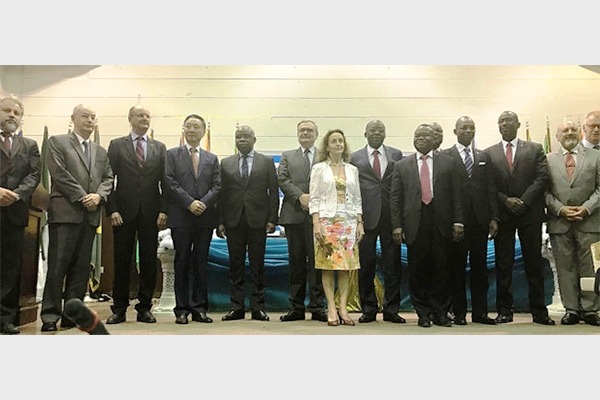
21-23 February 2017, Benin, Cotonou The United Nations Office for South-South Cooperation and the Government of Benin, through its Ministry of Planning and Development, convened the first of three subregional South-South and triangular cooperation capacity-building workshops in Cotonou, Benin. The workshop took place from 21 to 23 February 2017. The Hon. Mr. Abdoulaye Tchane, Minister of State for Planning and Development of the Republic of Benin, opened the workshop. Over 200 people, most of them from government departments and academia, attended the opening session. The objective of the first day of the workshop was for West African countries to exchange their experiences and knowledge on institutional and programme management of South-South and triangular cooperation with countries and inter-governmental institutions from outside Africa. The second and third days were dedicated to discussions among African countries towards developing an action plan for follow-up that UNOSSC can support. The workshop highlighted the intention of UNOSSC to scale up its engagement with Africa. The invitation to the workshop was extended to all national South-South focal points in West African countries, based on UNOSSC databases and through UNDP Country Office assistance. In addition to West African countries, Kenya also participated since it has stepped forward to host the East African Workshop in May 2017. A Southern African workshop is in the planning stages. Participating African countries included Chad, Côte d’Ivoire, Ghana, Kenya, Mauritania, Sao Tome and Principe, Senegal and Togo. The following resource countries also shared knowledge and experiences on institutional and programme management of South-South and triangular cooperation: Bangladesh, Brazil, Costa Rica, Mexico and Thailand. During deliberations on the first day of the workshop, the role of public private partnerships in development emerged as a strong focus from several presenters. Benin noted that most of its identified projects are funded by the private sector. It highlighted the general development spirit that embraces public-private partnerships, noting that even ambassadors are now development agents – searching for and gathering good practices and experiences. In that regard, the representative of the Benin Ministry of Planning and Development emphasized that safeguarding investments is a key component of development cooperation. The representative of Thailand noted that the Thai Government is focusing on an enhanced partnership among public-private-civic society entities, among others, to be supportive of each other. The private sector in Thailand learning how to help with community development. Bangladesh noted that 40 public services are currently run by entrepreneurs under its public service innovation programme. Colombia also highlighted its focus on micro public-private partnerships. Participants debated issues of trust between the public and private sectors. “The private sector fears that the public sector is inept or corrupt, and the public sector fears the private sector because of its profit motive,” noted one panellist. Despite this, it was clear that many of the Governments of developing countries are taking a fresh look at the private sector as a development partner and ally in reinforcing development of communities. The workshop concluded with delegates emphasizing, among other things, the need for a resolution on a common regional currency, free movement of goods and people, a fund for South-South cooperation in the African region, and initiatives focusing on women and youth. Delegates also noted major threats to South-South cooperation including lack of security, governance issues, and the lack of training and information flows to implementers of policy. On strengthening the institutional set-up for South-South cooperation, participants asked UNOSSC to compile a more robust database of focal points in the missions in New York and in capitals. The workshop was also very successful for matching those seeking and supplying development solutions. For example, Brazil, Thailand and Bangladesh are now consulting with authorities in Benin to launch cooperation projects. In addition, the Office of the Prime Minister of the People’s Republic of Bangladesh, which worked with UNDP on innovation in public service delivery, commenced discussions with UNDP Benin on the possibility of working together. Finally, participants circulated a draft declaration for comment and future adoption.   Speakers:
  • Hon. Mr Aurelien Agbenonci, Minister of Foreign Affairs and Cooperation, Benin
  • Hon. Mr Abdoulaye Tchane, Minister of State for Planning and Development, Benin
  • Mr Jorge Chediek, Envoy of the Secretary-General on South-South Cooperation, and Director, UNOSSC
  • Mr Siaka Coulibaly, UN Resident Coordinator and UNDP Resident Representative, Benin
Media Contacts:  

Related Post


  • All Post
  • ATCT Featured Publications POM
  • BAPA+40
  • Blog
  • Capacity Development Initiatives
  • CICETE Featured Publications POM
  • CIKD
  • Cities Clusters - Agriculture
  • Cities Clusters - COVID-19
  • Cities Clusters - COVID-19 Knowledge Products
  • Cities Clusters - DRR
  • Cities Clusters - E-commerce
  • Cities Clusters - Tourism
  • Cities Clusters - Tourism Knowledge Products
  • Cities Clusters - Transport
  • Cities Clusters - Waste
  • Cities Project
  • Cities Project COVID-19 Newsletters
  • Cities Project COVID-19 Response
  • Cities Project Knowledge Products
  • Classic (untouched)
  • Climate Action
  • COMSATS Featured Publications POM
  • COMSATS Featured Solutions POM
  • Converted from Divi
  • Converted from Mixed
  • Converted from WPBakery
  • COVID-19
  • COVID-19 Page Featured Solutions
  • DRR Knowledge Products
  • DRR News
  • Empty Post
  • Events
  • Featured Event UN-Habitat POM
  • Financing for Development
  • Financing Mechanisms
  • g7+
  • Gender Events
  • Gender News
  • Good Practices in SSTrC Series
  • Good Practices Publications
  • Good Practices Thematic Series & Special Editions
  • Good Practices Vol. 2
  • Good Practices Vol. 3
  • GSSDC
  • Highlighted
  • Highlighted Publications
  • IAEA Featured Solutions POM
  • IBRAF Featured Publications POM
  • IBSA Fund
  • IBSA Fund Annual Reports
  • IBSA Fund News and Stories
  • IBSA Fund Publication
  • IBSA Fund Story
  • ICGEB Featured Events POM
  • ICGEB Featured Publications POM
  • ICGEB Featured Solutions POM
  • ILO Featured Events POM
  • ILO Featured Publications POM
  • ILO Featured Solutions POM
  • India-UN Development Partnership Fund
  • India-UN Fund Publication
  • India-UN Fund Story
  • IsDB
  • IsDB Featured Publications POM
  • IsDB SCC
  • News
  • Norec Featured Publications POM
  • Norec Featured Solutions POM
  • Peace and Development
  • PGTF Publications
  • PGTF Story
  • PICA Featured News POM
  • PICA Featured Publications POM
  • PICA Featured Solutions POM
  • PIDF Featured Publications POM
  • Publications
  • Regional Updates
  • Research
  • ROK-UNOSSC Facility
  • SGP Featured Publication POM
  • SGP Featured Solutions POM
  • Solution
  • South South in Action
  • South-South Global Thinkers
  • South-South Ideas
  • South-South Ideas Series
  • South-South in Action Series
  • Southern Response to COVID-19
  • SSN4PSI Featured Publications POM
  • SSN4PSI Featured Solutions POM
  • Training
  • UN Day for SSC 2020
  • UN Fund for SSC
  • UN SSC Day Publications
  • UN-Habitat Featured Publications POM
  • UN-HABITAT Featured Solutions POM
  • UNCCT
  • UNEP Featured Publications POM
  • UNFPA
  • UNFSSC Publication
  • UNFSSC Story
  • UNIDO Featured Publications POM
  • UNIDO Featured Solutions POM
  • UNIDO POM Events
  • UNOCT Featured Publications POM
  • UNV
  • UNV Featured Publications POM
  • WB Featured Publications POM
  • WB Featured Solutions POM
  • Webinars
  • WFP Featured Events POM
  • WFP Featured Publication POM
  • WFP Featured Solutions POM
  • WIPO
  • Workshops and Seminars
  • Youth4South
  • z Across the Globe 1
  • z Across the Globe 2
  • z Across the Globe 4
  • z Across the Globe 5
  • z Across the Globe 6
  • z Across the Globe 7
  • z Across the Globe 8
  • z ES BAPA+40
  • z ES Eventos
  • z ES Noticias
  • z ES Noticias Destacadas
  • z ES Publicaciones
  • z ES Publicaciones Destacadas
  • z ES Serie Buenas Prácticas en la CSSyT
  • z ES Serie El Sur-Sur en Acción
  • z FR Actualités
  • z FR BAPA+40
  • z FR Événements
  • z FR Publications
  • z FR Publications en vedette
  • z FR Série Bonnes pratiques en CSST
  • z FR Série Sud-Sud en action
  • z Highlighted News
  • z Photos
  • z Videos
  • z ZH BAPA+40
  • z ZH Events
  • z ZH News

ABOUT

Terms of Service

Privacy Policy

Disclosures

RESOURCES

Terms of Service

Privacy Policy

Disclosures

ENGAGE

Terms of Service

Privacy Policy

Disclosures

Copyright © UNOSSC/UNDP

wpChatIcon
wpChatIcon

Alliance Application Form

Submit an Expression of Interest and/or Demand Signal. UNOSSC reviews submissions on a rolling basis.

1. Official name of organization / institution / government entity (exclusions to apply) *
2. Country *
3. Region *
4. SDG *
Secondary SDG *
5. Partner category *
6. Website *
7. Brief description of your institution (max. 150 words) *
Name for the Lead *
Title for the Lead *
Email address for the Lead *
Name for the co-lead
Title for the co-lead
Email address for the co-lead
Section 3. Expression of Interest in the Alliance *
Additional information on proposed areas of engagement may be requested through the platform following initial review by the Alliance Secretariat.
Section 4. Due Diligence and Integrity Declaration *

Submission Note:

  • Submission of this Expression of Interest form does not automatically confer participation in the Alliance.
  • All submissions will be reviewed by the Alliance Secretariat, including basic eligibility screening and proportionate due diligence, as appropriate.
  • Participation in Alliance activities is determined based on relevance to articulated cooperation needs, alignment with Alliance principles, and integrity considerations.
  • Engagement under the Alliance is voluntary, non-binding, and facilitative in nature, and does not constitute funding approval, contractual commitment, or institutional membership.
  • The Alliance Secretariat may contact submitting entities for additional information or clarification during the review process.

Submission of Demand Form

Description of Demand

Indicate the type of support or cooperation requested through the Alliance.
Please briefly describe the challenge, gap, or priority. (Max. 300 words)

Thematic and Geographic Focus

Please indicate the main focus areas of your demand:

A. Thematic Areas (select up to three)
B. Geographic Focus (select all that apply)

Proposed Engagement Modalities

Please indicate how you would like to engage through the Alliance (select all that apply):

Expected Outcomes

Please indicate the main results you seek to achieve through this engagement. (Max. 200 words)
Examples:
• Capacity strengthened
• Partnerships established
• Sectoral or regional strategies co-developed
• Solutions piloted
• Knowledge generated
• Policies informed

Timeline and Readiness (if applicable)

1. Expected timeframe for engagement:
2. Current stage:

Additional Information

Please provide any additional information, documents, or links relevant to this submission.
(Max. 200 words or upload link)

Submission of Offer Form

Description of Contribution

Indicate the type of contribution your institution can provide and describe the expertise, resources, or solutions you may offer.
Please briefly describe your proposed contribution. (Max. 300 words)

Thematic and Geographic Focus

Please indicate the main focus areas of your interest:

A. Thematic Areas (select up to three)
B. Geographic Focus (select all that apply)

Proposed Engagement Modalities

Please indicate how you would like to engage through the Alliance (select all that apply):

Expected Outcomes

Please indicate the main results you aim to achieve through this engagement. (Max. 200 words)
Examples:
• Capacity strengthened
• Partnerships established
• Sectoral or regional strategies co-developed
• Solutions piloted
• Knowledge generated
• Policies informed

Timeline and Readiness (if applicable)

1. Expected timeframe for engagement:
2. Current stage:

Additional Information

Please provide any additional information, documents, or links relevant to this submission.
(Max. 200 words or upload link)

Organization Registration

Authentication & Due Diligence This prototype simulates identity verification, due diligence confirmation, and an authentication step before submission. *

First Name *
Last Name *
Email address *
Password *
Confirm Password *
Name of institution / organization *
Country / Region *
Organization Type *
Organization other *
Function / role *
Organization logo *
Maximum file size: 1 GB

Login

Login / email *
Password *
Remember me

Forgot password?

Connect form

Your name *
Email *
Organization / institution *
Job title / role *
Reason for connecting:
Short message

Scroll to Top