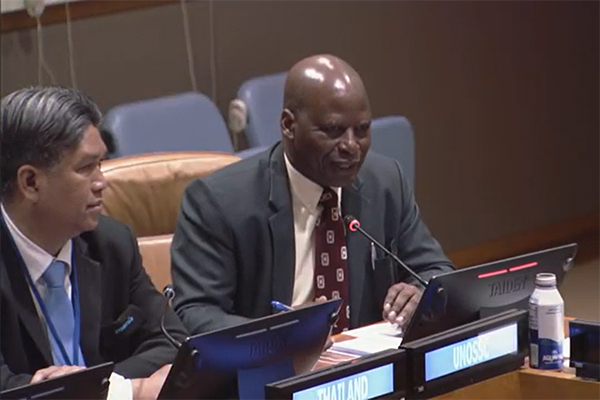
The 57th Session of the United Nations Commission on Population and Development (CPD57) reviewed the status of the 30-year implementation of the Programme of Action of the International Conference on Population and Development (ICPD) and its contribution to the follow-up and review of the 2030 Agenda for Sustainable Development.
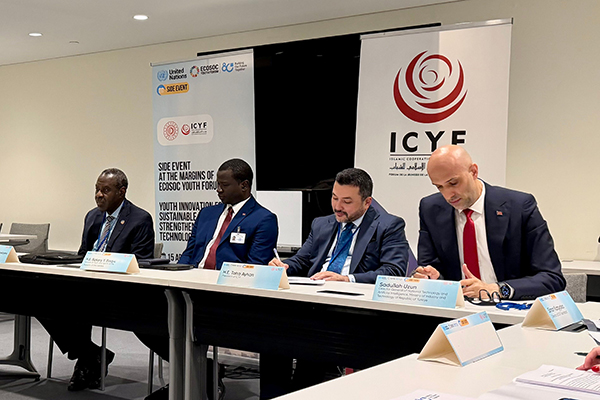
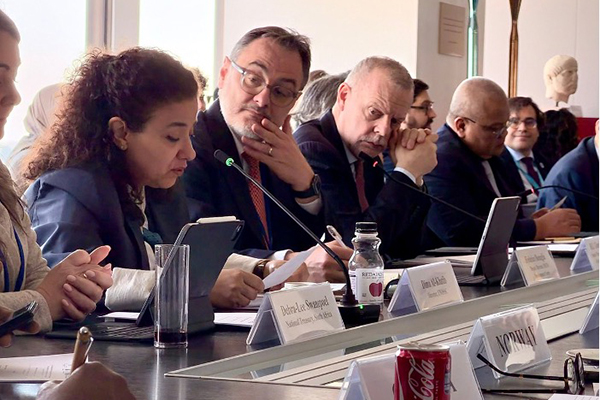
On the sidelines of CPD57, three Association of South-East Asian (ASEAN) Countries organized a side-event, together with UNFPA and UNOSSC as co-organizers.
“Experts tell us that whatever countries in the region do on the population and development agenda will shape the future of global development itself,” said Ms. Dima Al-Khatib, Director of the United Nations Office for South-South Cooperation during the Opening segment. “We have a generational opportunity to propel shared progress in and through Southeast Asia by leveraging South-South cooperation on population dynamics in the region – enabling neighbors to profit together from practices already tested by peers – and to extend these benefits to other regions.”
H.E. Mr. Antonio Lagdameo, Permanent Representative of the Philippines to the UN, and Pio Smith, UNFPA Regional Director for Asia and the Pacific, also spoke during the opening Segment of the event titled “Optimizing Southeast Asian Population Dynamics through South-South and triangular Cooperation”.
Keynote speakers from Malaysia, Philippines and Thailand highlighted similar trajectories in population growth. Both Malaysia and Thailand are experiencing a slowdown in population growth driven by declining fertility rates. In the case of Thailand, the population declined for the first time in 2021. The Philippines also showed a growing population which is also slowing down.
The speakers noted that while there are declining births, there are also problems of unwanted pregnancies among teenagers. These population dynamics, where the population is aging before the country attains its demographic dividend, require individual and collective regional action.
Malaysia’s presentation focused on the country’s Road toward 2030, on population trends and the way forward in tackling the ageing scenario including through the ASEAN-wide Research Networking on Ageing (ARNA) and its support to activities under the “Regional Action Plan to implement the Kuala Lumpur Declaration on Ageing: Empowering Older Persons in ASEAN”.
Thailand presented on the creation of an enabling environment as a policy option for demographic resilience.
The Philippines’ presentation focused on the optimization of demographic prospects in the country with the overall goal of optimizing demographic opportunities and addressing persistent population issues and challenges to reap the demographic dividend and accelerate sustainable and inclusive development at all levels.
The UNOSSC Director noted that population dynamics unfold and interplay with other trends that influence the development trajectories of countries and their neighbors. Regional cooperation is crucial, therefore, as development challenges increasingly transcend or spill over neighboring borders, and the knock-on impact of crises.
At the closing, participants noted the need to continue intra- and inter-regional sharing on population and development, which can be supported by Partners in Population and Development, UNFPA, as well as UNOSSC.
Click here to listen to the message of the UNOSSC Director
Click here to watch the meeting.