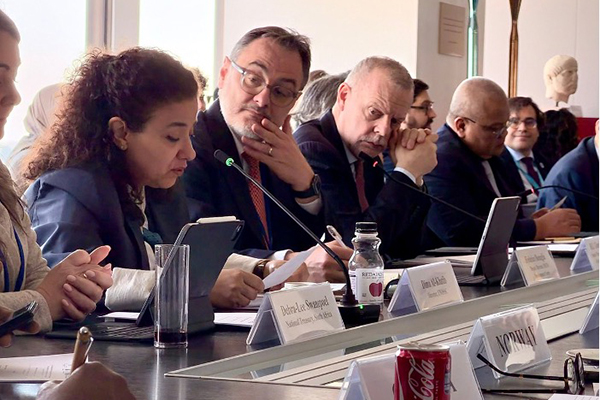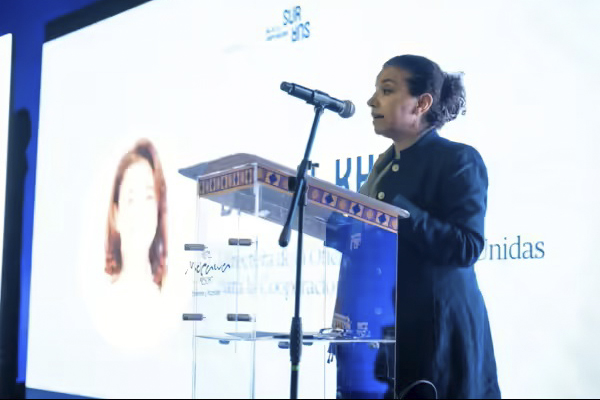
During the opening of an international cooperation meeting held this Thursday in Armenia, the Director of the United Nations Office for South-South Cooperation, Dima Al-Khatib, highlighted that the direction of international cooperation has changed in the region, and Colombia has assumed this leadership role.
“Among the countries traditionally known as the Global South, there are now some of the most dynamic economies in the world. Previously seen as recipients of aid, these countries have been transformed to become new development partners,” Al-Khatib stated.
The official also noted that countries like Colombia “show the path toward growth and development that works for the Global South. Clear in their direction because they have gone through the most difficult times and faced the toughest challenges, these are countries that are taking on greater roles at the regional and global levels, which align with their aspirations and drive their own defined growth. Our host exemplifies these changes.”
The event, led by the Colombian Presidential Agency for International Cooperation (APC Colombia) and the Ministry of Foreign Affairs, seeks to be a space for dialogue, integration, and the development of solutions to advance peace, closing gaps, and sustainable development.
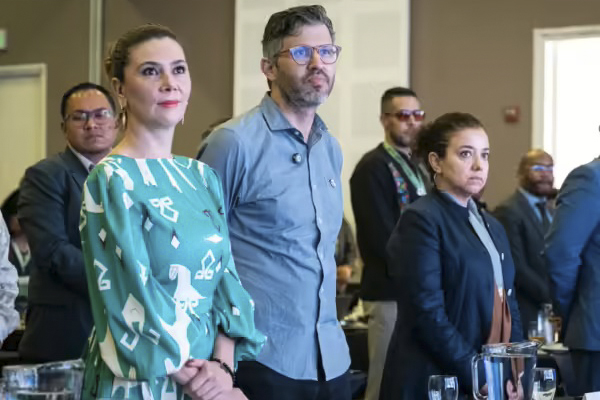 The director of APC Colombia, Eleonora Betancur González, revealed that Colombia is positioned as the largest implementer of bilateral South-South cooperation initiatives in the region, with more than 1,400 experiences developed since 2010, promoting sectors such as sustainable agriculture, energy transition, culture, and peacebuilding.
Betancur also said that cooperation is key to peace in times of confrontation. “Peace must be a shared commitment, and international cooperation is a very powerful tool to preserve the opportunities our societies need.”
The cooperation meeting was attended by vice ministers, ambassadors, and directors of cooperation from more than 30 countries in Asia, Eurasia, Africa, and Latin America, as well as local authorities and cooperation liaisons from 10 departments of the Colombian National System of International Cooperation (SNCIC).
Meanwhile, Mauricio Jaramillo Jassir, Vice Minister of Multilateral Affairs of the Colombian Ministry of Foreign Affairs, said that the best way to discuss international cooperation is by starting with what is happening in the territories.
“We cannot reach communities without listening to and gathering their expectations about what our diplomacy should be. Today, many of the major international issues, such as migration and human rights, are precisely based on community-based logic. That is the essence of community diplomacy: building foreign policy based on the voices, needs, and knowledge of the people.”
One of the projects discussed at the event was the ‘Colombia to the World Peace Program’, which shares peacebuilding experiences with regions such as Africa and Asia. This initiative, supported by the International Organization for Migration (IOM), channeled 2.779 billion pesos between 2024 and 2025, focusing on replicable reconciliation processes.
The cooperation meeting’s agenda also included spaces for dialogue and integration aimed at defining an international path forward on topics such as digital transformation, care societies, socio-ecological and energy transition, and knowledge management.
Highlights included the Second Meeting of Emerging Development Partners, an Intra-CELAC meeting, international panels, knowledge-sharing labs, and the SNCIC Territorial Meeting on the Coffee Region, Antioquia, Central Region, and Santanderes.
Source: https://www.eltiempo.com/colombia/otras-ciudades/colombia-ya-no-es-un-pais-receptor-de-ayudas-internacionales-directora-de-oficina-de-la-onu-para-la-cooperacion-3489932
The director of APC Colombia, Eleonora Betancur González, revealed that Colombia is positioned as the largest implementer of bilateral South-South cooperation initiatives in the region, with more than 1,400 experiences developed since 2010, promoting sectors such as sustainable agriculture, energy transition, culture, and peacebuilding.
Betancur also said that cooperation is key to peace in times of confrontation. “Peace must be a shared commitment, and international cooperation is a very powerful tool to preserve the opportunities our societies need.”
The cooperation meeting was attended by vice ministers, ambassadors, and directors of cooperation from more than 30 countries in Asia, Eurasia, Africa, and Latin America, as well as local authorities and cooperation liaisons from 10 departments of the Colombian National System of International Cooperation (SNCIC).
Meanwhile, Mauricio Jaramillo Jassir, Vice Minister of Multilateral Affairs of the Colombian Ministry of Foreign Affairs, said that the best way to discuss international cooperation is by starting with what is happening in the territories.
“We cannot reach communities without listening to and gathering their expectations about what our diplomacy should be. Today, many of the major international issues, such as migration and human rights, are precisely based on community-based logic. That is the essence of community diplomacy: building foreign policy based on the voices, needs, and knowledge of the people.”
One of the projects discussed at the event was the ‘Colombia to the World Peace Program’, which shares peacebuilding experiences with regions such as Africa and Asia. This initiative, supported by the International Organization for Migration (IOM), channeled 2.779 billion pesos between 2024 and 2025, focusing on replicable reconciliation processes.
The cooperation meeting’s agenda also included spaces for dialogue and integration aimed at defining an international path forward on topics such as digital transformation, care societies, socio-ecological and energy transition, and knowledge management.
Highlights included the Second Meeting of Emerging Development Partners, an Intra-CELAC meeting, international panels, knowledge-sharing labs, and the SNCIC Territorial Meeting on the Coffee Region, Antioquia, Central Region, and Santanderes.
Source: https://www.eltiempo.com/colombia/otras-ciudades/colombia-ya-no-es-un-pais-receptor-de-ayudas-internacionales-directora-de-oficina-de-la-onu-para-la-cooperacion-3489932
The director of APC Colombia, Eleonora Betancur González, revealed that Colombia is positioned as the largest implementer of bilateral South-South cooperation initiatives in the region, with more than 1,400 experiences developed since 2010, promoting sectors such as sustainable agriculture, energy transition, culture, and peacebuilding.
Betancur also said that cooperation is key to peace in times of confrontation. “Peace must be a shared commitment, and international cooperation is a very powerful tool to preserve the opportunities our societies need.”
The cooperation meeting was attended by vice ministers, ambassadors, and directors of cooperation from more than 30 countries in Asia, Eurasia, Africa, and Latin America, as well as local authorities and cooperation liaisons from 10 departments of the Colombian National System of International Cooperation (SNCIC).
Meanwhile, Mauricio Jaramillo Jassir, Vice Minister of Multilateral Affairs of the Colombian Ministry of Foreign Affairs, said that the best way to discuss international cooperation is by starting with what is happening in the territories.
“We cannot reach communities without listening to and gathering their expectations about what our diplomacy should be. Today, many of the major international issues, such as migration and human rights, are precisely based on community-based logic. That is the essence of community diplomacy: building foreign policy based on the voices, needs, and knowledge of the people.”
One of the projects discussed at the event was the ‘Colombia to the World Peace Program’, which shares peacebuilding experiences with regions such as Africa and Asia. This initiative, supported by the International Organization for Migration (IOM), channeled 2.779 billion pesos between 2024 and 2025, focusing on replicable reconciliation processes.
The cooperation meeting’s agenda also included spaces for dialogue and integration aimed at defining an international path forward on topics such as digital transformation, care societies, socio-ecological and energy transition, and knowledge management.
Highlights included the Second Meeting of Emerging Development Partners, an Intra-CELAC meeting, international panels, knowledge-sharing labs, and the SNCIC Territorial Meeting on the Coffee Region, Antioquia, Central Region, and Santanderes.
Source: https://www.eltiempo.com/colombia/otras-ciudades/colombia-ya-no-es-un-pais-receptor-de-ayudas-internacionales-directora-de-oficina-de-la-onu-para-la-cooperacion-3489932