New UNOSSC South-South and Triangular Cooperation Solutions Lab sparks collaborative innovation
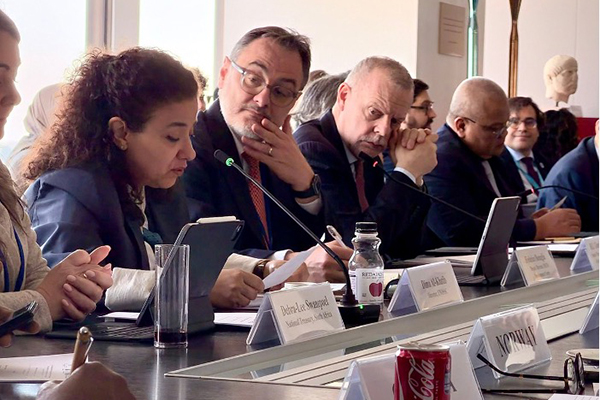
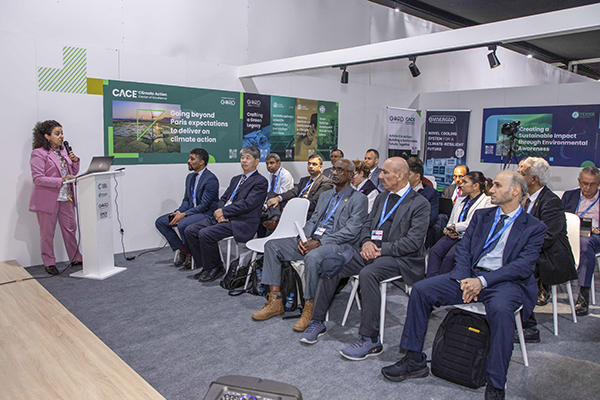
A high-level global event focusing on leveraging UNOSSC’s new South-South and Triangular Cooperation Solutions Lab to accelerate collaborative innovation and build coherent portfolios of new South-South and triangular cooperation solutions was held alongside COP29 in Baku, Azerbaijan.
The event aligned with the Lab’s mission to address complex development challenges through co-design, incubation, financing and scaling of innovative solutions, all contributing to the 2030 Agenda for Sustainable Development. Current partners of the Lab (alphabetically) are: Gulf Organisation for Research and Development (GORD), International Atomic Energy Agency (IAEA), Masdar City, United Nations Economic Commission for Europe (UNECE), World Food Programme (WFP) and Zayed International Foundation for Environment.
Speakers highlighted the potential of collaborative innovation, coherent solution portfolios building, and building resilient development pathways.
Dr. Yousef Alhorr, Founding Chairman, Gulf Organisation for Research and Development (host of the event), said, “The path to achieving the United Nations Sustainable Development Goals is not one that can be walked alone. It requires a united effort, driven by partnerships and the sharing of knowledge, expertise, and resources across borders. By joining forces for the creation of the South-South and Triangular Cooperation Solutions Lab, we are continuing our commitment to driving innovation and fostering practical solutions that meet the unique development challenges of the Global South. As the UN rightly identifies across its 17 SDGs, collaboration is the key to transforming our collective ambitions into tangible impact. Through cooperation, we can unlock solutions that not only address the immediate needs of developing nations but also pave the way for long-term, sustainable progress across the globe.”
“South-South and Triangular Cooperation are a key part of how the IAEA technical cooperation programme functions. We believe that our experience in institutionalizing mechanisms to support South-South and triangular cooperation offers valuable examples that can be replicated by other international organizations and in other settings,” said Mr. Liu Hua, Deputy Director General, International Atomic Energy Agency.
“The Solutions Lab and its thematic focus areas resonate deeply with the goals and themes of COP29, especially in advancing climate resilience, low-emission transitions, and sustainable urbanization.,” said UNOSSC Director Ms. Dima Al-Khatib. “Our partnerships within the Solutions Lab are a testament to strategic and thematic complementarity. Each partner brings specialized expertise and resources to support diverse yet interlinked thematic areas.”
“We cordially invite all the stake holders to join hands with us and collaborate for successful implementation of Agenda 2030 and beyond. Together let ss make the difference,” said Dr. Hamdan Khalifa Al Shaer, Deputy Chairman of the Higher Committee, Zayed International Foundation for the Environment.
A presentation of the globally launched first Innovation Challenge Call for solutions followed the high-level opening.
The UNOSSC South-South and Triangular Cooperation Solutions Lab is now accepting applications for its first Innovation Challenge. It is seeking innovative solutions to address critical sustainable development challenges across climate tech, agriculture, urban planning, and inclusive digital transformation.
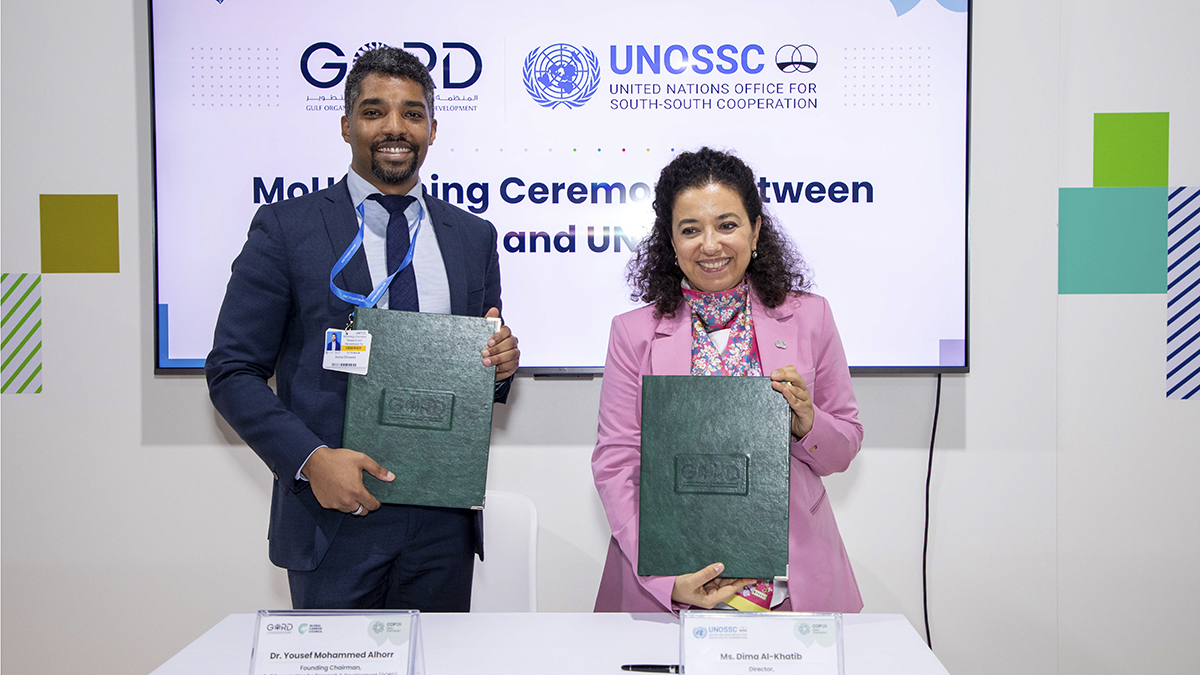 During the event, a Memorandum of Understanding was signed between UNOSSC and the Gulf Organisation for Research and Development (GORD) focusing on scaling up technological solutions to address challenges in sectors such as climate action, clean energy, health, water, and sustainable agriculture.
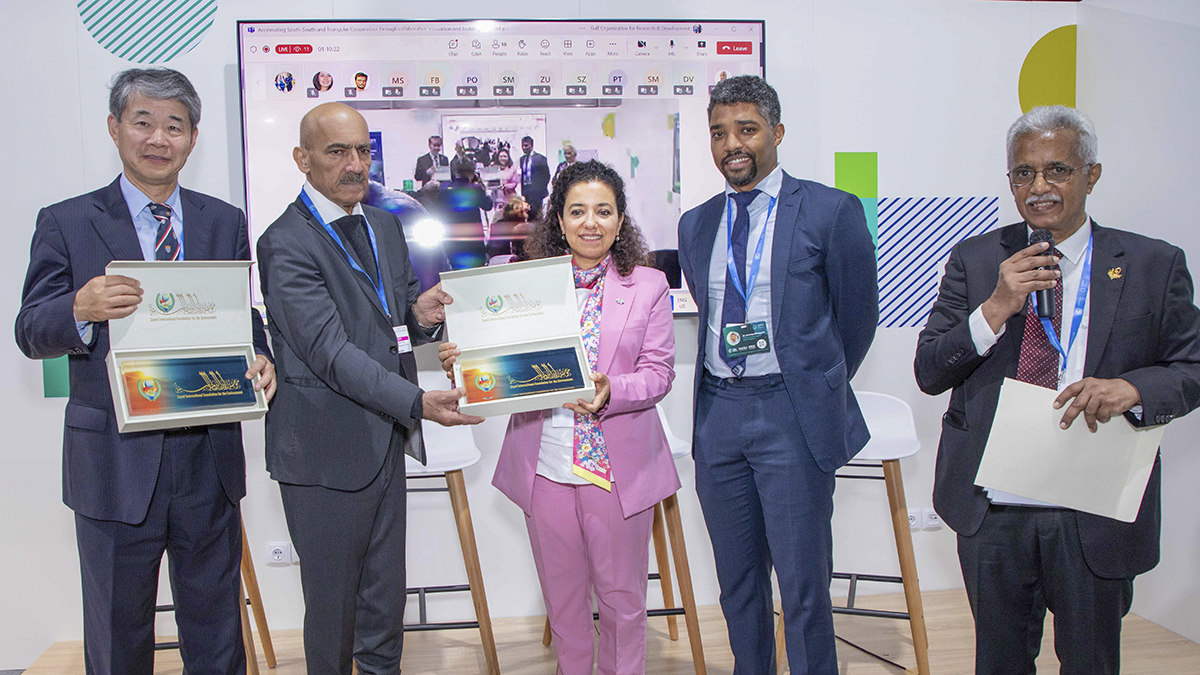 Zayed International Foundation for the Environment and UNOSSC exchanged a financing agreement to scale up the new Solutions Lab with technical assistance and financial support for the first global Innovation Challenge.
During COP29 UNOSSC also engaged in strategic advocacy with other partners toward scaling up South-South and triangular cooperation for climate action. A selection of engagements is below:
Zayed International Foundation for the Environment and UNOSSC exchanged a financing agreement to scale up the new Solutions Lab with technical assistance and financial support for the first global Innovation Challenge.
During COP29 UNOSSC also engaged in strategic advocacy with other partners toward scaling up South-South and triangular cooperation for climate action. A selection of engagements is below:
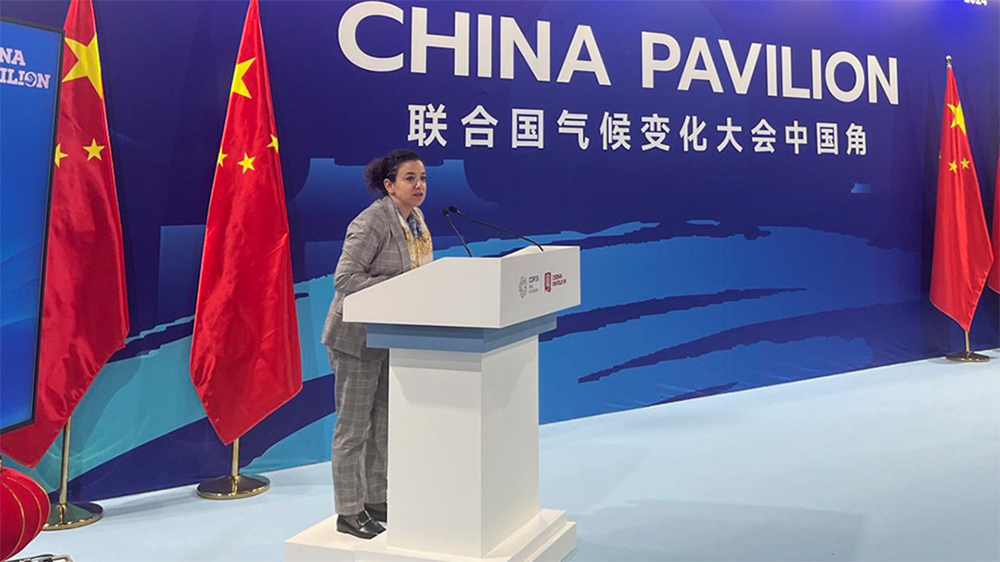 “Despite contributing least to global emissions, LDCs account for just 3.8% and SIDS less than 1%,” said Director Dima Al-Khatib at the High-Level Forum on South-South Cooperation on Climate Change, hosted by the Ministry of Ecology and Environment of China at COP29.
The reality of climate change is one we all face, but for many countries in the Global South, it is not just a challenge – it is an existential threat, the Director said. Loss and damage, adaptation, and mitigation demand full global solidarity. “China has been a key partner in this effort, demonstrating strong commitment through South-South cooperation initiatives, supporting developing countries in their transition to a low-carbon economy and enhancing their resilience to the impacts of climate change.”
“Despite contributing least to global emissions, LDCs account for just 3.8% and SIDS less than 1%,” said Director Dima Al-Khatib at the High-Level Forum on South-South Cooperation on Climate Change, hosted by the Ministry of Ecology and Environment of China at COP29.
The reality of climate change is one we all face, but for many countries in the Global South, it is not just a challenge – it is an existential threat, the Director said. Loss and damage, adaptation, and mitigation demand full global solidarity. “China has been a key partner in this effort, demonstrating strong commitment through South-South cooperation initiatives, supporting developing countries in their transition to a low-carbon economy and enhancing their resilience to the impacts of climate change.”
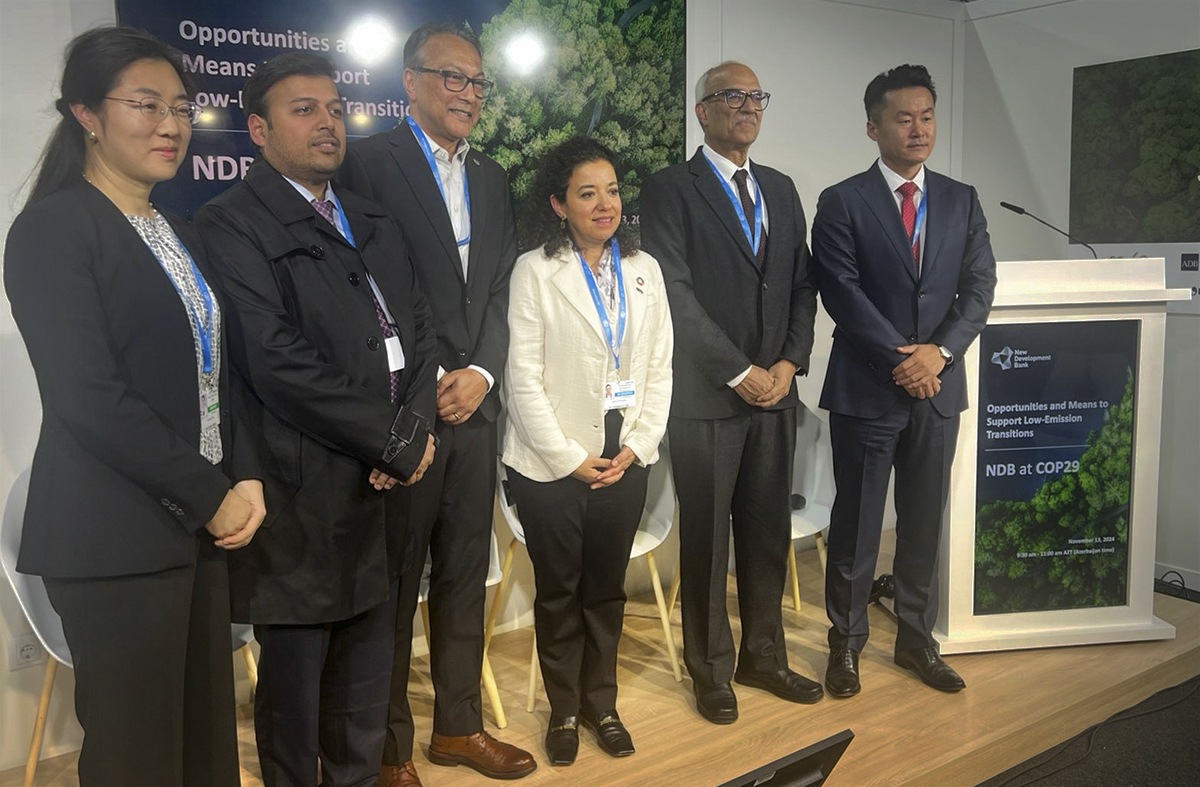 During the side event on “Opportunities and Means to Support Low-Emission Transitions,” organized by the New Development Bank (NDB), the UNOSSC Director emphasized the importance of regional and cross-regional South-South and triangular cooperation to advance low-emission transitions across the Global South.
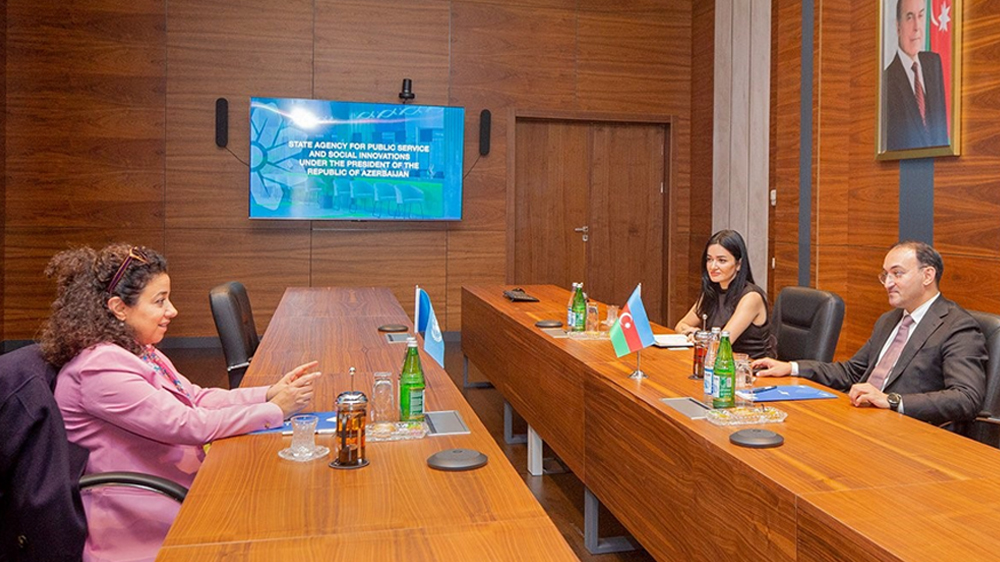 UNOSSC Director Dima Al-Khatib also met with Mr. Ulvi Mehdiyev, Chairman, the State Agency for Public Service and Social Innovations under the President of the Republic of Azerbaijan (ASAN).
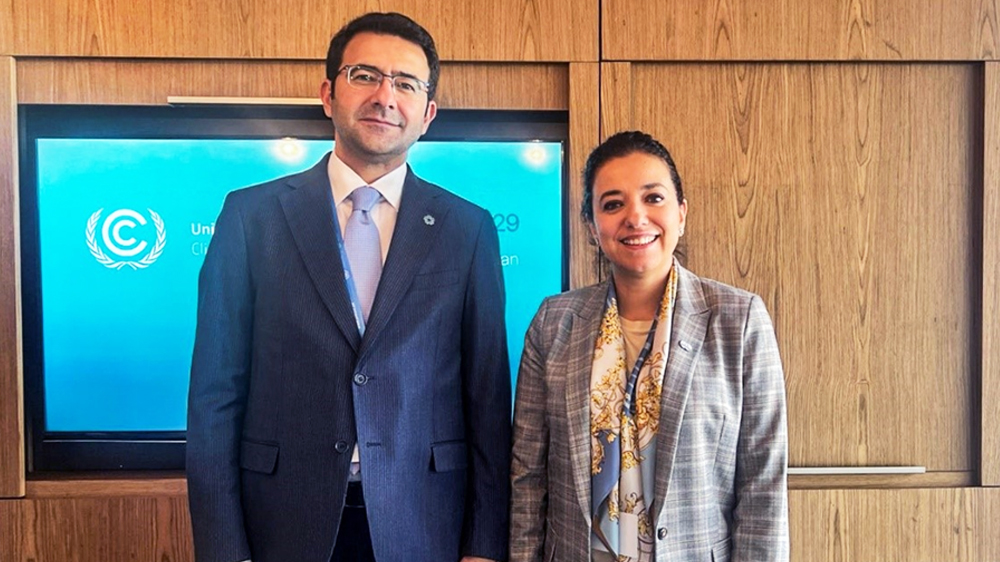 In a meeting with Mr. Elmaddin Mehdiyev, COP29 Presidency Finance Team Lead and Senior Negotiator, Director of Azerbaijan International Development Agency (AIDA), UNOSSC explored collaborative efforts in promoting South-South and triangular cooperation and identified new engagement opportunities. The Director invited AIDA to collaborate with UNOSSC in the South-South and Triangular Cooperation Solutions Lab, supporting innovative solutions across priority areas including financial inclusion, technological innovation, agricultural productivity and digital inclusion, while acknowledging Azerbaijan’s development journey, transitioning from a low-income to an upper-middle-income country.
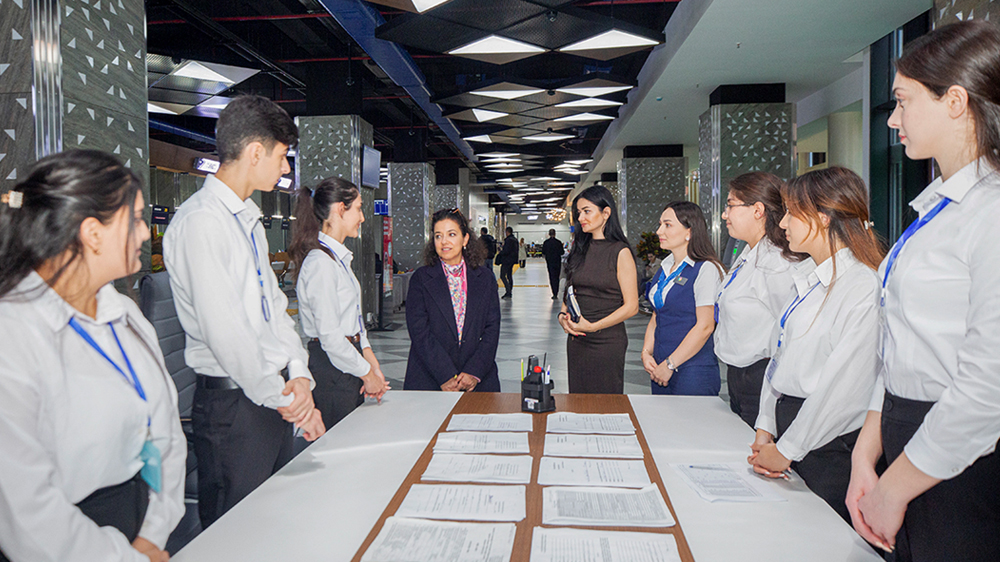 ASAN’s evidence-based approach for monitoring efficient and transparent delivery of public services is a scalable South-South cooperation model inspiring many Southern partner countries. It is grooming of volunteers and motivating youth to engage and improve public services is another key scalable South-South cooperation feature.
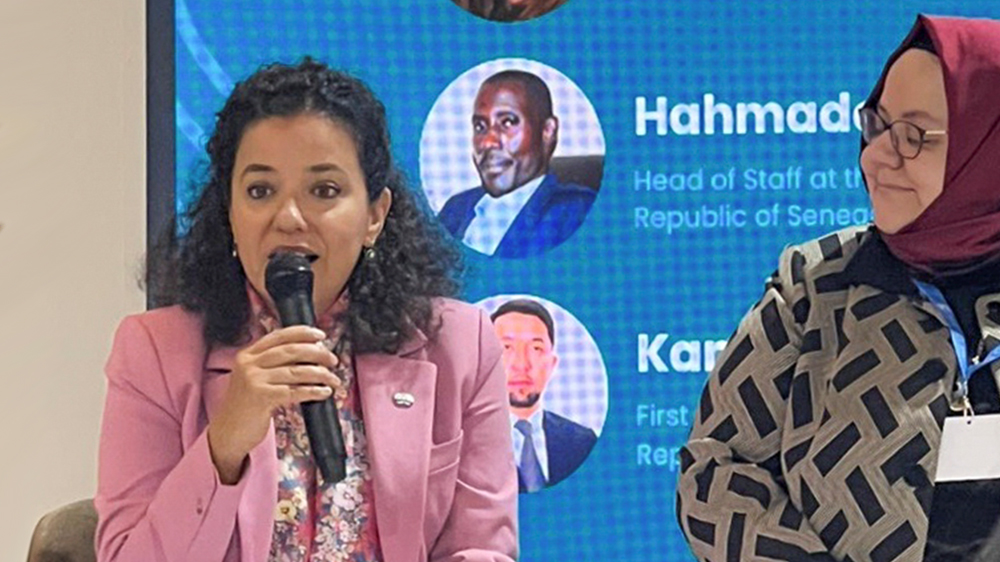 UNOSSC is bridging innovation gaps and accelerating sustainable development among nations in the South, said Director Dima Al-Khatib at the “Ministerial Forum on Green Good Governance” hosted by the Government of Azerbaijan on the sidelines of COP29.
The Director also addressed a discussion on ‘The Role of SMEs in the Green Economy’ hosted by the Small and Medium Business Development Agency (KOBİA) of the Republic of Azerbaijan as part of COP29. “SMEs are the lifeblood of job creation and economic development, particularly in the Global South,” said the UNOSSC Director. “As we shift towards greener economies, SMEs will be on the frontlines of generating the new jobs and opportunities that this transition will create.”
The Gulf Organisation for Research & Development (GORD) is an RDI entity recognized among leading organizations in the global sustainability milieu. Headquartered in Qatar Science and Technology Park, GORD targets all relevant dimensions of sustainability and Sustainable Development Goals (SDGs) of the United Nations. In line with Qatar National Vision 2030, GORD is committed to accelerating sustainability solutions regionally and internationally.
UNOSSC, hosted by UNDP since 1974, was established by the UN General Assembly with a mandate to advocate for and coordinate South-South and triangular cooperation on a global and UN system-wide basis.
For further enquiries: Mithre J. Sandrasagra, Communications Specialist, UNOSSC, mithre.sandrasagra@unossc.org; Hussam Othmany, Senior Manager, Marketing & Corporate Communications, GORD, h.othmany@gord.qa
UNOSSC is bridging innovation gaps and accelerating sustainable development among nations in the South, said Director Dima Al-Khatib at the “Ministerial Forum on Green Good Governance” hosted by the Government of Azerbaijan on the sidelines of COP29.
The Director also addressed a discussion on ‘The Role of SMEs in the Green Economy’ hosted by the Small and Medium Business Development Agency (KOBİA) of the Republic of Azerbaijan as part of COP29. “SMEs are the lifeblood of job creation and economic development, particularly in the Global South,” said the UNOSSC Director. “As we shift towards greener economies, SMEs will be on the frontlines of generating the new jobs and opportunities that this transition will create.”
The Gulf Organisation for Research & Development (GORD) is an RDI entity recognized among leading organizations in the global sustainability milieu. Headquartered in Qatar Science and Technology Park, GORD targets all relevant dimensions of sustainability and Sustainable Development Goals (SDGs) of the United Nations. In line with Qatar National Vision 2030, GORD is committed to accelerating sustainability solutions regionally and internationally.
UNOSSC, hosted by UNDP since 1974, was established by the UN General Assembly with a mandate to advocate for and coordinate South-South and triangular cooperation on a global and UN system-wide basis.
For further enquiries: Mithre J. Sandrasagra, Communications Specialist, UNOSSC, mithre.sandrasagra@unossc.org; Hussam Othmany, Senior Manager, Marketing & Corporate Communications, GORD, h.othmany@gord.qa
During the event, a Memorandum of Understanding was signed between UNOSSC and the Gulf Organisation for Research and Development (GORD) focusing on scaling up technological solutions to address challenges in sectors such as climate action, clean energy, health, water, and sustainable agriculture.
Zayed International Foundation for the Environment and UNOSSC exchanged a financing agreement to scale up the new Solutions Lab with technical assistance and financial support for the first global Innovation Challenge.
During COP29 UNOSSC also engaged in strategic advocacy with other partners toward scaling up South-South and triangular cooperation for climate action. A selection of engagements is below:
“Despite contributing least to global emissions, LDCs account for just 3.8% and SIDS less than 1%,” said Director Dima Al-Khatib at the High-Level Forum on South-South Cooperation on Climate Change, hosted by the Ministry of Ecology and Environment of China at COP29.
The reality of climate change is one we all face, but for many countries in the Global South, it is not just a challenge – it is an existential threat, the Director said. Loss and damage, adaptation, and mitigation demand full global solidarity. “China has been a key partner in this effort, demonstrating strong commitment through South-South cooperation initiatives, supporting developing countries in their transition to a low-carbon economy and enhancing their resilience to the impacts of climate change.”
During the side event on “Opportunities and Means to Support Low-Emission Transitions,” organized by the New Development Bank (NDB), the UNOSSC Director emphasized the importance of regional and cross-regional South-South and triangular cooperation to advance low-emission transitions across the Global South.
UNOSSC Director Dima Al-Khatib also met with Mr. Ulvi Mehdiyev, Chairman, the State Agency for Public Service and Social Innovations under the President of the Republic of Azerbaijan (ASAN).
In a meeting with Mr. Elmaddin Mehdiyev, COP29 Presidency Finance Team Lead and Senior Negotiator, Director of Azerbaijan International Development Agency (AIDA), UNOSSC explored collaborative efforts in promoting South-South and triangular cooperation and identified new engagement opportunities. The Director invited AIDA to collaborate with UNOSSC in the South-South and Triangular Cooperation Solutions Lab, supporting innovative solutions across priority areas including financial inclusion, technological innovation, agricultural productivity and digital inclusion, while acknowledging Azerbaijan’s development journey, transitioning from a low-income to an upper-middle-income country.
ASAN’s evidence-based approach for monitoring efficient and transparent delivery of public services is a scalable South-South cooperation model inspiring many Southern partner countries. It is grooming of volunteers and motivating youth to engage and improve public services is another key scalable South-South cooperation feature.
UNOSSC is bridging innovation gaps and accelerating sustainable development among nations in the South, said Director Dima Al-Khatib at the “Ministerial Forum on Green Good Governance” hosted by the Government of Azerbaijan on the sidelines of COP29.
The Director also addressed a discussion on ‘The Role of SMEs in the Green Economy’ hosted by the Small and Medium Business Development Agency (KOBİA) of the Republic of Azerbaijan as part of COP29. “SMEs are the lifeblood of job creation and economic development, particularly in the Global South,” said the UNOSSC Director. “As we shift towards greener economies, SMEs will be on the frontlines of generating the new jobs and opportunities that this transition will create.”
The Gulf Organisation for Research & Development (GORD) is an RDI entity recognized among leading organizations in the global sustainability milieu. Headquartered in Qatar Science and Technology Park, GORD targets all relevant dimensions of sustainability and Sustainable Development Goals (SDGs) of the United Nations. In line with Qatar National Vision 2030, GORD is committed to accelerating sustainability solutions regionally and internationally.
UNOSSC, hosted by UNDP since 1974, was established by the UN General Assembly with a mandate to advocate for and coordinate South-South and triangular cooperation on a global and UN system-wide basis.
For further enquiries: Mithre J. Sandrasagra, Communications Specialist, UNOSSC, mithre.sandrasagra@unossc.org; Hussam Othmany, Senior Manager, Marketing & Corporate Communications, GORD, h.othmany@gord.qa