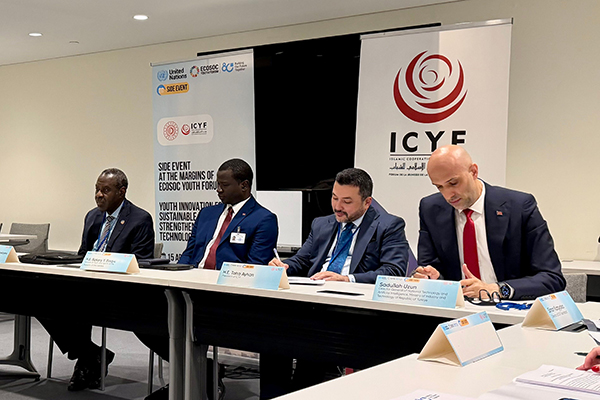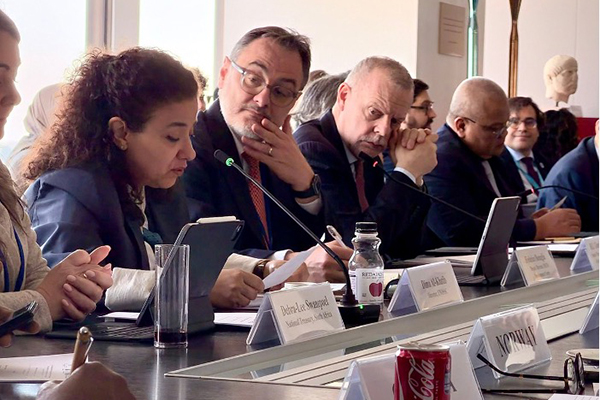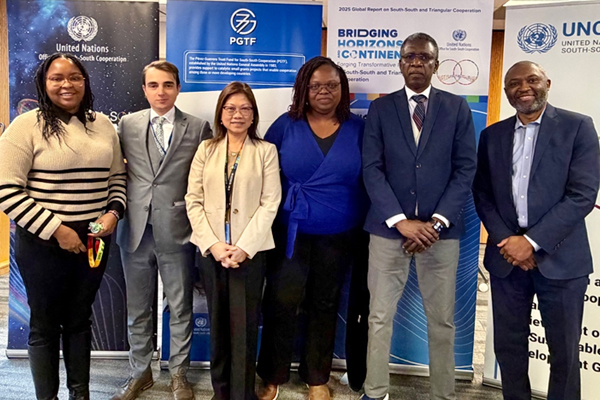
A cross-regional dialogue panel convened policymakers, development practitioners, and stakeholders from across the Global South to examine how South-South and triangular cooperation can accelerate the development of inclusive and resilient startup ecosystems. The discussion explored shared challenges, policy innovations, and strategic pathways for leveraging cross-regional partnerships to unlock entrepreneurship-led growth, particularly for youth and underserved communities.
The global startup economy – now valued at an estimated $7.6 trillion – has become a powerful driver of innovation, job creation, and economic transformation, rivaling the GDP of many high-income countries. Tech-enabled and scalable startups are reshaping industries and expanding opportunity, prompting governments worldwide to prioritize the development of strong startup ecosystems as a cornerstone of competitiveness and sustainable development.
However, the 2025 Global Startup Ecosystem Report points to a decline in overall ecosystem value and widening regional disparities, underscoring the urgency of cross-regional knowledge exchange, policy alignment, and coordinated investment to strengthen ecosystems in the Global South.
Development Cooperation and Startup Ecosystems
Southern-led solutions, anchored in South-South and triangular cooperation, are increasingly recognized as critical enablers of this transformation. “Regional and cross-regional partnerships, such as UNDP’s timbuktoo Initiative, are vital for scaling impact, fostering digital transformation, and building context-relevant ecosystems through knowledge exchange and strategic investment,” noted UNOSSC Director Dima Al-Khatib.
Speaking on behalf of the UNDP Regional Bureau for Africa, Raymond Gilpin, Chief of the Strategy, Analysis and Research Team, emphasized the need to move beyond macroeconomic indicators and place entrepreneurship ecosystems at the center of development strategies, highlighting their role in driving social change and sustainable development, and calling for continued cross-regional collaboration to address shared challenges.
During the panel discussion, speakers drew from regional initiatives and institutions supporting the development of the startup ecosystems. UNDP’s timbuktoo Initiative; ASEAN Foundation; Inter-American Development Bank Lab (IDB Lab) and the Digital Cooperation Organization; spotlighted their efforts, lessons learnt and recommendations for enhanced leveraging of South-South cooperation and triangular cooperation in this space. Innovators representing different startups and entities supporting startups: Evercomm Singapore; NIU NIU, Mexico; Jedar Capital, Egypt and Seedstars, Switzerland also spoke on their experiences and presented recommendations on areas that can benefit from greater South-South cooperation and triangular cooperation.
Speakers highlighted major regional initiatives advancing innovation and entrepreneurship: The UNDP Timbuktu Initiative is scaling support for women and youth-led startups in Africa through talent development, tech hubs, and financing; the AI Ready ASEAN program is equipping millions with AI literacy across Southeast Asia; and the Digital Cooperation Organization is driving policy harmonization, skills development, and cross-border market expansion in 16 member states.
Discussions also emphasized the need for impact financing, standardized measurement, and intentional cross-regional collaboration, with experts calling for unified methodologies, stronger support organizations, and leveraging shared challenges to foster sustainable growth in the Global South.
The speaker from the Uruguay National Development Agency highlighted the “startup paradox” in the Global South, where local ideas generate global value elsewhere, and emphasized the need for South-South cooperation to address this imbalance.
This inaugural cross-regional dialogue co-organised by UNOSSC and the UNDP Regional Bureau for Africa sought to explore how South-South and triangular cooperation could be harnessed to build resilient startup ecosystems in underserved markets. By drawing on regional initiatives and experiences of innovators from different regions, the event highlighted the value of peer learning and cross-border collaboration for scaling successful models and accelerating inclusive entrepreneurship.
Looking forward, the speakers identified some action points including the fostering of systematic South-South cooperation and triangular cooperation exchanges to accelerate knowledge transfer, technology adoption, and capacity building, especially in underserved markets. Specifically, there were calls to establish a South-South Cooperation Startup Ecosystem Peer-Learning Platform for ongoing knowledge exchange and partnership brokering.
Regional Snapshots of the Startup Ecosystem
Africa
- Trends: Africa is experiencing a startup boom, driven by its large youth population, rapid digitalization, and regional integration through the Africa Continental Free Trade Agreement (AfCFTA).
- Key Initiatives: The UNDP timbuktoo Initiative aims to mobilize $1 billion over 10 years to support 10,000 startups, scale 1,000, and improve 100 million livelihoods. The initiative provides resources, expertise, and funding through thematic innovation hubs and University Innovation Pods (UniPods).
- Challenges: Africa still accounts for less than 1% of global startup value. There are significant gaps in skills, infrastructure, and access to sustainable financing.
- Trends: Rapid growth in the startup ecosystem, fueled by digital adoption, government innovation strategies, and international partnerships.
- Key Initiatives: Digital Cooperation Organization fosters regional collaboration and digital skills development.
- Challenges: The ecosystem is uneven, with wealthier Gulf countries advancing faster due to stronger financial systems and policy support, while fragile states lag behind. Gender disparity is pronounced, with nearly 90% of startup funding going to male founders.
- Trends: Home to some of the world’s most dynamic startup ecosystems, led by India, Indonesia, Singapore, China, and Republic of Korea.
- Key Initiatives: ASEAN’s Startup Alliance connects over 4,000 startups, with an ecosystem value exceeding $130 billion. The ASEAN Startup Platform boosts sector growth and regional integration.
- Challenges: The pace of growth is decelerating, and ongoing structural issues could hinder future regional innovation. Significant differences also continue to exist between various countries and cities.
- Trends: Diverse and evolving ecosystem, with notable disparities between Western Europe, Central Europe, the Balkans, and the South Caucasus.
- Key Initiatives: Regional hubs such as Astana Hub in Kazakhstan and a planned regional AI center in Tajikistan are strengthening the ecosystem.
- Challenges: Persistent issues include funding gaps, fragmented markets, and limited exit opportunities, especially in Central Asia.
- Trends: The region’s startup ecosystem is growing with entrepreneurship and innovation being seen as key levers for sustainable development. As of 2021, over 1,000 tech-driven startups created more than $221 billion in value and employing over 245,000 people.
- Key Initiatives: The Inter-American Development Bank Lab (IDB Lab) drives ecosystem development through financing, knowledge, and networks.
- Challenges: Ecosystem value and activity remain concentrated in a few countries and sectors. Gaps in financing, skills, and infrastructure persist, and many markets remain untapped.