United Nations Office for South-South Cooperation (UNOSSC) Chief, Intergovernmental and UN System Affairs, Denis Nkala, delivered a presentation on the significance of South-South and triangular cooperation for Africa’s development and existing monitoring and evaluation tools to enhance reporting processes.
The presentation was targeted at participants at the second African Peer Review Mechanism (APRM) continental capacity program on South-South and triangular cooperation. The training was carried out in collaboration with strategic partners including the Islamic Development Bank (IsDB), UN World Food Program (WFP), International Fund for Agriculture Development (IFAD), Tunisian Agency for Technical Cooperation, and Rwanda Cooperation Initiative (RCI).
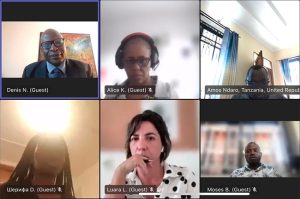 This 4-week program was developed by the APRM Monitoring and Evaluation Directorate to raise awareness and knowledge on South-South and triangular cooperation in Africa and the Global south to accelerate the implementation of Agenda 2063 and the Sustainable Development Goals (SDGs). The meeting brought together 286 participants from across Africa and beyond, including as far afield as India and Brazil.
During the presentation, Mr. Nkala highlighted some of the issues in the monitoring and evaluation of South-South cooperation, a modality that is based on very distinct principles. These include respect for national sovereignty, national ownership, equality, mutual benefit, non-conditionality, and non-interference. Innovation, adaptation and leapfrogging as well as the engagement of a multiplicity of implementing institutions are some of the additional unique aspects of South-South cooperation. In keeping with the spirit of South-South cooperation, projects, initiatives, programmes and general partnerships should ideally embody these principles. Subsequently, any monitoring and evaluation effort should be cognizant of this. However, general goals of any monitoring and evaluation undertaking still apply even when undertaking South-South cooperation monitoring.
UNOSSC’s efforts in strengthening the monitoring and evaluation of South-South cooperation include the development of a Handbook on Integrating South-South and Triangular Cooperation in the Voluntary National Reviews (VNRs) with key partners such as the Group of Friends of the VNRs and other UN entities. The Handbook, among other things, is intended to help generate evidence of South-South and triangular cooperation contributions toward achieving the SDGs. Additionally, and in partnership with UN Evaluation Group, UNOSSC plans to develop a handbook to support the integration of South-South cooperation perspectives in evaluations carried out by UN entities.
At programmatic and project level, UNOSSC provides a guidance note for the formulation, activities, monitoring, and evaluation of UNOSSC South- South projects closely aligned with South-South cooperation principles for use by all stakeholders.
Monitoring and evaluation also require data from measurement of South-South and triangular cooperation. The Voluntary Framework, endorsed by the UN Statistical Commission in 2022 with UNCTAD as custodian is based on experimental work by Global South countries, and quantifying South-South cooperation inputs and outputs.
Mr. Nkala’s presentation also highlighted some of the constraints relating to the monitoring and evaluation of South-South cooperation including the dearth of data and the lack of a standard South-South cooperation-specific monitoring and evaluation process and approach. However, the unique aspects of South-South cooperation, such as its demand-driven nature, means that the onus of this process must be for and by the relevant stakeholders who should be part of the monitoring process. Capturing lessons learnt and best-practices is one of the key goals of South-South cooperation monitoring and evaluation, to allow for knowledge and experience exchange.
Mr. Nkala’s session was one of the programme’s public guest lectures. Other notable guest lecturers were Ambassador Amr Aljowaily (AU Commission), Dr. Willy Mugenzi (Rwanda Cooperation Initiative), Mr. Dageng Liu and Luara Lopes from the World Food Program (WFP), Mr. Adamou Mayaki and Mr. Sameh Hussein from IsDB.
The success of the program underscores the commitment of African countries and their partners to utilize South-South and triangular cooperation for regional and global development, aligning with the AU-UN framework for Agenda 2063 and the 2030 Agenda for Sustainable Development.
It is worth highlighting that APRM-African Union and UNOSSC had signed an MoU (2020-2022) to raise awareness on South-South and triangular cooperation, mainstream the BAPA+40 outcome document and institutionalize South-South cooperation mechanisms on the continent. UNOSSC supported different initiatives led by APRM, including the Africa High-level Forum on South-South and Triangular Cooperation, which took place in Egypt (2021) and Kampala (2023).
For further info, please visit: https://aprm.au.int/en/events/2024-03-06/aprm-e-training-south-south-and-triangular-cooperation
This 4-week program was developed by the APRM Monitoring and Evaluation Directorate to raise awareness and knowledge on South-South and triangular cooperation in Africa and the Global south to accelerate the implementation of Agenda 2063 and the Sustainable Development Goals (SDGs). The meeting brought together 286 participants from across Africa and beyond, including as far afield as India and Brazil.
During the presentation, Mr. Nkala highlighted some of the issues in the monitoring and evaluation of South-South cooperation, a modality that is based on very distinct principles. These include respect for national sovereignty, national ownership, equality, mutual benefit, non-conditionality, and non-interference. Innovation, adaptation and leapfrogging as well as the engagement of a multiplicity of implementing institutions are some of the additional unique aspects of South-South cooperation. In keeping with the spirit of South-South cooperation, projects, initiatives, programmes and general partnerships should ideally embody these principles. Subsequently, any monitoring and evaluation effort should be cognizant of this. However, general goals of any monitoring and evaluation undertaking still apply even when undertaking South-South cooperation monitoring.
UNOSSC’s efforts in strengthening the monitoring and evaluation of South-South cooperation include the development of a Handbook on Integrating South-South and Triangular Cooperation in the Voluntary National Reviews (VNRs) with key partners such as the Group of Friends of the VNRs and other UN entities. The Handbook, among other things, is intended to help generate evidence of South-South and triangular cooperation contributions toward achieving the SDGs. Additionally, and in partnership with UN Evaluation Group, UNOSSC plans to develop a handbook to support the integration of South-South cooperation perspectives in evaluations carried out by UN entities.
At programmatic and project level, UNOSSC provides a guidance note for the formulation, activities, monitoring, and evaluation of UNOSSC South- South projects closely aligned with South-South cooperation principles for use by all stakeholders.
Monitoring and evaluation also require data from measurement of South-South and triangular cooperation. The Voluntary Framework, endorsed by the UN Statistical Commission in 2022 with UNCTAD as custodian is based on experimental work by Global South countries, and quantifying South-South cooperation inputs and outputs.
Mr. Nkala’s presentation also highlighted some of the constraints relating to the monitoring and evaluation of South-South cooperation including the dearth of data and the lack of a standard South-South cooperation-specific monitoring and evaluation process and approach. However, the unique aspects of South-South cooperation, such as its demand-driven nature, means that the onus of this process must be for and by the relevant stakeholders who should be part of the monitoring process. Capturing lessons learnt and best-practices is one of the key goals of South-South cooperation monitoring and evaluation, to allow for knowledge and experience exchange.
Mr. Nkala’s session was one of the programme’s public guest lectures. Other notable guest lecturers were Ambassador Amr Aljowaily (AU Commission), Dr. Willy Mugenzi (Rwanda Cooperation Initiative), Mr. Dageng Liu and Luara Lopes from the World Food Program (WFP), Mr. Adamou Mayaki and Mr. Sameh Hussein from IsDB.
The success of the program underscores the commitment of African countries and their partners to utilize South-South and triangular cooperation for regional and global development, aligning with the AU-UN framework for Agenda 2063 and the 2030 Agenda for Sustainable Development.
It is worth highlighting that APRM-African Union and UNOSSC had signed an MoU (2020-2022) to raise awareness on South-South and triangular cooperation, mainstream the BAPA+40 outcome document and institutionalize South-South cooperation mechanisms on the continent. UNOSSC supported different initiatives led by APRM, including the Africa High-level Forum on South-South and Triangular Cooperation, which took place in Egypt (2021) and Kampala (2023).
For further info, please visit: https://aprm.au.int/en/events/2024-03-06/aprm-e-training-south-south-and-triangular-cooperation
This 4-week program was developed by the APRM Monitoring and Evaluation Directorate to raise awareness and knowledge on South-South and triangular cooperation in Africa and the Global south to accelerate the implementation of Agenda 2063 and the Sustainable Development Goals (SDGs). The meeting brought together 286 participants from across Africa and beyond, including as far afield as India and Brazil.
During the presentation, Mr. Nkala highlighted some of the issues in the monitoring and evaluation of South-South cooperation, a modality that is based on very distinct principles. These include respect for national sovereignty, national ownership, equality, mutual benefit, non-conditionality, and non-interference. Innovation, adaptation and leapfrogging as well as the engagement of a multiplicity of implementing institutions are some of the additional unique aspects of South-South cooperation. In keeping with the spirit of South-South cooperation, projects, initiatives, programmes and general partnerships should ideally embody these principles. Subsequently, any monitoring and evaluation effort should be cognizant of this. However, general goals of any monitoring and evaluation undertaking still apply even when undertaking South-South cooperation monitoring.
UNOSSC’s efforts in strengthening the monitoring and evaluation of South-South cooperation include the development of a Handbook on Integrating South-South and Triangular Cooperation in the Voluntary National Reviews (VNRs) with key partners such as the Group of Friends of the VNRs and other UN entities. The Handbook, among other things, is intended to help generate evidence of South-South and triangular cooperation contributions toward achieving the SDGs. Additionally, and in partnership with UN Evaluation Group, UNOSSC plans to develop a handbook to support the integration of South-South cooperation perspectives in evaluations carried out by UN entities.
At programmatic and project level, UNOSSC provides a guidance note for the formulation, activities, monitoring, and evaluation of UNOSSC South- South projects closely aligned with South-South cooperation principles for use by all stakeholders.
Monitoring and evaluation also require data from measurement of South-South and triangular cooperation. The Voluntary Framework, endorsed by the UN Statistical Commission in 2022 with UNCTAD as custodian is based on experimental work by Global South countries, and quantifying South-South cooperation inputs and outputs.
Mr. Nkala’s presentation also highlighted some of the constraints relating to the monitoring and evaluation of South-South cooperation including the dearth of data and the lack of a standard South-South cooperation-specific monitoring and evaluation process and approach. However, the unique aspects of South-South cooperation, such as its demand-driven nature, means that the onus of this process must be for and by the relevant stakeholders who should be part of the monitoring process. Capturing lessons learnt and best-practices is one of the key goals of South-South cooperation monitoring and evaluation, to allow for knowledge and experience exchange.
Mr. Nkala’s session was one of the programme’s public guest lectures. Other notable guest lecturers were Ambassador Amr Aljowaily (AU Commission), Dr. Willy Mugenzi (Rwanda Cooperation Initiative), Mr. Dageng Liu and Luara Lopes from the World Food Program (WFP), Mr. Adamou Mayaki and Mr. Sameh Hussein from IsDB.
The success of the program underscores the commitment of African countries and their partners to utilize South-South and triangular cooperation for regional and global development, aligning with the AU-UN framework for Agenda 2063 and the 2030 Agenda for Sustainable Development.
It is worth highlighting that APRM-African Union and UNOSSC had signed an MoU (2020-2022) to raise awareness on South-South and triangular cooperation, mainstream the BAPA+40 outcome document and institutionalize South-South cooperation mechanisms on the continent. UNOSSC supported different initiatives led by APRM, including the Africa High-level Forum on South-South and Triangular Cooperation, which took place in Egypt (2021) and Kampala (2023).
For further info, please visit: https://aprm.au.int/en/events/2024-03-06/aprm-e-training-south-south-and-triangular-cooperation