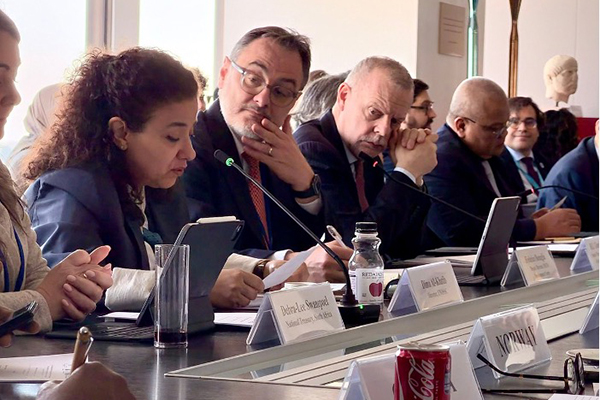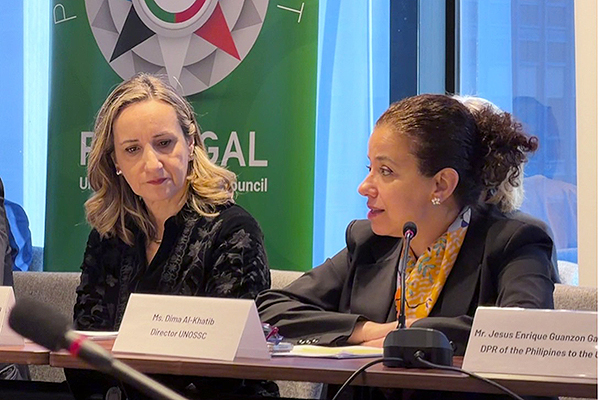
On 20 April 2026, a high-level side event held on the margins of the ECOSOC Forum on Financing for Development 2026 brought together policymakers, practitioners, and development partners to explore how triangular cooperation can accelerate the implementation of the Sevilla Commitment. The event was organized by Camões, I.P., the Organisation for Economic Co-operation and Development (OECD), and the United Nations Office for South-South Cooperation (UNOSSC), and hosted by the Permanent Mission of Portugal to the United Nations.
Discussions underscored a shared urgency: with declining traditional financing and rising global needs, new approaches are required to translate political commitments into tangible, scalable results.
Participants broadly converged on the view that triangular cooperation is no longer a niche modality, but an increasingly relevant and practical tool for delivering sustainable development outcomes. While reaffirming that it complements rather than replaces traditional development cooperation, speakers emphasized its unique ability to mobilize a wider spectrum of resources – combining finance with knowledge exchange, technology transfer, institutional strengthening, and peer learning.
This multidimensional value proposition was highlighted as particularly important in a context where financial flows alone are insufficient to meet growing development demands. By leveraging partnerships that are more horizontal and demand-driven, triangular cooperation enables countries and institutions to co-create solutions tailored to real needs, while fostering mutual learning and long-term capacity.
Yet, despite its growing relevance, a central message throughout the event was that triangular cooperation remains under-recognized and insufficiently measured.
Existing reporting systems continue to focus predominantly on financial contributions, often overlooking the significant role of non-financial inputs such as expertise, training, and institutional support. As a result, much of the true value and impact of triangular cooperation remains invisible.
Participants called for a stronger focus on evidence, data, and visibility – not only to better capture results, but also to strengthen credibility and inform decision-making. This includes improving how triangular cooperation is identified and labelled, enhancing interoperability across reporting frameworks, and integrating both quantitative and qualitative insights. The need to better reflect the leadership and contributions of partners from the Global South was also emphasized, as current systems often underrepresent these dynamics.
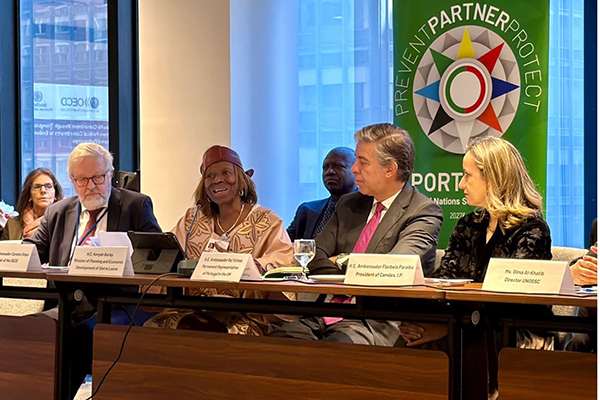 The event brought together a diverse group of participants from across the development cooperation landscape. Contributors included H.E. Kenyeh Barlay, Minister of Planning and Economic Development of Sierra Leone; H.E. Florbela Paraíba, President of Camões, I.P.; H.E. Carsten Staur, Chair of the OECD Development Assistance Committee; and Jesus Enrique Guanzon Garcia II, Deputy Permanent Representative of the Philippines to the United Nations. The discussion segment further benefited from contributions by Meryem Hamdouni, Counsellor at the Permanent Mission of Morocco to the United Nations; Juan José Martinez Badillo, Chief of the UNCTAD New York Office; Camilo Gambia Gamba, Policy Analyst and Communications Lead at the TOSSD Secretariat; Roberto Valent, Regional Director for Latin America and the Caribbean at the United Nations Development Coordination Office; and Sander Glas, Programme Officer for Development Policy and Finance at the Gates Foundation.
Beyond diagnosis, the discussion pointed to a clear operational agenda. Speakers stressed that triangular cooperation must move beyond isolated projects and be more systematically embedded within national development strategies, financing frameworks, and United Nations country-level planning processes. Strengthening the role of in-country coordination mechanisms was seen as critical to aligning partnerships with national priorities and linking them to implementation and financing pathways.
A recurring theme was the need to shift from pilot initiatives to scale. While triangular cooperation has demonstrated its effectiveness across diverse sectors – from climate resilience to digital transformation – its impact often remains fragmented. Scaling up requires stronger coordination, more coherent financing, and mechanisms that can connect successful initiatives to broader policy and investment ecosystems.
In her intervention, the Dima Al-Khatib, Director of the United Nations Office for South-South Cooperation, emphasized that the current global context demands a more strategic and integrated use of all forms of cooperation. With official development assistance declining sharply in recent years, she underscored that the challenge is not only to mobilize more resources, but to deploy them more effectively and at scale.
She highlighted triangular cooperation as a strategic means of implementing the Sevilla Commitment, noting its ability to bridge diverse actors and resources while fostering innovation and partnership. However, she also pointed to persistent gaps – particularly in visibility, data, and system-wide coherence – that limit its full potential.
To address these challenges, she outlined three priorities: strengthening integration across national and international frameworks; building a more robust evidence base that captures both financial and non-financial contributions; and reinforcing the enabling ecosystem for partnerships and financing. Central to this vision is the development of a new Global Alliance for South-South and Triangular Cooperation designed to connect demand with supply, facilitate matchmaking, and support the scaling of proven solutions across regions.
To address these challenges, she outlined three priorities: strengthening integration across national and international frameworks; building a more robust evidence base that captures both financial and non-financial contributions; and reinforcing the enabling ecosystem for partnerships and financing. Central to this vision is UNOSSC’s development of a new Global Alliance for South-South and Triangular Cooperation designed to connect demand with supply, facilitate matchmaking, and support the scaling of proven solutions across regions – complemented by instruments such as the Triangular Cooperation Window of the United Nations Fund for South-South Cooperation, which helps catalyze financing and scale impact.
The event brought together a diverse group of participants from across the development cooperation landscape. Contributors included H.E. Kenyeh Barlay, Minister of Planning and Economic Development of Sierra Leone; H.E. Florbela Paraíba, President of Camões, I.P.; H.E. Carsten Staur, Chair of the OECD Development Assistance Committee; and Jesus Enrique Guanzon Garcia II, Deputy Permanent Representative of the Philippines to the United Nations. The discussion segment further benefited from contributions by Meryem Hamdouni, Counsellor at the Permanent Mission of Morocco to the United Nations; Juan José Martinez Badillo, Chief of the UNCTAD New York Office; Camilo Gambia Gamba, Policy Analyst and Communications Lead at the TOSSD Secretariat; Roberto Valent, Regional Director for Latin America and the Caribbean at the United Nations Development Coordination Office; and Sander Glas, Programme Officer for Development Policy and Finance at the Gates Foundation.
Beyond diagnosis, the discussion pointed to a clear operational agenda. Speakers stressed that triangular cooperation must move beyond isolated projects and be more systematically embedded within national development strategies, financing frameworks, and United Nations country-level planning processes. Strengthening the role of in-country coordination mechanisms was seen as critical to aligning partnerships with national priorities and linking them to implementation and financing pathways.
A recurring theme was the need to shift from pilot initiatives to scale. While triangular cooperation has demonstrated its effectiveness across diverse sectors – from climate resilience to digital transformation – its impact often remains fragmented. Scaling up requires stronger coordination, more coherent financing, and mechanisms that can connect successful initiatives to broader policy and investment ecosystems.
In her intervention, the Dima Al-Khatib, Director of the United Nations Office for South-South Cooperation, emphasized that the current global context demands a more strategic and integrated use of all forms of cooperation. With official development assistance declining sharply in recent years, she underscored that the challenge is not only to mobilize more resources, but to deploy them more effectively and at scale.
She highlighted triangular cooperation as a strategic means of implementing the Sevilla Commitment, noting its ability to bridge diverse actors and resources while fostering innovation and partnership. However, she also pointed to persistent gaps – particularly in visibility, data, and system-wide coherence – that limit its full potential.
To address these challenges, she outlined three priorities: strengthening integration across national and international frameworks; building a more robust evidence base that captures both financial and non-financial contributions; and reinforcing the enabling ecosystem for partnerships and financing. Central to this vision is the development of a new Global Alliance for South-South and Triangular Cooperation designed to connect demand with supply, facilitate matchmaking, and support the scaling of proven solutions across regions.
To address these challenges, she outlined three priorities: strengthening integration across national and international frameworks; building a more robust evidence base that captures both financial and non-financial contributions; and reinforcing the enabling ecosystem for partnerships and financing. Central to this vision is UNOSSC’s development of a new Global Alliance for South-South and Triangular Cooperation designed to connect demand with supply, facilitate matchmaking, and support the scaling of proven solutions across regions – complemented by instruments such as the Triangular Cooperation Window of the United Nations Fund for South-South Cooperation, which helps catalyze financing and scale impact.
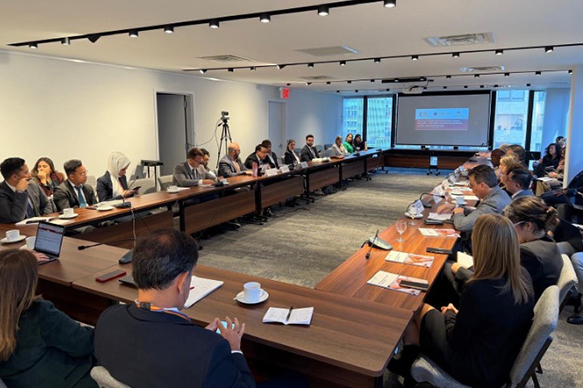 The event also served as a mobilizing moment for a broader call to action, inviting partners to contribute data, experiences, and insights to strengthen the global evidence base on triangular cooperation. By linking data with real-world experiences, this effort aims to enhance visibility, inform policy, and unlock new opportunities for investment and collaboration.
As discussions look ahead to future global milestones, participants agreed that 2026 presents a critical opportunity to elevate the role of triangular cooperation. Turning political commitments into delivery will require not only stronger partnerships, but also a renewed focus on learning, evidence, and scale.
In a rapidly evolving development landscape, the message was clear: triangular cooperation offers a practical pathway to connect ideas, resources, and actors – and to deliver results where they are needed most.
The event also served as a mobilizing moment for a broader call to action, inviting partners to contribute data, experiences, and insights to strengthen the global evidence base on triangular cooperation. By linking data with real-world experiences, this effort aims to enhance visibility, inform policy, and unlock new opportunities for investment and collaboration.
As discussions look ahead to future global milestones, participants agreed that 2026 presents a critical opportunity to elevate the role of triangular cooperation. Turning political commitments into delivery will require not only stronger partnerships, but also a renewed focus on learning, evidence, and scale.
In a rapidly evolving development landscape, the message was clear: triangular cooperation offers a practical pathway to connect ideas, resources, and actors – and to deliver results where they are needed most.
The event brought together a diverse group of participants from across the development cooperation landscape. Contributors included H.E. Kenyeh Barlay, Minister of Planning and Economic Development of Sierra Leone; H.E. Florbela Paraíba, President of Camões, I.P.; H.E. Carsten Staur, Chair of the OECD Development Assistance Committee; and Jesus Enrique Guanzon Garcia II, Deputy Permanent Representative of the Philippines to the United Nations. The discussion segment further benefited from contributions by Meryem Hamdouni, Counsellor at the Permanent Mission of Morocco to the United Nations; Juan José Martinez Badillo, Chief of the UNCTAD New York Office; Camilo Gambia Gamba, Policy Analyst and Communications Lead at the TOSSD Secretariat; Roberto Valent, Regional Director for Latin America and the Caribbean at the United Nations Development Coordination Office; and Sander Glas, Programme Officer for Development Policy and Finance at the Gates Foundation.
Beyond diagnosis, the discussion pointed to a clear operational agenda. Speakers stressed that triangular cooperation must move beyond isolated projects and be more systematically embedded within national development strategies, financing frameworks, and United Nations country-level planning processes. Strengthening the role of in-country coordination mechanisms was seen as critical to aligning partnerships with national priorities and linking them to implementation and financing pathways.
A recurring theme was the need to shift from pilot initiatives to scale. While triangular cooperation has demonstrated its effectiveness across diverse sectors – from climate resilience to digital transformation – its impact often remains fragmented. Scaling up requires stronger coordination, more coherent financing, and mechanisms that can connect successful initiatives to broader policy and investment ecosystems.
In her intervention, the Dima Al-Khatib, Director of the United Nations Office for South-South Cooperation, emphasized that the current global context demands a more strategic and integrated use of all forms of cooperation. With official development assistance declining sharply in recent years, she underscored that the challenge is not only to mobilize more resources, but to deploy them more effectively and at scale.
She highlighted triangular cooperation as a strategic means of implementing the Sevilla Commitment, noting its ability to bridge diverse actors and resources while fostering innovation and partnership. However, she also pointed to persistent gaps – particularly in visibility, data, and system-wide coherence – that limit its full potential.
To address these challenges, she outlined three priorities: strengthening integration across national and international frameworks; building a more robust evidence base that captures both financial and non-financial contributions; and reinforcing the enabling ecosystem for partnerships and financing. Central to this vision is the development of a new Global Alliance for South-South and Triangular Cooperation designed to connect demand with supply, facilitate matchmaking, and support the scaling of proven solutions across regions.
To address these challenges, she outlined three priorities: strengthening integration across national and international frameworks; building a more robust evidence base that captures both financial and non-financial contributions; and reinforcing the enabling ecosystem for partnerships and financing. Central to this vision is UNOSSC’s development of a new Global Alliance for South-South and Triangular Cooperation designed to connect demand with supply, facilitate matchmaking, and support the scaling of proven solutions across regions – complemented by instruments such as the Triangular Cooperation Window of the United Nations Fund for South-South Cooperation, which helps catalyze financing and scale impact.
The event also served as a mobilizing moment for a broader call to action, inviting partners to contribute data, experiences, and insights to strengthen the global evidence base on triangular cooperation. By linking data with real-world experiences, this effort aims to enhance visibility, inform policy, and unlock new opportunities for investment and collaboration.
As discussions look ahead to future global milestones, participants agreed that 2026 presents a critical opportunity to elevate the role of triangular cooperation. Turning political commitments into delivery will require not only stronger partnerships, but also a renewed focus on learning, evidence, and scale.
In a rapidly evolving development landscape, the message was clear: triangular cooperation offers a practical pathway to connect ideas, resources, and actors – and to deliver results where they are needed most.