• Home
  • /
  • Events
  • /
  • Graduating from ODA: country experiences and lessons

Graduating from ODA: country experiences and lessons


BLOG POST: What happens to a country when their economy is considered strong enough that they are no longer in need of official development assistance (ODA)? How can they move away from aid in the most productive way possible? Are there any common experiences and advice for how other development partners – donors, banks, the UN- can help support this transition?

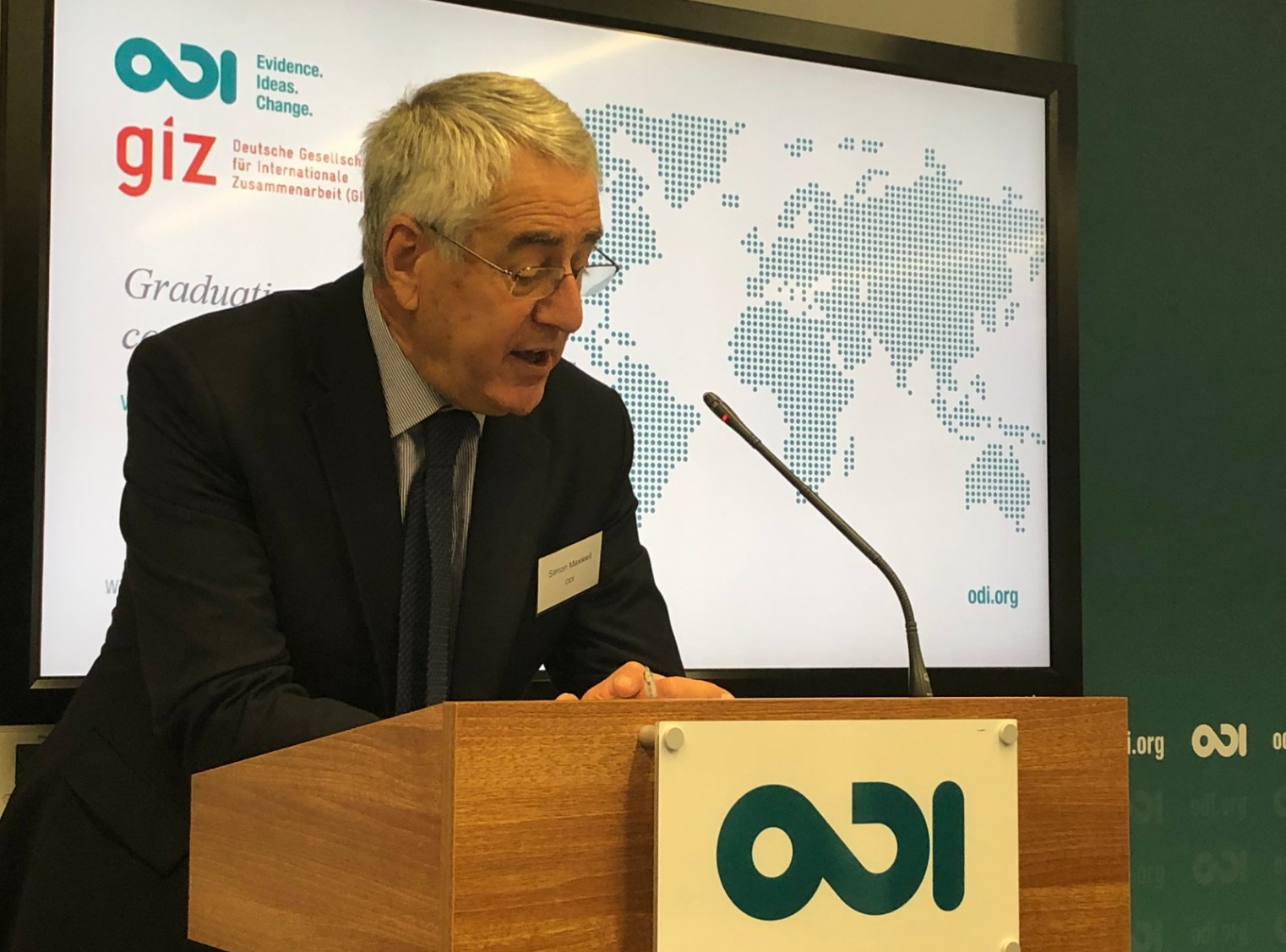
On Monday morning, policy experts and international cooperation agency representatives met at the Overseas Development Institute (ODI) in London to discuss these questions through a project by ODI and the Deutsche Gesellschaft fur Internationale Zusammenarbeit (GIZ). 

The project is completing four in-depth country case studies to help shed light on these issues- Botswana, Mexico, Chile, and the Republic of Korea. 

What was most striking to me as I listened to the presentation of initial findings was how different these countries experiences were. They ranged from countries who are objecting to and trying to re-define the ODA criteria (so that they can continue to receive aid) and those who have no issue with graduating and do not consider ODA as an important financing mechanism and accept donors leaving in a different way. 

Furthermore, there is not a clear cut linkage between this classification and decreased ODA- some countries continued to receive assistance, sometimes even higher, even though it was no longer classified as ODA. 

There were many interesting points made during the discussion, which took place under Chatham House Rules. One participant pointed out that there is a big difference between those who are moving away from access to aid but do not have access to the capital market, and those that do.

Also, there is a danger in graduating countries just to have them later face crises that require international assistance – an example was the hurricane season which caused major shocks but impacted countries to whom assistance would not qualify under ODA.

I liked the notion raised by one participant on the need for development partners to change their attitudes and approaches – are donors capable of moving away from aid to economic diplomacy? Do they have the instruments to be a strong partner and peer?

The report will be finalized later this year, and we look forward to seeing it

Linnea van Wagenen is a Special Assistant to the Secretary-General Envoy on South-South Cooperation and Director of UNOSSC at United Nations in New York. At UNOSSC, she supports the Director’s mandate by coordinating activities and meetings with senior management of UNDP and other partners. She is a strategic communications professional and previously worked at United Nations in Sierra Leone and Denmark, providing communications support through social media, website development, and external relations. Ms. Wagenen attended the event and shared her experience through this blog post.
Related Post


  • All Post
  • ATCT Featured Publications POM
  • BAPA+40
  • Blog
  • Capacity Development Initiatives
  • CICETE Featured Publications POM
  • CIKD
  • Cities Clusters - Agriculture
  • Cities Clusters - COVID-19
  • Cities Clusters - COVID-19 Knowledge Products
  • Cities Clusters - DRR
  • Cities Clusters - E-commerce
  • Cities Clusters - Tourism
  • Cities Clusters - Tourism Knowledge Products
  • Cities Clusters - Transport
  • Cities Clusters - Waste
  • Cities Project
  • Cities Project COVID-19 Newsletters
  • Cities Project COVID-19 Response
  • Cities Project Knowledge Products
  • Classic (untouched)
  • Climate Action
  • COMSATS Featured Publications POM
  • COMSATS Featured Solutions POM
  • Converted from Divi
  • Converted from Mixed
  • Converted from WPBakery
  • COVID-19
  • COVID-19 Page Featured Solutions
  • DRR Knowledge Products
  • DRR News
  • Empty Post
  • Events
  • Featured Event UN-Habitat POM
  • Financing for Development
  • Financing Mechanisms
  • g7+
  • Gender Events
  • Gender News
  • Good Practices in SSTrC Series
  • Good Practices Publications
  • Good Practices Thematic Series & Special Editions
  • Good Practices Vol. 2
  • Good Practices Vol. 3
  • GSSDC
  • Highlighted
  • Highlighted Publications
  • IAEA Featured Solutions POM
  • IBRAF Featured Publications POM
  • IBSA Fund
  • IBSA Fund Annual Reports
  • IBSA Fund News and Stories
  • IBSA Fund Publication
  • IBSA Fund Story
  • ICGEB Featured Events POM
  • ICGEB Featured Publications POM
  • ICGEB Featured Solutions POM
  • ILO Featured Events POM
  • ILO Featured Publications POM
  • ILO Featured Solutions POM
  • India-UN Development Partnership Fund
  • India-UN Fund Publication
  • India-UN Fund Story
  • IsDB
  • IsDB Featured Publications POM
  • IsDB SCC
  • News
  • Norec Featured Publications POM
  • Norec Featured Solutions POM
  • Peace and Development
  • PGTF Publications
  • PGTF Story
  • PICA Featured News POM
  • PICA Featured Publications POM
  • PICA Featured Solutions POM
  • PIDF Featured Publications POM
  • Publications
  • Regional Updates
  • Research
  • ROK-UNOSSC Facility
  • SGP Featured Publication POM
  • SGP Featured Solutions POM
  • Solution
  • South South in Action
  • South-South Global Thinkers
  • South-South Ideas
  • South-South Ideas Series
  • South-South in Action Series
  • Southern Response to COVID-19
  • SSN4PSI Featured Publications POM
  • SSN4PSI Featured Solutions POM
  • Training
  • UN Day for SSC 2020
  • UN Fund for SSC
  • UN SSC Day Publications
  • UN-Habitat Featured Publications POM
  • UN-HABITAT Featured Solutions POM
  • UNCCT
  • UNEP Featured Publications POM
  • UNFPA
  • UNFSSC Publication
  • UNFSSC Story
  • UNIDO Featured Publications POM
  • UNIDO Featured Solutions POM
  • UNIDO POM Events
  • UNOCT Featured Publications POM
  • UNV
  • UNV Featured Publications POM
  • WB Featured Publications POM
  • WB Featured Solutions POM
  • Webinars
  • WFP Featured Events POM
  • WFP Featured Publication POM
  • WFP Featured Solutions POM
  • WIPO
  • Workshops and Seminars
  • Youth4South
  • z Across the Globe 1
  • z Across the Globe 2
  • z Across the Globe 4
  • z Across the Globe 5
  • z Across the Globe 6
  • z Across the Globe 7
  • z Across the Globe 8
  • z ES BAPA+40
  • z ES Eventos
  • z ES Noticias
  • z ES Noticias Destacadas
  • z ES Publicaciones
  • z ES Publicaciones Destacadas
  • z ES Serie Buenas Prácticas en la CSSyT
  • z ES Serie El Sur-Sur en Acción
  • z FR Actualités
  • z FR BAPA+40
  • z FR Événements
  • z FR Publications
  • z FR Publications en vedette
  • z FR Série Bonnes pratiques en CSST
  • z FR Série Sud-Sud en action
  • z Highlighted News
  • z Photos
  • z Videos
  • z ZH BAPA+40
  • z ZH Events
  • z ZH News

Connect with UNOSSC

Stay updated with the latest trends in South-South cooperation and access our vast repository of knowledge.

Copyright © UNOSSC/UNDP

Alliance Application Form

Submit an Expression of Interest and/or Demand Signal. UNOSSC reviews submissions on a rolling basis.

1. Official name of organization / institution / government entity (exclusions to apply) *
Organization logo
Maximum file size: 20 MB
2. Country *
3. Region *
4. SDG *
5. Partner category *
6. Website *
7. Brief description of your institution (max. 150 words) *
Name for the Lead *
Title for the Lead *
Email address for the Lead *
Name for the co-lead
Title for the co-lead
Email address for the co-lead
Section 3. Expression of Interest in the Alliance *
Additional information on proposed areas of engagement may be requested through the platform following initial review by the Alliance Secretariat.
Section 4. Due Diligence and Integrity Declaration *

Submission Note:

  • Submission of this Expression of Interest form does not automatically confer participation in the Alliance.
  • All submissions will be reviewed by the Alliance Secretariat, including basic eligibility screening and proportionate due diligence, as appropriate.
  • Participation in Alliance activities is determined based on relevance to articulated cooperation needs, alignment with Alliance principles, and integrity considerations.
  • Engagement under the Alliance is voluntary, non-binding, and facilitative in nature, and does not constitute funding approval, contractual commitment, or institutional membership.
  • The Alliance Secretariat may contact submitting entities for additional information or clarification during the review process.

Submission of Demand Form

Description of Demand

Indicate the type of support or cooperation requested through the Alliance.
Please briefly describe the challenge, gap, or priority. (Max. 300 words)

Thematic and Geographic Focus

Please indicate the main focus areas of your demand:

A. Thematic Areas (select up to three)
B. Geographic Focus (select all that apply)

Proposed Engagement Modalities

Please indicate how you would like to engage through the Alliance (select all that apply):

Expected Outcomes

Please indicate the main results you seek to achieve through this engagement. (Max. 200 words)
Examples:
• Capacity strengthened
• Partnerships established
• Sectoral or regional strategies co-developed
• Solutions piloted
• Knowledge generated
• Policies informed

Timeline and Readiness (if applicable)

1. Expected timeframe for engagement:
2. Current stage:

Additional Information

Please provide any additional information, documents, or links relevant to this submission.
(Max. 200 words or upload link)

Submission of Offer Form

Description of Contribution

Indicate the type of contribution your institution can provide and describe the expertise, resources, or solutions you may offer.
Please briefly describe your proposed contribution. (Max. 300 words)

Thematic and Geographic Focus

Please indicate the main focus areas of your interest:

A. Thematic Areas (select up to three)
B. Geographic Focus (select all that apply)

Proposed Engagement Modalities

Please indicate how you would like to engage through the Alliance (select all that apply):

Expected Outcomes

Please indicate the main results you aim to achieve through this engagement. (Max. 200 words)
Examples:
• Capacity strengthened
• Partnerships established
• Sectoral or regional strategies co-developed
• Solutions piloted
• Knowledge generated
• Policies informed

Timeline and Readiness (if applicable)

1. Expected timeframe for engagement:
2. Current stage:

Additional Information

Please provide any additional information, documents, or links relevant to this submission.
(Max. 200 words or upload link)

Organization Registration

Authentication & Due Diligence This prototype simulates identity verification, due diligence confirmation, and an authentication step before submission. *

First Name *
Last Name *
Email address *
Password *
Confirm Password *
Name of institution / organization *
Country / Region *
Organization Type *
Organization other *
Function / role *
Organization logo *
Maximum file size: 1 GB

Login

Login / email *
Password *
Remember me

Forgot password?

Connect form

Your name *
Email *
Organization / institution *
Job title / role *
Reason for connecting:
Short message

Scroll to Top