• Home
  • /
  • Events
  • /
  • GSSD Expo 2018: Summary of the First Day (Wednesday, 28 Nov 2018)

GSSD Expo 2018: Summary of the First Day (Wednesday, 28 Nov 2018)


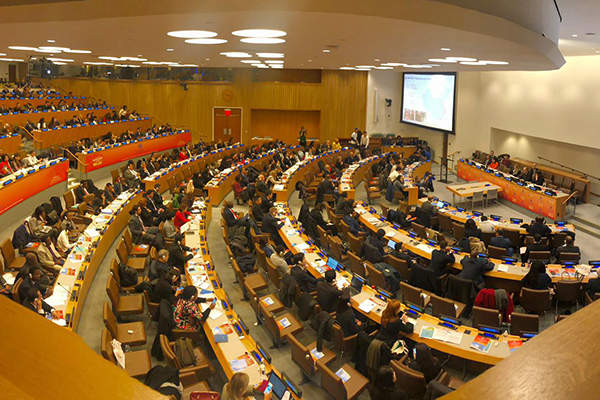
DAILY SUMMARY – Wednesday, 28 November 2018   Day 1 of the Global South-South Development Expo 2018 has seen very rich, diverse and inspiring discussions with participation of representatives from the Governments, UN agencies, private sector, civil society and academia, who have shown a strong commitment to South-South and triangular cooperation as a way to achieve the 2030 Agenda for Sustainable Development. The High-Level Opening Ceremony provided the overall vision for strengthening relations between partners and working together towards enhancing South-South cooperation.
  • In his opening remarks, Jorge Chediek, Director of UNOSSC and Envoy of the Secretary-General on South-South Cooperation, noted the scale of the current Expo which has gathered over 850 participants from more than 120 countries, thus demonstrating the importance and increasing interest towards South-South and triangular cooperation. The event provides a great opportunity to learn about successful experiences in the South, create partnerships and expand cooperation that will enable collaborative work to build a better world.
  • António Guterres, Secretary-General of the United Nations, emphasized the significance of South-South cooperation as a key instrument for achieving the 2030 Agenda and fair globalization. In his speech, he articulated the enormous contributions that the Southern countries have made to global development, including to poverty reduction, trade, emergency response and finance. The Secretary-General reiterated that South-South cooperation is not meant to replace North-South cooperation; nor should it substitute the response by the North. It is intended to enhance national commitments to achieving the 2030 Agenda and other international agreements including the Addis Ababa Action Agenda. In conclusion, he called for harnessing the power and potential of South-South cooperation for the common good, while identifying creative and sustainable solutions through South-South and triangular cooperation, which could bring long-lasting development gains in the South and across the globe.
  • In her remarks, E. Ms. María Fernanda Espinosa Garcés, President of 73rd session of the United Nations General Assembly, encouraged celebration of solidarity between countries in the South and called for increasing South-South cooperation and working closer together to enhance multilaterism and regional cooperation in order to address global challenges. She emphasized that the tremendous achievements of the South are attributed all developing countries which have developed innovative successes in critical areas.
  • E. Ambassador Hany Selim, Assistant Foreign Minister for International Cooperation for Development, Ministry of Foreign Affairs of the Arab Republic of Egypt, Chair of the Group of 77 and China, joined previous speakers in acknowledging the importance of South-South cooperation in creating diverse and viable opportunities for sustainable development – guided by principles such as respect for national sovereignty, national ownership and non-interference in domestic affairs; and commending the work of UNOSSC in supporting South-South cooperation, including through networking within the UN system and connecting partners in developing countries. Strategic thinking and a system-wide approach are critical to enhance this form of cooperation.
  • Achim Steiner, UNDP Administrator, pointed out that South-South cooperation is an essential part of the UN mandate and has been instrumental in strengthening national capacity, expanding knowledge networks and developing multistakeholder partnerships. Working in some 170 countries and territories, UNDP has a large footprint in the South and strongly supports South-South cooperation as a driver of development cooperation and innovative solutions. For example, Kenya and Bangladesh provide great examples of leveraging digital technology to address the needs of those that are furthest behind. It is important that South-South and triangular cooperation continues its momentum and engages more partners in its crucial work.
  Following the Opening Ceremony, the Expo has showcased the experiences of countries in the South through five Thematic Solution Forums and side-events, focusing on specific development areas in line with the 2030 Agenda.   Thematic Solution Forum 1 discussed opportunities and challenges of South-South cooperation in eradicating poverty and improving livelihoods in the era of technological revolution. Chaired by UNDP, the panel included representatives from the Government of Bangladesh, UNDP Office in Turkmenistan, Alibaba and JD Foundation. Some of the highlights of the forum include the following:
  • Partnership between Alibaba, the Chinese Government and individual farmers in over 1,000 counties resulted in the improvement of rural livelihoods. Notably, using the e-commerce platform in Taobao villages it provided a platform for farmers to increase their productivity, improve income and develop rural entrepreneurship. Key factors for success include government support, particularly in terms of finance; online infrastructure; and training support in marketing and use of technology. This business model is now being replicated in other countries the South.
  • The UNDP Office in Turkmenistan shared its experience in working with deaf and blind people and providing them with new job and training opportunities based on the experience of China. Embarking on the concept of digital economy, Turkmenistan is also exploring ways to bridge digital divides in partnership with Huawei by deploying mobile solutions in railway and transport industries.
  • Driven by domestic demand, Bangladesh recognizes the importance of South-South cooperation, particularly through leveraging technology and innovation. ICT infrastructure and broad Internet and mobile coverage in particular have been critical to financial inclusion, especially among women, older people and persons with disabilities in the country. Furthermore, digitalization of cash transfer programs has revolutionized public service delivery through higher efficiency, better transparency and accountability.
  • The experience of JF Foundation, the largest retail company in China, has shown how high-tech logistics infrastructure, including in the context of natural hazards, is instrumental to reducing poverty and improving health in rural areas. This experience is being shared with other countries in the region, including in Thailand, and demonstrates that social innovation models empowered by technology are a promising way forward for strengthened South-South cooperation.
  Thematic Solution Forum 2 focused on sharing good practices in decent work led by ILO with participation of representatives from Samoa, Jamaica, Sierra Leone and South Africa. Some highlights of this forum include:
  • In view of the high sensitivity of Samoa and other Pacific Islands to climate change impacts, it is important that solutions focus on improving work for local communities and enhancing climate resilience. In Samoa, for example, the government integrated the decent work agenda in its national development strategy which is aligned with principles of the 2030 Agenda. It also created the tripartite forum which includes employers, employees and the government with the purpose of creating equal opportunities for both men and women. There is also a regional forum for Pacific Islands which provides a knowledge sharing platform for addressing common challenges in the context of climate change.
  • Jamaica has put forth significant efforts in eliminating child labour across the Caribbean countries, creating apprenticeship programs, and training officials and practitioners on labour regulations in partnership with Brazil in the areas of agriculture, child labour, and transition to work. Main results of this work include updated information on child labour, enhanced capacity of local specialists, and new regional initiatives in the Caribbean which contribute to evidence-based policy recommendations and by doing so improve national legislation.
  • One of the key challenges in Africa that was highlighted based on the example of South Africa is low social protection coverage, which is key to decent work, reducing unpaid care work, improving health and education outcomes. Trainings in several countries across Africa have provided an important channel for improving social protection through the creation of the network of experts.
  Thematic Solution Forum 3 discussed innovative mechanisms for South-South and triangular cooperation. Cosponsored by the Permanent Mission of India and UNOSSC, the panel included representatives from UN-OHRLLS, Inter-American Development Bank, IFAD, PIDF and OECD. Some of the key messages include the following:
  • The partnership between India and UNOSSC has led to several innovative projects both at the regional and national levels. For example, a multi-country project between 7 states in the Pacific focused on climate resilience is a good example of bringing together stakeholders from various settings that are vulnerable to climate change. Moreover, in Benin the provision of seed funds from the UN and other partners has been instrumental to implementing and scaling up a project on agriculture.
  • UN-OHRLLS shared its experience of working with least developed countries, landlocked developing countries and small island states in addressing the challenges of accessing finance, technology transfer, infrastructure development and trade. Moreover, South-driven initiatives such as the New Development Bank are recognized as important tools for financial cooperation, including for climate finance, in the context of the emerging development finance landscape.
  • The work of the Inter-American Development Bank has shown that the mobilization of co-financing with other development partners including bilateral agencies, development banks and private sector actors is needed to achieve better results amid severe financial constraints.
  • IFAD has emphasized that support to small holder farmers is critical not only to SDG 2 but also to other development goals in the 2030 Agenda. It needs to be accompanied with investments in rural areas, job creation including for young people, and infrastructure development.
  Thematic Solution Forums 4 focused on promoting opportunities for young people and women through South-South cooperation. The panel included the UN Secretary General’s Envoy on Youth, the representative of the Government of Cambodia, UNV, China Africa Development Fund and UNESCO Office. Some of the key messages include the following:
  • There are three important paths for youth development: (i) support for youth entrepreneurship, (ii) enabling regulatory and financial instruments; and (iii) seizing the potential of 4th Industrial Revolution through skills training. The Youth Strategy launched recently by the UN Secretary-General offers priority areas which aim to guide national actors in developing their own youth development strategies and improving the lives of young people.
  • Cambodia provides an example of creating an institutional environment through the National Youth Policy and Youth National Action Plan. Critical areas include agriculture, water, sanitation and environmental degradation. Over 3,800 young people, half of whom are women, have been trained in skills and are now confident players in economic change. Moreover, a dedicated youth career guidance online platform has been developed to address the challenge of youth employment. Policymakers and young people from Cambodia are now planning to visit India to share their experience and learn about good practices in other contexts. These results have been made possible thanks to support of UNV and UNOSSC.
  • Volunteerism has been emphasized as an important way to build cooperation, develop community and social cohesion. It also provides a platform for South-South and triangular cooperation, fosters exchange of expertise and contributes to improving employment opportunities, while addressing gender gaps.
  • UNESCO Office in Gabon has shared its experience in implementing the Train My Generation Project which provides training to young people by teaching them computer skills and preparing them for ICT jobs. It also contributes to reducing the high rate of school failure of young people in exam classes, especially in scientific subjects.
  Thematic Solution Forums 5 focused on promoting sustainable development through engaging youth and women in the South-South cooperation. Given that a significant proportion of the population in developing countries comprise youth and women, it is vital to tailor the priorities of youth and women into the planning processes of the policies and programmes for the implementation of the SDGs. The challenges posed by the ‘youth bulge’ in Africa and other continents of the world require urgent attention. At the same time, this urgency presents an opportunity to empower youth and women to build an inclusive society. Some of the lessons learned from past experiences include the importance of clear principles, simple planning, strengthened commitment, enhanced local engagement, and innovative communication and story telling.   Day 1 of the Expo has also featured special segments during which UNOSSC gratefully acknowledged the commitment of the Government of Qatar and UN-OHRLLS to South-South cooperation for development. A welcome reception and talk show featuring the launch of “Good Practices in South-South and Triangular Cooperation Volume 2” in the 6 UN languages plus Portuguese concluded the activities of Day 1. A more detailed report of the discussions and side-events will be provided after the Expo and will be shared with all participants.   [Not an official record]    

Related Post


  • All Post
  • ATCT Featured Publications POM
  • BAPA+40
  • Blog
  • Capacity Development Initiatives
  • CICETE Featured Publications POM
  • CIKD
  • Cities Clusters - Agriculture
  • Cities Clusters - COVID-19
  • Cities Clusters - COVID-19 Knowledge Products
  • Cities Clusters - DRR
  • Cities Clusters - E-commerce
  • Cities Clusters - Tourism
  • Cities Clusters - Tourism Knowledge Products
  • Cities Clusters - Transport
  • Cities Clusters - Waste
  • Cities Project
  • Cities Project COVID-19 Newsletters
  • Cities Project COVID-19 Response
  • Cities Project Knowledge Products
  • Classic (untouched)
  • Climate Action
  • COMSATS Featured Publications POM
  • COMSATS Featured Solutions POM
  • Converted from Divi
  • Converted from Mixed
  • Converted from WPBakery
  • COVID-19
  • COVID-19 Page Featured Solutions
  • DRR Knowledge Products
  • DRR News
  • Empty Post
  • Events
  • Featured Event UN-Habitat POM
  • Financing for Development
  • Financing Mechanisms
  • g7+
  • Gender Events
  • Gender News
  • Good Practices in SSTrC Series
  • Good Practices Publications
  • Good Practices Thematic Series & Special Editions
  • Good Practices Vol. 2
  • Good Practices Vol. 3
  • GSSDC
  • Highlighted
  • Highlighted Publications
  • IAEA Featured Solutions POM
  • IBRAF Featured Publications POM
  • IBSA Fund
  • IBSA Fund Annual Reports
  • IBSA Fund News and Stories
  • IBSA Fund Publication
  • IBSA Fund Story
  • ICGEB Featured Events POM
  • ICGEB Featured Publications POM
  • ICGEB Featured Solutions POM
  • ILO Featured Events POM
  • ILO Featured Publications POM
  • ILO Featured Solutions POM
  • India-UN Development Partnership Fund
  • India-UN Fund Publication
  • India-UN Fund Story
  • IsDB
  • IsDB Featured Publications POM
  • IsDB SCC
  • News
  • Norec Featured Publications POM
  • Norec Featured Solutions POM
  • Peace and Development
  • PGTF Publications
  • PGTF Story
  • PICA Featured News POM
  • PICA Featured Publications POM
  • PICA Featured Solutions POM
  • PIDF Featured Publications POM
  • Publications
  • Regional Updates
  • Research
  • ROK-UNOSSC Facility
  • SGP Featured Publication POM
  • SGP Featured Solutions POM
  • Solution
  • South South in Action
  • South-South Global Thinkers
  • South-South Ideas
  • South-South Ideas Series
  • South-South in Action Series
  • Southern Response to COVID-19
  • SSN4PSI Featured Publications POM
  • SSN4PSI Featured Solutions POM
  • Training
  • UN Day for SSC 2020
  • UN Fund for SSC
  • UN SSC Day Publications
  • UN-Habitat Featured Publications POM
  • UN-HABITAT Featured Solutions POM
  • UNCCT
  • UNEP Featured Publications POM
  • UNFPA
  • UNFSSC Publication
  • UNFSSC Story
  • UNIDO Featured Publications POM
  • UNIDO Featured Solutions POM
  • UNIDO POM Events
  • UNOCT Featured Publications POM
  • UNV
  • UNV Featured Publications POM
  • WB Featured Publications POM
  • WB Featured Solutions POM
  • Webinars
  • WFP Featured Events POM
  • WFP Featured Publication POM
  • WFP Featured Solutions POM
  • WIPO
  • Workshops and Seminars
  • Youth4South
  • z Across the Globe 1
  • z Across the Globe 2
  • z Across the Globe 4
  • z Across the Globe 5
  • z Across the Globe 6
  • z Across the Globe 7
  • z Across the Globe 8
  • z ES BAPA+40
  • z ES Eventos
  • z ES Noticias
  • z ES Noticias Destacadas
  • z ES Publicaciones
  • z ES Publicaciones Destacadas
  • z ES Serie Buenas Prácticas en la CSSyT
  • z ES Serie El Sur-Sur en Acción
  • z FR Actualités
  • z FR BAPA+40
  • z FR Événements
  • z FR Publications
  • z FR Publications en vedette
  • z FR Série Bonnes pratiques en CSST
  • z FR Série Sud-Sud en action
  • z Highlighted News
  • z Photos
  • z Videos
  • z ZH BAPA+40
  • z ZH Events
  • z ZH News

ABOUT

Terms of Service

Privacy Policy

Disclosures

RESOURCES

Terms of Service

Privacy Policy

Disclosures

ENGAGE

Terms of Service

Privacy Policy

Disclosures

Copyright © UNOSSC/UNDP

wpChatIcon
wpChatIcon

Alliance Application Form

Submit an Expression of Interest and/or Demand Signal. UNOSSC reviews submissions on a rolling basis.

1. Official name of organization / institution / government entity (exclusions to apply) *
2. Country *
3. Region *
4. SDG *
Secondary SDG *
5. Partner category *
6. Website *
7. Brief description of your institution (max. 150 words) *
Name for the Lead *
Title for the Lead *
Email address for the Lead *
Name for the co-lead
Title for the co-lead
Email address for the co-lead
Section 3. Expression of Interest in the Alliance *
Additional information on proposed areas of engagement may be requested through the platform following initial review by the Alliance Secretariat.
Section 4. Due Diligence and Integrity Declaration *

Submission Note:

  • Submission of this Expression of Interest form does not automatically confer participation in the Alliance.
  • All submissions will be reviewed by the Alliance Secretariat, including basic eligibility screening and proportionate due diligence, as appropriate.
  • Participation in Alliance activities is determined based on relevance to articulated cooperation needs, alignment with Alliance principles, and integrity considerations.
  • Engagement under the Alliance is voluntary, non-binding, and facilitative in nature, and does not constitute funding approval, contractual commitment, or institutional membership.
  • The Alliance Secretariat may contact submitting entities for additional information or clarification during the review process.

Submission of Demand Form

Description of Demand

Indicate the type of support or cooperation requested through the Alliance.
Please briefly describe the challenge, gap, or priority. (Max. 300 words)

Thematic and Geographic Focus

Please indicate the main focus areas of your demand:

A. Thematic Areas (select up to three)
B. Geographic Focus (select all that apply)

Proposed Engagement Modalities

Please indicate how you would like to engage through the Alliance (select all that apply):

Expected Outcomes

Please indicate the main results you seek to achieve through this engagement. (Max. 200 words)
Examples:
• Capacity strengthened
• Partnerships established
• Sectoral or regional strategies co-developed
• Solutions piloted
• Knowledge generated
• Policies informed

Timeline and Readiness (if applicable)

1. Expected timeframe for engagement:
2. Current stage:

Additional Information

Please provide any additional information, documents, or links relevant to this submission.
(Max. 200 words or upload link)

Submission of Offer Form

Description of Contribution

Indicate the type of contribution your institution can provide and describe the expertise, resources, or solutions you may offer.
Please briefly describe your proposed contribution. (Max. 300 words)

Thematic and Geographic Focus

Please indicate the main focus areas of your interest:

A. Thematic Areas (select up to three)
B. Geographic Focus (select all that apply)

Proposed Engagement Modalities

Please indicate how you would like to engage through the Alliance (select all that apply):

Expected Outcomes

Please indicate the main results you aim to achieve through this engagement. (Max. 200 words)
Examples:
• Capacity strengthened
• Partnerships established
• Sectoral or regional strategies co-developed
• Solutions piloted
• Knowledge generated
• Policies informed

Timeline and Readiness (if applicable)

1. Expected timeframe for engagement:
2. Current stage:

Additional Information

Please provide any additional information, documents, or links relevant to this submission.
(Max. 200 words or upload link)

Organization Registration

Authentication & Due Diligence This prototype simulates identity verification, due diligence confirmation, and an authentication step before submission. *

First Name *
Last Name *
Email address *
Password *
Confirm Password *
Name of institution / organization *
Country / Region *
Organization Type *
Organization other *
Function / role *
Organization logo *
Maximum file size: 1 GB

Login

Login / email *
Password *
Remember me

Forgot password?

Connect form

Your name *
Email *
Organization / institution *
Job title / role *
Reason for connecting:
Short message

Scroll to Top