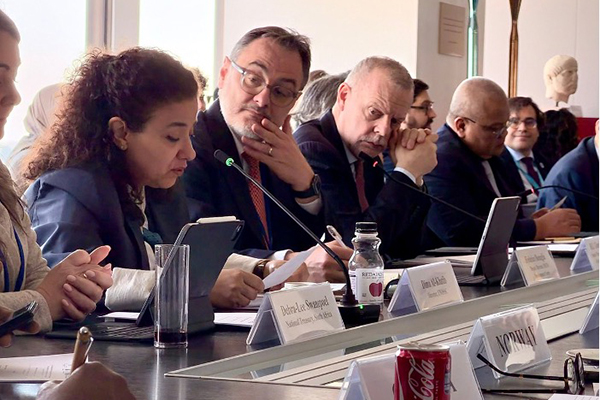
29 January 2024 – India, Brazil and South Africa Facility for Poverty and Hunger Alleviation (IBSA Fund) Board of Directors met today and approved three proposals for Belize, Palestine and South Sudan, amounting to $3 million in new funding. It also approved the design of a project in Mali to begin in 2024. The meeting was held in New York at the Permanent Mission of Brazil.
The proposals under consideration are closely aligned with IBSA’s core mission to leverage the power of South-South cooperation towards the alleviation of poverty and hunger among countries of the Global South. While each programme addresses its country’s unique and pressing needs, mitigating challenges related to the climate crisis was an underlying theme.
The project in Belize, ‘Rural Electrification using Micro-grids in Southern Belize’, will enhance access to renewable energy in marginalized communities in the Toledo district of Belize. This district experiences the highest poverty rate in the country. The project aims to provide solar equipment to 166 households, a school and a primary health centre.
The project in South Sudan, ‘Empowering Women and Youth to Drive Sustainable Agriculture’, aims to increase vegetable and fish production, and expand distribution markets, so as to improve nutrition, food security and livelihoods in the Central Equatorial State. Eight vegetable production groups comprised of 48 heads-of-household, and four fisheries groups of 30 heads-of-household will be supported.
“With South Sudan being such a challenging environment to operate development initiatives, we welcome the flexibility of partners and of the UN System and their determination to bring this proposal to fruition,” said H.E. Mr. Marthinus Christoffel Johannes Van Schalkwyk, Ambassador and Deputy Permanent Representative of South Africa to the United Nations.
The project in State of Palestine, ‘Investment in Agri-business development in Mubadrti’, aims to create sustainable job opportunities for women, youth and recent graduates in the agricultural sector and its production chain. This will involve the production of market-oriented agricultural commodities, as well as food processing. 70 farmers, unemployed youth and engineers will increase agricultural productivity in Palestine through the proposed investments in agri-business, through comprehensive training programmes on farming techniques, crop management, harvesting methods, post-harvest handling, processing and packaging, marketing and business management.
“We confirm the timeliness and relevance of this initiative in the West Bank, and its importance to support food production and livelihoods at these times,” said H.E. Mr. Norberto Moretti, Ambassador and Deputy Permanent Representative of Brazil to the United Nations, Chair of the IBSA Fund.
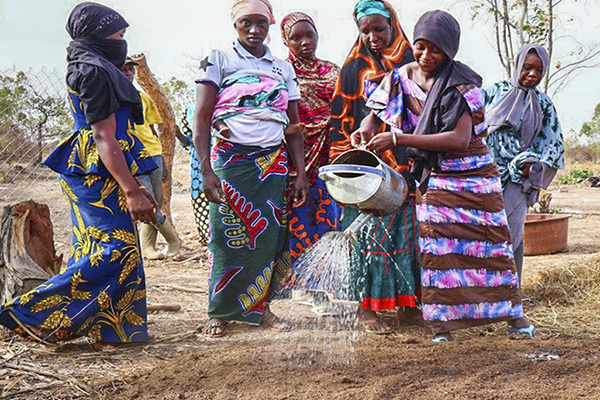
Also in Africa, the Board endorsed the detailed design for a project in Mali’s Climate Change Resilient Community Farms and Women’s Empowerment in Baguinéda Irrigated Zone, to begin in 2024. This project aims to strengthen the resilience of women producers and youth against the adverse effects of climate change, through the renovation of two agribusiness centres, the provision of improved seeds and capacity building to over 7,000 women producers. There will also be provision of equipment to four youth Economic Interest Groups, and the installation of solar pumping systems in five market garden areas.
H.E. Mrs. Yojna Patel, Ambassador and Deputy Permanent Representative of India to the United Nations said, “we should also have substantive discussions with the partnering countries implementing IBSA Fund projects, held in the sidelines of major UN Conferences and other global forums where these key development questions are being studied, serving as practical examples and an opportunity to reflect and exchange on these experiences.”
“The IBSA Fund has a very rich portfolio of projects, complemented by today’s approvals, which is transformational. Initiatives of this type, amount and partnerships are catalytic at unleashing progress towards the SDGs in those communities where they are implemented,” said Ms. Dima Al-Khatib, Director, UNOSSC. “It is important to showcase these best practices in applicable UN Conferences and other forums during the year, to enable their broader contribution to the shaping of those agendas,” she said, echoing Ambassador Patel.